
OFF-TOPIC (77)
By:
August 3, 2026
Off-Topic brings you over-the-transom, on-tangent essays, dialogues and subjective scholarship on an occasional, impulsive basis. On today’s road of ruin and renewal, a walk through what might be and a visitation with what is no more, with a leading visionary of the spaces we paint ourselves into……
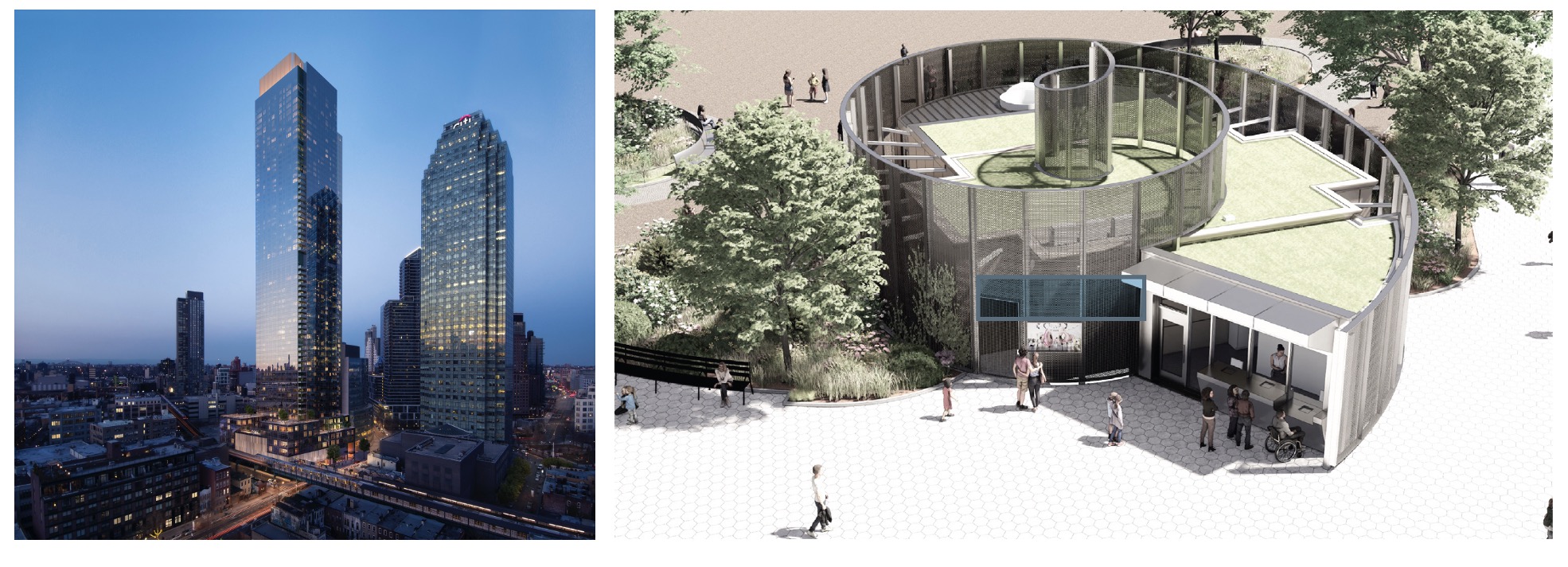
The angle and the curve could be the competing crests of the 21st century’s competition between gain and survival. Gridded glass towers rise like some kind of invasive crystal formation over most current skylines, while more fanciful spirals of structure and playful patchworks of color and texture accompany the closer-to-earth. Emulating or integrating nature into the industry-created environment is the principal (and principled) concern of landscape architects like Kateryna Maksimentseva, who has spent her career reclaiming spaces from destruction, regreening the concrete metropolis, and reconnecting historic structures to past grandeur and contemporary relevance, from her native Ukraine, to Germany, to NYC.
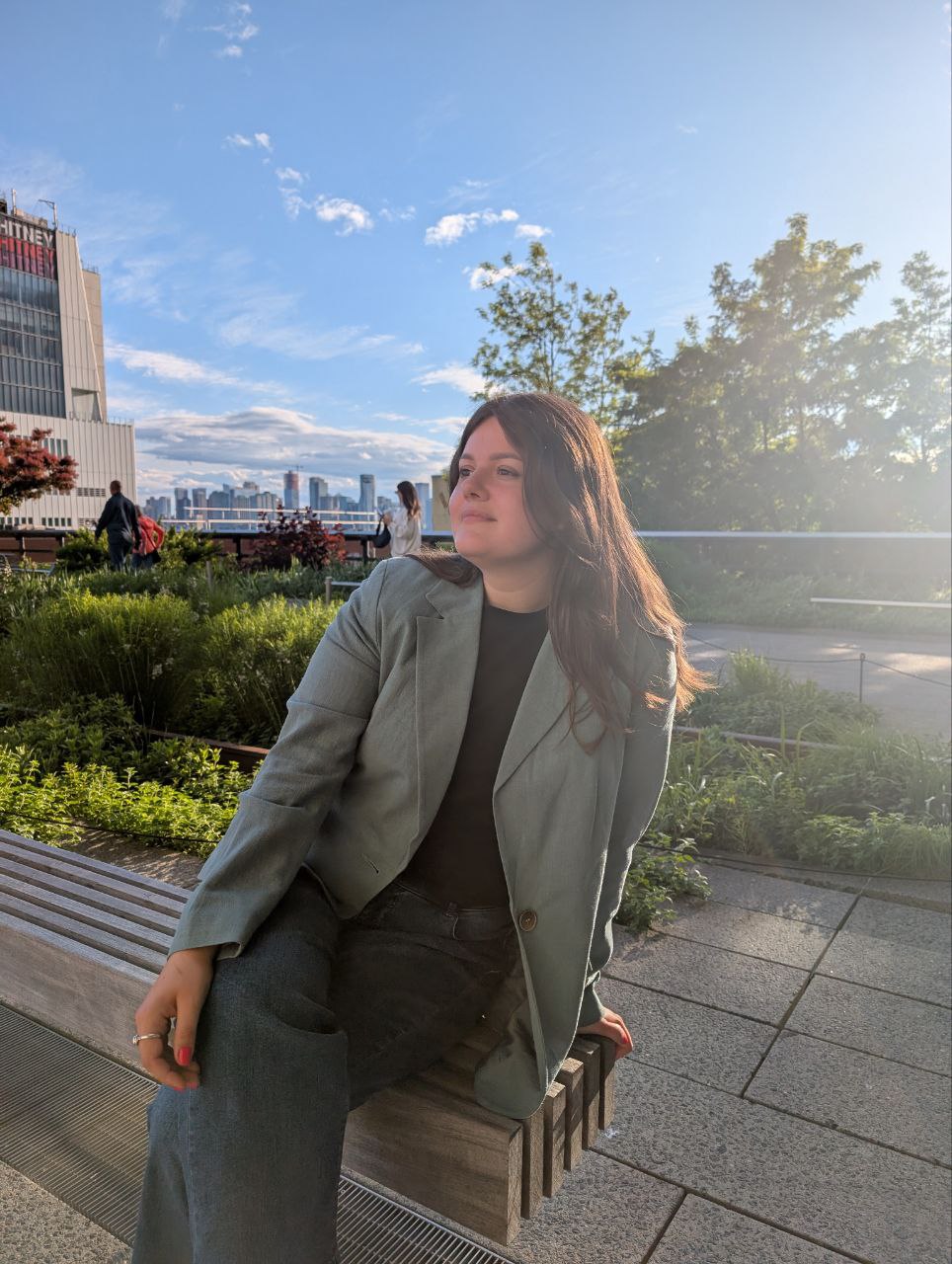
“For me,” she says, “the human scale is not only about dimensions. It is about what a person sees, touches, smells, and understands while moving through the space — the planting at eye level, the active façade, the bench near the entrance, the terrace visible from the street. It creates a visual connection with the surroundings, adds a horizontal layer that supports the human scale, and invites people to wonder what is happening inside.”
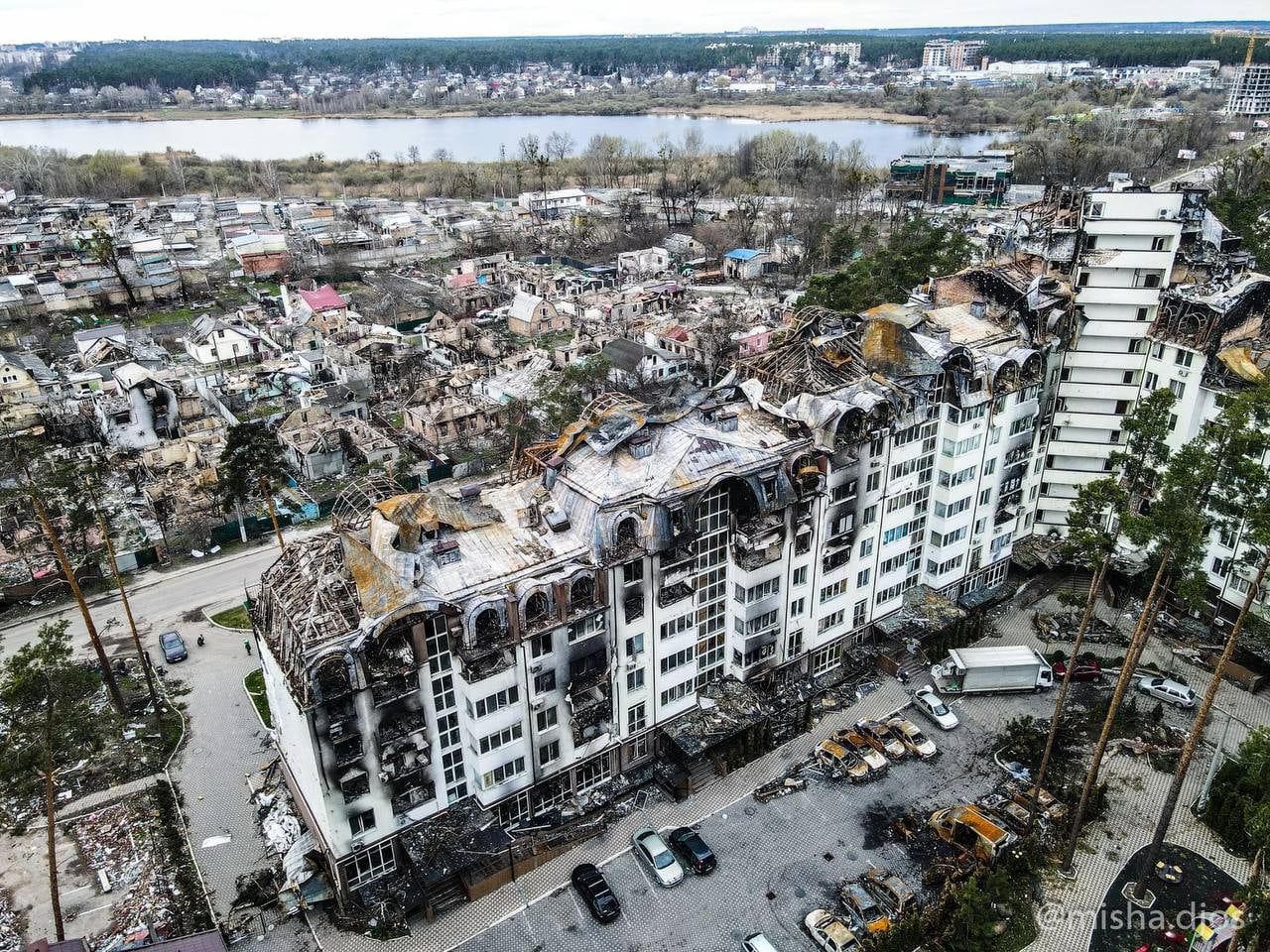
Wreckage and rebuilding have been another dialectic dominant in our minds, across a century so-far defined by climate ravages and military catastrophes, erasing and remaking whole cities and nations. Add to this the liminal stage and unexpected armistice between them: the temporary Garden we got back during the pandemic, with untended wilderness expanding, and wildlife roaming the highways and towns.
Having seen all these possible paths, are there ways to reconcile the demands of the market and the needs of living beings? Is there any picture of a more-perfect habitat with us in it? I sat down to a series of emails with Kate to discuss what’s looking good on paper and some visions for real life…
HILOBROW: Your bio notes your architectural background; was there a particular turning point of ideas/precedents you related to, areas you were finding your interest/expertise gravitating more toward, etc. that inspired you to transition to landscape?
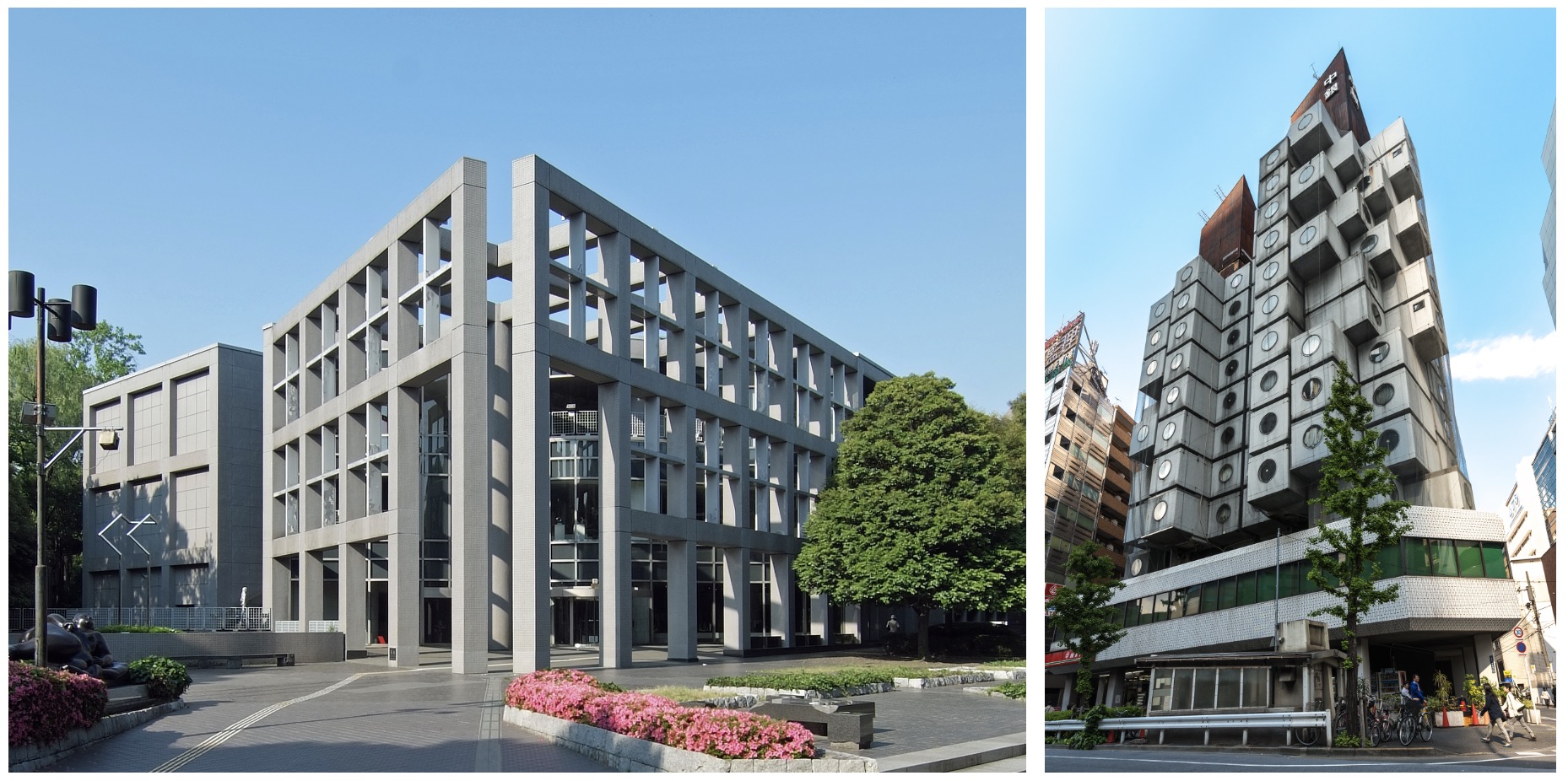
MAKSIMENTSEVA: I first became interested in landscape design while studying the work of Kisho Kurokawa and his philosophy of symbiosis, which sees architecture not as a separate element of the environment, but as part of a larger organism, where people, nature, and the built environment come together in one mutually enriching system.
I was fascinated by how, even in traditional Japanese architecture, landscape does not exist separately. It harmoniously flows into the architectural space. It is visible from inside the building — it becomes part of your home.
My focus gradually shifted from architecture alone to the architectural environment, especially its natural component. I became interested in how green components can be integrated into architecture — vertical gardens, green terraces, urban farms, planted passages, elevated structures, even underground gardens.
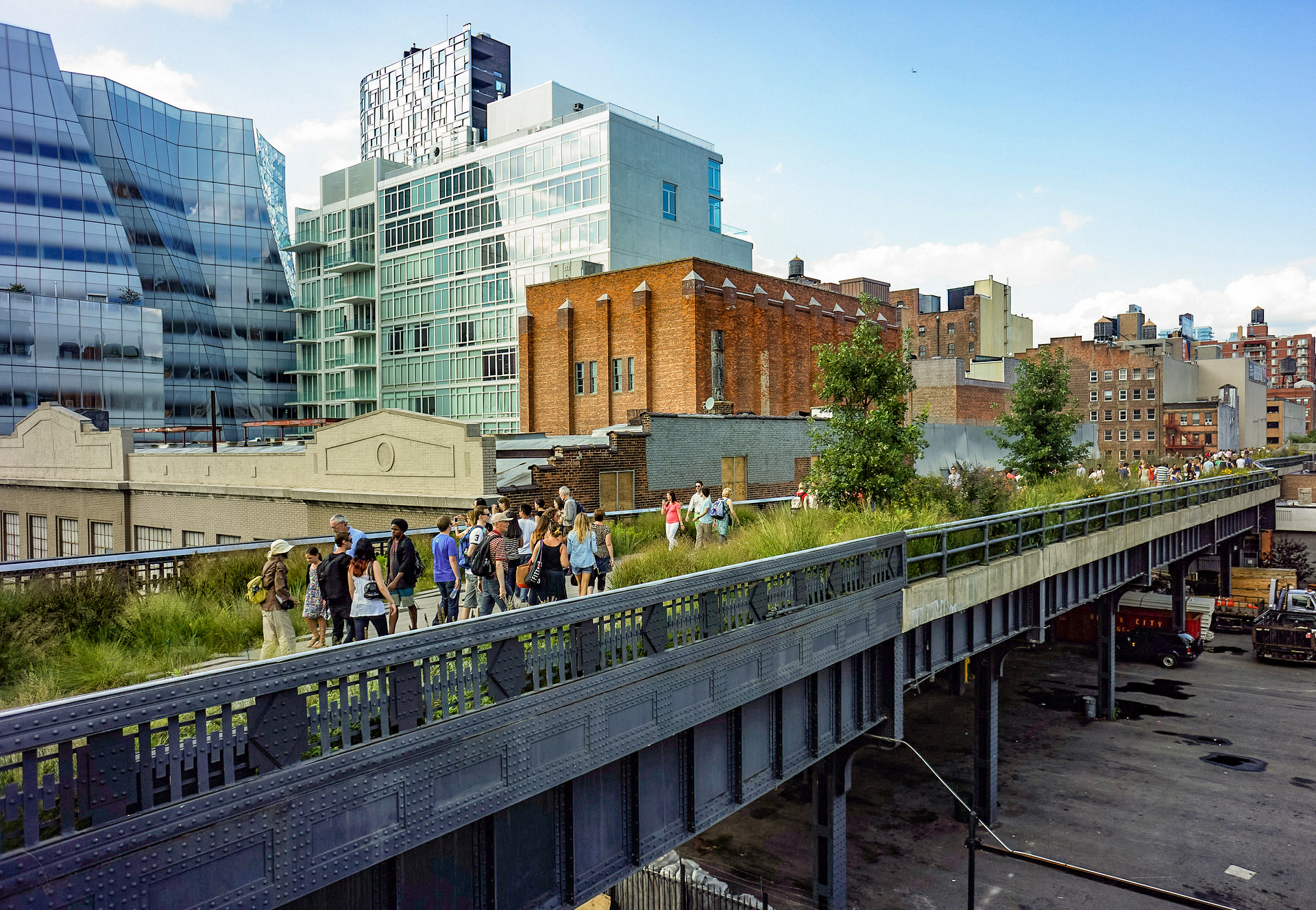
I still remember the first time I learned about High Line Park. The very idea of creating a public park on the site of a neglected industrial structure was fascinating to me. This reference became my North Star for many years, and it remains one today.
We can see a similar idea in Kingsborough Senior House. [It’s] an affordable senior housing development in Crown Heights, Brooklyn, designed by MASS and MARVEL (architecture) and Starr Whitehouse (landscape architecture). I worked on the project as the lead landscape designer for public spaces, including the ground-floor community space, the teaching kitchen patio, the publicly accessible terraces, and the rooftop with its community garden and social spaces.
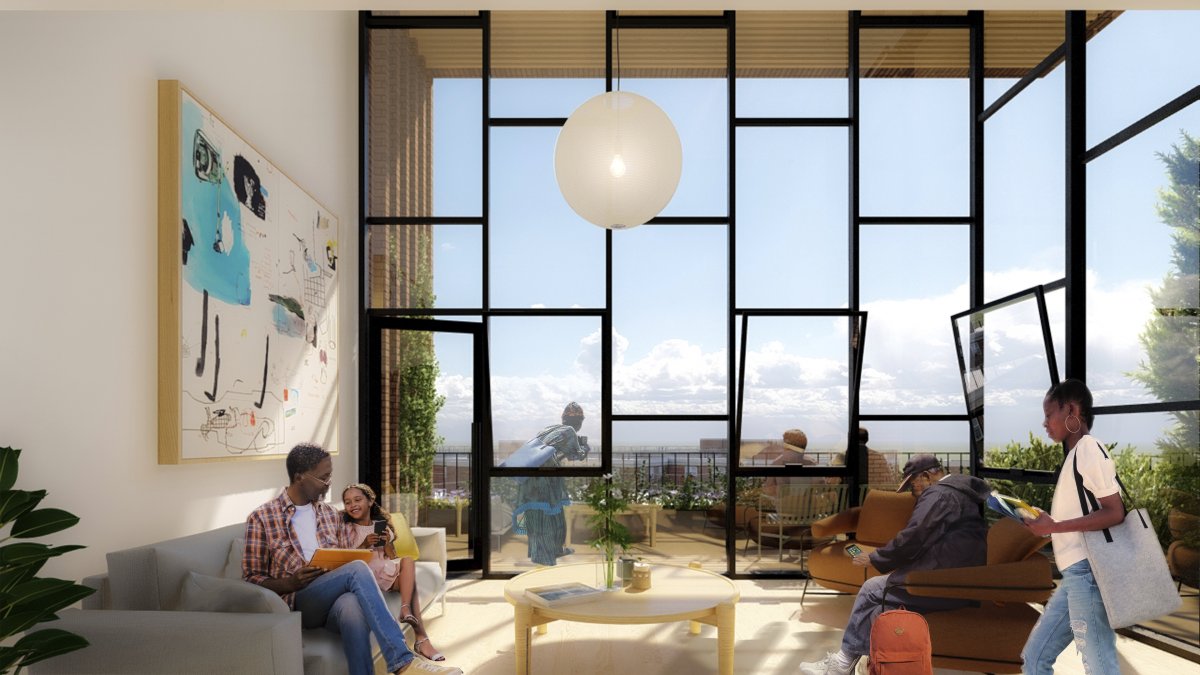
There, the architectural volumes, together with the landscape design, create diverse spaces, experiences, and ways for people to interact with the site. Instead of creating an impenetrable tower, we tried to shape a welcoming, inviting environment — a place where people want to be and feel that the space is not foreign but created for them. Instead of isolating people from their environment, the project creates places for social interaction, connection to the land, and connection to the community.
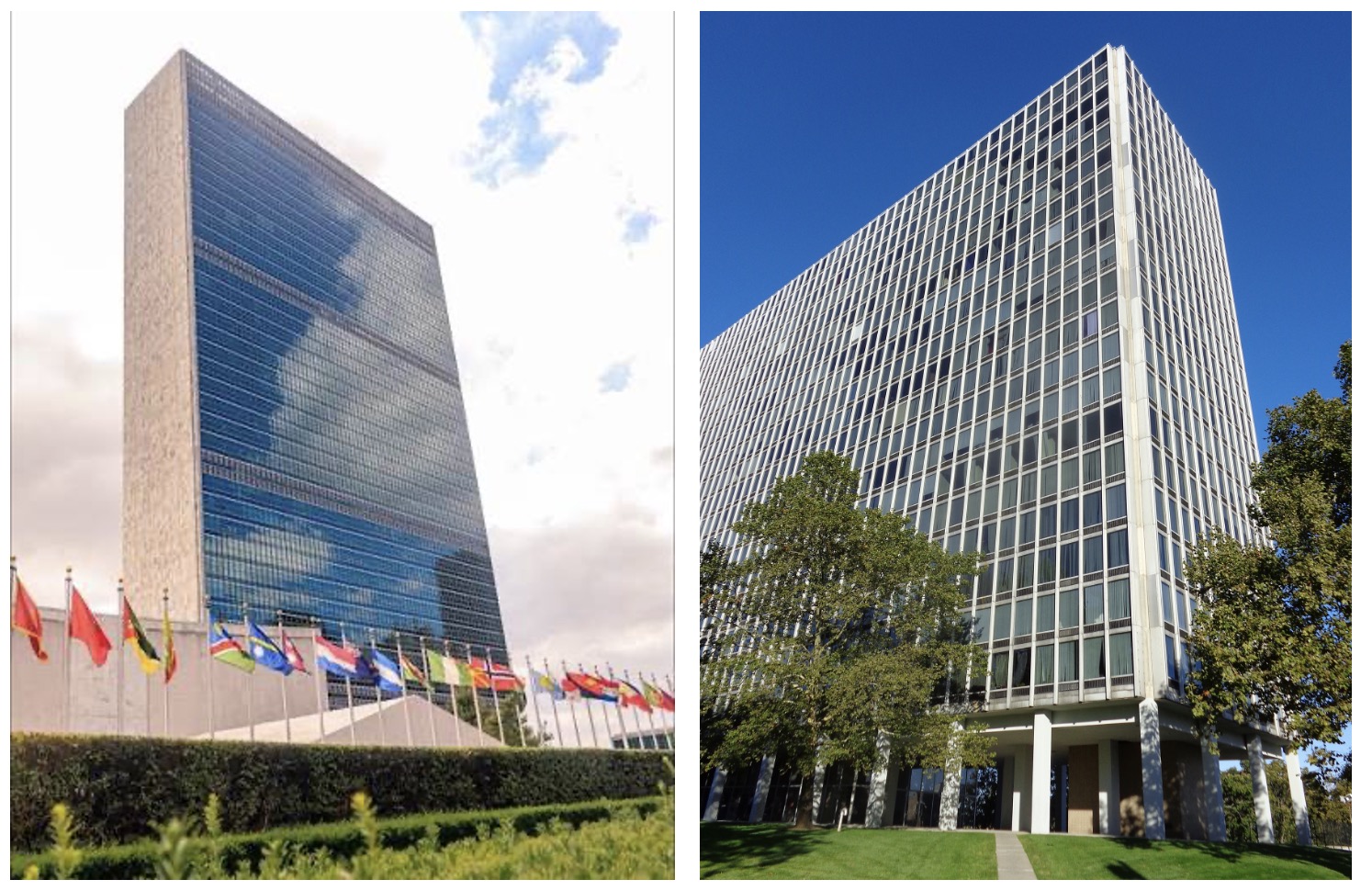
HILOBROW: I grew up with the optimistic geometries of the early 1960s, a lightness of all-window facades and sky-inspired colors before the steel-and-black-glass of more ’70s corporate castle-keeps set in… I know I have the decades a bit askew since the epitome of the former style would be the United Nations tower from c. 1952, but it seemed to be everywhere by the time I was little (including the buildings I lived in, like the Colonnade (by Mies) in Newark, NJ).
The Kingsborough project picks up this progression in the more 21st-century, playful fashion — not sublime towers but more human-scale blocks that embrace a dynamic asymmetry in window-placement, unexpected volumes carved out of the mass, airy struts that the building seems to float on, and stepped/zigzag footprints. This works in great duet with your environmental design since it creates so many spaces for light and terraces for greenery. The two together merge into a new kind of ornamentation, not of statuary and molding but shape and color and texture. Is welcome the message of new urban design now?
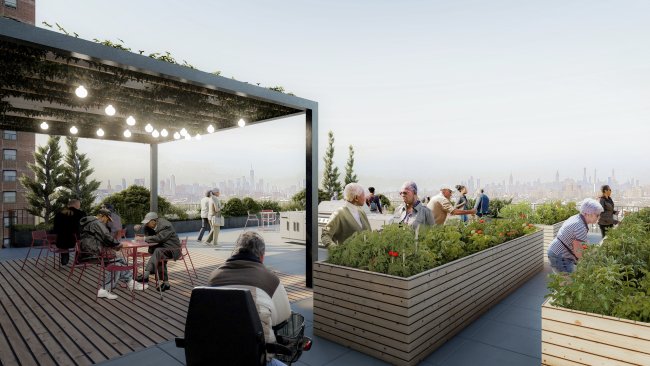
MAKSIMENTSEVA: I truly believe that our architectural environment is a reflection of people’s collective values — or at least, this is how it is meant to be. Over the past century, architects and planners have experimented a lot, elevating and prioritizing different elements: processes, functions, structures, industries, and vehicles. Beautiful large-scale master plans sometimes miss one important point: people are not birds — they cannot fly (yet) to see their beauty from above.
That is why, whenever I shape a masterplan into a balanced composition, I imagine who the final user is and what kind of experience they will have as they move through the space at eye level.
I believe that creating human-scale spaces is something we should continue to strive for, because this is what makes our cities livable. It defines who — or what — we are designing cities for.
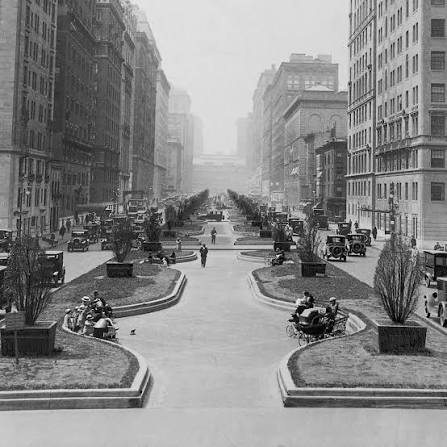
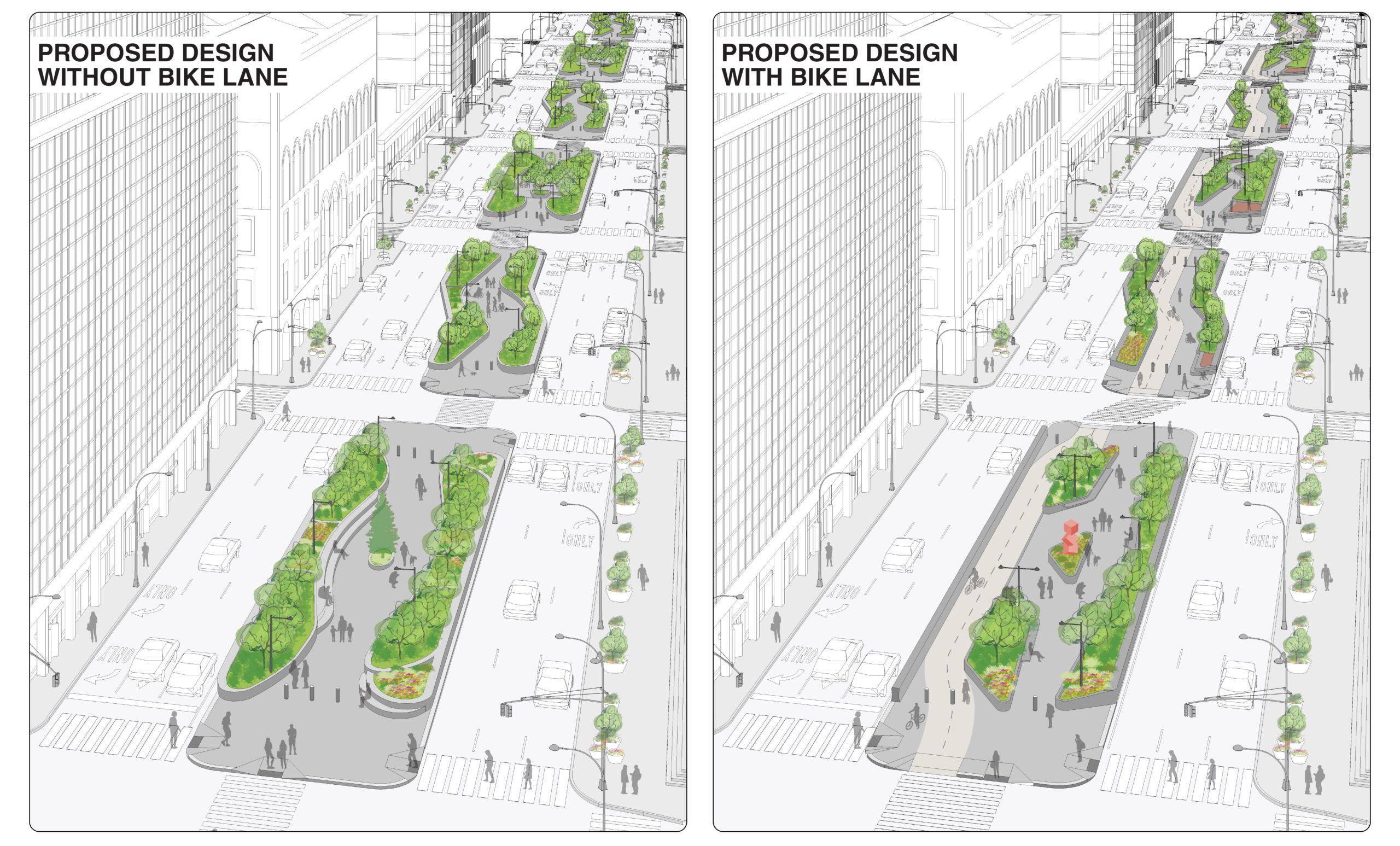
During my work on Park Avenue [per her current firm’s messaging, Kate “leads design visioning for NYC DOT’s Park Avenue Vision Plan, a project to transform New York’s premier financial corridor into a promenade of ecology, art, and social space”] it was fascinating to study how this iconic street has changed over time, reflecting different ways of living. Park Avenue used to be a park and a pedestrian promenade, which was narrowed in the 1920s as roadbeds were expanded and cars became the priority. Today, we are seeing Park Avenue’s appearance change again. In a way, we are bringing the “park” back to Park Avenue, which feels like an important step toward prioritizing pedestrians in our cities. It is an exciting and meaningful mission to be part of.
HILOBROW: Winston Churchill is credited with saying “We shape our buildings and afterward our buildings shape us”, which perhaps refers less to an individual imprint that architecture/landscape makes and more to collective symbolism and suggestion upon societies and decades — in what ways do you see urban environments influencing how those who move through them act and feel, and in what ways does the right urban design give expression to what the average pedestrian has been imagining and needing — or is the enterprise a mix of both?
MAKSIMENTSEVA: I grew up in a residential district of Kyiv, surrounded by typical Soviet housing from the 1960s. At that time, very few people were thinking about beauty, because the country was facing a housing crisis and urgently needed to provide homes for thousands of people. People, however, were very happy — compared to communal apartments, having their own apartment felt like a palace.
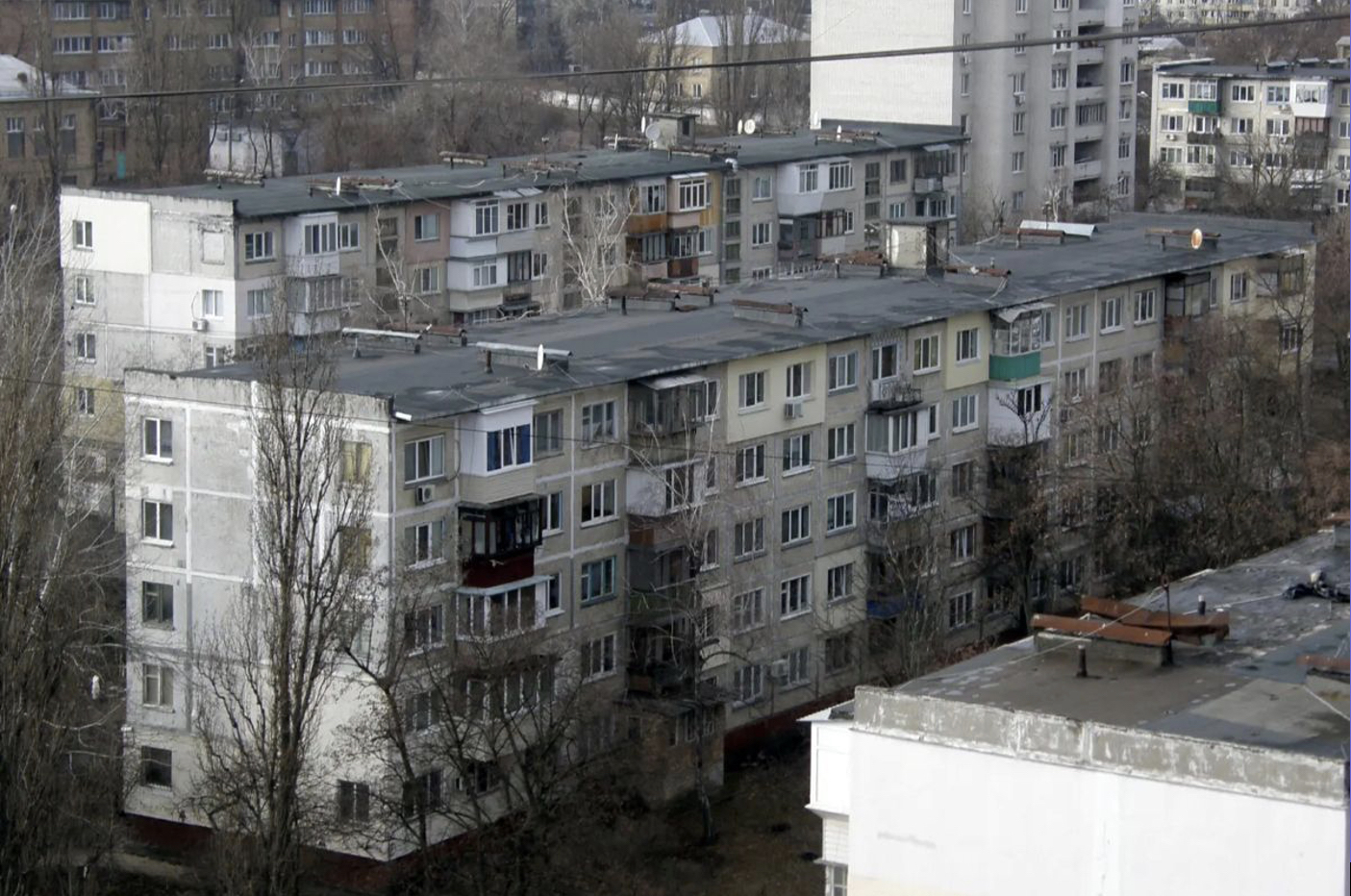
This type of housing does not even meet minimum contemporary design standards: the rooms are too small, there is not enough sunlight, and there is no inclusivity. Nevertheless, I think Eastern Europe and the post-Soviet space in general are known for this kind of typical, depressing housing environment. I can say that although these views are familiar to me, they still create a permanent sadness, a sense of hopelessness, and an existential crisis. I know that some people see a certain aesthetic or romanticism in it, but only because they did not live there.
Of course, this was also influenced by broader ideas of modernism in architecture, such as Le Corbusier, and in urban planning more generally — ideas whose consequences we are still dealing with today. This architecture became a symbol of erasing human individuality in favor of the state, which defines who you are allowed to be. Administrative buildings, by contrast, are massive and brutal, with a superhuman scale, directly showing that you are only an insect within this mechanism.
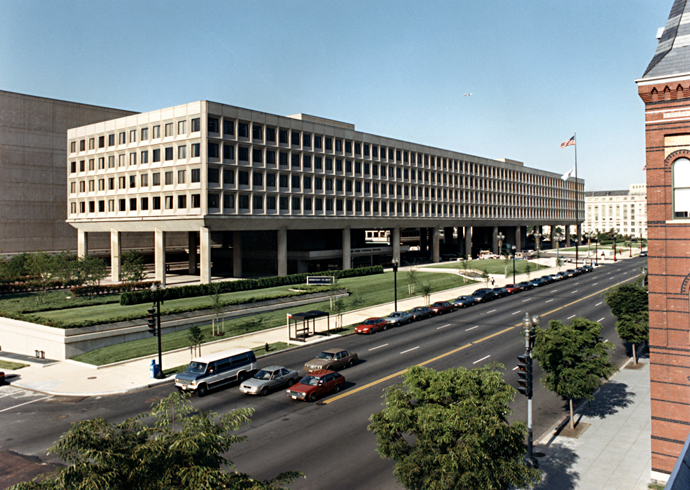
Huge spaces between buildings, the priority given to cars, long distances, and the fragmentation of the city into functional zones — all of this led to the loss of human scale, daily internal migration between different parts of the city, an overloaded transportation system between home and work, uneven development of different urban areas, and unequal access to green infrastructure. It is interesting to think now that even the French boulevards, which we all love so much today and which are so beneficial to society, once also served to strengthen control over the masses [broad streets are harder for dissenters to barricade, as noted here].
For me, Colin Ellard’s book Places of the Heart became an interesting source of understanding the influence of public space on us. He refers to the evolutionary human ability to evaluate space — we need only a fraction of a second to decide whether we want to be in a place. The best condition is a combination of feeling protected while also being able to observe what is happening around us. By our nature, we seek connection with natural elements, which reduces stress and improves concentration. Our brain is constantly seeking sensory variety; monotony exhausts and isolates us from the environment.
HILOBROW: You’ve had close contact with and extensive conceptualizing around the remains of both modern-brutalist and classic architecture too…
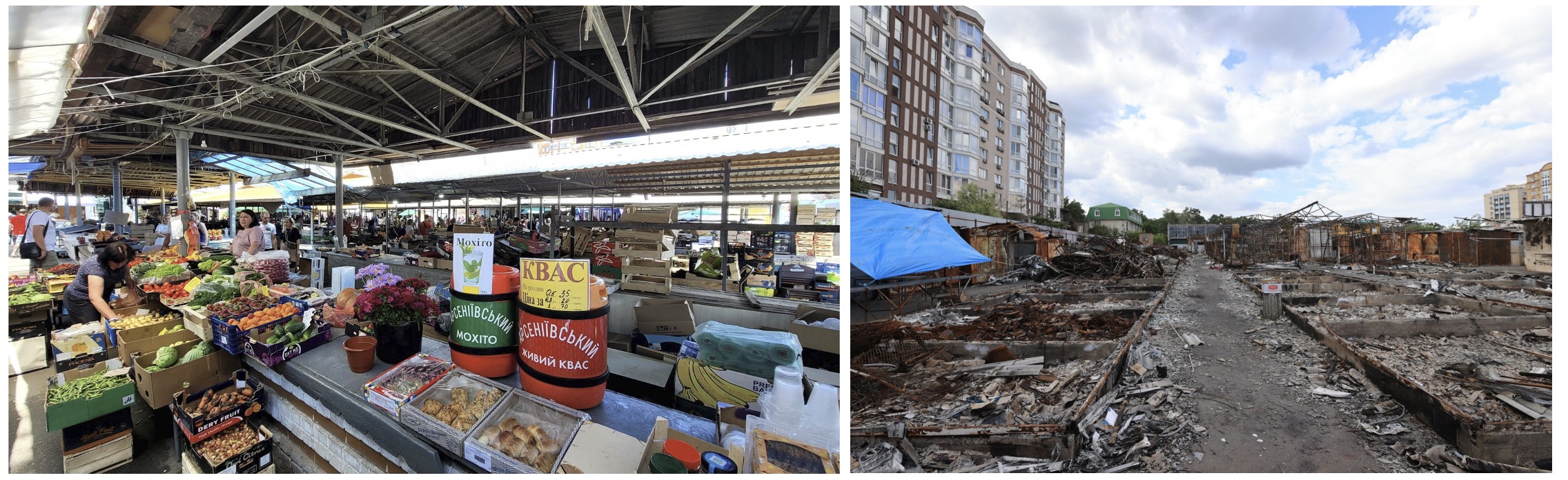
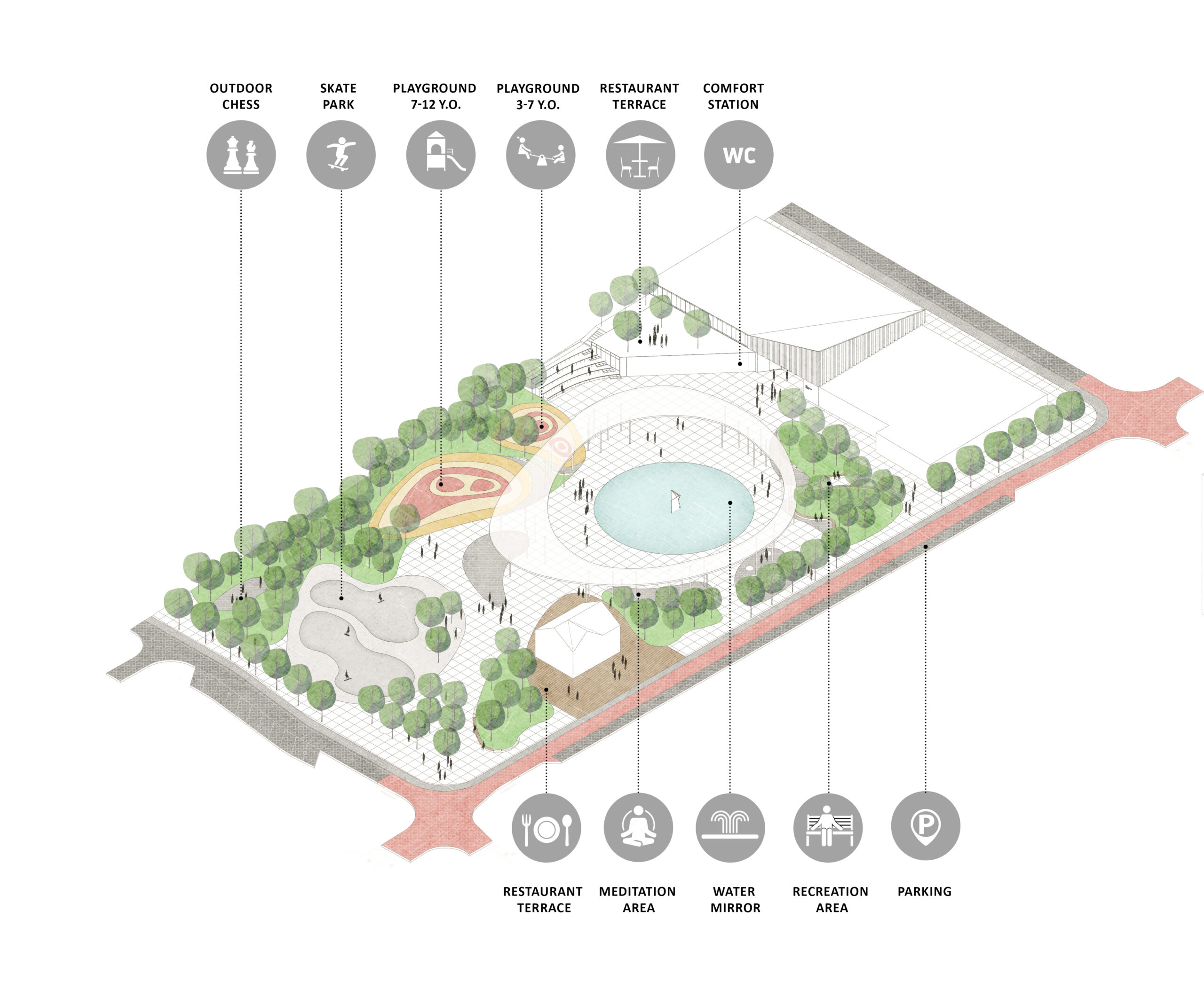
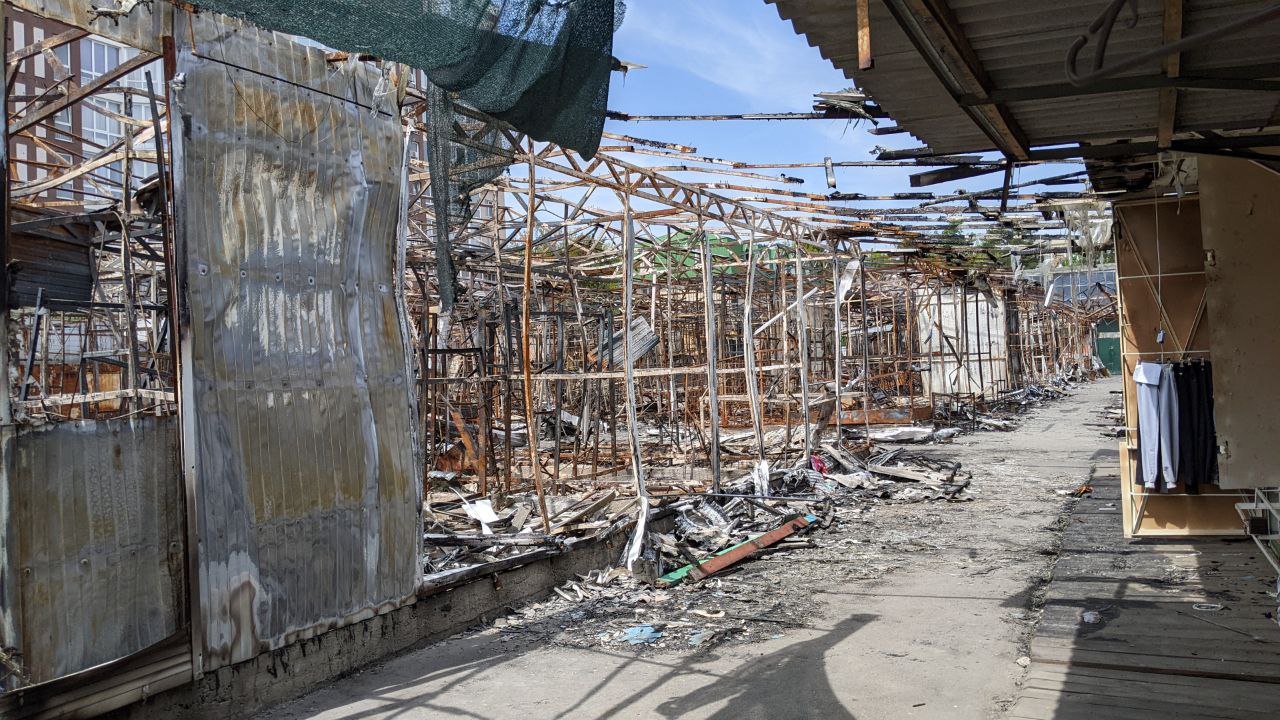
MAKSIMENTSEVA: In the summer of 2022, I participated in the volunteer project, Irpin Reconstruction Summit. My team’s proposal for the reconstruction of the local market won first place. Our landscape design concept proposed creating a public park on the site of the burned market. The central element was a large circular pergola that would embrace visitors, creating a sense of safety and bringing people together. At the center of the composition, I placed a reflecting pool and a symbolic sculpture mirrored in the water — a symbol of hope for a better future while preserving a deep memory of our past.
The competition also included proposals for the reconstruction of cultural institutions, educational facilities, and public spaces damaged by the war. It was fascinating to see the different approaches. Some participants viewed reconstruction as an opportunity to create entirely new and improved buildings, while others sought ways to memorialize national tragedy and history through architectural imagery — sometimes symbolic, sometimes quite literal.
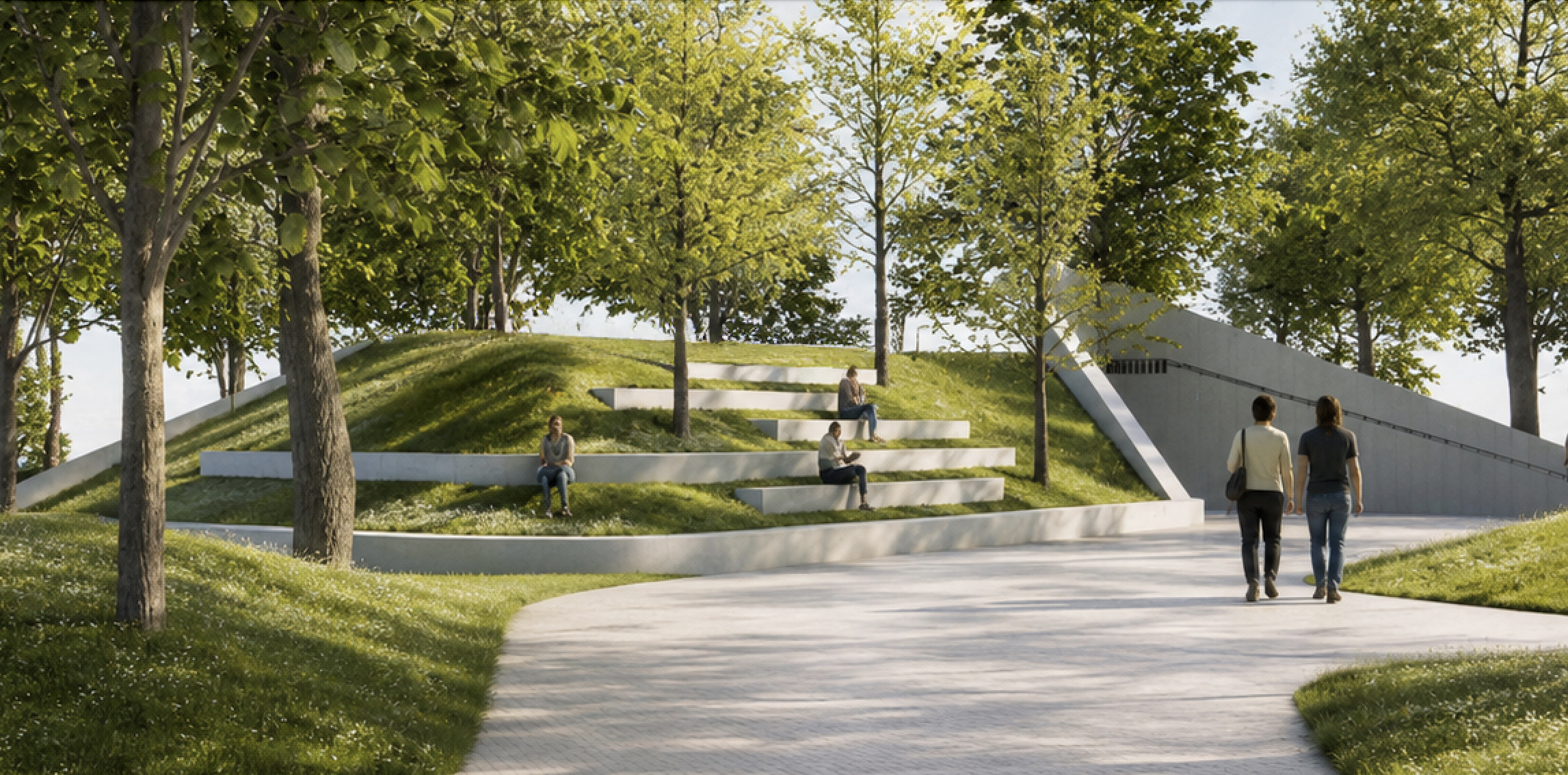
During my work on another residential project in Irpin, one of my first tasks was designing a shelter. The idea was to create an architectural object that blends into the landscape and serves as a bomb shelter during air raids, but transforms into an amphitheater when it’s safe. It was a very unusual design challenge — trying to humanize something so frightening while still creating a space that benefits the community.
That experience made me think more broadly about what has happened to public spaces in Ukraine during the war. From a safety perspective, public spaces are often places people should avoid. But people’s need for them hasn’t disappeared — if anything, it has become even stronger. During constant stress and uncertainty, public spaces become places for social connection, mutual support, physical and mental well-being, local businesses, and simply continuing everyday life.
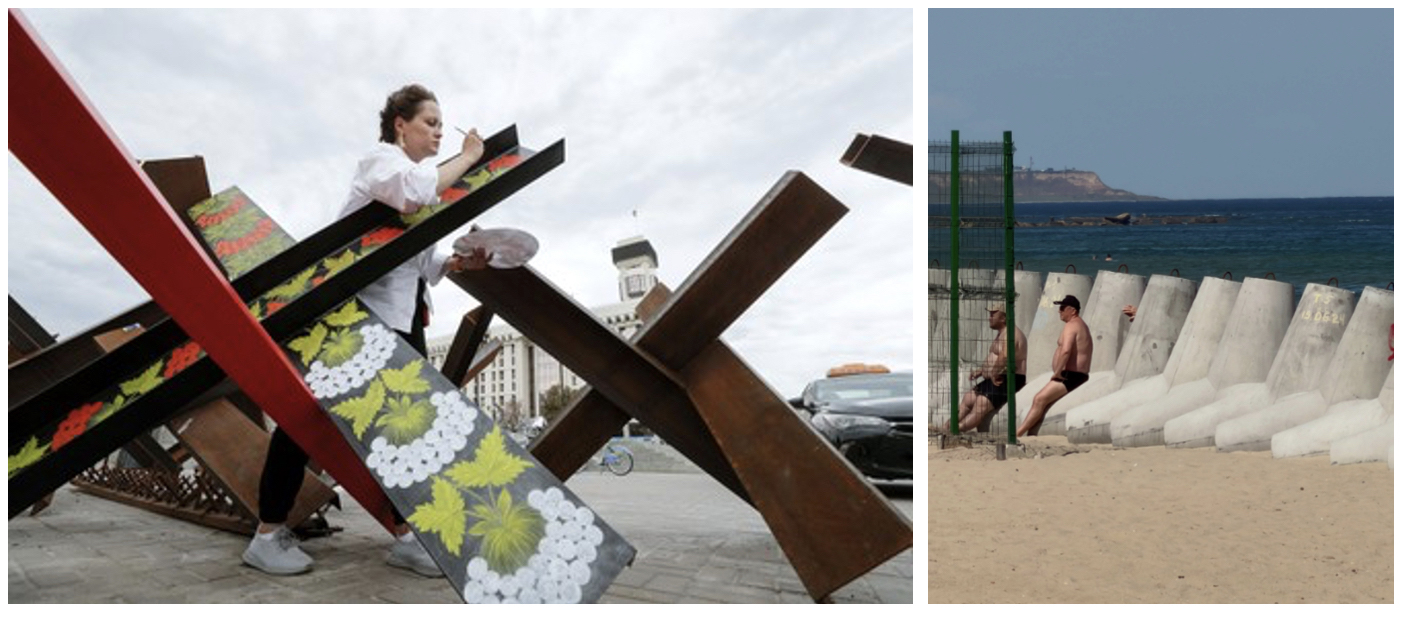
It’s also interesting to see how elements that were never intended to be part of the urban landscape have become integrated into it. Protective structures around monuments, anti-tank hedgehogs, sandbags, and concrete barriers have become familiar parts of city streets. At the same time, new temporary and permanent shelters are being introduced into parks, plazas, and public spaces so people can continue their daily activities more safely.
[This] reminds me of another example, Albania, where thousands of Cold War bunkers gradually became part of the landscape and, in a strange way, even symbols of the country. I find it fascinating how infrastructure created for conflict can eventually become embedded in a place’s identity, and I wonder whether some of the same questions will shape the future of Ukrainian cities.
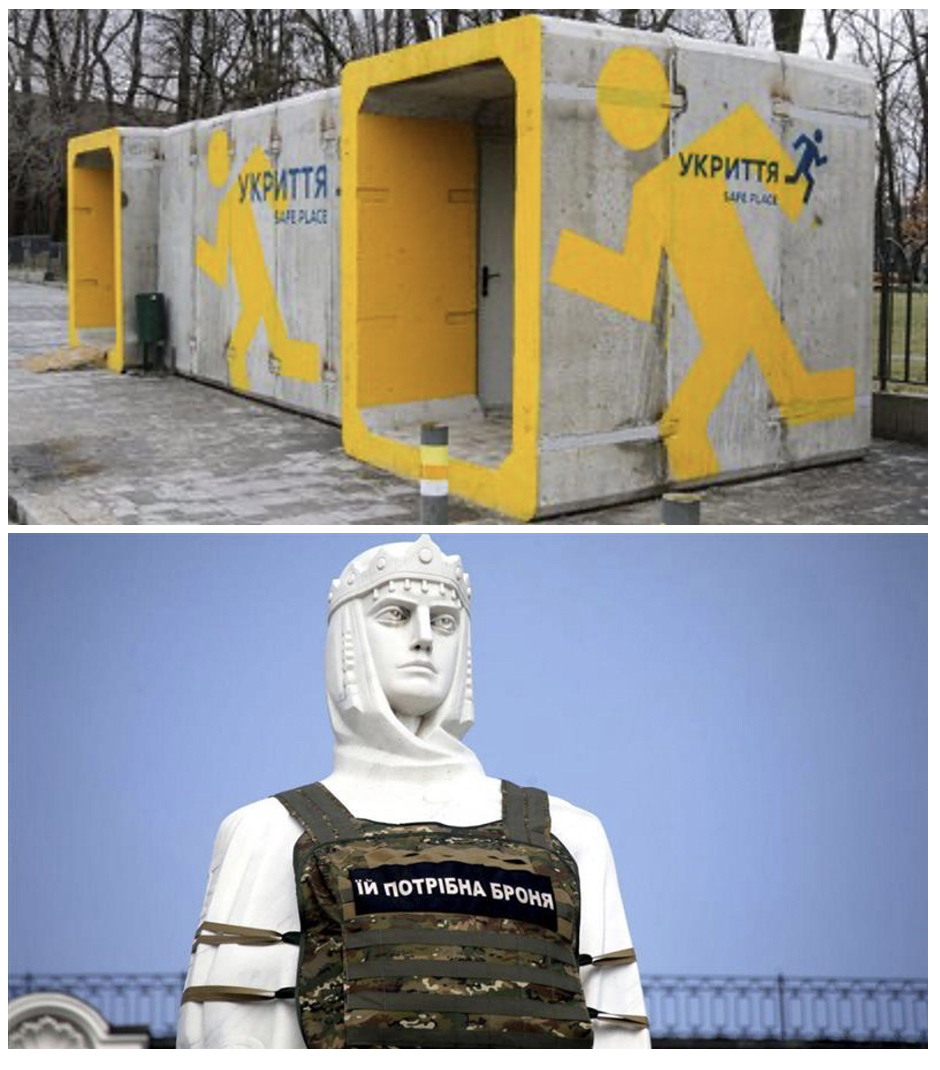
HILOBROW: Wreckage itself strangely seems to be an aesthetic of the 21st century in the West, with some buildings in New York seeming to emulate disassembly, a literally exploded view. I’ve wondered if this shows a subconscious imprint of 9/11, so it’s illuminating to see how, in a country that is experiencing a 9/11 almost every day like Ukraine, the trend is instead toward resiliency and what can remain intact and elegant. How does architecture (and landscape) intersect with public psychology?
MAKSIMENTSEVA: It is always difficult to balance the desire to memorialize a traumatic event with the risk of continuously retraumatizing society. Collective trauma undoubtedly shapes how we perceive things. Some events change people and the world forever. We become sensitive to images and symbols that previously carried no particular meaning. As designers and planners, we also learn from tragedies, implementing changes in technologies, materials, and design approaches to prevent past mistakes.
In Ukraine, life has changed forever for most people. The idea of home as a [sanctuary] no longer works when your entire life and all your belongings can turn into dust in a matter of seconds. Many Ukrainian cities proved unprepared for wartime life because nobody had expected this scenario. As a result, there is a shortage of proper bomb shelters everywhere. People use building basements that were never designed for protection, or, if they have no access to them, sleep in bathrooms and hallways.
At the same time, familiar spaces have suddenly taken on a protective function. The Kyiv Metro, which during the day serves thousands of passengers and supports the city’s everyday life, transforms at night into a shelter from missile attacks. It becomes filled with people, pets, mattresses, and tents, then carries those same people back to schools, offices, and kindergartens the next morning.
I would like to see these elements of protection integrated into every new project, regardless of whether a country is at peace or at war. Every Ukrainian will tell you that life can be extremely unpredictable.
In the context of constant destruction, there is very little room for the memorialization or romanticization of ruins. Every destroyed building, every crater in the road, is a bleeding wound that people want to heal as quickly as possible.
HILOBROW: That shows an indelible imprint of time, though it raises an even broader question: to what extent is architecture/landscaping tied to its time, and to what extent is it a context-dependent aesthetic/conceptual experience? Humans have long been fascinated with surviving, ancient structures that they only belatedly, or never, learn the original purpose of. Does this argue for the sheer creativity of buildings and fancy of landscaping being at least equally as important as function?
MAKSIMENTSEVA: I believe aesthetic and functional qualities are both important, but societies often prioritize one over the other. That balance changes with time, context, and values.
I sometimes feel that aesthetics used to play a stronger role in the built environment. That may be why we have inherited so many buildings, objects, and landscapes that still fascinate us today and that we want to preserve.
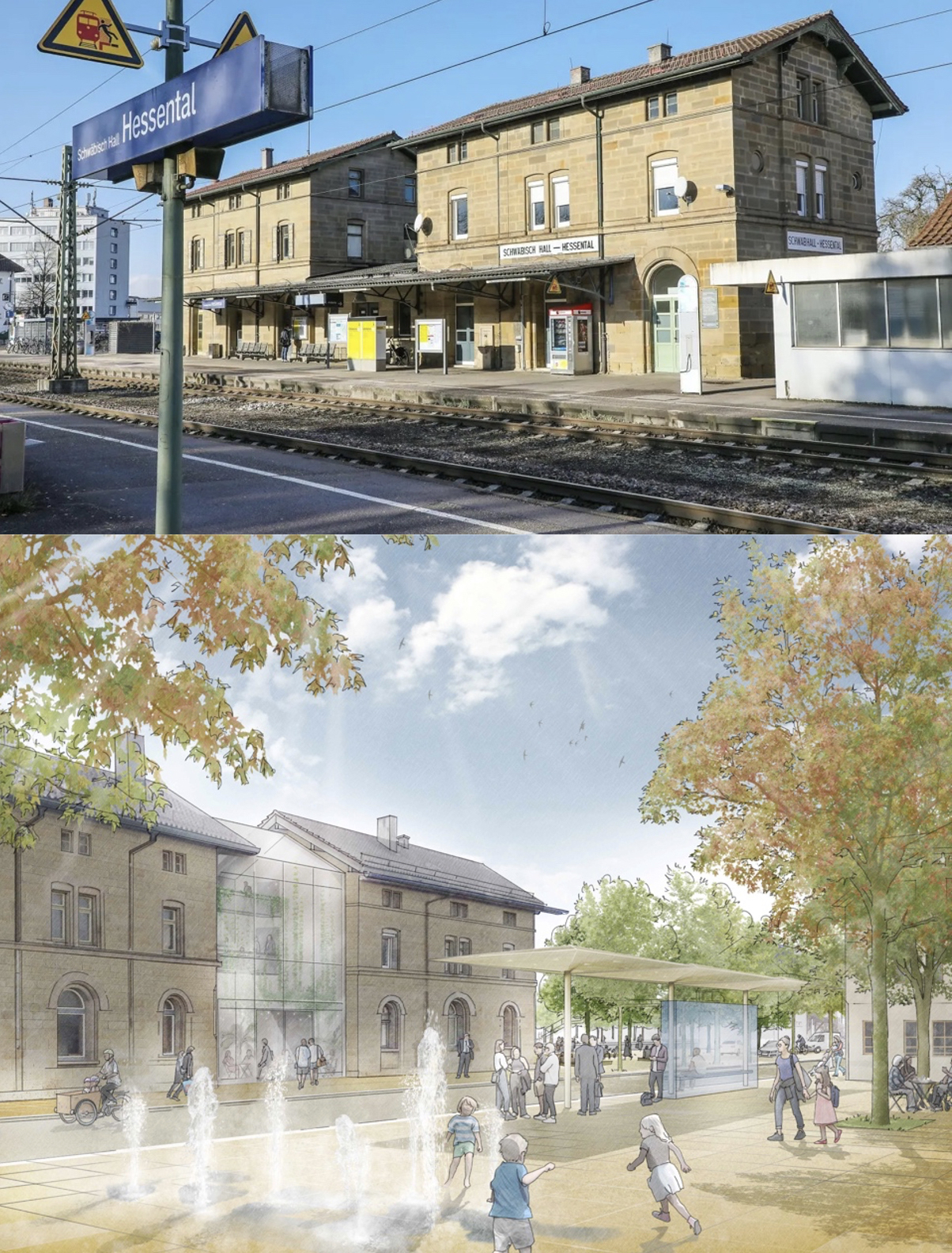
Today, we often seek an ideal balance among cost-efficiency, appearance, and measurable benefit in everything we create, and that does not always leave much room for experimentation. Perhaps that is one reason why so many cars, phones, and apartments can start to look almost the same. But people often love imperfect things — they make us happy. Imperfection can make a place feel more human, more personal, and more alive.
In any case, I feel that life moves much faster than it used to, which makes it a real challenge to create something that can resist time. I am not sure what is more resilient — function or beauty. Probably both are at risk :)
But there is one incredible thing about landscape design: while most built structures become weaker over time and can lose their relevance, landscapes grow. They mature, become more resilient, and often become more beautiful. That is what truly inspires me in my work.
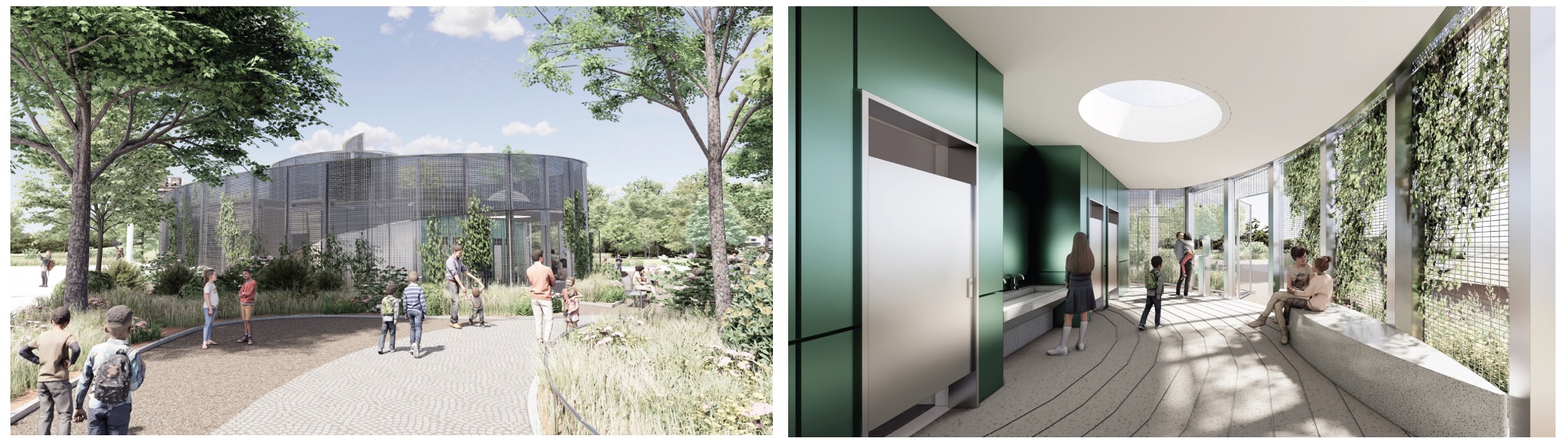
HILOBROW: I’m curious about how many projects you join after the built environment is designed, and how often you are part of the conceptual team from the start? And in either case, do your ideas always generate from the spaces and shapes that are there for you to work with, or are there concepts you keep in your head for projects that might one day suit them? (I guess it’s a process that has some of the same reactivity and accommodation we see in natural growth itself…)
MAKSIMENTSEVA: On a certain level, this absolutely happens, and most often it applies to specific design elements. Consciously or subconsciously, you might see something somewhere or learn something new, and it stays in your mind, waiting for the right conditions to take shape in reality. The scenario in which I design from the earliest conceptual stage remains the most common for me. I see any design process as the layering of different systems, with context as one of those layers.
For me, the process rarely begins with form. First, I try to think about the place as an overall feeling and as an experience that, as I imagine it, a person will have within it. From that, the general conceptual assignment of different functions to different parts of the site begins to take shape, and only later is it translated into forms and lines. This is my favorite part of the process. Strangely enough, it can be unpredictable, and it is also the most creative stage. I always make sketches by hand, because that gives me the best sense of space and control over the character of the lines.
There are days when nothing comes together, and there are days when inspiration appears, and everything falls into place naturally and harmoniously. When I sit down at the table, I never know what I will stand up with. So, in a way, this process is always an experiment and an improvisation, unique to each project.
MORE POSTS by ADAM McGOVERN: OFF-TOPIC (2019–2026 monthly) | textshow (2018 quarterly) | PANEL ZERO (comics-related Q&As, 2018 monthly) | THIS: (2016–2017 weekly) | PEOPLE YOU MEET IN HELL, a 5-part series about characters in McGovern’s and Paolo Leandri’s comic Nightworld | Two IDORU JONES comics by McGovern and Paolo Leandri | BOWIEOLOGY: Celebrating 50 years of Bowie | ODD ABSURDUM: How Felix invented the 21st century self | KOJAK YOUR ENTHUSIASM: FAWLTY TOWERS | KICK YOUR ENTHUSIASM: JACKIE McGEE | NERD YOUR ENTHUSIASM: JOAN SEMMEL | SWERVE YOUR ENTHUSIASM: INTRO and THE LEON SUITES | FIVE-O YOUR ENTHUSIASM: JULIA | FERB YOUR ENTHUSIASM: KIMBA THE WHITE LION | CARBONA YOUR ENTHUSIASM: WASHINGTON BULLETS | KLAATU YOU: SILENT RUNNING | CONVOY YOUR ENTHUSIASM: QUINTET | TUBE YOUR ENTHUSIASM: HIGHWAY PATROL | #SQUADGOALS: KAMANDI’S FAMILY | QUIRK YOUR ENTHUSIASM: LUCKY NUMBER | CROM YOUR ENTHUSIASM: JIREL OF JOIRY | KERN YOUR ENTHUSIASM: Data 70 | HERC YOUR ENTHUSIASM: “Freedom” | KIRK YOUR ENTHUSIASM: Captain Camelot | KIRB YOUR ENTHUSIASM: Full Fathom Five | A 5-part series on Jack Kirby’s Fourth World mythos | Reviews of Annie Nocenti’s comics Katana, Catwoman, Klarion, and Green Arrow | The curated series FANCHILD | To see all of Adam’s posts, including HiLo Hero items on Lilli Carré, Judy Garland, Wally Wood, and others: CLICK HERE