
RECOVERED GROUND
By:
January 12, 2026
One in a series of occasional detours from Adam McGovern’s irregularly scheduled column OFF-TOPIC.
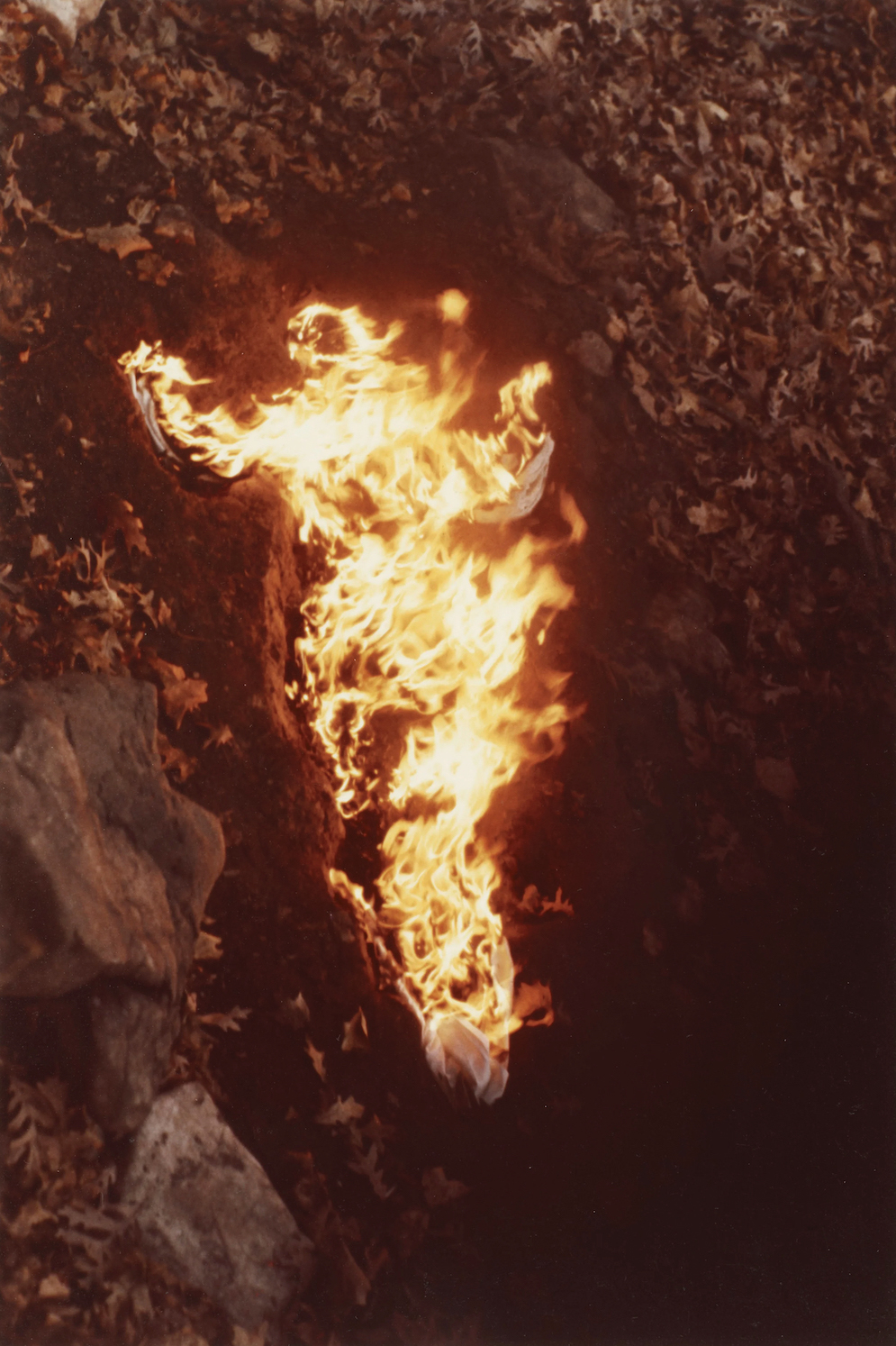
We see most most clearly what continually isn’t there. Ana Mendieta’s life was offered to the absent, the almost unnoticed. Like raindrops on a river, her eye caught each life’s momentary mark on the liquid surface of existence. Though not to “capture” any moment, but to set the next ones free. What comes after was her mission, though memory was her medium. The only lasting imprint of anything is on personal or collective recall, as landscapes shift, monuments decay and our archives of artificial permanence, from carved trees to stone tablets to bound volumes and limitless, ephemeral data, fade.
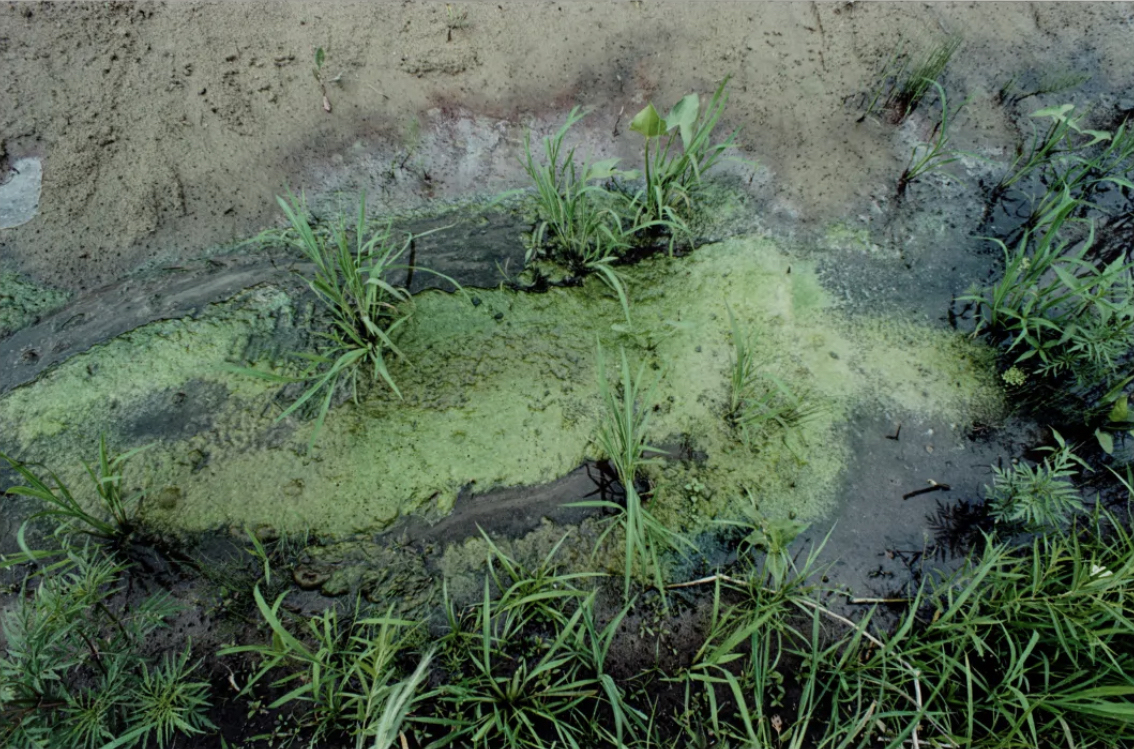
That transit was Mendieta’s territory. She would trace her own silhouette into the mud of a swamp, burn it into a tree trunk, mow it into a field, leave it marked, perishably, on the stone of caves. “Her” silhouette was conditional; no one could tell whose identity this was, and thus anyone could fit the contour; it was almost the shape of the air around a body, of the ocean in the instant before the body has moved on, or of a grave before its contents become once more continuous with the earth. It was like leaving a fossil for the future, like those footsteps we find pressed in the mud of millennia ago, except as befits an era of transience, of dying forests and rising seas, her marks were made to disappear, and by the time you were seeing her poignant photo documents, you knew they were already gone.
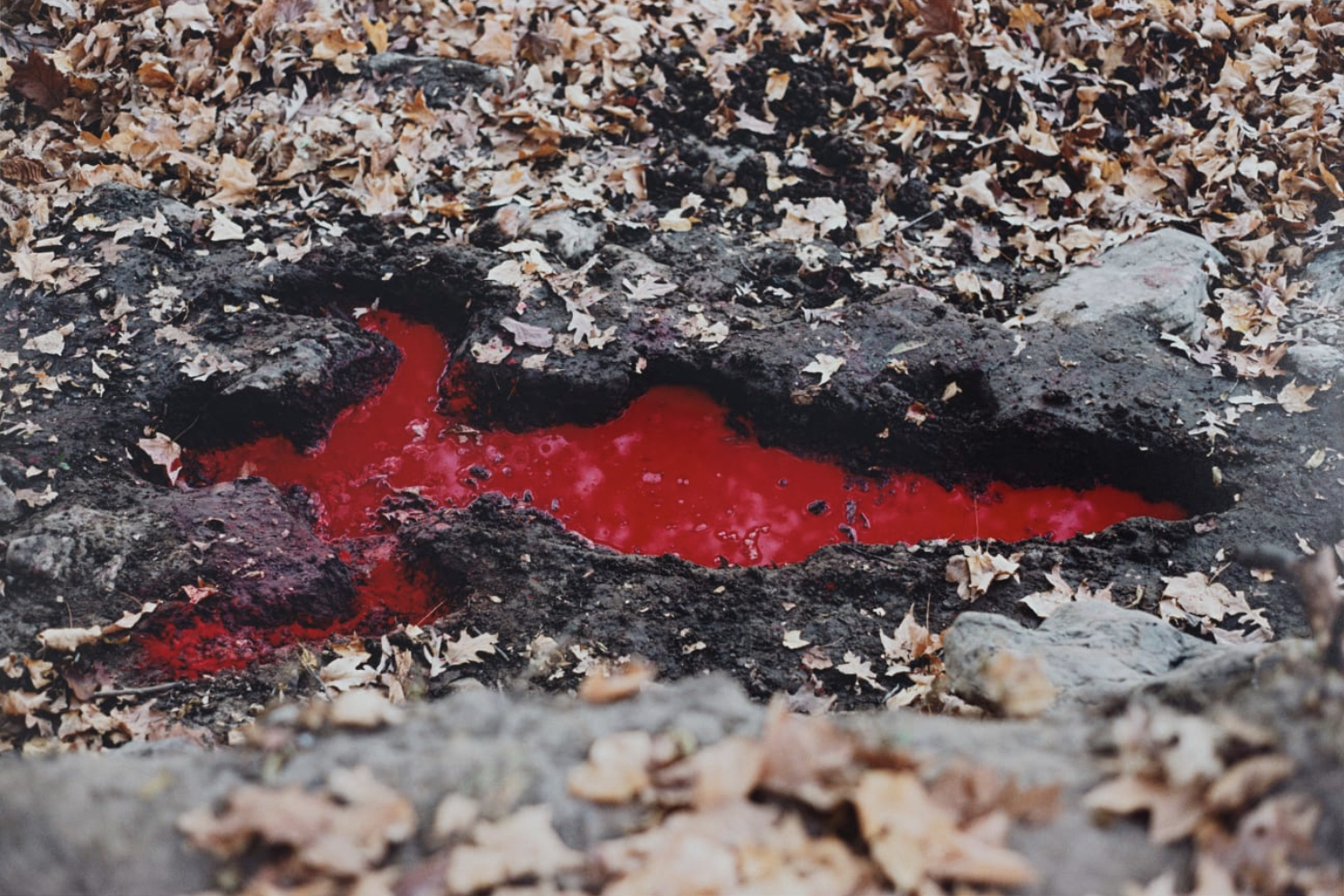
This disappearance was no tragedy; her carvings of herself into stone and soil were meant to heal over. Like the millions of years of pre-industrial humanity that took fairly from the world around them and made much fewer marks that are recorded, whose monument was the surviving earth itself, her model was the indigenous culture before human supremacy, and the natural processes waiting to reclaim the world.
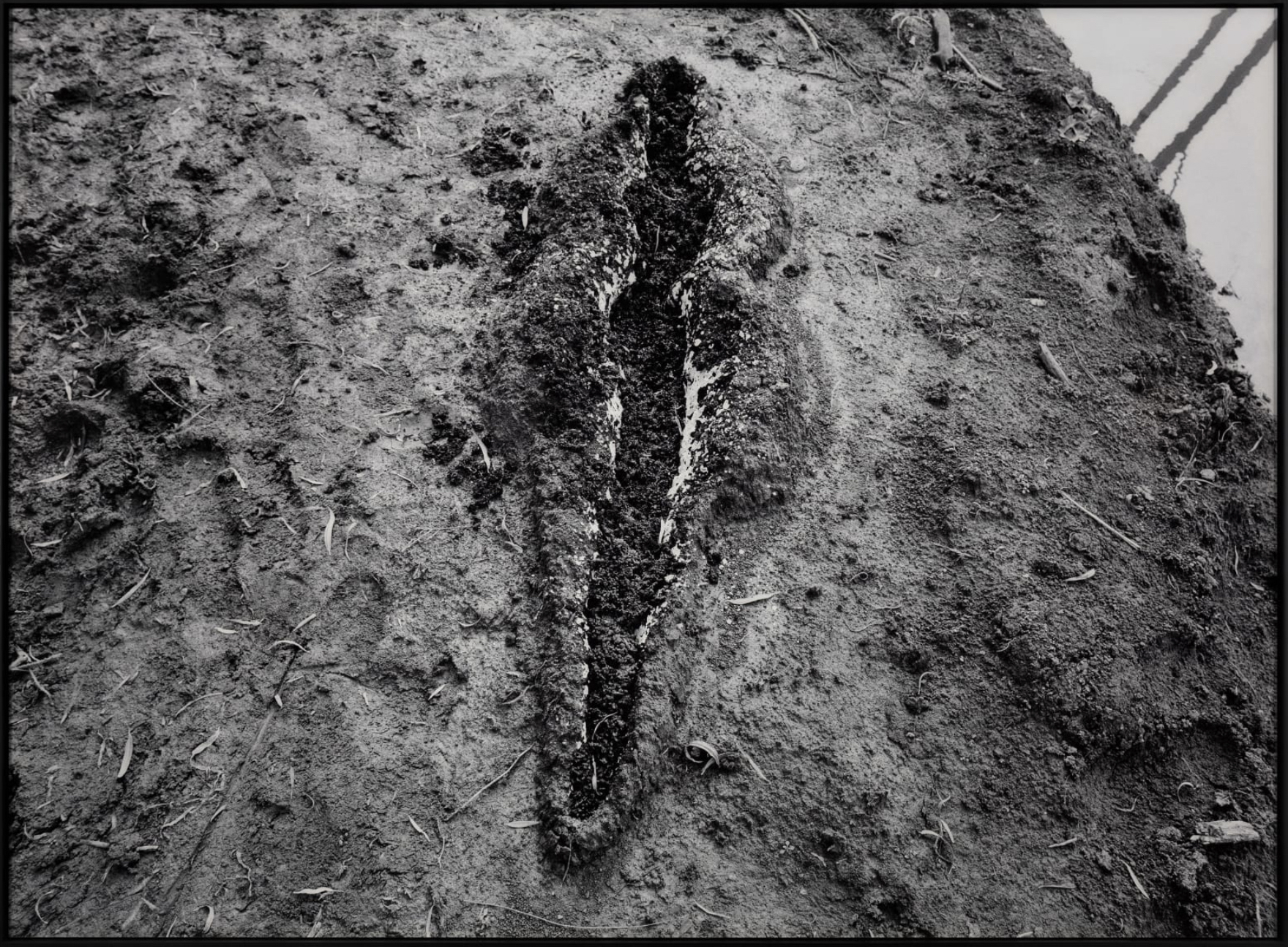
We are all sacrifices to the future, and what pours into the outline we take up in our time is the sum of a life lived meaningfully, and accumulated in our genetic lore. That frame, traced around Mendieta’s living form, was that of an ancient goddess or a reconceived crucifix, legs together and tapering and arms raised overhead, a posture of acceptance, or ascendance, depending on where you place the ground. Seeing it through Mendieta’s ambient camera, with no one visible to witness and centered on a space in the shape of a person, conveys an experience of remarkably egoless awareness, the sense of a vantage point with neither subject nor observer; existence’s original undifferentiated consciousness of itself.
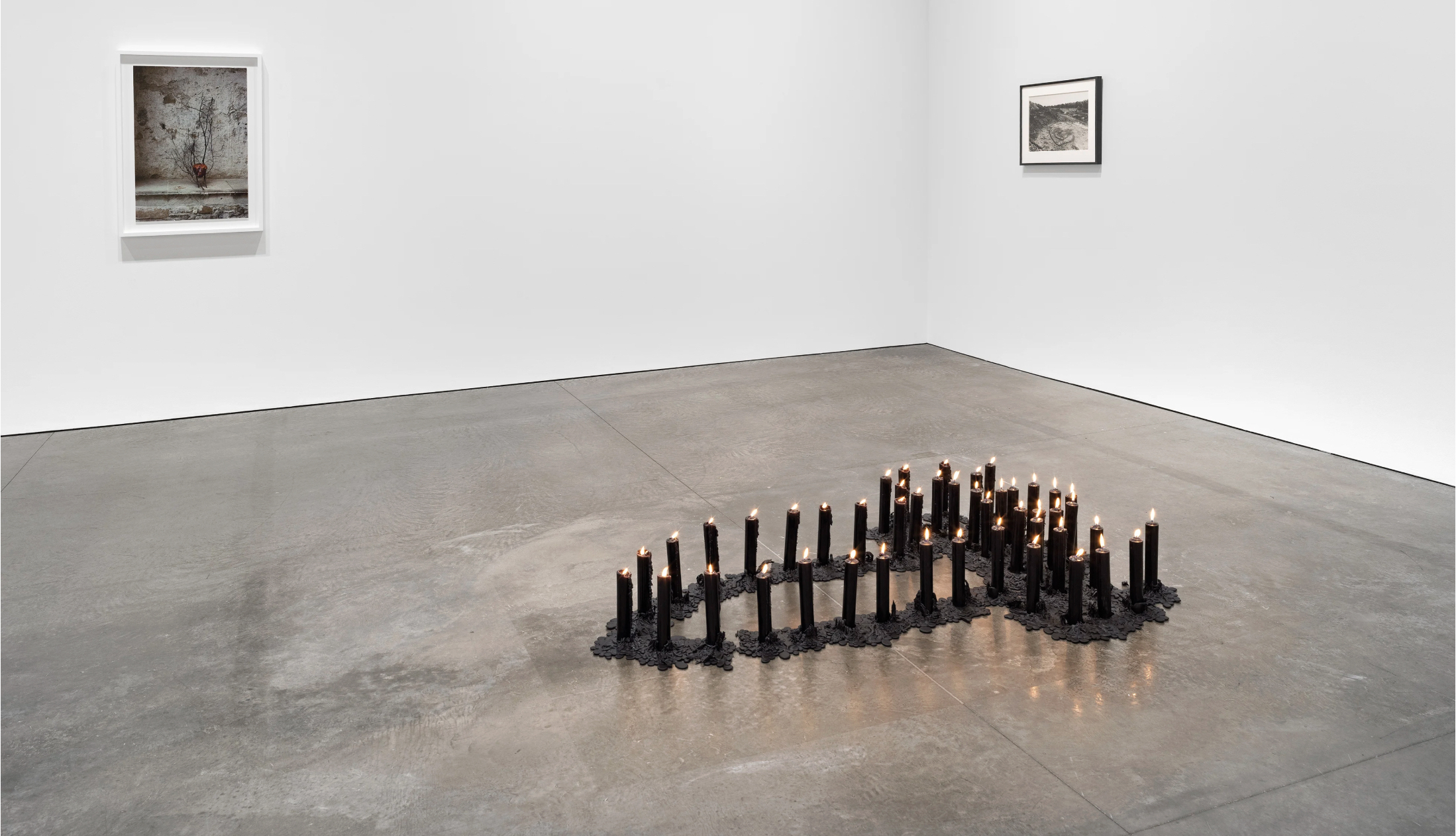
I’d never seen one of her pieces with the moment unfrozen, until I watched one burn away in a recent retrospective. A votive array of black candles, initially placed in the shape of her inclusive silhouette, was melting onto the floor of the gallery, replicating a mound of earth in its mass, while individual trickles incidentally sculpted themselves into a tangle of roots, or the organic circuitry of the mycelial network, the flows meeting up to form a shadow on the ground, the memorial consuming itself while raising up around the shape of a human body as if pressed into soil, a form resurrected in the transformed wax. I stepped toward the wide windows, reflections on a gloomy day making us appear to walk in midair over New York’s Broadway, short blocks from the same atmosphere she plunged through to a violent death at other hands 40 years before, her final cry ignored then and long forgotten now; I looked out on grime and graffiti accumulating onto the elegant building facades and rooftops, and writing the city into the past. Ana Mendieta’s echo reverberated to the beginning and the end of time, and she cast a shadow filled with light.
[Images (top to bottom): Alma, Silueta en Fuego, 1975; Untitled: Silueta Series, 1979; Silueta Sangrienta, 1975; Black Venus, 1980; Ñañigo Burial, 1976 (installation view, 2025); all photos © The Estate of Ana Mendieta Collection, LLC; all photos courtesy Marian Goodman Gallery except Alma…, courtesy Galerie Lelong]
MORE POSTS by ADAM McGOVERN: OFF-TOPIC (2019–2025 monthly) | textshow (2018 quarterly) | PANEL ZERO (comics-related Q&As, 2018 monthly) | THIS: (2016–2017 weekly) | PEOPLE YOU MEET IN HELL, a 5-part series about characters in McGovern’s and Paolo Leandri’s comic Nightworld | Two IDORU JONES comics by McGovern and Paolo Leandri | BOWIEOLOGY: Celebrating 50 years of Bowie | ODD ABSURDUM: How Felix invented the 21st century self | KOJAK YOUR ENTHUSIASM: FAWLTY TOWERS | KICK YOUR ENTHUSIASM: JACKIE McGEE | NERD YOUR ENTHUSIASM: JOAN SEMMEL | SWERVE YOUR ENTHUSIASM: INTRO and THE LEON SUITES | FIVE-O YOUR ENTHUSIASM: JULIA | FERB YOUR ENTHUSIASM: KIMBA THE WHITE LION | CARBONA YOUR ENTHUSIASM: WASHINGTON BULLETS | KLAATU YOU: SILENT RUNNING | CONVOY YOUR ENTHUSIASM: QUINTET | TUBE YOUR ENTHUSIASM: HIGHWAY PATROL | #SQUADGOALS: KAMANDI’S FAMILY | QUIRK YOUR ENTHUSIASM: LUCKY NUMBER | CROM YOUR ENTHUSIASM: JIREL OF JOIRY | KERN YOUR ENTHUSIASM: Data 70 | HERC YOUR ENTHUSIASM: “Freedom” | KIRK YOUR ENTHUSIASM: Captain Camelot | KIRB YOUR ENTHUSIASM: Full Fathom Five | A 5-part series on Jack Kirby’s Fourth World mythos | Reviews of Annie Nocenti’s comics Katana, Catwoman, Klarion, and Green Arrow | The curated series FANCHILD | To see all of Adam’s posts, including HiLo Hero items on Lilli Carré, Judy Garland, Wally Wood, and others: CLICK HERE