
OFF-TOPIC (75)
By:
April 5, 2026
Off-Topic brings you over-the-transom, on-tangent essays, dialogues and subjective scholarship on an occasional, impulsive basis. This early April, a conversation in unhushed tones about a new book passed along in hopes of a different, more perfect American Spring…
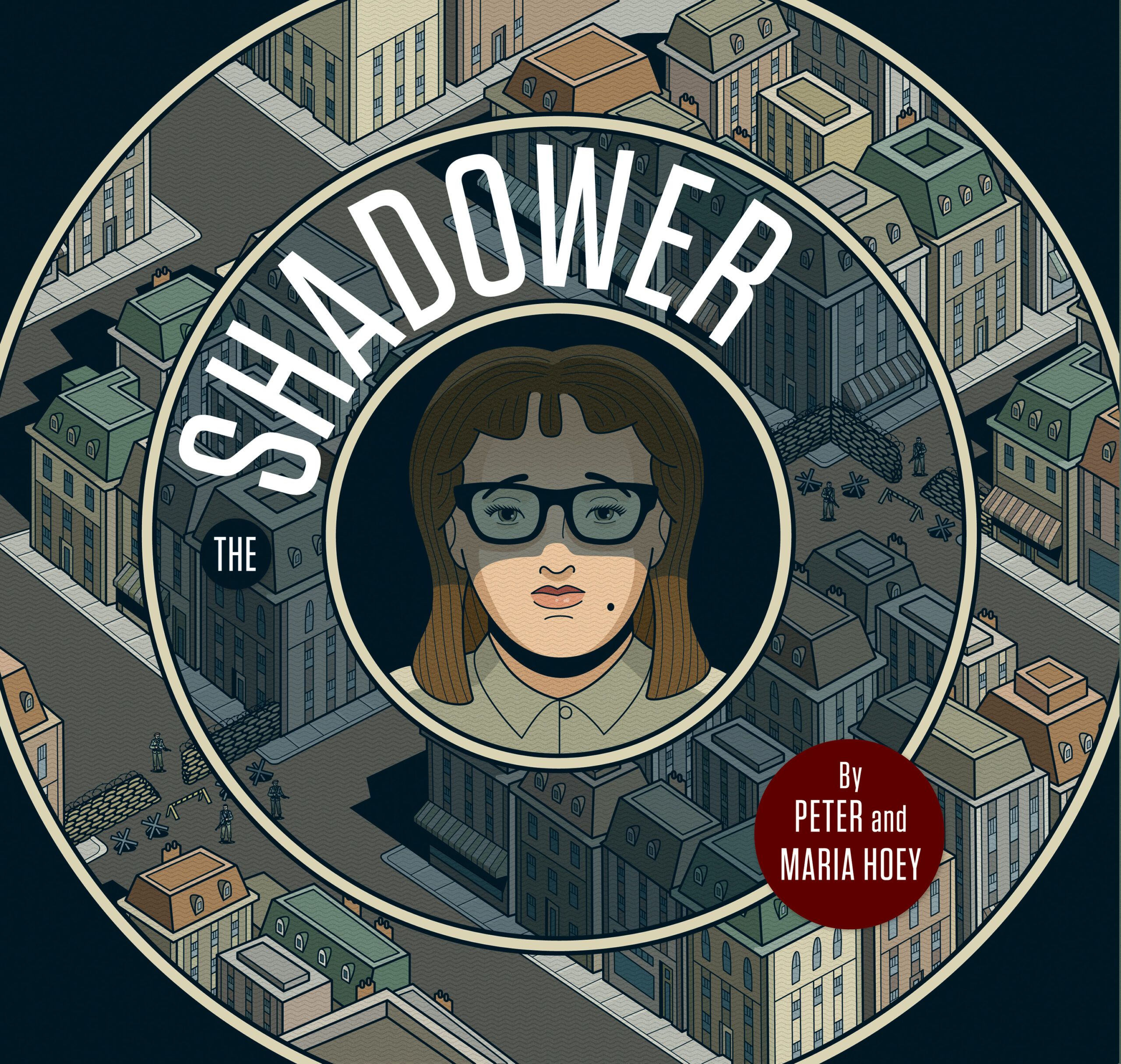
Smuggled metaphors run the risk of being absorbed by the very context they’re infiltrating. Artistic undercover missions become the currency of any society in which direct political expression is repressed, and the Hoey siblings are both dramatizing and anticipating this in their new GN, The Shadower.
The setting itself is metaphorical, but all too accurate — a familiar yet unspecific Eastern European city under permanent partition and occupation by vaguely defined rival authorities, and the unremarkable everywoman who becomes a pawn in one of their maneuvers against each other.
As in Kafka, the country is pointedly unnamed — the strivings of the human soul being equally embattled everywhere and the routines of human cruelty being barely worth distinguishing — though the Cold War-movie locale gives American readers a remove to frame what we can see coming as still survivably far away.
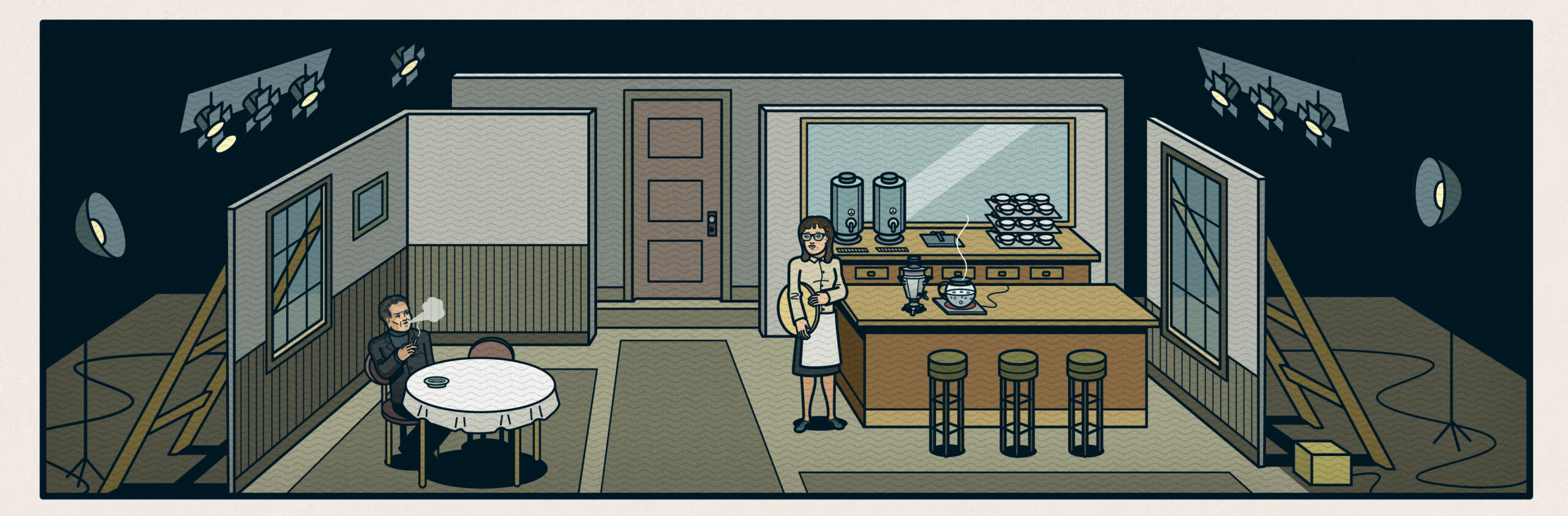
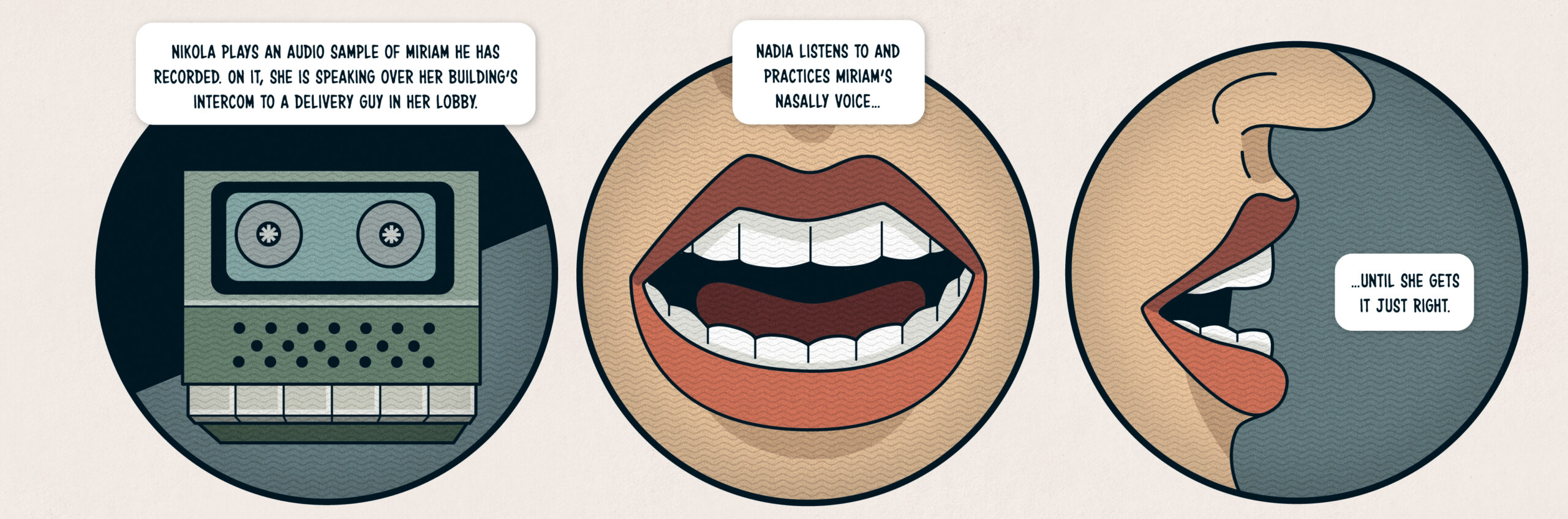
The protagonist, Nadia, is similarly effaced, though of course she is more than she seems or the State would abbreviate her to. Though that State seeks to make her literally interchangeable: a young actor, she is recruited (whether she likes it or not) to stand in for a waitress in “enemy”-controlled territory whom she vaguely resembles so she can spy on an officer in the café where the waitress works.
Every life in a surveillance state is a performance, in which we watch ourselves for we can’t know who is watching; which self is ours can get lost irretrievably, and that turns out to be the real stakes Nadia is playing for. But, chosen (as was her disappeared counterpart) for her supposed anonymity, her controllers may end up losing even more as a consequence of what they don’t bother to notice.
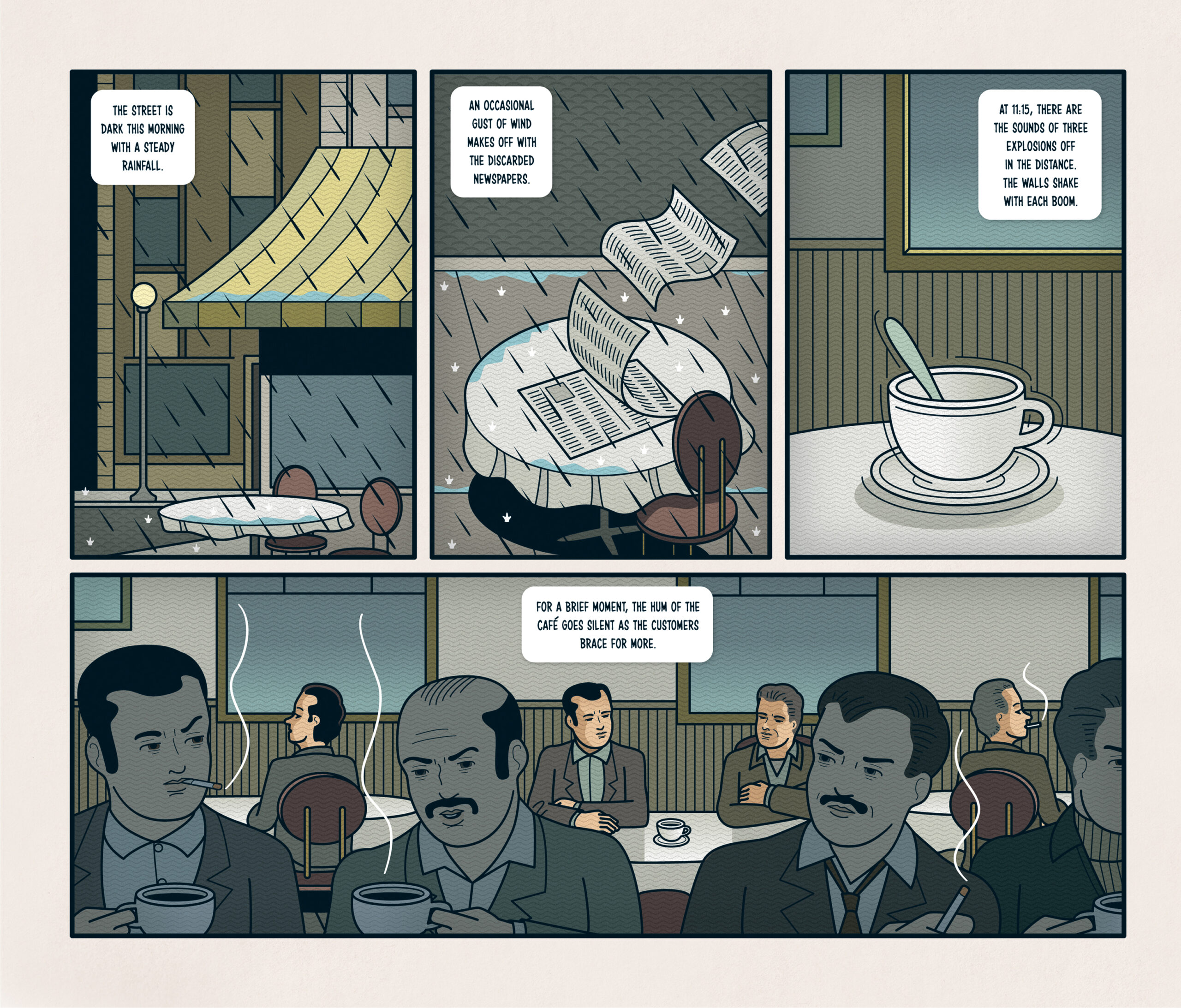
This is a drama of appearances, but the creators show a remarkable amount in how they choose to tell the story. With as much narration as dialogue, we feel we are reading a dossier of the events, the clipped descriptions putting us claustrophobically in the midst of how existence in such a society is measured out. The pervasive circular motif, in shapes of panels, expressionistic spotlighting, swirling water, café teacups, makes us feel perpetually in the fishbowl of a camera lens. The often vacant streets and long shadows make us feel we are in a de Chirico bad dream, while the picturesque emptiness, which Nadia often has all to herself, holds the grand, calm nostalgia of a dream we might wish we could go back into. A full-page scene of venetian blind-slats creating an ephemeral prison, and a three-panel sequence of stormclouds, wind-dashed newspapers and unseen bomb-tremors — the clockwork of violence amid a minefield of imposed silences — are especially powerful.
But like all the Hoeys’ eerie, moving work, The Shadower on every page puts you in a state of unreal reverie that calls your conscience to wake up.
I got them in for a brief interrogation on the week their account saw the light of day…
HILOBROW: It must be challenging to hold together the slippage between illusion, self-deception, wariness and objective reality that the distorted messages and pressurized thinking in a dictatorship give rise to — how did you plot this story out without losing yourself in it like Nadia and others do?
PETER HOEY: It was written out in prose first. A roughly 100-page novella. I did the writing with Charles Freund. That’s how we do all our long-form graphic novels. Kind of like a treatment for a feature film.
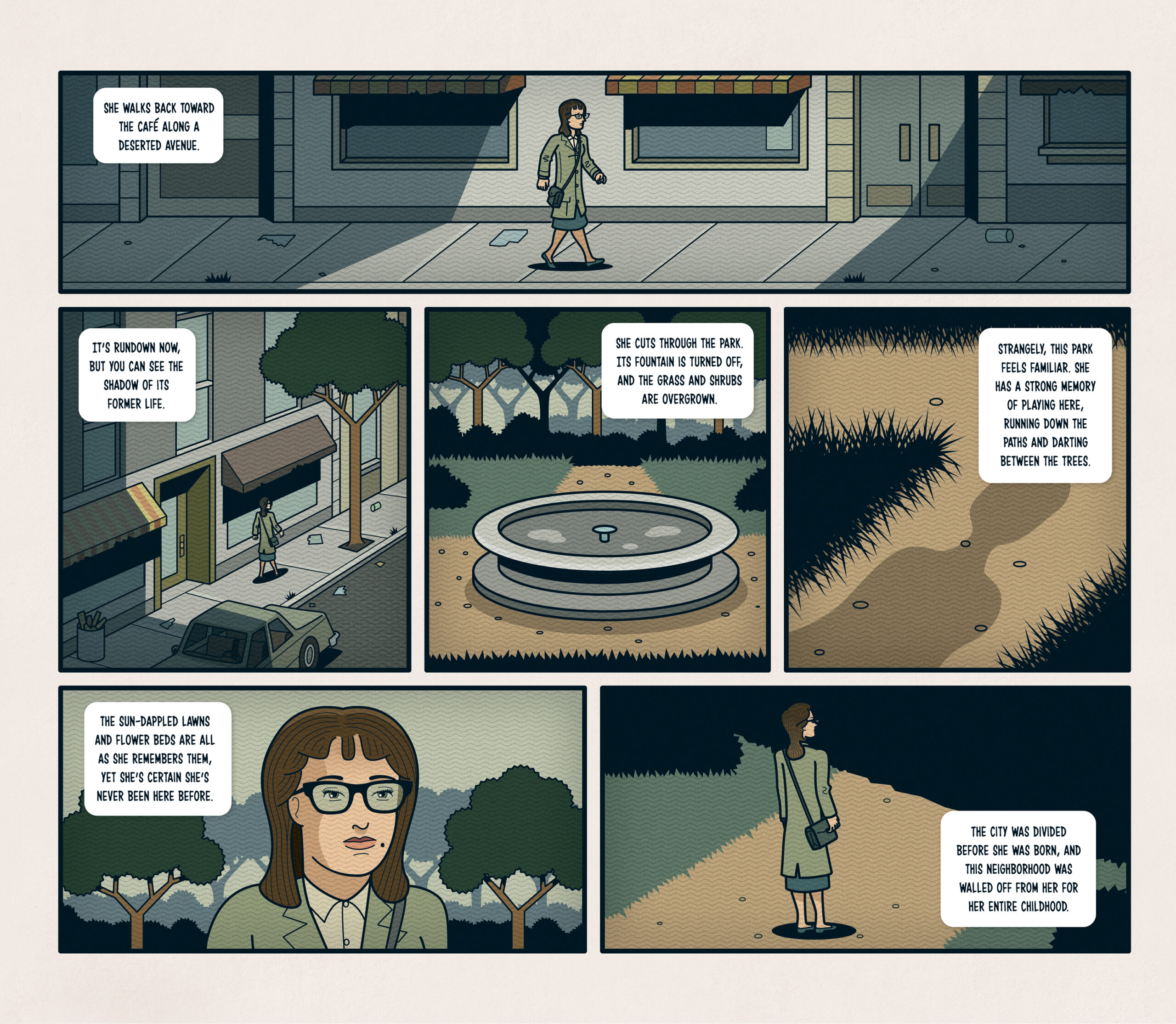
HILOBROW: You always have a strong sense of imagined place in your stories to map the novel predicaments and allegorical struggles the characters play out. This time it almost put me in mind of a gloomy, forsaken twin to Wes Anderson’s lyrical, absurdist composite countries and time-periods, depression to his elation. Any thoughts on how the geography of your mind comes together and some of the context you might be conscious of in creating it?
PETER HOEY: I think Carol Reed’s film The Third Man was a guidepost for the mood of the story. A divided city, a cynical mindset, a constant underground struggle for survival. Also, Ana Burn’s 2018 novel, Milkman. A story that takes place with no markers of names and places but you gradually come to realize is Belfast, in the late 1970s. A city divided along sectarian lines, with military occupation and a constant low-level refusal of cooperation.
MARIA HOEY: The Romanian filmmaker Christian Mungiu’s movies and Kieslowski’s Dekalog are the inspiration — both for their humanistic touch as well as their palette of cement, decay, tobacco smoke, and hope amidst the despair. The opposite of Anderson.
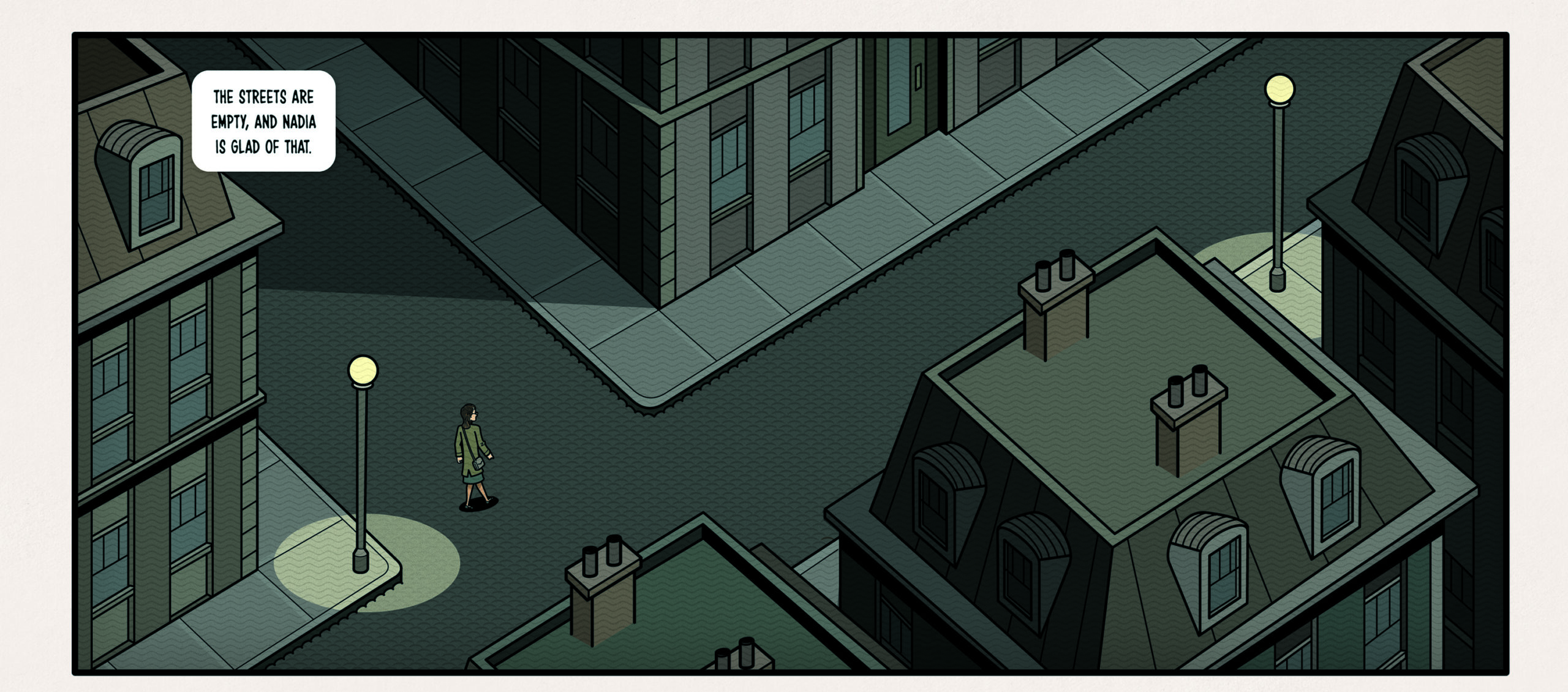
HILOBROW: Stage plays recur as a counterpoint to the role Nadia is playing in “real” life, and her initial recruitment after being seen acting in Ibsen almost seemed like a macabre echo of Team America — the regime here enacting an unwitting parody of themselves. Are we doomed to replicate progressively inauthentic scenarios while we do accumulating damage to actual life? Or can we break character (and change the ending)?
PETER HOEY: Not sure the regime is all that unwitting. They fully understand the value of theater… but performers always have the power to break character… hence tension.
MARIA HOEY: We are not doomed. I think this book is actually optimistic. The individual can triumph over the oppression of the State. No matter how much you are boxed in (wink wink)*, quartered off, or squeezed.
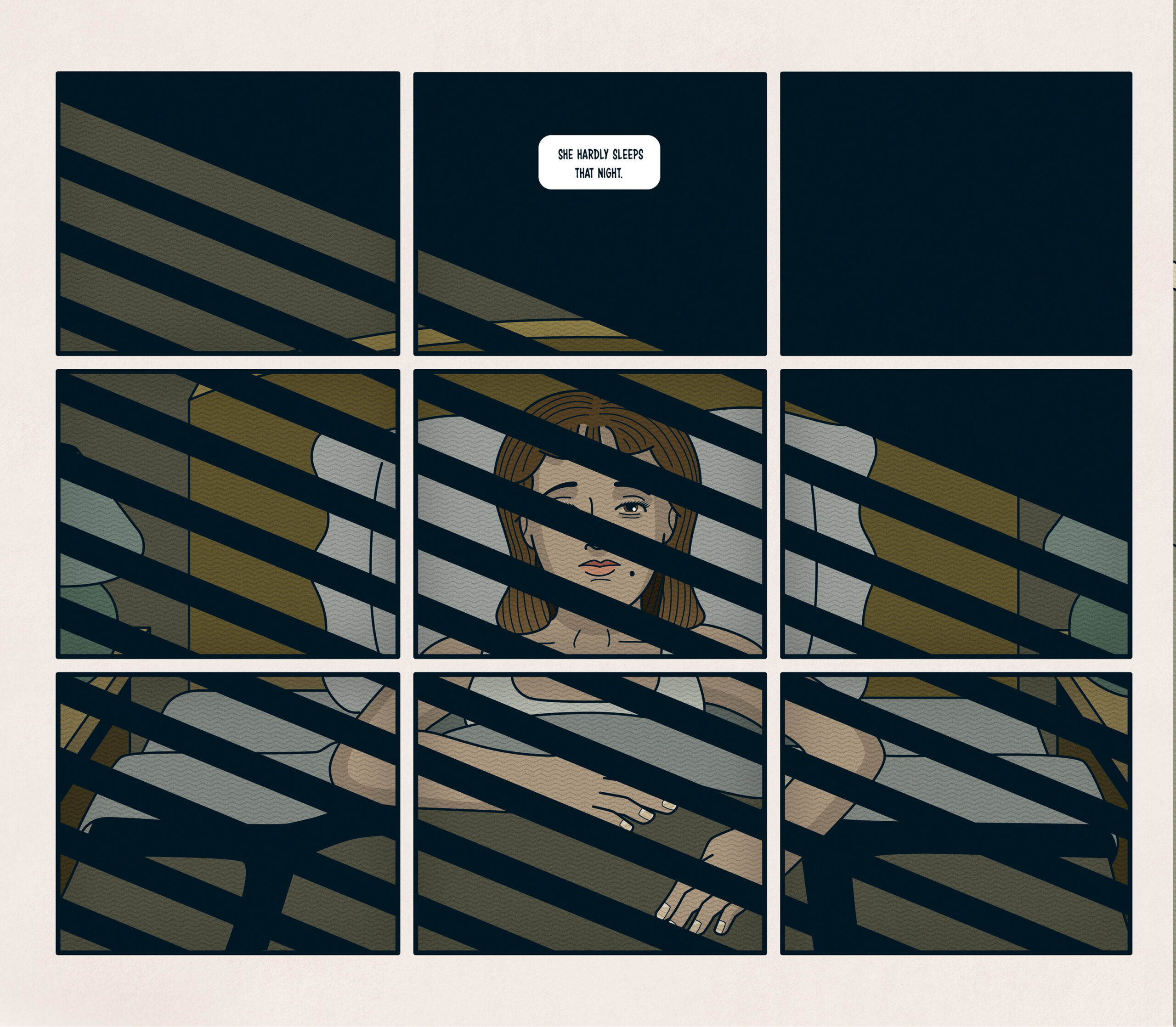
HILOBROW: The casting of long shadows, very film-noir but also suggestive of the long track of darkness laying out before these characters; the use of monumental architecture rendering the passing humans smaller then they realize; all the circular apertures — they tell a story all their own, and are a skeleton this one depends on even while it recedes from the characters’ own notice. When you set out on a narrative like this, do you plan out the motifs and metaphors, or do these well up in successive drafts?
PETER HOEY: We do start out with a rough plan but we let the mood of the story dictate the background visuals… architecture, cityscape, interiors, clothes, lighting etc.
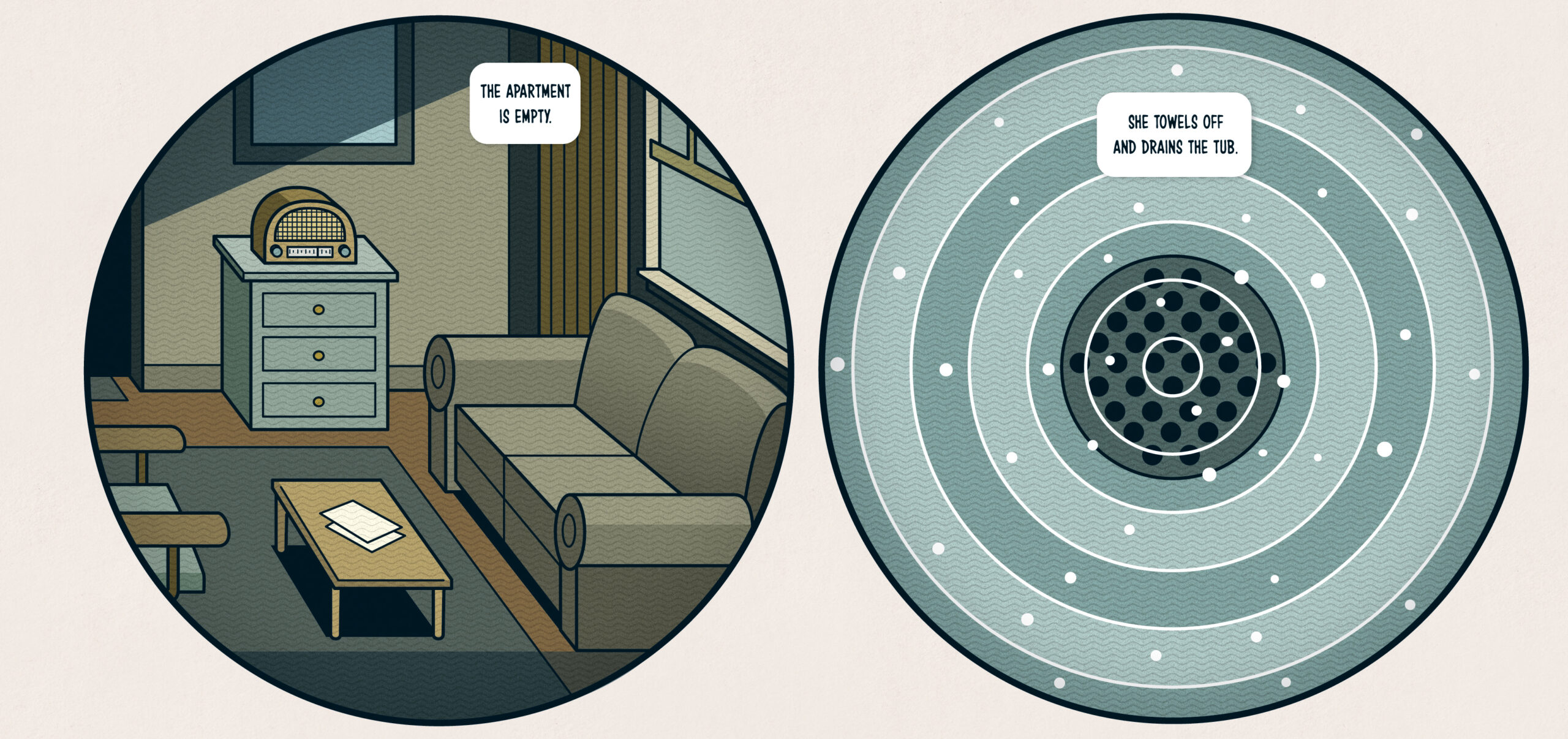
HILOBROW: Art confounds and outlasts tyranny; is it harrowing to process these themes, or your own kind of tunnel through and hopefully out of this time?
PETER HOEY: Art confounds tyranny when it doesn’t stay obedient. This refusal of complicity makes it much less a tool and much more a torch.
MARIA HOEY: As (white) Americans, we’ve been pretty lucky up to this point. I don’t think the current crew will last. But if they do, and we all go over the cliff, well we can always escape into our books…The Methodology of Disappearing is one title I’d recommend.** I also like the scene in Casablanca when Victor demands the band to play “La Marseillaise”. Looking forward to that day.
* A reference to a short book the Hoeys and this interviewer collaborated on, full disclosure ;-).
** An acting text (and meta survival guidebook) that surfaces in The Shadower’s narrative at pivotal and subtle moments.
MORE POSTS by ADAM McGOVERN: OFF-TOPIC (2019–2025 monthly) | textshow (2018 quarterly) | PANEL ZERO (comics-related Q&As, 2018 monthly) | THIS: (2016–2017 weekly) | PEOPLE YOU MEET IN HELL, a 5-part series about characters in McGovern’s and Paolo Leandri’s comic Nightworld | Two IDORU JONES comics by McGovern and Paolo Leandri | BOWIEOLOGY: Celebrating 50 years of Bowie | ODD ABSURDUM: How Felix invented the 21st century self | KOJAK YOUR ENTHUSIASM: FAWLTY TOWERS | KICK YOUR ENTHUSIASM: JACKIE McGEE | NERD YOUR ENTHUSIASM: JOAN SEMMEL | SWERVE YOUR ENTHUSIASM: INTRO and THE LEON SUITES | FIVE-O YOUR ENTHUSIASM: JULIA | FERB YOUR ENTHUSIASM: KIMBA THE WHITE LION | CARBONA YOUR ENTHUSIASM: WASHINGTON BULLETS | KLAATU YOU: SILENT RUNNING | CONVOY YOUR ENTHUSIASM: QUINTET | TUBE YOUR ENTHUSIASM: HIGHWAY PATROL | #SQUADGOALS: KAMANDI’S FAMILY | QUIRK YOUR ENTHUSIASM: LUCKY NUMBER | CROM YOUR ENTHUSIASM: JIREL OF JOIRY | KERN YOUR ENTHUSIASM: Data 70 | HERC YOUR ENTHUSIASM: “Freedom” | KIRK YOUR ENTHUSIASM: Captain Camelot | KIRB YOUR ENTHUSIASM: Full Fathom Five | A 5-part series on Jack Kirby’s Fourth World mythos | Reviews of Annie Nocenti’s comics Katana, Catwoman, Klarion, and Green Arrow | The curated series FANCHILD | To see all of Adam’s posts, including HiLo Hero items on Lilli Carré, Judy Garland, Wally Wood, and others: CLICK HERE