
RADIUM AGE 1Q2026
By:
March 30, 2026

Under the direction of HILOBROW’s Josh Glenn, in 2022 the MIT Press launched its RADIUM AGE series of proto-sf reissues from 1900–1935.
In these forgotten classics, sf readers will discover the origins of enduring tropes like robots (berserk or benevolent), tyrannical supermen, dystopias and apocalypses, sinister telepaths, and eco-catastrophes. With new contributions by historians, science journalists, and sf authors, the RADIUM AGE book series recontextualizes the breakthroughs and biases of these proto-sf pioneers, and charts the emergence of a burgeoning literary genre.
RADIUM AGE SERIES UPDATES: 2022 | 2023 | 2024 | 2025 | 1Q2026 | 2Q2026 | 3Q2026. FULL SERIES INFO.
Below, please find updates on the RADIUM AGE project from 1Q2026.
During 1Q2026, the RADIUM AGE series published the following titles.
IRENE CLYDE
Introduction by LUCY SANTE
(March 31, 2026)
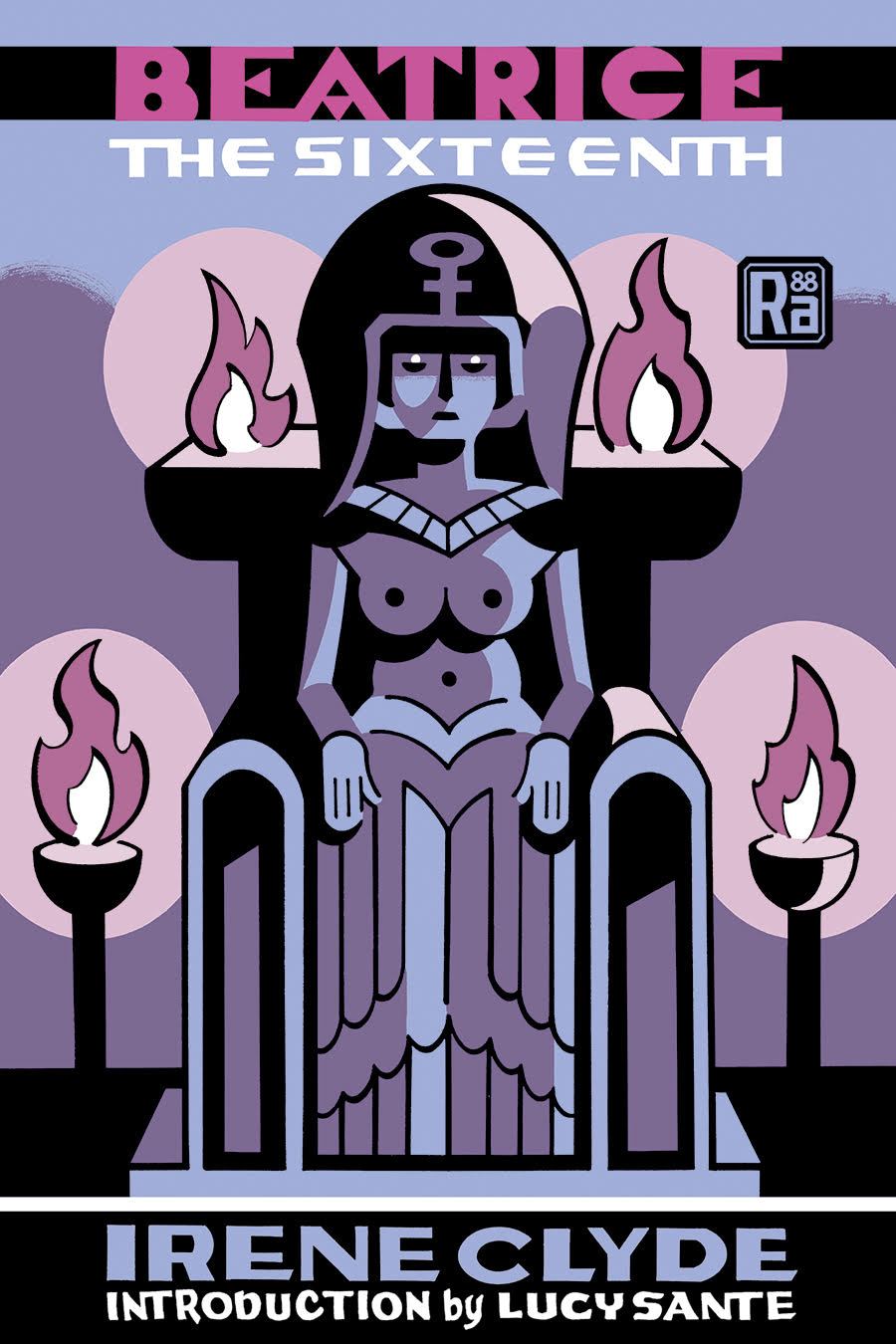
Introduced by Lucy Sante, author of the acclaimed memoir of transition I Heard Her Call My Name, this pioneering 1909 feminist utopia is productively discombobulating. When Mary Hatherley, an intrepid British explorer, is kicked in the head by the camel she was riding through the Arabian desert, she finds herself transported to what seems to be an alternate version of Earth. Arriving in Armeria, she discovers a society in which the very concept of gender is unknown. Like Mary, the reader will become disoriented, enjoyably so: By initially avoiding the use of gendered pronouns, the story’s author (herself a gender-fluid activist) challenges our assumptions about gendered social paradigms.
“This little book has something peculiarly its own in its treatment. It is really a study of the Soul precipitated into another country without losing the consciousness of its immediate past life. Everything is strange — scenery, people, customs and ideals. Though the authoress has not stated clearly what her purpose is, we cannot help thinking that she means it to represent the Soul’s experience upon an occult plane of consciousness.” — The Herald of the Cross (1910)
“A gynarchic state, Armeria, where women marry each other and buy the babies on whom the future of Armeria depends… Readable and suggestive.” — The Occult Review (1909)
“A real wonderland, where only the fair sex live and reign…” — The Theosophist (Jan. – Mar. 1910)
“Early 20th-century transfeminine author Irene Clyde’s Beatrice the Sixteenth is an interdimensional Amazonian romance and imperialist ethnographic fantasy rolled into one. Readers of this new edition are in for an unexpected and thought-provoking journey.” — Susan Stryker, author of Transgender History: A Resource for Today’s Struggle — And Tomorrow’s.
LUCY SANTE’s books include Low Life, Kill All Your Darlings, The Other Paris, Maybe the People Would Be the Times, and I Heard Her Call My Name. She was recently appointed an officer of the Order of the Crown by the Belgian government.
IRENE CLYDE (b. Thomas Baty, 1869–1954) was an English lawyer, writer, and activist who spent much of her life in Japan. She co-founded the Aëthnic Union, a society dedicated to challenging binary gender distinctions; and for 25 years she helped edit, write, and publish Urania, a privately circulated journal which covered such topics as same-sex relationships, androgyny, and sex changes, and which sharply criticized heterosexual marriage. Beatrice the Sixteenth (1909) is her only novel.
Originally published 1909. Cover illustrated and designed by Seth. See this book at The MIT Press.
E. AND H. HERON
Edited & Introduced by ALEXANDER B. JOY
(March 10, 2026)
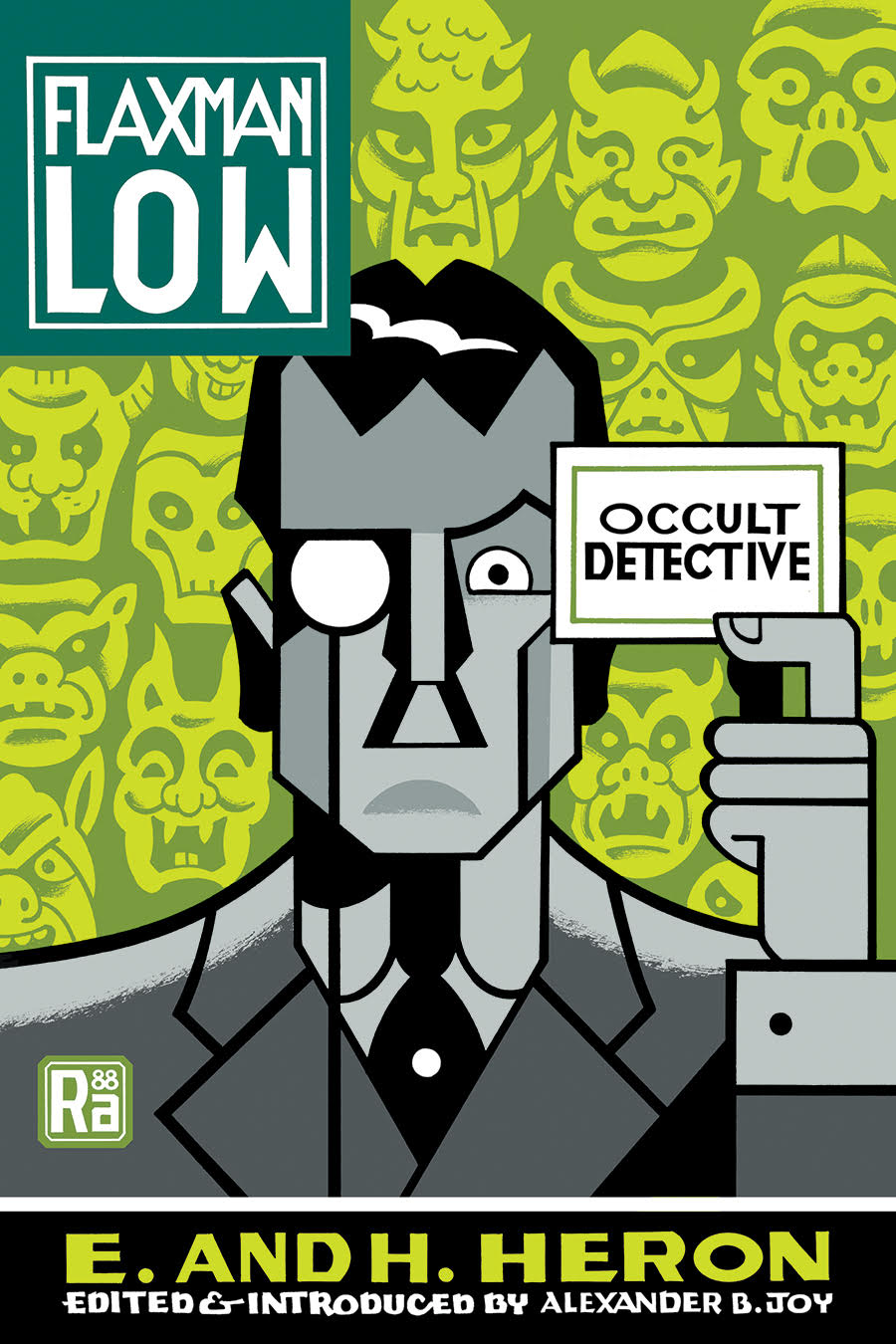
Flaxman Low, literature’s first professional, full-time “occult detective,” i.e., an intrepid investigator who deploys the scientific method when tackling paranormal phenomena, appeared in a dozen stories first published from 1898–99. His creators, the mother-and-son team Hesketh Hesketh-Prichard and Kate O’Brien Ryall Prichard (who published as “E. and H. Heron”), endowed the Oxford-trained psychologist with the bravery and acumen to tackle every sort of adversary from ghosts, mummies, and vampires to a mushroom mannequin. Both less credulous and less cynical than earlier fictional investigators of the spirit world, Low always triumphs in the end… but not before scientifically demonstrating that even the most outré incidents and situations can’t hold a candle to the truly bizarre capacities of the human mind.
“New, disgusting, delightful thrills.” — The Outlook (1899)
“Flaxman Low is the Sherlock Holmes of the ghost world.” — The London Quarterly Review (1900)
“Shows extraordinary ingenuity and an unerring facility on the part of the authors in making the reader’s flesh creep.” — Literature (1900)
“Most ingenious and successful.” — M.R. James, “Some Remarks on Ghost Stories” (1929)
“At once dashing and cerebral, Flaxman Low is a supernatural Sherlock Holmes investigating the surreal and impossible, created by a mother and son duo who themselves seem to have come from a pulp story. Great to see these stories in a new edition!” — Daniel Polansky, author of the Low Town book series
ALEXANDER B. JOY is a writer from New Hampshire. When not working on fiction or poetry, he typically writes about literature, film, philosophy, and games. He earned a Ph.D. in Comparative Literature from the University of Massachusetts Amherst. He is the author of Legend of the River King (Boss Fight Books, 2026) and a coauthor of Pandemic Death Discourse (McFarland, 2025). See more of his work at alexanderbjoy.com.
E. AND H. HERON was a collective pseudonym used by the English writers Hesketh Prichard (1876–1922) and his mother, Kate O’Brien Ryall Prichard (1851–1935). “Hex” was an explorer, cricketer, naturalist, soldier, and travel writer. Kate, also an intrepid globetrotter, voyaged with her son to many remote locations; Rio Caterina, in Patagonia, is named after her. In addition to creating Flaxman Low, one of the first modern occult detectives in fiction, the duo wrote stories about Captain Rallywood and Don Q.
Originally published 1899. Cover illustrated and designed by Seth. See this book at The MIT Press.
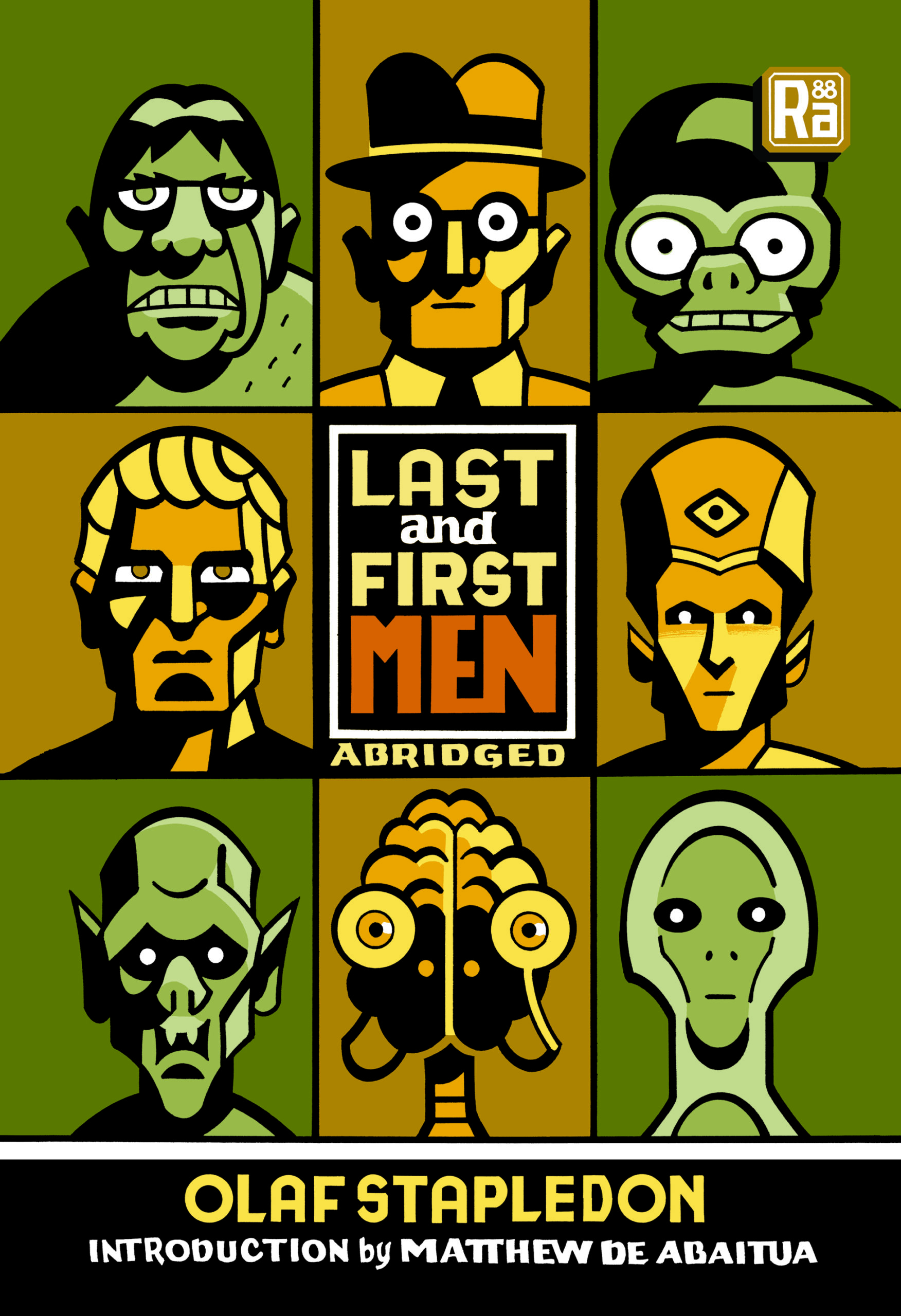
After Spring 2026, the RADIUM AGE series will publish just one title per season (Spring / Fall), for a total of two titles per year.
More exciting installments in this series, including anthologies and collections, some of them currently being translated into English, are in the works. For the latest updates, keep an eye on this page.
Here at HILOBROW, during 1Q2026 Josh continued to share his Radium Age-related research. For example…
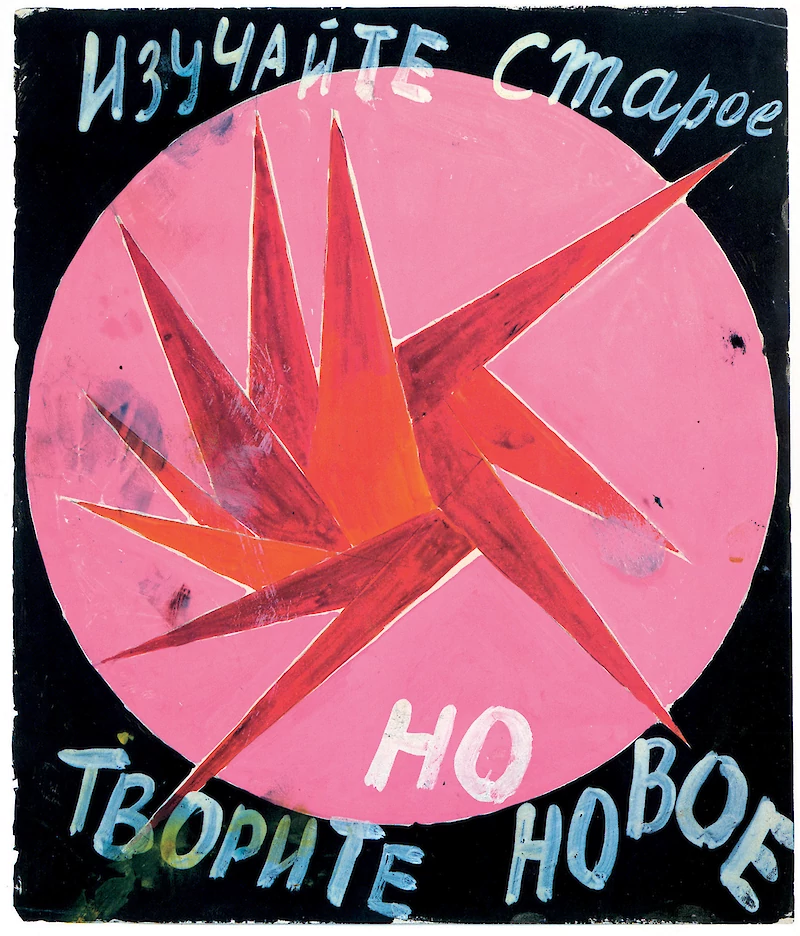
HILOBROW published further installments in the series RADIUM AGE POETRY. Here’s a sampling of the 1Q2026 lineup:
Carrie W. Clifford’s TOMORROW | Georg Heym’s UMBRA VITAE | Zhimo Xu’s NIGHT TRAIN | John Peale Bishop’s THE RETURN | Lola Ridge’s “SADIE QUIVERS LIKE A ROD” | Hirato Renkichi’s “HE DASHED THROUGH (THE WOUNDED CITY)” | William Empson’s THE WORLD’S END | Joaquín Pasos’ NORWAY | H.D.’s CITIES | OLAF STAPLEDON’s “LAST NIGHT…”
Josh has surfaced some 500 proto-sf-adjacent poems thus far, and published ~200 of them here at HILOBROW. To see the RADIUM AGE POETRY lineup, organized thematically, please visit this page.
During 1Q2026 Josh has continued to build out the RADIUM AGE POETRY index linked to above, as well as the RADIUM AGE ART index.
Also, he has just begun the time-consuming, tedious, yet satisfying task of sorting — into the same categories as these other indices — the Radium Age proto-sf novels and stories collected in the earlier series RADIUM AGE TIMELINE. (There is no separate index for this material; Josh is reworking the timeline posts.) Here are the RADIUM AGE TIMELINE installments that were retrofitted during 1Q2026:
1900 | 1901 | 1902 | 1903 | 1904 | 1905 | 1906 | 1907 | 1908 | 1909 | 1910 | 1911 | 1912 | 1913
Here at HILOBROW, as we have been doing for a decade now, during 2025 we serialized some of Josh’s favorite Radium Age proto-sf stories and novels. Here’s the 1Q2026 lineup:
- Edward Johnson’s Light Ahead for the Negro (1904, excerpt)
- Jean de La Hire’s The Mystery of the XV (1911, excerpt), trans. by Josh
- Olaf Stapledon’s Last and First Men (1930, excerpt)
- Erle Stanley Gardner’s “A Year in a Day” (1930)
Here’s a sampling of 1Q2026 series publicity:
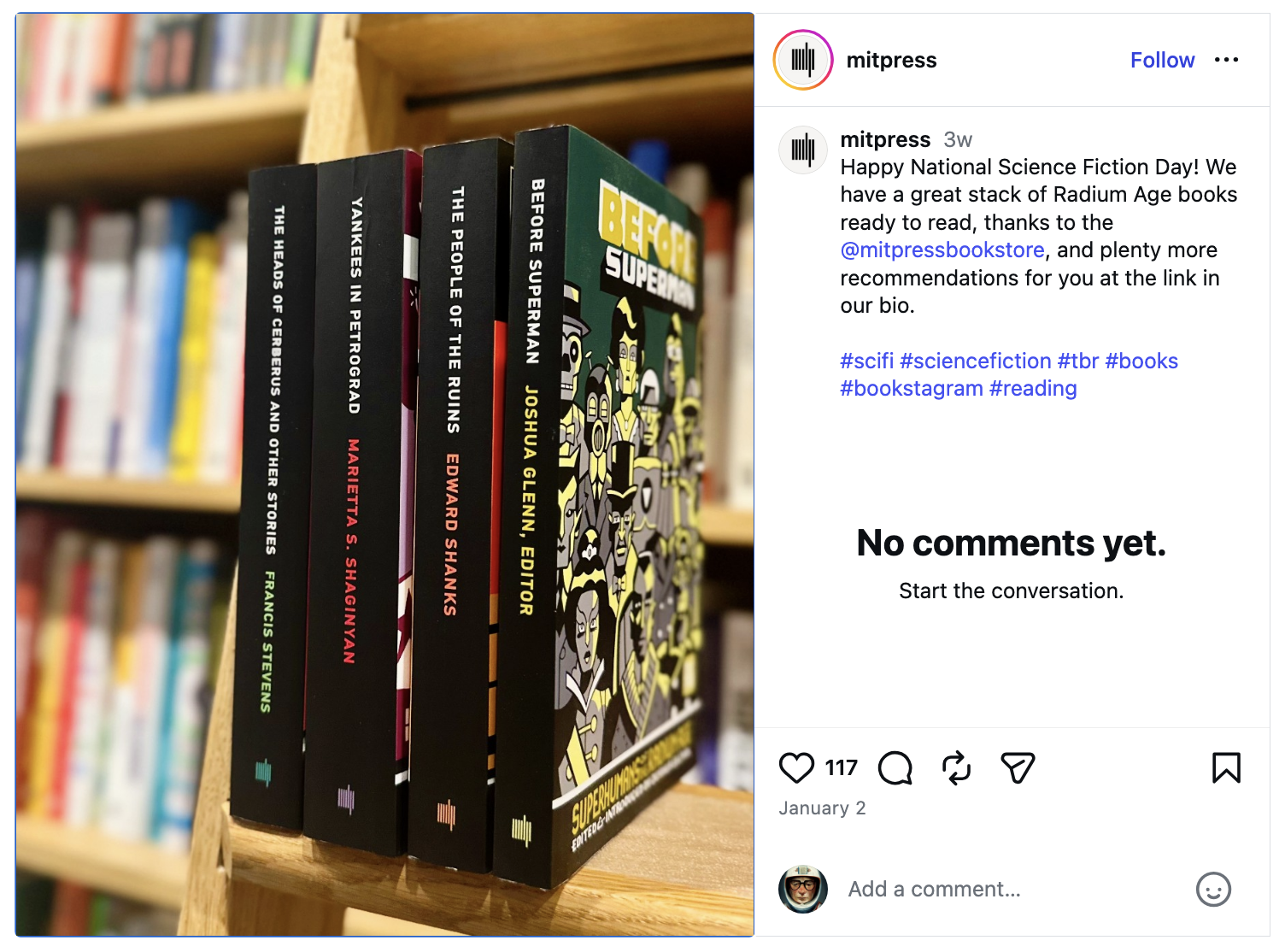
- Above, a National Science Fiction Day social media post from The MIT Press.
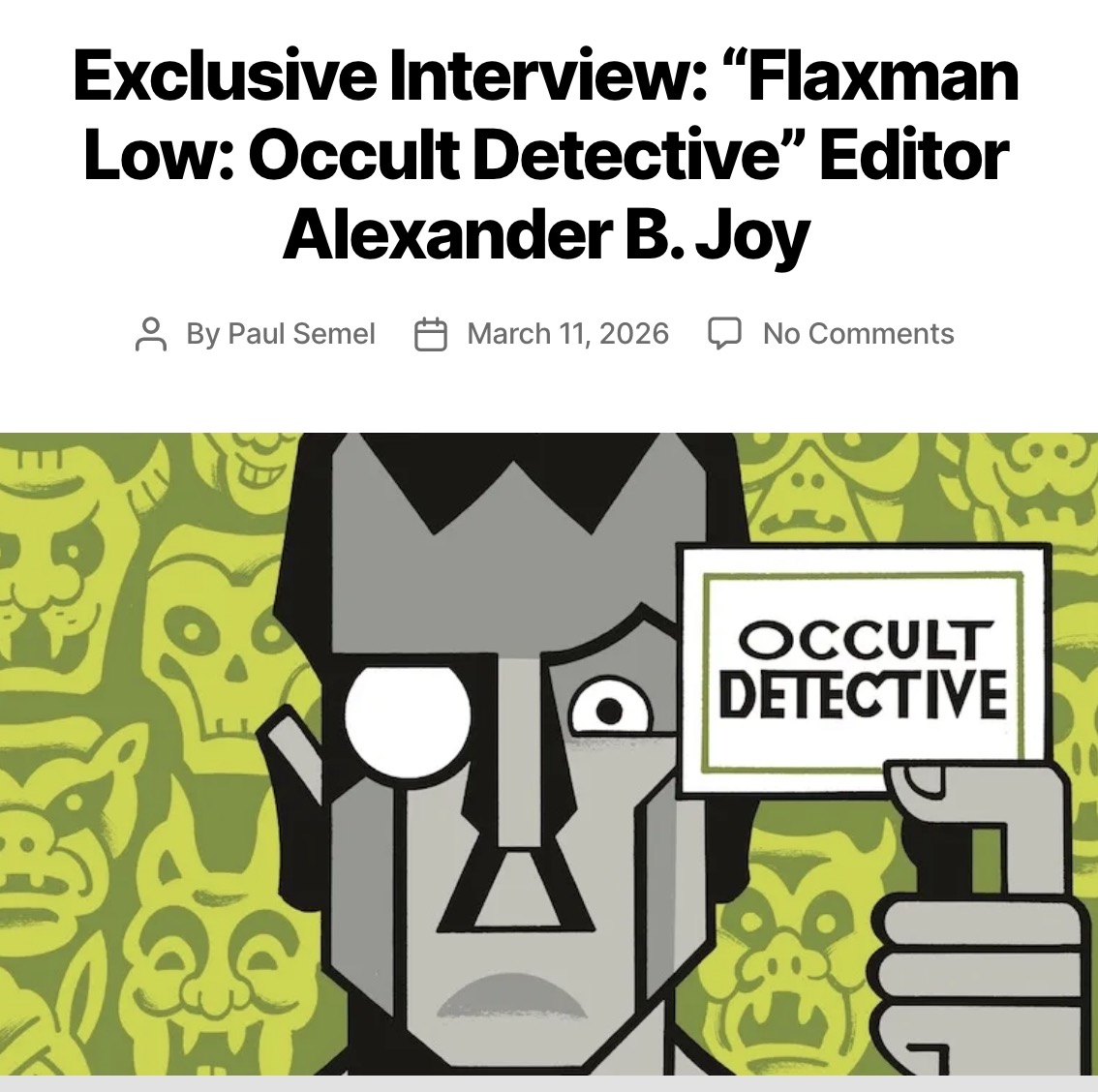
- Interview with Alexander B. Joy here. Excerpt: “Flaxman Low’s exploits are best contextualized in terms of early psychological science. In effect, they’re speculative fiction stories about the mind and brain. They explore the space that opens when we recognize that our mental states to map to material entities (like the brain and its chemistry) instead of immaterial souls.”
- Podcast interview with Alexander B. Joy here. Excerpt: “[Flaxman Low] acts as a scientific investigator of sorts. He’ll investigate and sometimes eradicate these seemingly supernatural and mystical phenomena. But of course it’s only after he establishes a scientific basis for their occurrence.”
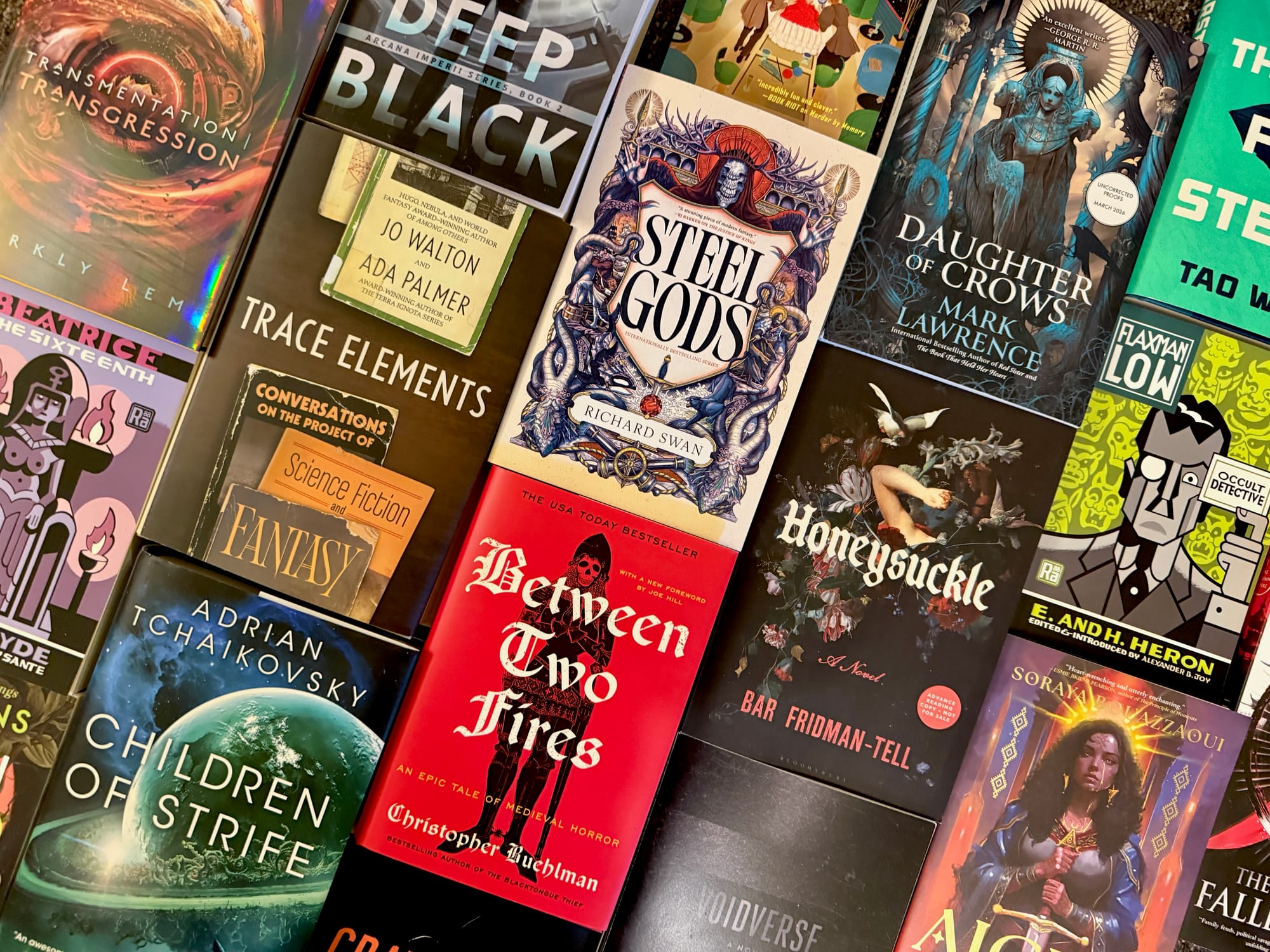
- Reactor: “Over a century ago, writer Irene Clyde was pushing back against perceptions of gender in the U.K. Now, Clyde’s novel Beatrice the Sixteenth, set in a utopian alternate world with no concept of gender, is getting a stylish new edition, complete with an introduction by the great Lucy Sante.”
- Foreword, on Beatrice the Sixteenth: “The introduction by Lucy Sante places the book in context of its Edwardian author, who would now be considered a transwoman, and her advocacy for the ‘abolition of gender binaries’ and ‘celebration of female-female intimacy.’ The book explores a society that upholds women-dominated communities as utopian, eschewing binaries, and having no men.”
- From Andrew Liptak’s Transfer Orbit newsletter on the Flaxman Low collection: “This collection of stories (published between 1898 and 1899) features Flaxman Low, literature’s first occult detective, who uses science to figure out what’s behind paranormal phenomena. Low is an Oxford-trained psychologist who takes on everything from ghosts to mummies to vampires to a mushroom mannequin, and it sounds like a ton of fun.”
And on Beatrice the Sixteenth: “A pioneering feminist utopian story that originally came out in 1909, and follows a British explorer named Mary Hatherley, who’s kicked by a camel and wakes up to find herself in what seems to be an alternative version of Earth. When she arrives in Armeria, she finds a society where the concept of gender is unknown, and she has to figure out her bearings.”

On to 2Q2026…
MORE RADIUM AGE SCI FI ON HILOBROW: RADIUM AGE SERIES from THE MIT PRESS: In-depth info on each book in the series; a sneak peek at what’s coming in the months ahead; the secret identity of the series’ advisory panel; and more. | RADIUM AGE: TIMELINE: Notes on proto-sf publications and related events from 1900–1935. | RADIUM AGE POETRY: Proto-sf and science-related poetry from 1900–1935. | RADIUM AGE ART: Proto-sf and science-related fine art from 1900–1935. | RADIUM AGE 100: A list (now somewhat outdated) of Josh’s 100 favorite proto-sf novels from the genre’s emergent Radium Age | SISTERS OF THE RADIUM AGE: A resource compiled by Lisa Yaszek.