
MAN OF STEEL
By:
April 7, 2026
1937–2026
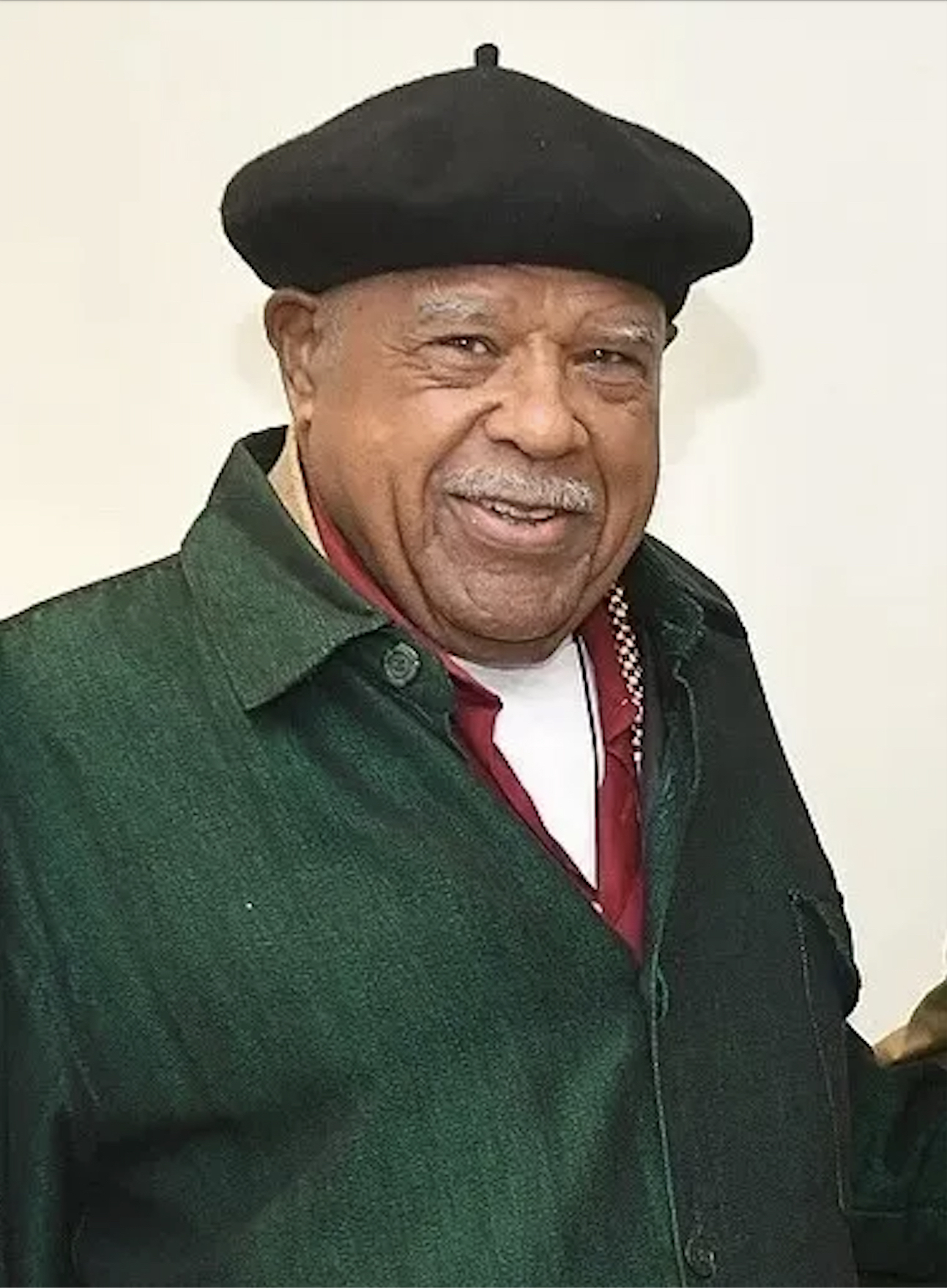
You may be one of the few people who hasn’t heard my joke about What I Really Learned in Art School, and you may have heard about the star of the story only as news gathers from the past few days that he has gone. In Melvin Edwards’ intro “Artmaking” class at Rutgers he once assigned us to do five sketches of chairs, from which we’d pick one to do a more monumental drawing; he was trying to get us to see drama and meaning in offhand everyday objects and decide what could be exalted about at least one of them. I always spent all my energy on the first thing outta my head so I really liked the eclectic sketches more than the cleanly geometric wood-block dorm-chair I ended up enlarging; I was especially attached to one of a vintage schoolroom-chair I’d found left out on a loading dock that winter, warped, splintered and partially encased in ice. When it came time to hold the class critique he only had us put up and talk about the final drawings, not the preliminary pieces. As he was walking away I asked if we were doing the other sketches and he asked if it was important to me that we go over those, and I was like, “Well yeah Mel, I thought we were gonna go through the whole process and I put a lot of work and imagination into those, and I’d like them to get some recognition.” He said “Welcome to the club” and kept walking.
I look back on this of course as the most important lesson I got from the whole four years; the world didn’t ask for your creativity and it’s up to you to show that world what it was waiting for, or at least show every day that you value the signals that some other world is sending you, about your purpose and your truth. In one of the memorial articles that are accumulating now, a fellow artist of Mel’s says of his pinnacles and plateaus of recognition that he was “a very generous, jovial, optimistic man that just stayed in the fight,” and his own words from the past and now for the ages close that article, saying “I have no illusions that what I do will change things much, I just wanted to be sure I didn’t get caught not expressing what I thought was important to me.”
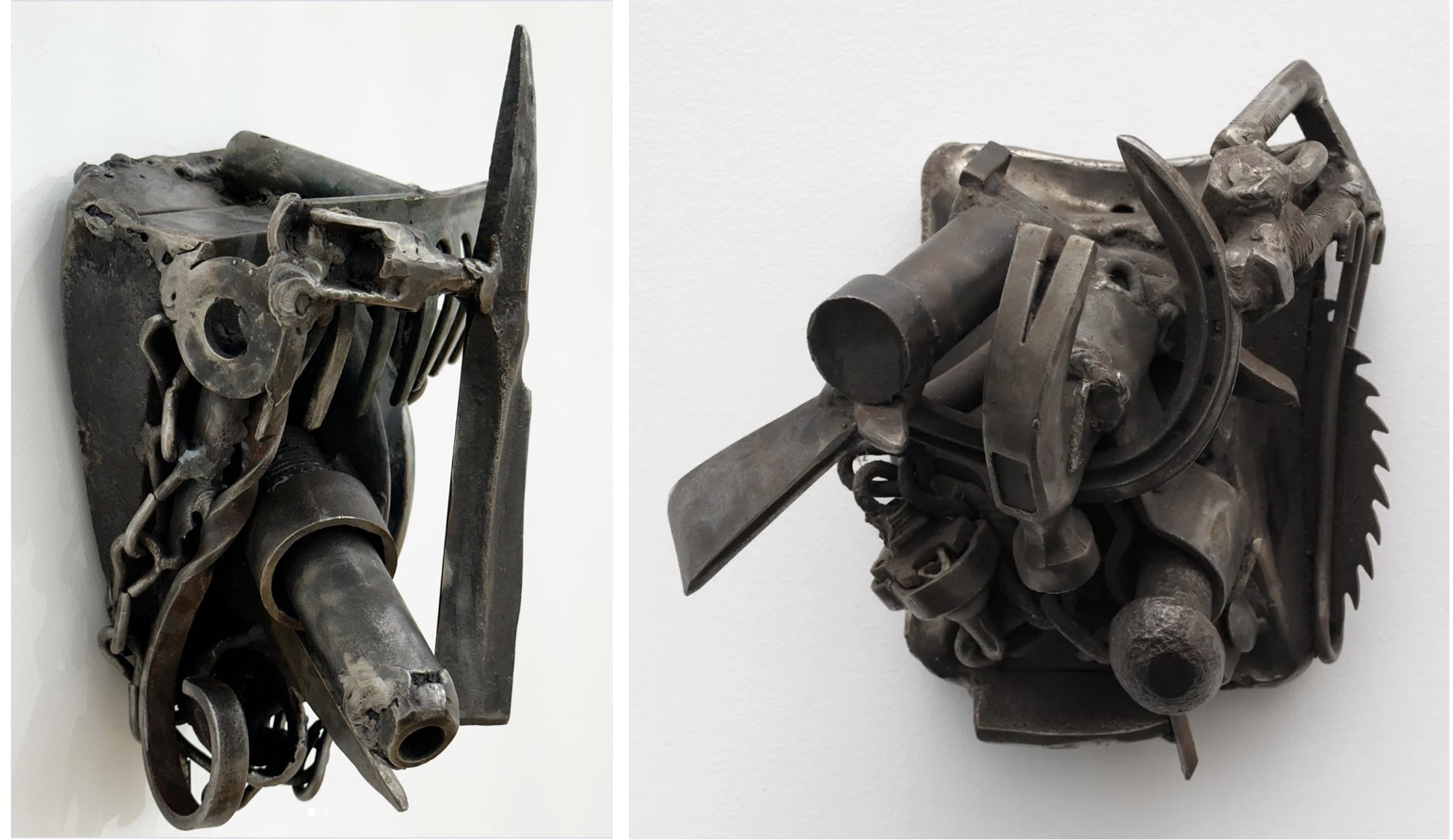
Mel Edwards mattered every day, and especially these days; his fresh creations were an act of remembering, a link in a chain that roots us to the past and connects us to each other. His signature “Lynch Fragments,” hallowed, horrored mementos of human brutality, the breaks in the bloodline and the barbs on the bindings held at only one end, were the proof of a past some want its survivors edited out of, and a declaration that something new can be created out of the debris we are dealt from our collective past.
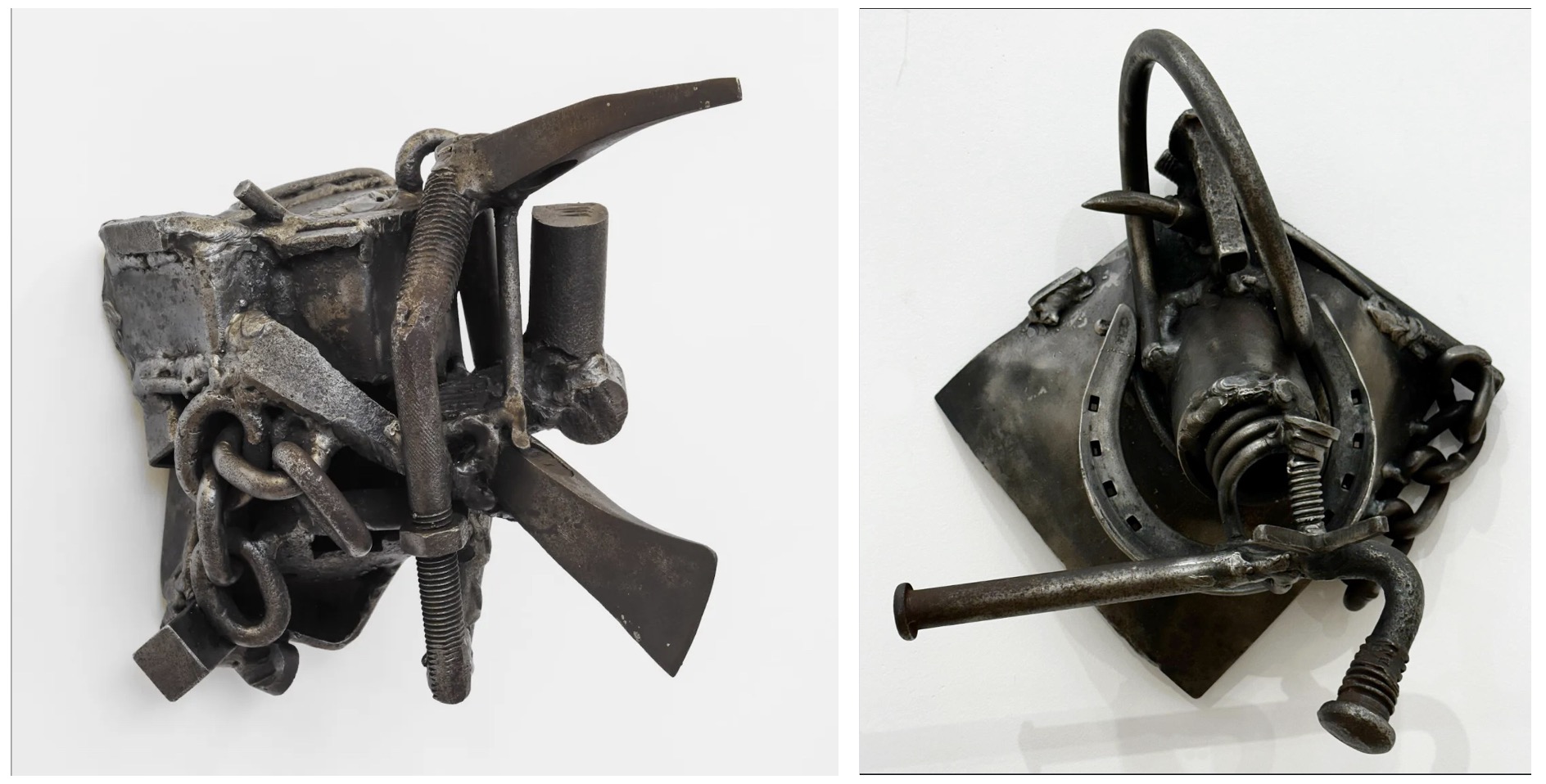
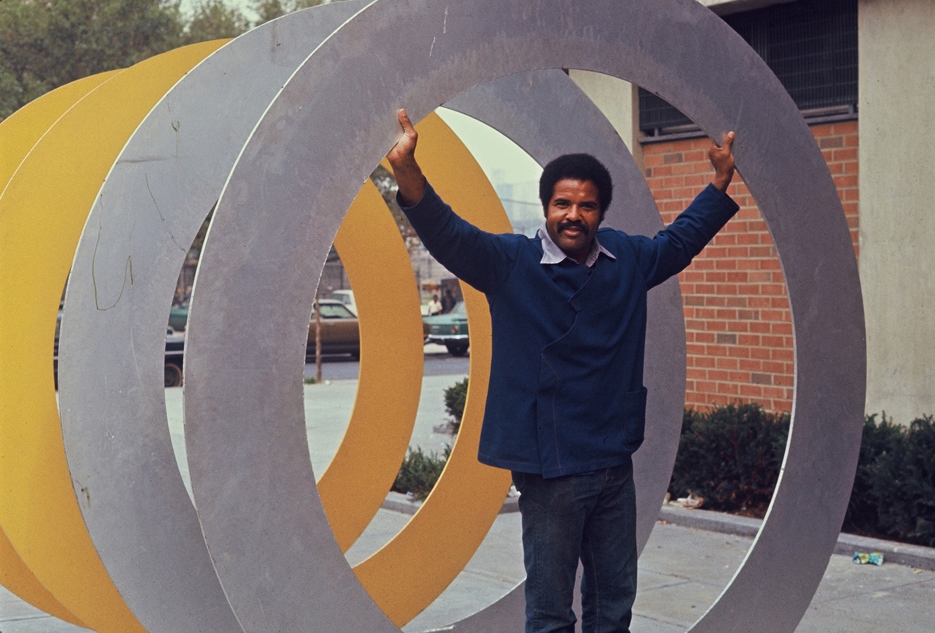
These were slag from the churning crucible of history, the collision-point of the abstract shapes he started with and the specific wrongs he wanted to chronicle. Anticipating the wreckage of 9/11 that would tour the country, and evoking iconic relics, they melted and fused fearsome metal remnants of implements that can both build and harm; nails and barbed wire and chain and blades and piping, discarded mechanisms and soldered wound-like blobs, a memoir of the injuries and traps of both the individual enslavement that constructed this society and the institutional version that kept (and keeps) its souls and potential confined for so long. They were countered by the smooth, oratorical geometry of his large-scale public works; often curvilinear, loops of infinite renewal, concentric rings of life-cycles existing in shared orbit around our central sacred source.
I was lucky enough to have Mel grant one lynch fragment to a student show I curated of objects in a metamorphic state between reverence and unease (“Alter Pieces”), I think he was the only professor who participated and probably the only one I knew I could ask. He sometimes didn’t show up for class and was at least once seen sound asleep as strategically scheduled films rolled, but every time I talked to him (often out of class) I would scribble my wrist off capturing the wise insights he would pour out just by speaking; a true life-teacher.
Mel’s link had untold new lines looped into it, and while I always hoped I’d see him again, I can’t imagine a day my eyes don’t open based indelibly on what he showed me. Some artists break the locks and forge a legacy that’s indestructible. Our lives, even our hopes may be meant not to last, but what Mel left behind stays beside us, and shows us a way to the restored world that always lies ahead.
Images top-bottom: Portrait by Tom Nappi/Wikimedia Commons; Charlottesville (2017); Prepaid Logic (1992); Ogun Again (1988); Elemental (1981); the artist with his sculpture Double Circles (1970), Bethune Tower, 650 Malcolm X Boulevard, Harlem, NY; all images © Melvin Edwards / Artists Rights Society (ARS), New York
MORE POSTS by ADAM McGOVERN: OFF-TOPIC (2019–2025 monthly) | textshow (2018 quarterly) | PANEL ZERO (comics-related Q&As, 2018 monthly) | THIS: (2016–2017 weekly) | PEOPLE YOU MEET IN HELL, a 5-part series about characters in McGovern’s and Paolo Leandri’s comic Nightworld | Two IDORU JONES comics by McGovern and Paolo Leandri | BOWIEOLOGY: Celebrating 50 years of Bowie | ODD ABSURDUM: How Felix invented the 21st century self | KOJAK YOUR ENTHUSIASM: FAWLTY TOWERS | KICK YOUR ENTHUSIASM: JACKIE McGEE | NERD YOUR ENTHUSIASM: JOAN SEMMEL | SWERVE YOUR ENTHUSIASM: INTRO and THE LEON SUITES | FIVE-O YOUR ENTHUSIASM: JULIA | FERB YOUR ENTHUSIASM: KIMBA THE WHITE LION | CARBONA YOUR ENTHUSIASM: WASHINGTON BULLETS | KLAATU YOU: SILENT RUNNING | CONVOY YOUR ENTHUSIASM: QUINTET | TUBE YOUR ENTHUSIASM: HIGHWAY PATROL | #SQUADGOALS: KAMANDI’S FAMILY | QUIRK YOUR ENTHUSIASM: LUCKY NUMBER | CROM YOUR ENTHUSIASM: JIREL OF JOIRY | KERN YOUR ENTHUSIASM: Data 70 | HERC YOUR ENTHUSIASM: “Freedom” | KIRK YOUR ENTHUSIASM: Captain Camelot | KIRB YOUR ENTHUSIASM: Full Fathom Five | A 5-part series on Jack Kirby’s Fourth World mythos | Reviews of Annie Nocenti’s comics Katana, Catwoman, Klarion, and Green Arrow | The curated series FANCHILD | To see all of Adam’s posts, including HiLo Hero items on Lilli Carré, Judy Garland, Wally Wood, and others: CLICK HERE