
MEDIA DIET
By:
July 31, 2026
A weekly series exploring the media “input” of a group of people — HILOBROW’s friends and contributors — whose “output” we admire.
Michael has been a valued HILOBROW contributor since 2018. His first post was on the topic of MUSIC HAS THE RIGHT TO CHILDREN. His most recent contributions to this publication include: WILD PALMS | MAX HEADROOM | PYNCHONIAN RESISTANCE.
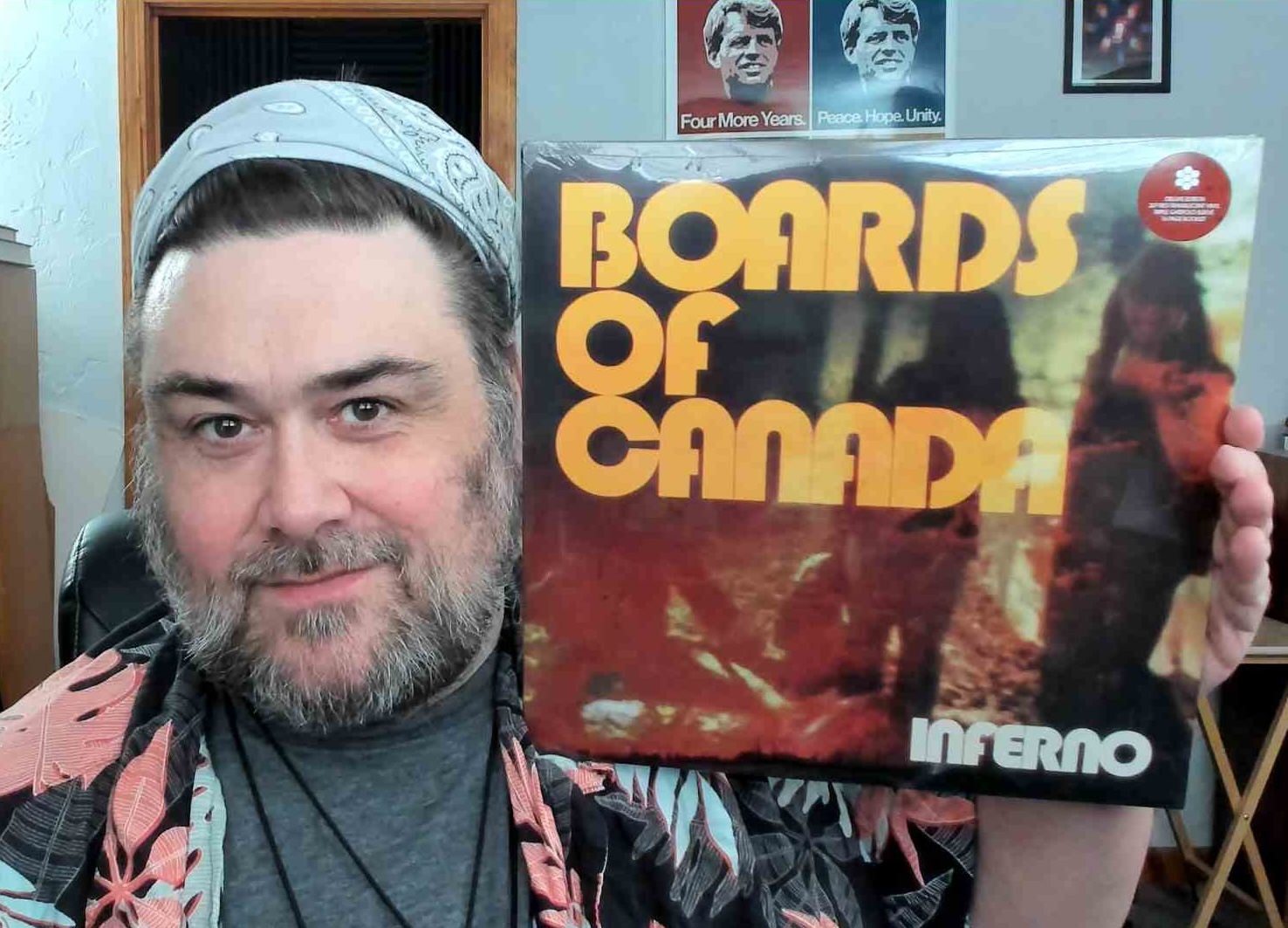
Greater Boston, Mass.…
HILOBROW: What forms of media do you “take in” the most regularly/frequently, during a typical day or week?
MICHAEL GRASSO: I’ve found in the last few years I watch way, way less episodic TV than I used to. I’m not sure when exactly the rupture happened but I feel like it was probably in the long, slow decline of broadcast TV and the rise of streaming services. COVID also probably had a lot to do with it. I mean, I was raised by broadcast television and it still looms very large in my interior imaginary, like many Americans of my generation. Cutting that cord has been very surprising to me. I could easily go off on a wild tangent about how I feel the television of my 1980s youth primed the pump for the national disaster we’re experiencing on so many levels right now, but I’m still fascinated by American television history — the sheer sausage-making of shaping the prime time network programming-watching American mind from the ’60s through about the ’90s, when cable and the internet started eating into broadcast TV’s share — and how it worked as a pacification and ideology-installation device for the average American. Of course these days we have all kinds of media designed to simultaneously pacify and anger; to me the phone screen is ultimately just a TV — indeed, its ultimate evolutionary form — no matter how “participatory” the internet may seem.
So on that note, I would say a good chunk of my visual media consumption in 2026 is done on Twitch and YouTube — low-key, low-engagement comedy/gaming streams. I still adore film and wish I had more opportunities to sit down for two uninterrupted hours and watch a movie the way it deserves to be. I’ve been trying to build up my physical media collection in the face of the media conglomerates trying actively to take that option away from us (on this note, my vinyl LP collection also continues to grow). But I would say a majority of the media I consume in a week is inevitably music.
HILOBROW: What music — genres, particular artists and songs — do you listen to during a typical day?
MICHAEL GRASSO: I recently decided to get rid of Spotify for, like, a thousand different reasons (I’m a hypocrite, I admit it; I did keep my YouTube subscription) but mostly because I infinitely prefer internet radio programmed by human beings to autoplay algorithms. I cannot tell you how many times I’ve discovered something new from a DJ and how few times an auto-shuffle has given me something new I’ve wanted to look up. I worked in internet radio a few years ago and programming dozens of DJs with their own histories listening to music, who are able to thoughtfully curate and juxtapose music… man, there’s nothing better. These days I tune into NTS pretty much every day; when I’m not listening to live shows (I lean towards hosts with specialties in jazz fusion, New Age, ambient, indie, and R&B/soul) NTS has some great genre-themed channels called “Mixtapes” that dig through their archives. And probably my most recent obsession is Vintage Obscura, a radio station that takes suggestions from the subreddit of the same name (“All tracks have fewer than 30,000 views on YouTube at the time of discovery and were released before 2000”) and plays them in genre blocks. The library music block, when it comes up in the rotation? Perfection.
HILOBROW: What work of literature (old or new) would you recommend to someone trying to make sense of today’s world?
MICHAEL GRASSO: I recently went back through Don DeLillo’s maybe lesser-known novels from the late 1970s and early 1980s, the “trilogy” of Players (1977), Running Dog (1978), and The Names (1982) and found them shockingly prescient for so many things we’re seeing manifest in 2026: the obvious mechanisms of conspiracy, violence, and cult movements behind the scenes of the deeper levels of governance in America today, along with the seeming impossibility of the individual to make a difference under such conditions.
HILOBROW: What work of nonfiction (old or new) would you recommend to someone trying to make sense of today’s world?
MICHAEL GRASSO: Lately I’ve been getting into what I call “conspiracy cheapies”; independently-published works of parapolitics that try to explore the mechanisms of secret control that underpin American hegemony since World War II. I could go through all the big names and classics (really, read David McGowan) but honestly I have been enjoying, with a huge grain of salt, some of the more liminal and maybe disreputable books in this genre. Even if the author ends up being a total crackpot, there’s usually gems in the bibliography that allow me to go and research things myself. I fully realize a lot of people don’t have the luxury of, or care enough to exercise, this option. I don’t think the problem with conspiracizing is the act itself but swallowing other people’s research hook, line and sinker. A lot of babies got thrown out with the bathwater back in the aftermath of Watergate and Vietnam, when journalists toiling in the fields of conspiracy writing got tarred with the “crackpot” brush, and we’re still dealing with the ramifications of that today.
On the more reputable side of things, I’ve been working through Mike Davis’s eminently-readable 1990s treatises on Los Angeles (City of Quartz and Ecology of Fear) for one of my tabletop role-playing game campaigns, and works on Lollardy, the Peasants’ Revolt and the general political aftermath of the Black Plague in late-1300s England for another campaign. Both sets of research definitely have ramifications for today’s world; it’s fun to read a late-medieval allegorical poem like, say, Piers Plowman, and see people 700 years ago making complaints about the immorality of the people with power that wouldn’t be out of place in one of those conspiracy cheapies I talked about above.
HILOBROW: How do you use social media these days?
MICHAEL GRASSO: I don’t feel great about the amount of time I spend in a week posting on social media. I know it’s an addiction, I know it essentially makes me more political powerless. It’s a way for our righteous anger to get channeled into useless declarations of our collective political impotence. It doesn’t help us organize against the system but instead leaves us more enmeshed within it. But I think it also doesn’t hurt to know we’re not alone in experiencing all this madness. I don’t know if any of the silliness, or paranoia, or pain that I post on Bluesky actually helps educate or inform anyone, anywhere. Maybe it’s enough that it helps me to have somewhere to put it all. But I realize the sheer amount of words I spew willy-nilly onto social media could also be channeled into cohesive writing with a didactic and political purpose.
MEDIA DIET series: MATTHEW BATTLES | ADRIENNE CREW | HOLLY INTERLANDI | CAROLYN KELLOGG | MARK KINGWELL | FLOURISH KLINK | ADAM McGOVERN | CHARLIE MITCHELL | TOM NEALON | ANNIE NOCENTI | GARY PANTER | LYNN PERIL | JONATHAN PINCHERA | NICHOLAS ROMBES | CARLO ROTELLA | LUCY SANTE | SETH | MIKE WATT | JUDITH ZISSMAN | & many others! Visit the SERIES INDEX.