
MEDIA DIET
By:
May 12, 2026
A weekly series exploring the media “input” of a group of people — HILOBROW’s friends and contributors — whose “output” we admire.
Carolyn has been a valued HILOBROW contributor since 2010. Her first post was on the topic of RAYMOND CHANDLER. Her most recent contributions to this publication include: MAD MAX | IT CAME FROM OUTER SPACE.
Albuquerque…
HILOBROW: What forms of media do you “take in” the most regularly/frequently, during a typical day or week?
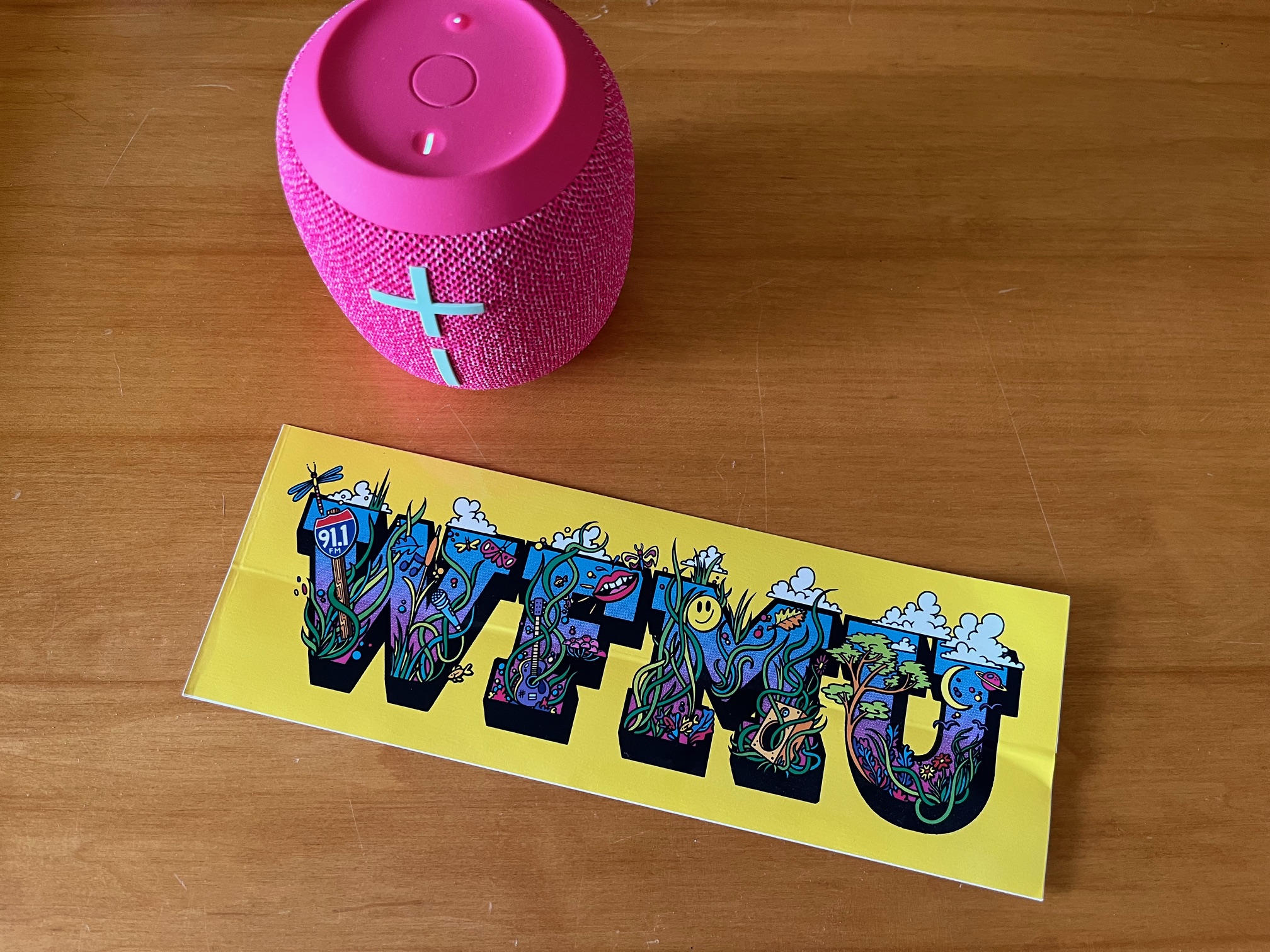
CAROLYN KELLOGG: I am addicted to Clay Pigeon’s morning show on WFMU. It is a true radio show, driven by his own eclectic tastes, played live (although I’m catching it a bit later from the west coast). Despite the fact that the show is called Wake ‘n Bake, it’s not stoner-y, unless you count some of the 1970s bangers he mixes in. He’s the best kind of morning host, playing songs that have some momentum to start the day; a recent playlist included Lambchop, Dr. John, XTC and AFI. He also does expertly produced, silly running skits, and offbeat call-in segments that make it feel like not just a morning show but a meta-morning show. Rock on.
HILOBROW: What are your reading habits?
CAROLYN KELLOGG: As a longtime book critic, I have a fairly established set of habits for reading books for review. I like to finish about a week before my review is due, so it’s fresh in my mind. I read sitting in a good chair with good light and leave my phone elsewhere. If I have a long day of reading, I may move from one chair to another (woohoo!). I can read a book in a day if necessary, but I prefer to do so over a couple of days, to get some air around it in my brain. That said, I don’t like to read any other books while I’m in the midst of a book and its review (magazines and the internet are OK).
Extracurricularly, I’ve been reading a lot of history books, particularly about Los Angeles and the American west. I finished Before L.A.: Race, Space and Municipal Power in Los Angeles, 1781–1894 by David Samuel Torres-Rouff and just started America, América: A New History of the New World by Greg Grandin. Because history can be slow going (Grandin excepted), I try to have an additional, lighter book to turn to, pulling something unread off my shelves. Recently that’s included Case Histories by Kate Atkinson, which I expected to love but was kind of meh on, and Golden Days by Carolyn See, which I expected to be meh on but loved.
HILOBROW: What’s the best movie you’ve seen recently?
CAROLYN KELLOGG: When I was in college, one of my roommates had the movie poster of Aguirre: Wrath of God on his wall, burning Klaus Kinski’s face and Werner Herzog’s name into my brain. Nevertheless — or, rather, because of that — I’ve avoided much of their shared output. I’ve seen many Herzog films, but post-Kinski.
I finally fixed that not with Aguirre, but Fitzcarraldo. Holy cow! Fitzcarraldo is amazing!
I know it’s hardly revelatory to discover a 1982 film in 2026, but I think it’s so good that I’d like to see it displace Apocalypse Now on many best-of lists. It’s a brilliant late-20th-century film about a man’s folly and colonialism in a jungle where they don’t belong. Fitzcarraldo, though, also has complex ideas about art and commerce, which get as muddy as the struggling actors and extras trying to drag that steamship over the hill. I think Fitzcarraldo wasn’t recognized as the masterpiece it is when it came out. I wonder if film critics and audiences were burned out on epic grand cinema; maybe they thought more films were coming, one every three years, brilliant directors and actors driven to the brink to tell a devastating story on screen. Not so much.
In Fitzcarraldo, set around 1900 in Peru, Kinski’s character wants to move a steamship across a mountain to create a new way to reach a remote region. For him the goal is an opera house; for some of his backers, rubber plants. None of that is explained with much clarity — we’re dropped in the middle of a jungle with Kinski and his girlfriend Claudia Cardinale rushing to catch an opera, then socializing with the local wealthy and dissolute expats of the region.
He eventually gets a boat, a huge boat, repairs it and takes it down the river, into dangerous territory. Everyone knows the project is filled with folly, but as long as there’s some money it in, or its promise, or just for a change of scene, they’re willing to go along with this crazy plan. In some ways, that is filmmaking, and maybe other ventures too; of course, when people on shore might be trying to kill you, the stakes are higher. And that’s before you even get to the mad part about moving the boat over the mountain.
That sequence was shot without special effects. It is jawdropping.
The film’s production was famously troubled — there are books and movies — but I haven’t explored that. I was so blown away by Fitzcarraldo that I just wanted to sit with it as a work of art for a while. And start by watching it again.
MEDIA DIET series: MATTHEW BATTLES | ADRIENNE CREW | HOLLY INTERLANDI | CAROLYN KELLOGG | MARK KINGWELL | FLOURISH KLINK | ADAM McGOVERN | CHARLIE MITCHELL | TOM NEALON | ANNIE NOCENTI | GARY PANTER | LYNN PERIL | JONATHAN PINCHERA | NICHOLAS ROMBES | CARLO ROTELLA | LUCY SANTE | SETH | MIKE WATT | JUDITH ZISSMAN | & many others! Visit the SERIES INDEX.