
PLANET OF PERIL (46)
By:
April 8, 2026
One in a series of posts, about forgotten fads and figures, by historian and HILOBROW friend Lynn Peril.
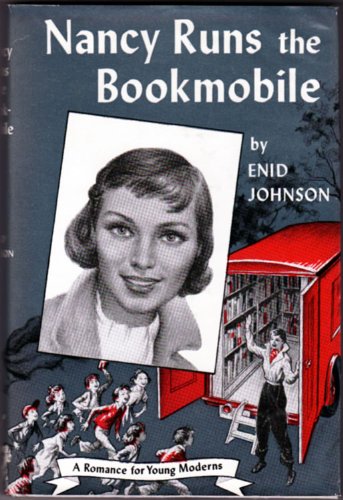
First installment in the mini-series CAREER NOVELS FOR GIRLS.
“But you must want to be something!” My mother was exasperated. I remember we were standing in the kitchen, and she had asked me for the umpteenth time what I wanted to do with my life. It was the summer before my senior year in high school; decisions had to be made. Once again I had responded to her question with something along the lines of, “I have no idea.” At that moment in time, all I really wanted to do was go to punk rock shows and maybe move to New York City after graduation, where I would do … something … for a year or so and then go to college. This was not an answer either of my parents wanted to hear so the verbal equivalent of shrugged shoulders had to suffice.
Perhaps my youthful indecision is one reason why I enjoy career romance novels so much. Written for tween and teen readers, published mostly from the 1940s to ’70s, they presented “the requirements, problems, pleasures and future possibilities of selected fields of work that are worthwhile for young people today,” according to the back cover of one such book. Who can resist titles like Penny Marsh Finds Adventure in Public Health Nursing, Betsy Yates: Realtor, Shirley Clayton: Secretary, or Sally, Army Dietitian? Not me.
Ideally written by women who worked in said careers, or whose authors consulted heavily with women who did (for example, before she wrote Nancy Runs the Bookmobile (1956), author Enid Johnson took a part-time job as a librarian), these books do their best to make the world of work seem exciting, especially when focused on the often mundane jobs available to women before the liberation movement opened up the professions in the 1970s.
They also do their best to wrap up everything in bridal satin by the story’s end. This may seem contradictory. After all, our protagonist has just spent 200 pages or so learning all about the minutiae of what it takes to be, say, a bookmobile librarian. Now she’s getting married and presumably quitting her job because the prevailing cultural norm in the pre-feminist mid-20th century was that a woman’s “true” career was marriage and motherhood — at least when it came to middle- and upper-class white women.
Career indecision actually kicks off the plot line of Nancy Runs the Bookmobile. Recent college graduate Nancy “Nan” Anderson has a teaching degree but doesn’t want to teach. She is seated in the office of the Superintendent of Schools, about to request a job placement anyway, when the phone rings. He answers it:
Do I understand you to say, Mrs. Archer, that Miss Withers won’t be able to run the Bookmobile, after all? … You are trying to find someone to substitute for a few weeks, eh? What’s that? Miss Withers may not be able to take the job at all because the doctor has ordered her to take her mother to Arizona as soon after the operation as she is able to travel? Dear me, Mrs. Archer! What will you do?
Dear me, what indeed? Ballsy Nan volunteers herself. She grew up on a farm and already knows how to operate a truck, a plus because otherwise they’d have to hire “a man to drive and a woman librarian.” Alas, the job will have to be on a temporary basis because she doesn’t have a degree in library science. Nan eagerly says yes anyway.
Decked out in pants and a parka, she discovers she loves helping the children on her rural route find good reading material, including, in a very meta moment, one of the career novels listed on Nancy’s back cover (Kathie, the New Teacher). She decides to become a fully fledged children’s librarian.
But before she can enroll at Western Reserve University, Nan meets Tad Rivers, home from Harvard to help his sick father run the family farm. Tad’s working on an advanced degree in history. In an unexpected twist, his goal is to write a textbook “that tells the truth — not just glosses over the terrible mistakes the pioneers made … how some of them treated the Indians and stole their land.”
Nor is this the book’s only progressive moment. Nan moves into the The Co-operative House on campus, populated by young men and women from all over the world, and where one of her two roommates is Black. Nan is thrilled “to put into practice her theories of race equality and the brotherhood of man.” This was a big deal for a YA novel in 1956, the year of the Montgomery bus boycott. Sarah Jones, Lee Tang, and Ali Hassam may be stereotypes, but at least Nan’s relationships with them modeled respect and friendship, not to mention introduced readers to non-white characters, something that can’t be said for most career novels.
Not that Nancy Runs the Bookmobile is a paragon of twenty-first century wokeness. Offered a fifteen-minute radio spot to tell a children’s story, she chooses Claire Hutchet Bishop’s The Five Chinese Brothers. And instead of calling HR when creepy announcer, Harold Mathews, pressures her into dating him, Nan accepts because she needs him to raise community awareness about the need for another bookmobile.
By the time Tad proposes on the next-to-last page Nan has received her MA, had a fling with concentration camp survivor and fellow grad student Jan Pulaski, gotten disabled teen Mabel Smithers out of the house and into the community choir, and been placed in charge of the town’s bookmobile program. Luckily for her, Tad believes in women working after marriage — or so he says at book’s end.
Reading along as all this unfolds is what makes Nancy Runs the Bookmobile and other career novels so eye-rollingly entertaining. Often absurd, frequently predictable, occasionally infuriating, they are one of my favorite security blankets in these strange and uncertain times.
MORE LYNN PERIL at HILOBROW: PLANET OF PERIL series | #SQUADGOALS: The Daly Sisters | KLUTE YOUR ENTHUSIASM: BLOW-UP | MUSEUM OF FEMORIBILIA series | HERMENAUTIC TAROT: The Waiting Man | KIRB YOUR ENTHUSIASM: Young Romance | CROM YOUR ENTHUSIASM: Fritz Leiber’s Conjure Wife | HILO HERO ITEMS on: Tura Satana, Paul Simonon, Vivienne Westwood, Lucy Stone, Lydia Lunch, Gloria Steinem, Gene Vincent, among many others.