
RADIUM AGE ART (1933)
By:
December 4, 2024
A series of notes regarding proto sf-adjacent artwork created during the sf genre’s emergent Radium Age (1900–1935). Very much a work-in-progress. Curation and categorization by Josh Glenn, whose notes are rough-and-ready — and in some cases, no doubt, improperly attributed. Also see these series: RADIUM AGE TIMELINE and RADIUM AGE POETRY.
RADIUM AGE ART: 1900 | 1901 | 1902 | 1903 | 1904 | 1905 | 1906 | 1907 | 1908 | 1909 | 1910 | 1911 | 1912 | 1913 | 1914 | 1915 | 1916 | 1917 | 1918 | 1919 | 1920 | 1921 | 1922 | 1923 | 1924 | 1925 | 1926 | 1927 | 1928 | 1929 | 1930 | 1931 | 1932 | 1933 | 1934 | 1935 | THEMATIC INDEX.
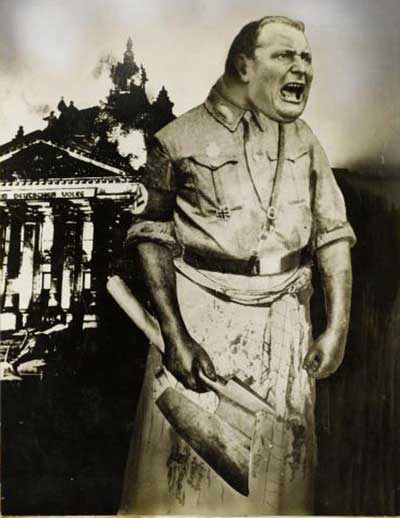
Adolf Hitler appointed Chancellor of Germany; Reichstag fire in Berlin; Goebbels named Hitler’s Minister of Propaganda; Hitler granted dictatorial powers; the first Nazi concentration camps; boycott of Jews in Germany begins; all books by non-Nazi and Jewish authors burned; modernist art in Germany suppressed.
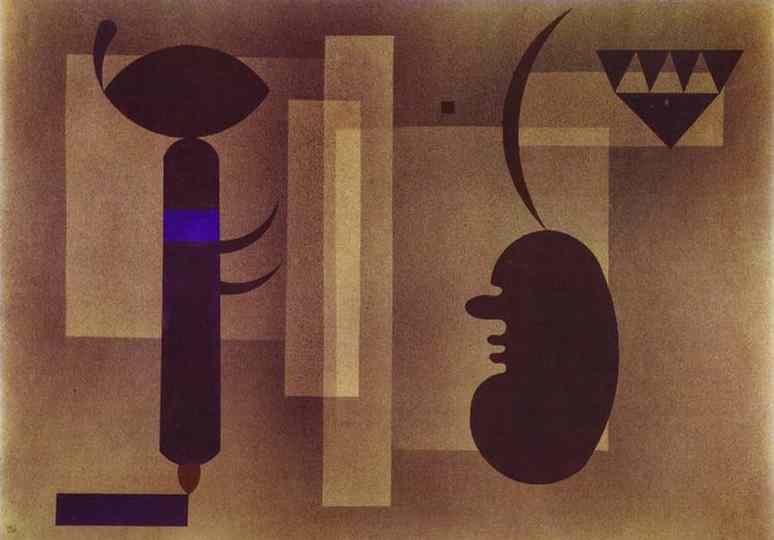
Sixty thousands artists and authors leave Germany, including Kandinsky and Klee.
George Grosz emigrates from Nazi Germany to the United States.
Black Mountain College founded by John Andrew Rice.
Between 1933 and 1943 the US government, for the first and last time, subsidized art on a massive scale. A series of federal programs endorsed a public role for artists, beginning with the Public Works of Art Projec (1933–34), and later the Federal Art Project (1935–43). Willem de Kooning, Arshile Gorky, Philip Guston, Lee Krasner, Jacob Lawrence, Alice Neel, Louise Nevelson, Isamu Noguchi, Jackson Pollock, Mark Rothko, Ben Shahn, and others got their start thanks to these programs.
Also see: RADIUM AGE: 1933.
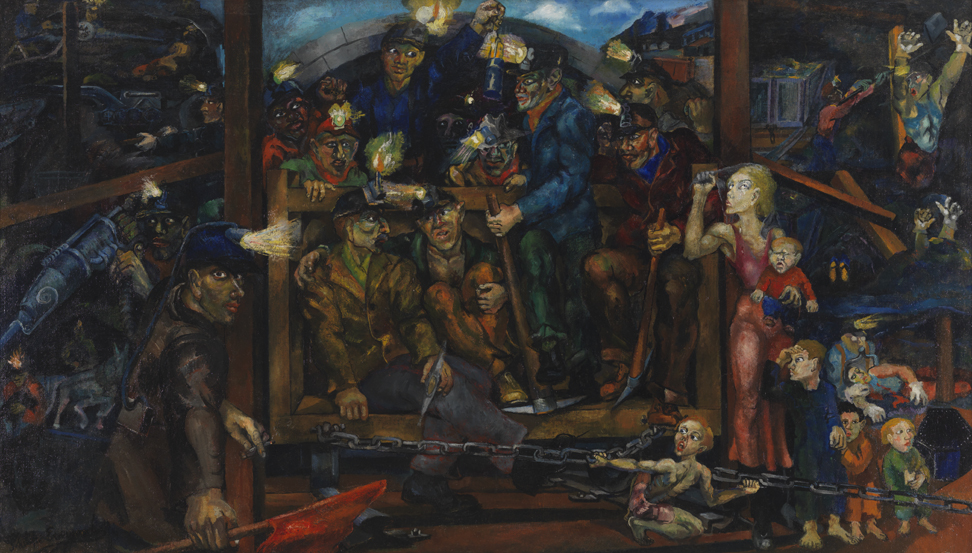
From the Pennsylvania Academy of the Fine Arts website:
Long considered among the most significant easel-sized paintings of the 1930s aimed at political and humanist themes, Evergood’s painting was an appeal for his audiences to work for change in the world. It was painted for inclusion in the exhibition, “The World Crisis Expressed in Art on the Themes Hunger, Fascism, War,” held under the auspices of the leftist John Reed Club in New York City from December 1933 to January 1934. The artist held nothing back in the resulting work, ambitiously crafting an empathetic secular altarpiece to workers for an audience he hoped would consider him legitimate and authentic as a politically-committed artist. In a letter written to National Director of the Federal Art Project, Holger Cahill, Evergood identified the three parts of his triptych-like composition, from left to right: Labor in Darkness, Rescue Squad, and Tragedy of Entombment.
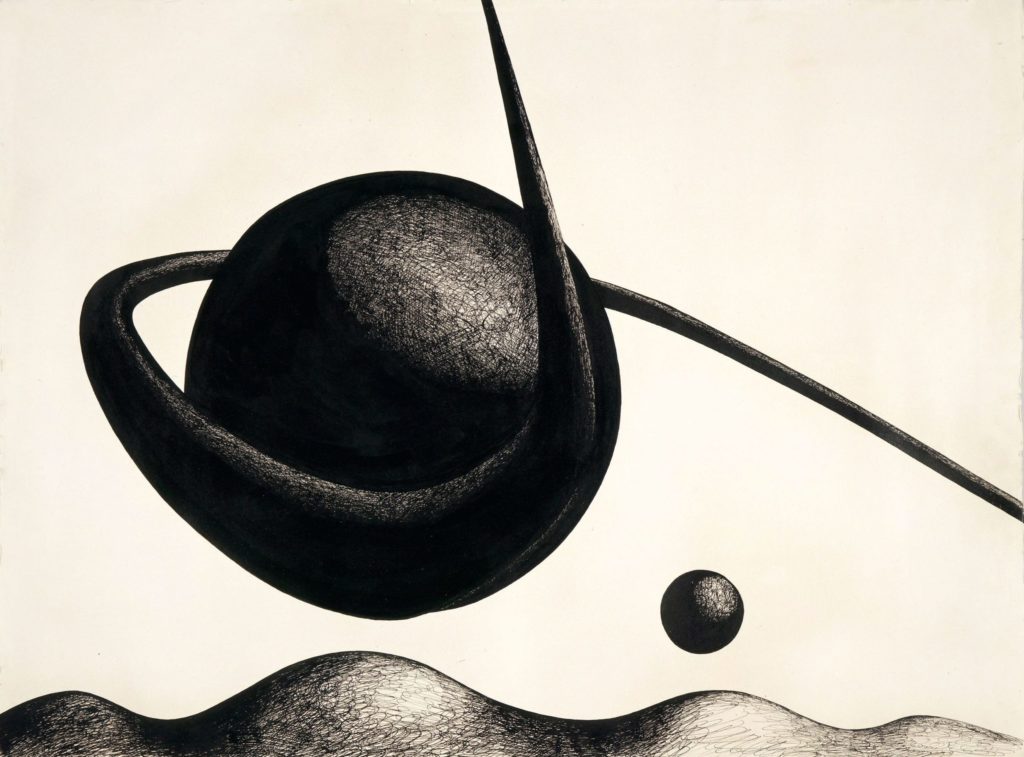
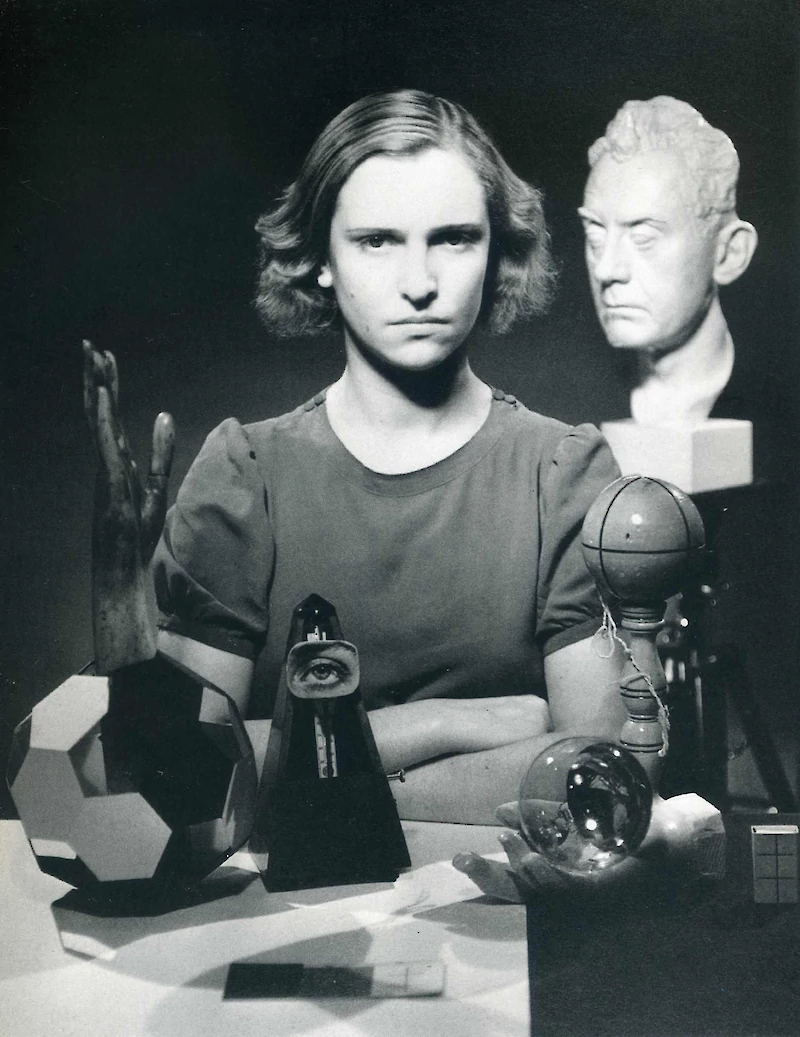
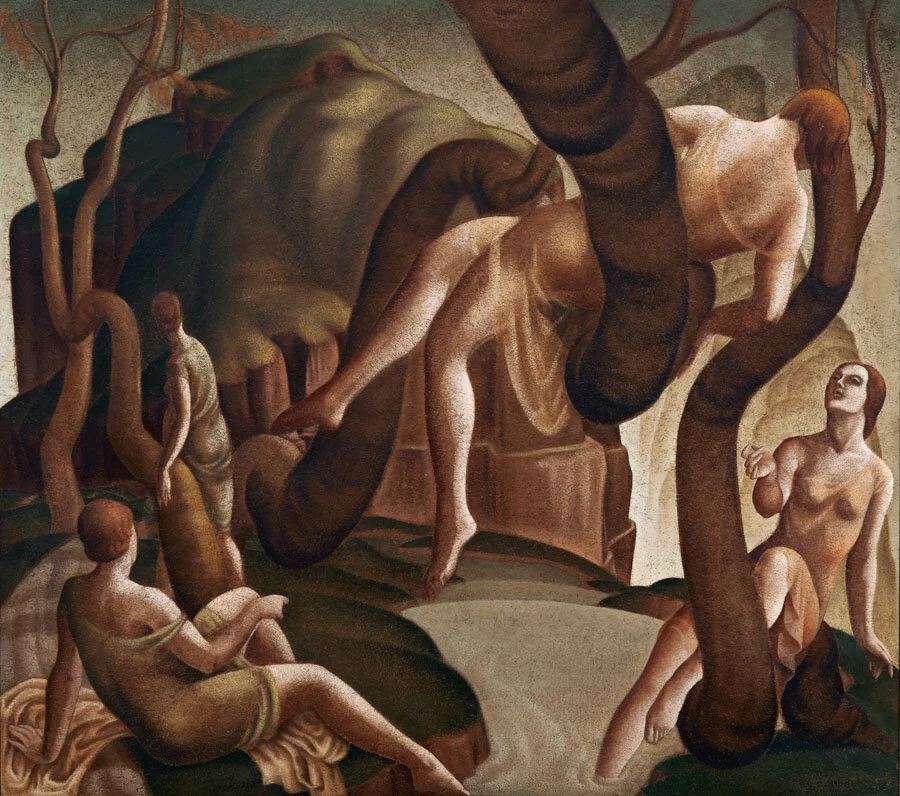
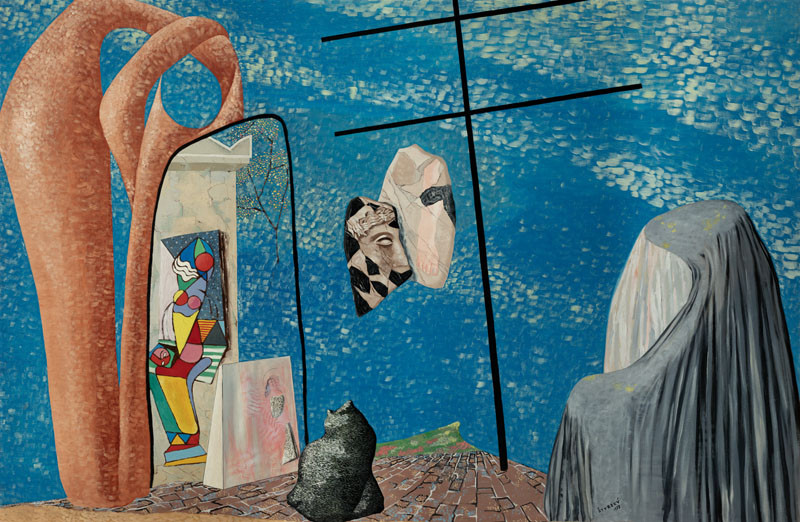
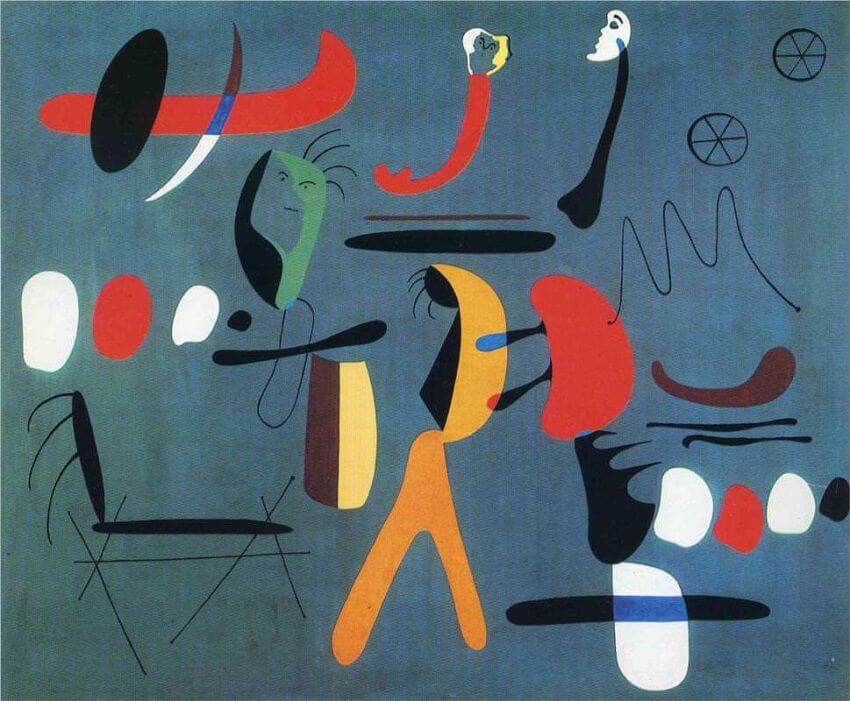
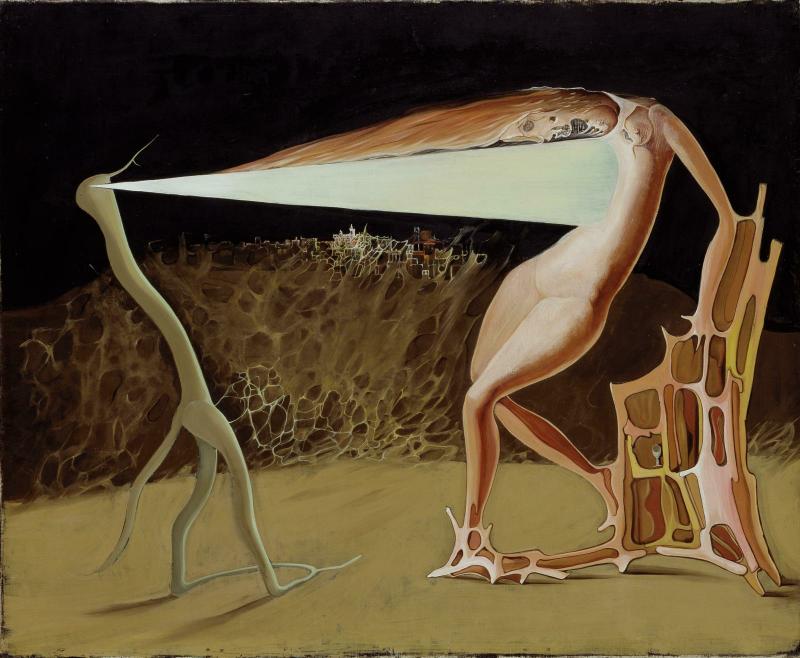
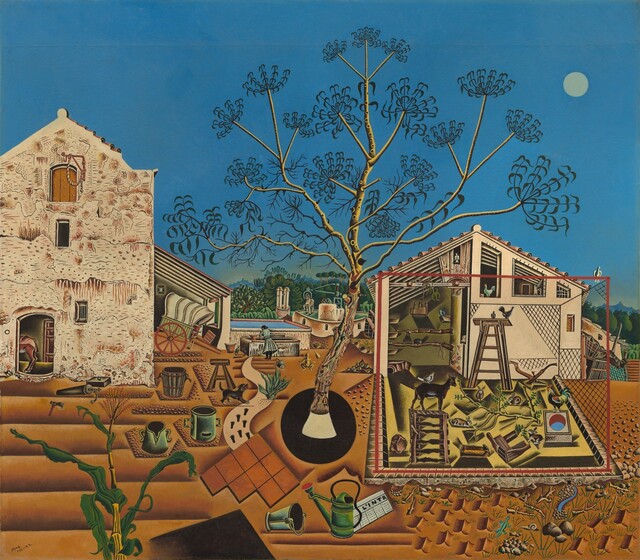
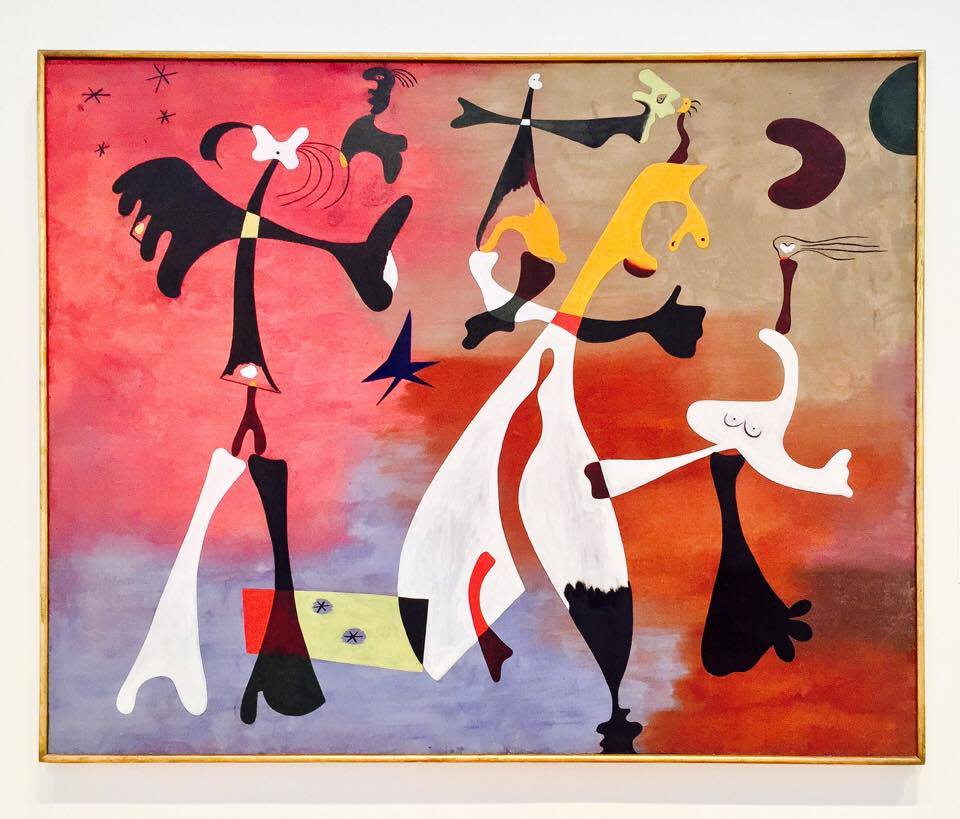
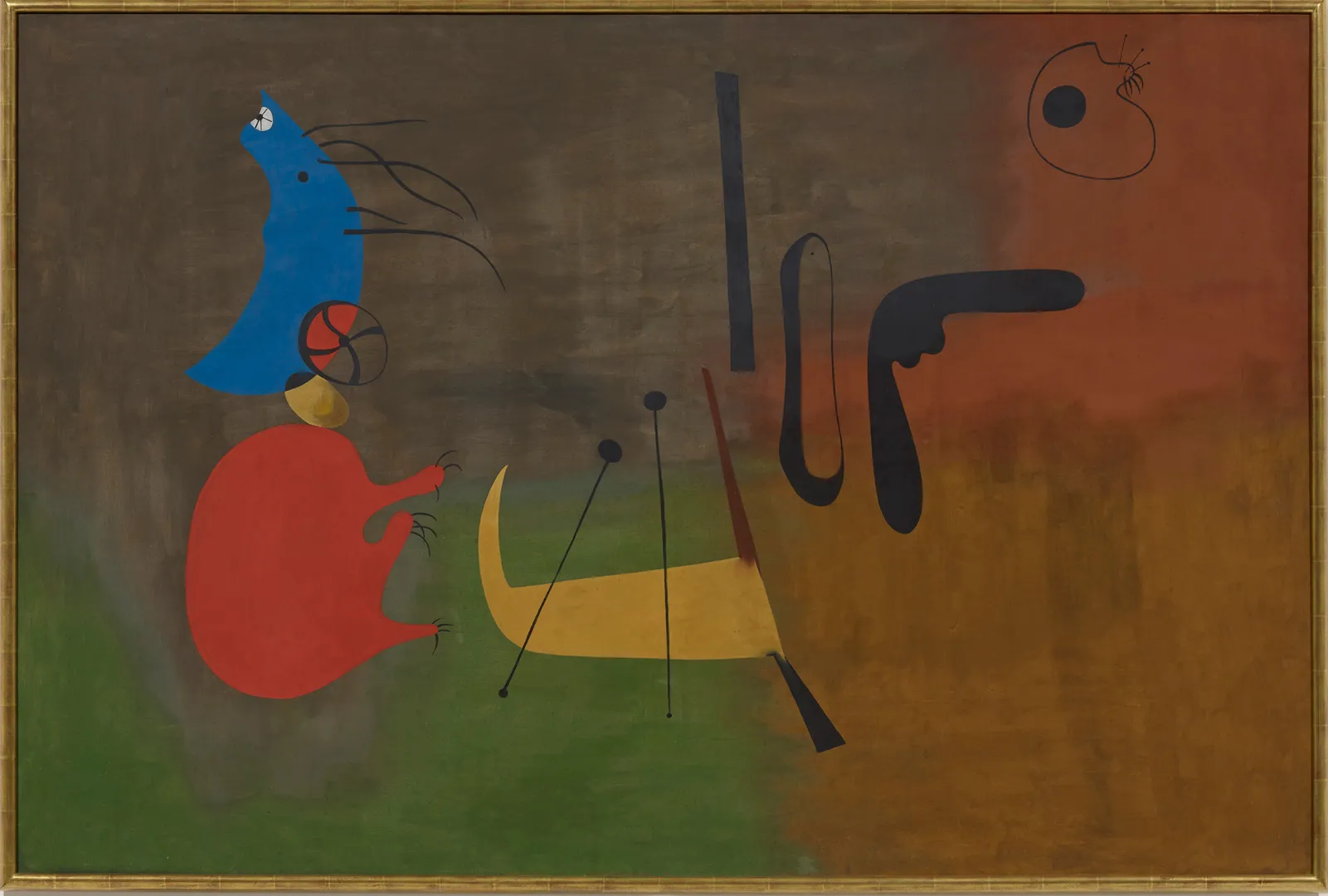
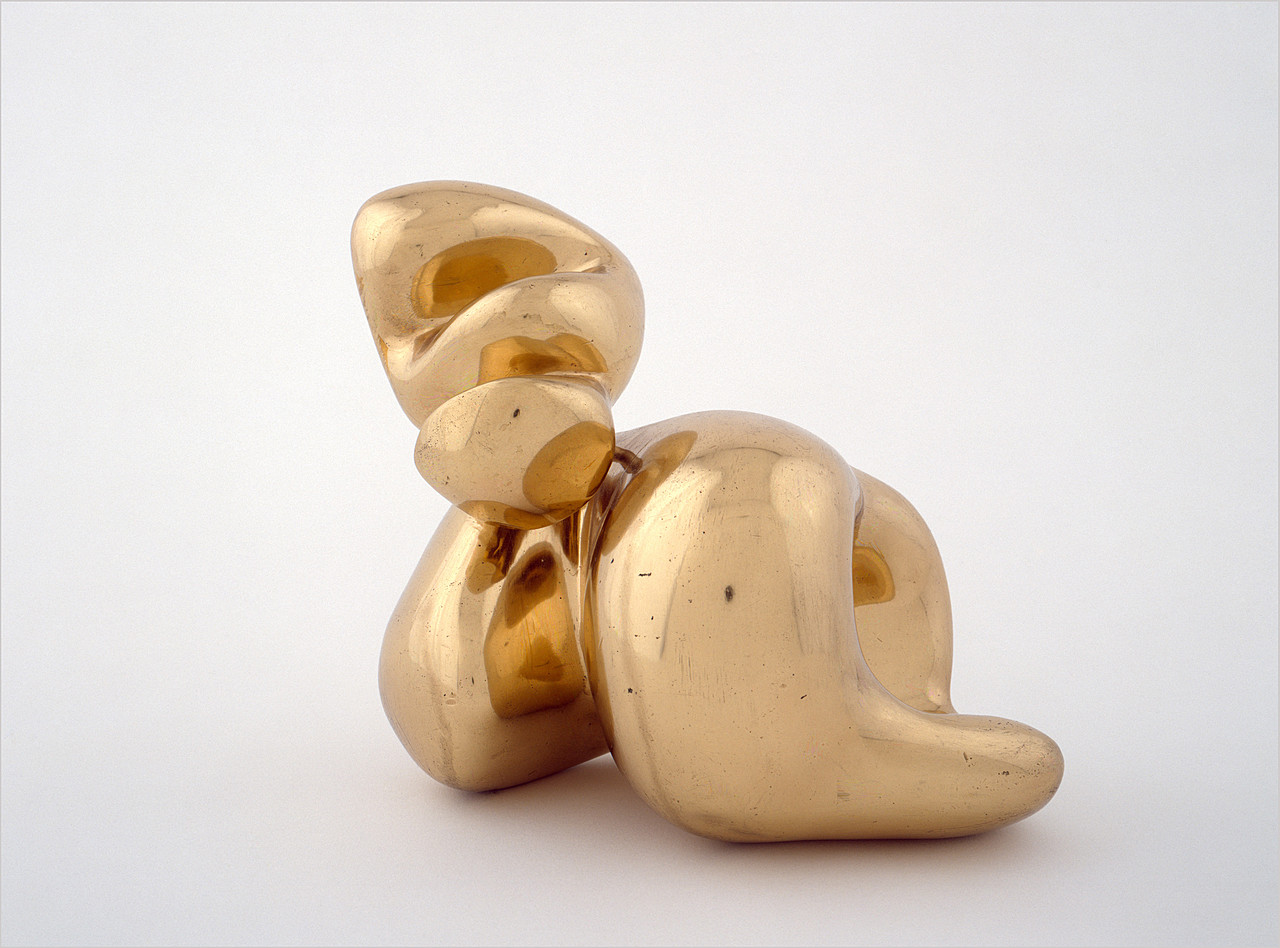
Miró’s paintings based on collages of (advertisements for) household objects and machinery transform the objects into biomorphic figures. In this series of paintings we find a universe of primitive creatures at different stages of evolution.

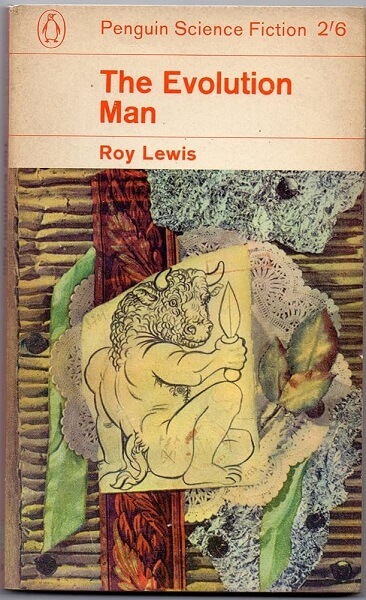
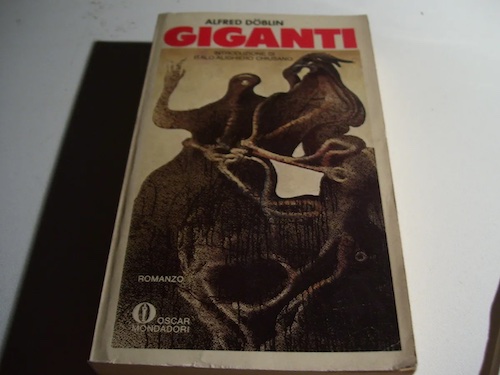
See below, for a use of this image as an sf book cover illustration.
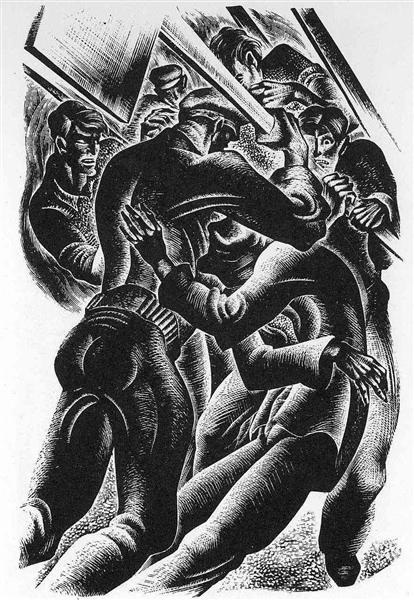
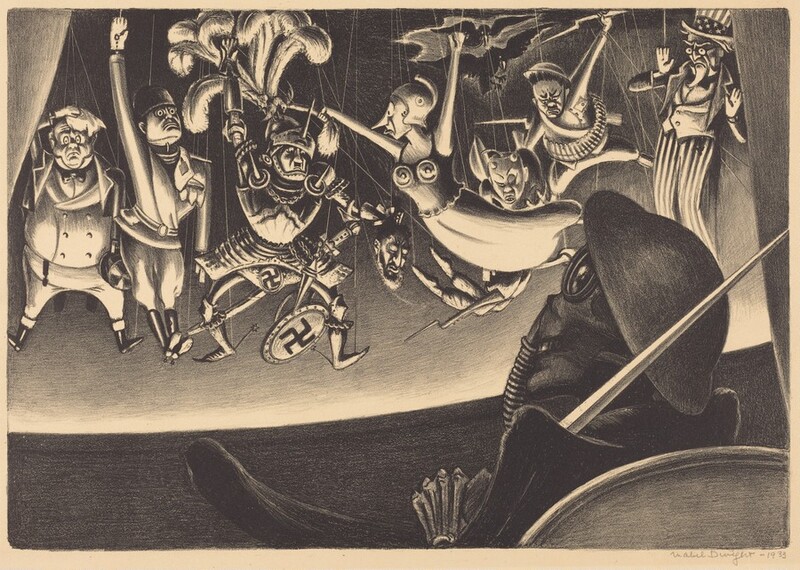
From John P. Murphy’s New Deal Art (2025):
Ward’s 1933 wordless novel, Prelude to a Million Years, made vivid the inner conflict of the Depression-era artist. Should an artist follow their personal muse>? Or should they make art in the service of progressive change?
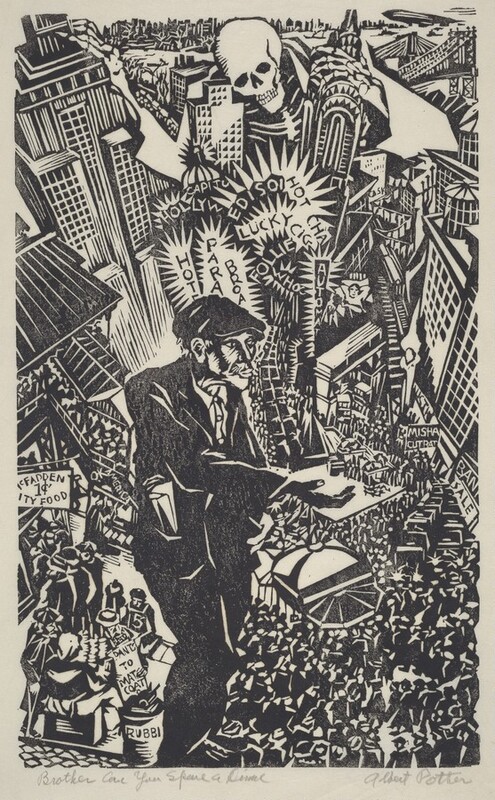
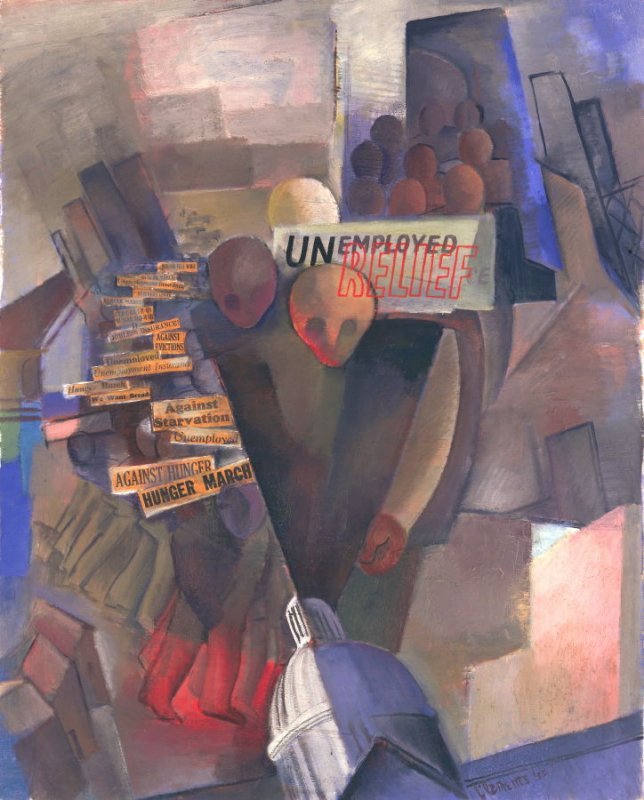
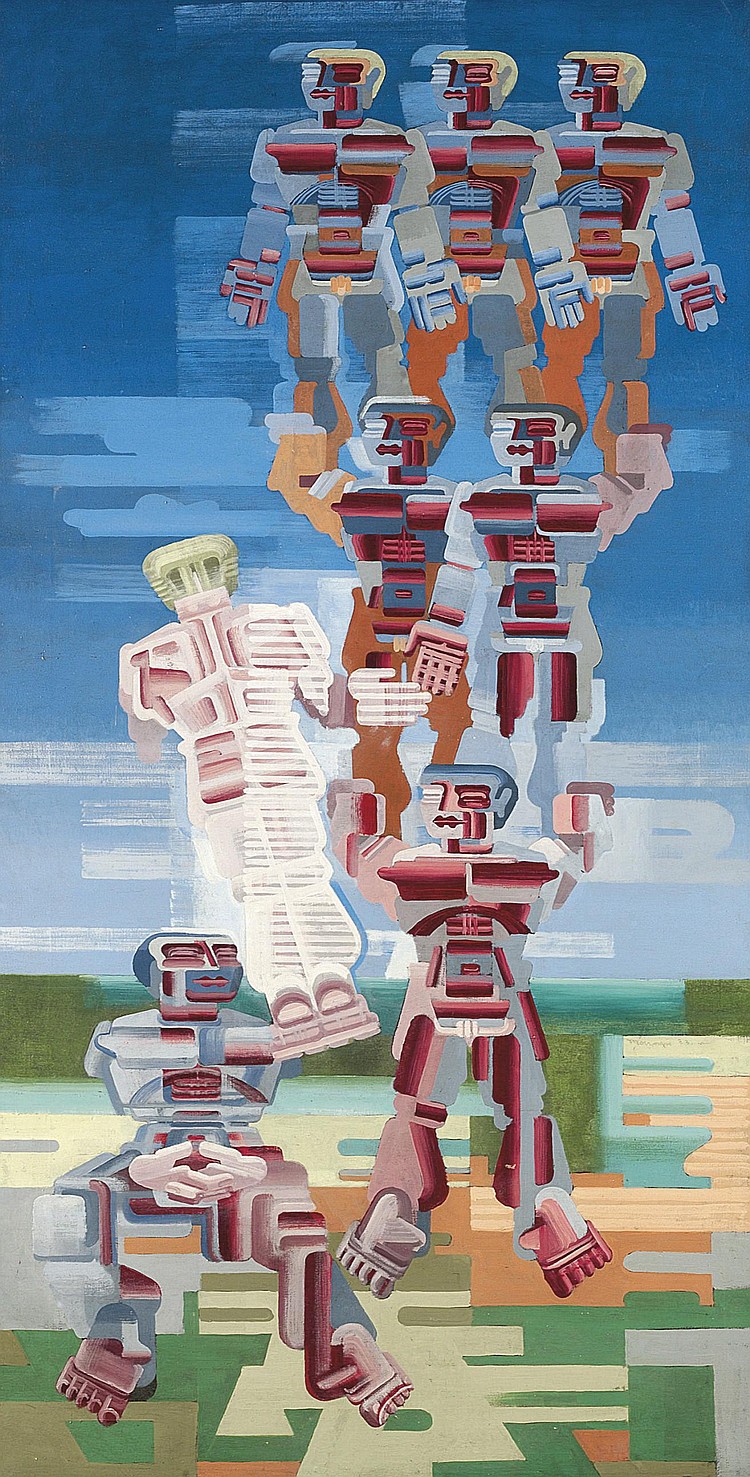
From John P. Murphy’s New Deal Art (2025):
In Grace Clements’s (1905-69) Winter, 1932 a battalion of specters, hollowed out by hunger and rage, stride forward in a topsy-turvy world of fractured planes and stuttering architecture. Headlines clipped from newspapers advance alongside them: Hunger March, Against Hunger, Against Starvation. The word RELIEF is stenciled in red, the color repeated in the marching feet-aggressive notes in the earthy palette of ochres and browns. The dome of the chiaroscuro Capitol slants at an axis, a house divided.
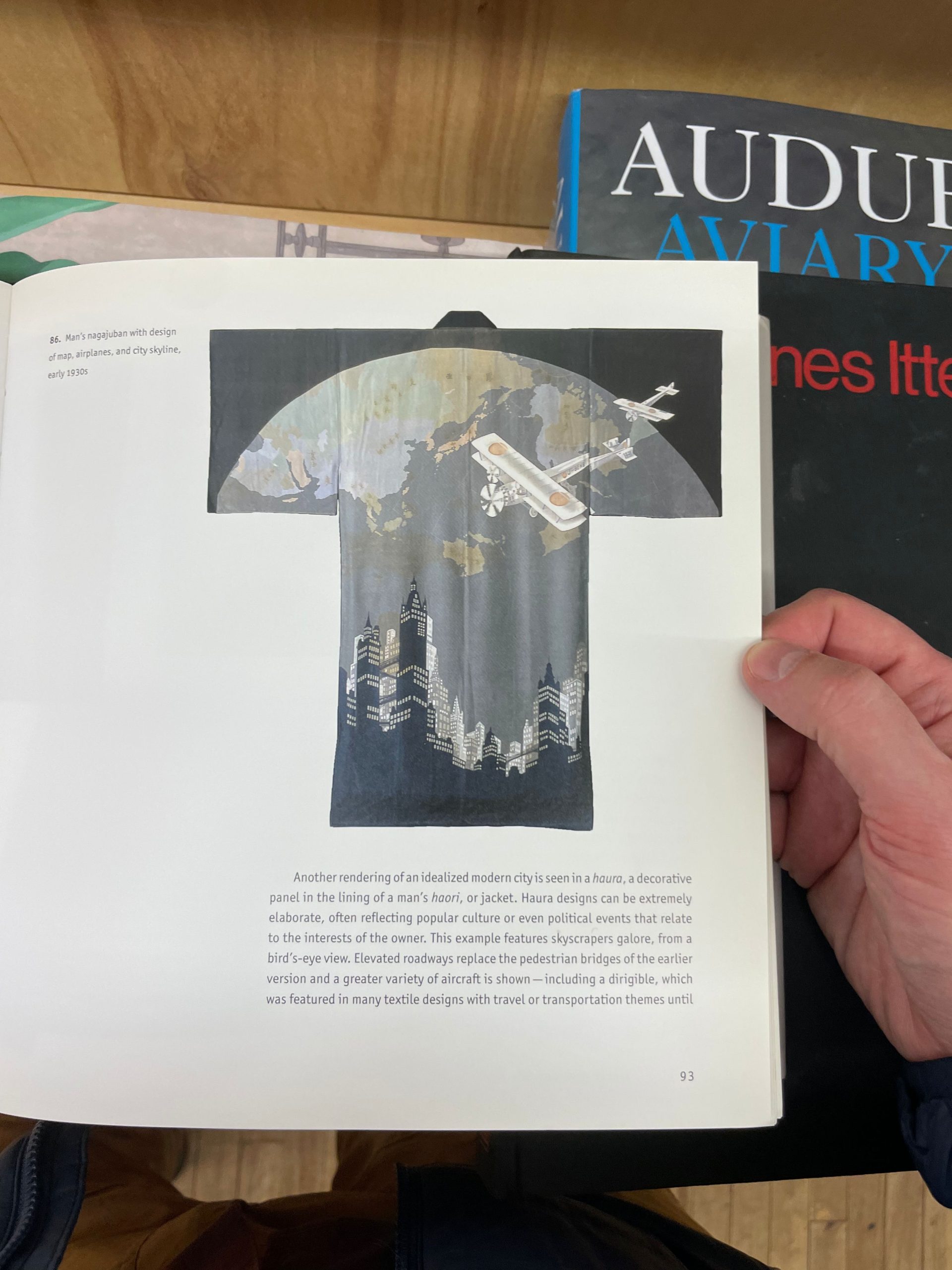
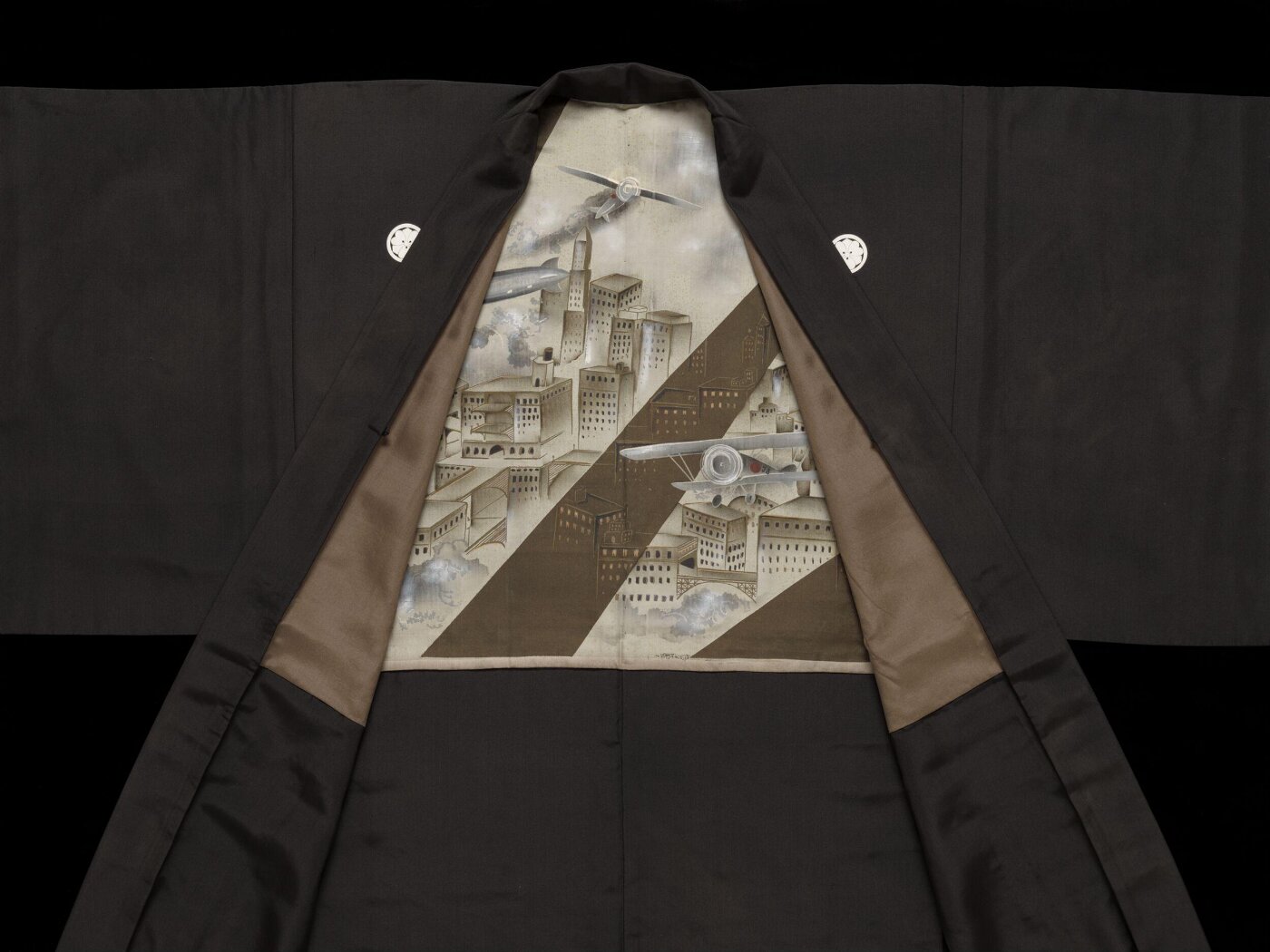
From the V&A Museum website:
Haori (kimono jacket) for a man of black plain weave silk (habutae) with five mon. Lined with brown plain weave silk, the back section printed with a design of two aeroplanes and a zepplin flying over a city of skyscrapers. The sky is cloudy with lightning flashes and the image is divided diagonally into light and dark to suggest searchlights.
Motifs such as aeroplanes and skyscrapers, symbols of Japan’s progress and modernity, were a popular choice for the lining of men’s kimono jackets. Such designs are known as omoshirogara, which roughly translates as ‘novelty designs’.
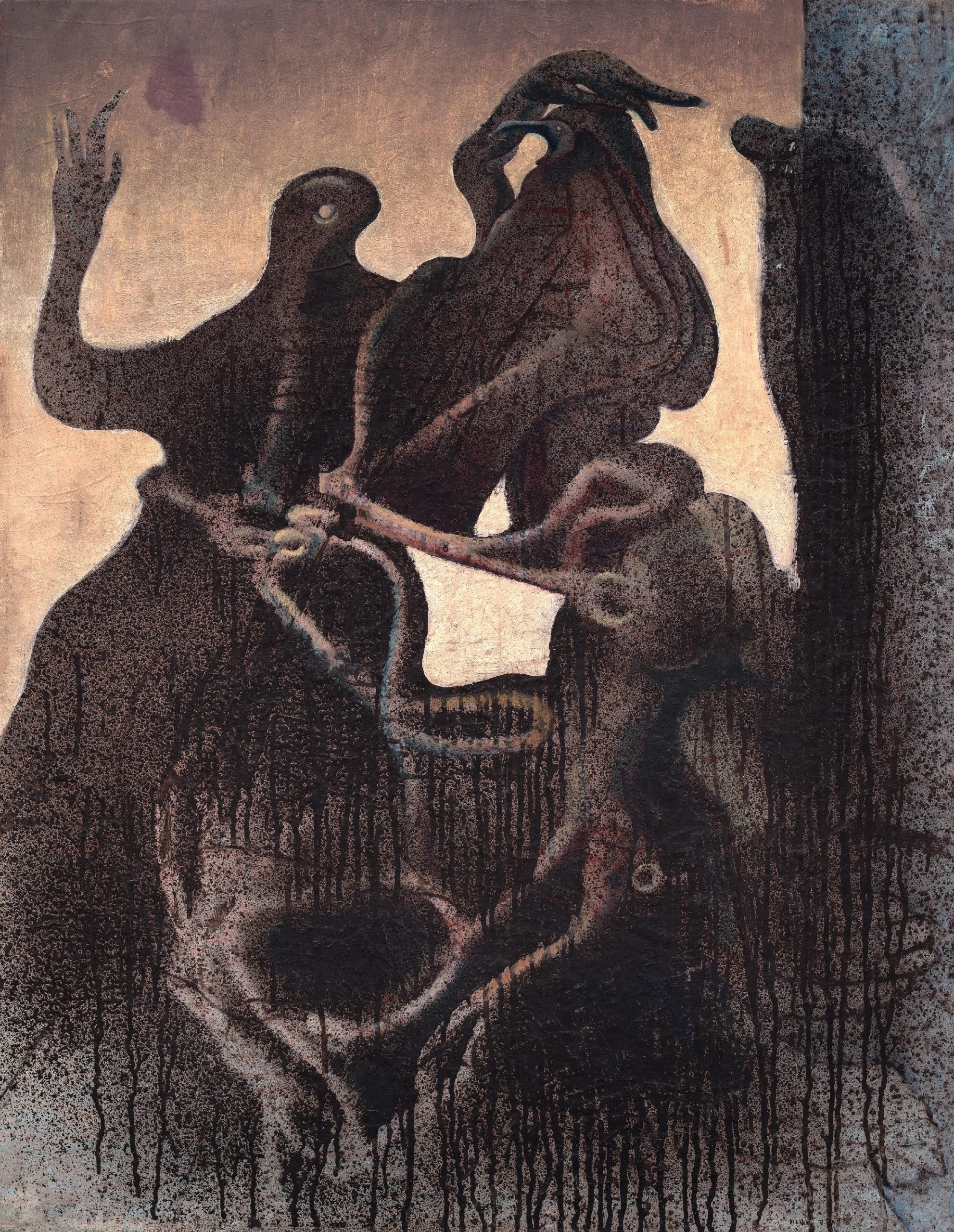
Ernst’s painting was used as the cover illustration for a 1980s edition of the 1920s sf novel Giganti by Alfred Döblin.
ALSO:
MORE RADIUM AGE SCI FI ON HILOBROW: RADIUM AGE SERIES from THE MIT PRESS: In-depth info on each book in the series; a sneak peek at what’s coming in the months ahead; the secret identity of the series’ advisory panel; and more. | RADIUM AGE: TIMELINE: Notes on proto-sf publications and related events from 1900–1935. | RADIUM AGE POETRY: Proto-sf and science-related poetry from 1900–1935. | RADIUM AGE ART: Proto-sf and science-related fine art from 1900–1935. | RADIUM AGE 100: A list (now somewhat outdated) of Josh’s 100 favorite proto-sf novels from the genre’s emergent Radium Age | SISTERS OF THE RADIUM AGE: A resource compiled by Lisa Yaszek.