
CAHUN YOUR ENTHUSIASM (INTRO)
By:
January 1, 2026
An exchange from Greta Gerwig’s Barbie — this scene takes place after Stereotypical Barbie (Margot Robbie) returns to Barbie Land, and discovers that Ken (Ryan Gosling) has spearheaded a misogynistic, patriarchal cultural revolution there — has stuck with me.
Doctor Barbie (Hari Nef), now wearing a French maid’s outfit, coquettishly asks the Kens, “Anyone need a brewski beer?” Horrified, Stereotypical Barbie says, “But you’re a doctor…” To which Doctor Barbie replies, “I like being a helpful decoration!” Physicist Barbie (Emma Mackey) agrees: “I like not having to make any decisions! It’s like a spa day for my brain… forever!”

Some indigenous folks have found Gloria (America Ferrara)’s commentary on this topy-turvy situation offensive. They are correct, the comparison she makes should not have been milked for laughs. That said, however, Gloria’s penetrating diagnosis of how the unthinkable revolution that’s happened in Barbie Land could possibly have happened is very much on point. This is the exchange that has stuck with me:
STEREOTYPICAL BARBIE: What is wrong with them?
KEN: We just explained to them the immaculate, impeccable seamless garment of logic that is patriarchy… and they crumbled.
GLORIA: Oh. My. God. This is like in the 1500s with the indigenous people and smallpox! They had no defenses against it!
A crucial discovery that we’ve made, since, let’s say (in my judgment as an amateur cultural historian) 1968 or so, is this: A sociocultural “vaccine” that trains a society’s “immune system” to fight a sociocultural “virus” (i.e., by recognizing it and rapidly producing defenses to stop infection before it spreads) is by no means a permanent fix. One generation’s “inoculation” doesn’t automatically mean that subsequent generations are inoculated. Without periodic “booster shots,” sooner or later every sort of pernicious nonsense and injustice can and will make a comeback — from superstition, prejudice, blind faith, traditional authority, and censorship to religious intolerance, rigid social hierarchies, hereditary privilege, colonialism, and slavery.
Not to mention: fascism.
With the exception, perhaps, of assigned readings, c. 7th grade, of The Diary of a Young Girl (an inoculation against the related viruses of anti-Semitism and race hatred, at least, if not fascism itself) those of us too young to remember WWII weren’t thoroughly inoculated against the virus that has in recent years infected the United States. And thanks to the culture wars, in some parts of these United States kids today aren’t inoculated against fascism at all.
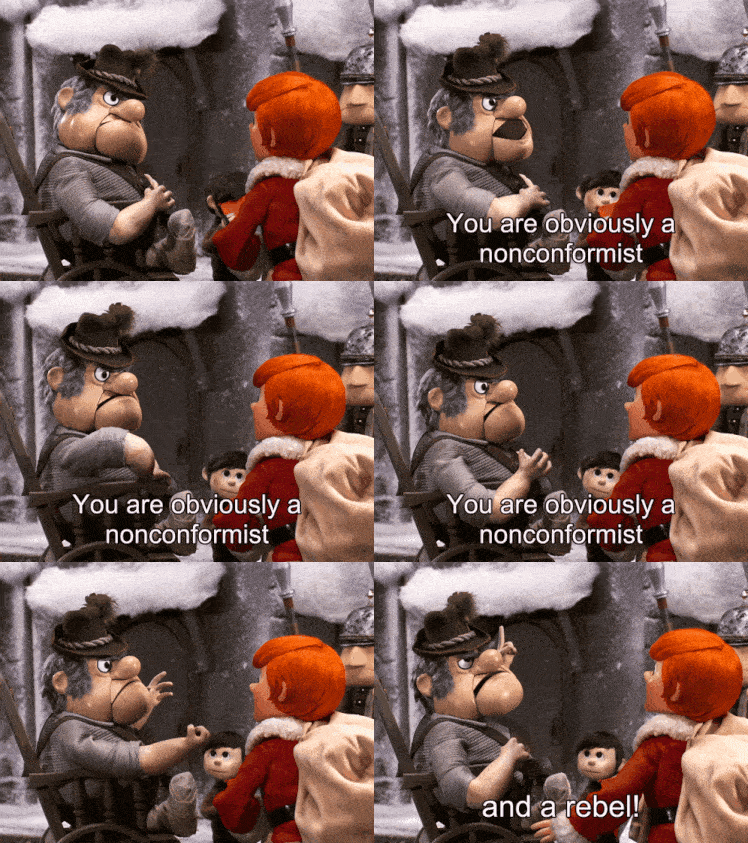
As a child, the closest I came to an anti-fascist inoculation, as far as I can recall, was watching Rankin/Bass’s stop-motion Santa Claus Is Comin’ to Town (1970) on TV each year at Christmastime. Yes, it’s a propaganda film of sorts, in which Burgermeister Meisterburger, the dictator of a Prussian hamlet, Sombertown, arbitrarily bans toys — and enforces the ban with nighttime raids on the homes of Sombertownians.1 Kris Kringle and his toy-delivering friends are arrested; children’s confiscated toys are burned in a pyre in the center of town. Though Herr Meisterburger isn’t defeated, Kringle escapes — and lives the rest of his life as a guerrilla on the run. This was not The Great Dictator, exactly — but every little bit helps.
Fascism is an existential threat to democracy, human rights, and the safety of vulnerable communities; whenever it begins to take root, it must be weeded out — before it becomes an unstoppable force. And our defenses against fascism, whose proponents are persuasive, cannot be built up via standard political debate alone. By highlighting the inherent violence and genocidal aims of historical and modern fascist movements, anti-fascist propaganda efforts must expose their true nature, call out their lies and manipulations, and rally public opinion against them.
But anti-fascist propaganda doesn’t have to be — shouldn’t be — ham-handed. As this series will demonstrate, anti-fascist art is persuasive not despite but because it is beautiful, funny, smart, and eccentric.
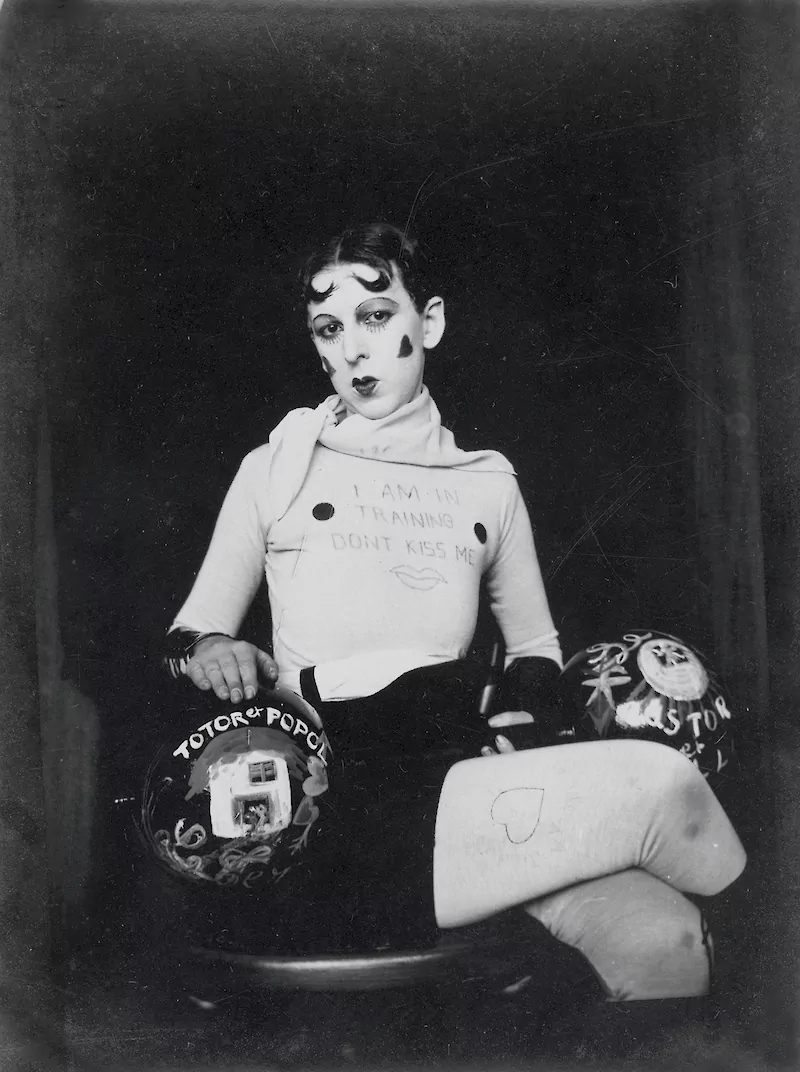
Why is our anti-fascist art series titled CAHUN YOUR ENTHUSIASM? Speaking of art that is beautiful, moving, funny, smart, and eccentric…
Lucy Schwob (b. 1894) was an androgynous French surrealist photographer, sculptor, and writer who assumed a variety of performative personae; in 1914 they adopted the masculine pseudonym Claude Cahun. [Although Cahun mostly referred to them- or herself with grammatically feminine words, they also described their gender as fluid or “neuter.”] During the early 1920s, they settled in Paris with Suzanne Malherbe, their lifelong artistic (and presumably romantic) partner, who also adopted a masculine pseudonym: Marcel Moore. For the rest of their lives, Cahun and Moore would collaborate on written works, sculptures, photomontages, and collages — the subject (depicted in various roles: aviator, buddha, doll, angel, dandy, body builder, vampire, Japanese puppet, etc.) and “author” of most of which was Cahun. Moore, as far as we know, preferred it that way.
In 1937 Cahun and Moore settled on Jersey, the largest of the Channel Islands. Following the fall of France in 1940 and the German occupation of Jersey that same year, the two became active as anti-Nazi propagandists. Believing that not all of the German soldiers stationed on Jersey sympathized with the Nazis and, with some inspiration, might be encouraged to overthrow the Nazi regime on the Island, for the next five years Cahun, who’d been born into a Jewish family, and Moore produced illustrated tissue-paper flyers — supposedly created by Der Soldat Ohne Namen (i.e., a German “Soldier With No Name”) bearing snippets from Moore’s English-to-German translations of BBC reports on the Nazis’ crimes, which were pasted together to create poems and criticism.
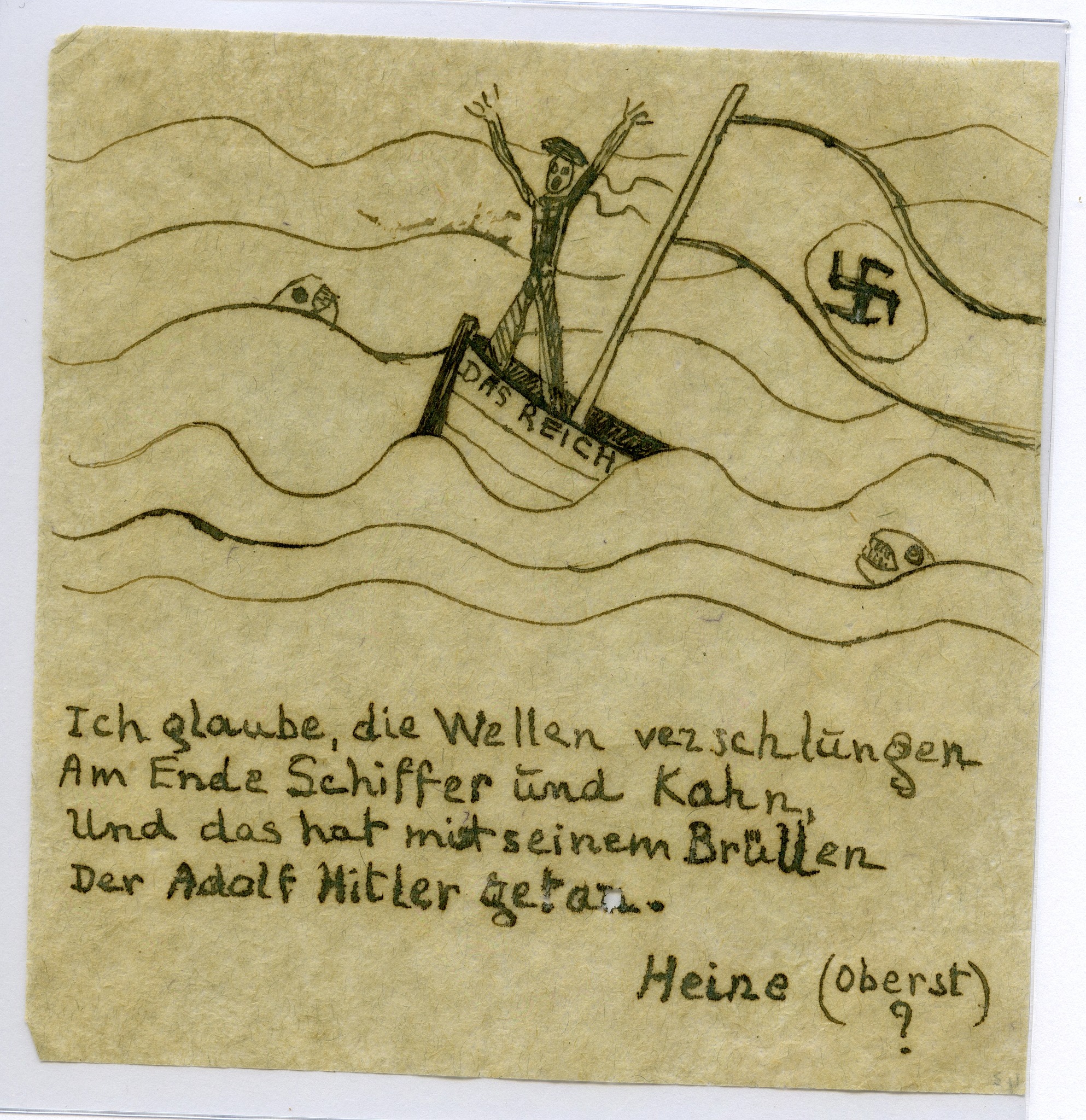
The anti-Nazi flyers were courageously distributed by Cahun and Moore, who would leave them in soldier’s coat pockets and on café tables. As the Occupation continued, the conspirators discovered that by placing notes inside cigarette packets they were more likely to be noticed. They also crumpled up and threw their fliers into cars and windows. And once they even hung a banner in a Jersey church that read, “Jesus is great, but Hitler is greater — because Jesus died for people, but people die for Hitler.”
In 1944, Cahun and Moore were arrested and sentenced to death. (David Smay’s 2012 HILO HERO essay on Cahun connects the dots between Cahun’s imprisonment and the story arc of Evey Hammond in Alan Moore’s 1982–85 anti-fascist comic V for Vendetta.) The death sentence was never carried out, though, as the island was liberated from German occupation in 1945. However, Cahun’s health never recovered from their treatment while imprisoned; they died in 1954.
I’m thrilled with how the CAHUN YOUR ENTHUSIASM series has turned out. Here’s the lineup:
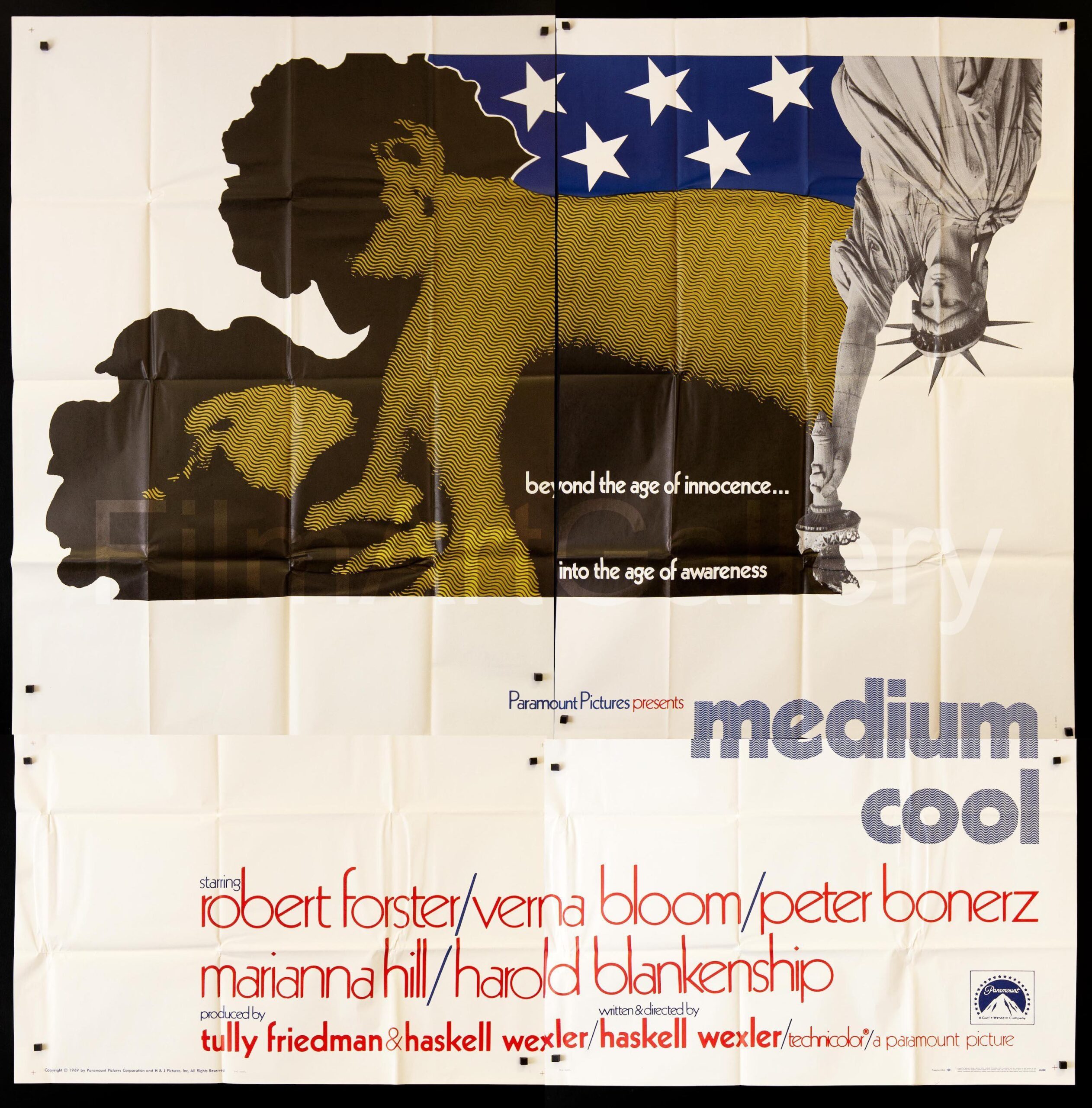
Mark Kingwell on ONCE UPON A HONEYMOON | Lynn Peril on ZAZOUS | Judith Zissman on DIE GEDANKEN SIND FREI | Annie Nocenti on MEDIUM COOL | Mike Watt on FASCIST
Here’s an excerpt from Annie Nocenti’s series installment on Haskell Wexler’s 1969 movie Medium Cool:
John’s next fictional job is shooting the real DNC. As “The Star-Spangled Banner” plays and votes are counted, John is oblivious to the better news story outside. Eileen’s fictional character and the real actress (Verna Bloom) merge as Eileen/Verna wanders, shocked, into the live chaos while protestors chant “The whole world is watching.” Wexler heads into the mayhem right behind her, and films Eileen/Verna watching cops bashing the heads of the protestors. Wexler again gets gassed, but this time it’s the real thing.

William Nericcio on LALO ALCARAZ | Josh Glenn on THE LADY VANISHES | Carlo Rotella on INQUIETUD | Heather Quinlan on CASABLANCA | Adam McGovern on HEART OF GLASS (MAD JENNY)
Here’s an excerpt from William Nericcio’s series installment on the Mexican-American cartoonist Lalo Alcaraz:
His art is always in a political vein, but unlike other pundits, this semiotic wizard always has his sights firmly in sync with our various and diverse Chicana/o and Latina/o barrios. His wise, scintillating revelations regarding the perceived specter of immigrants invoked by American neo-fascists is incisive and demands notice.
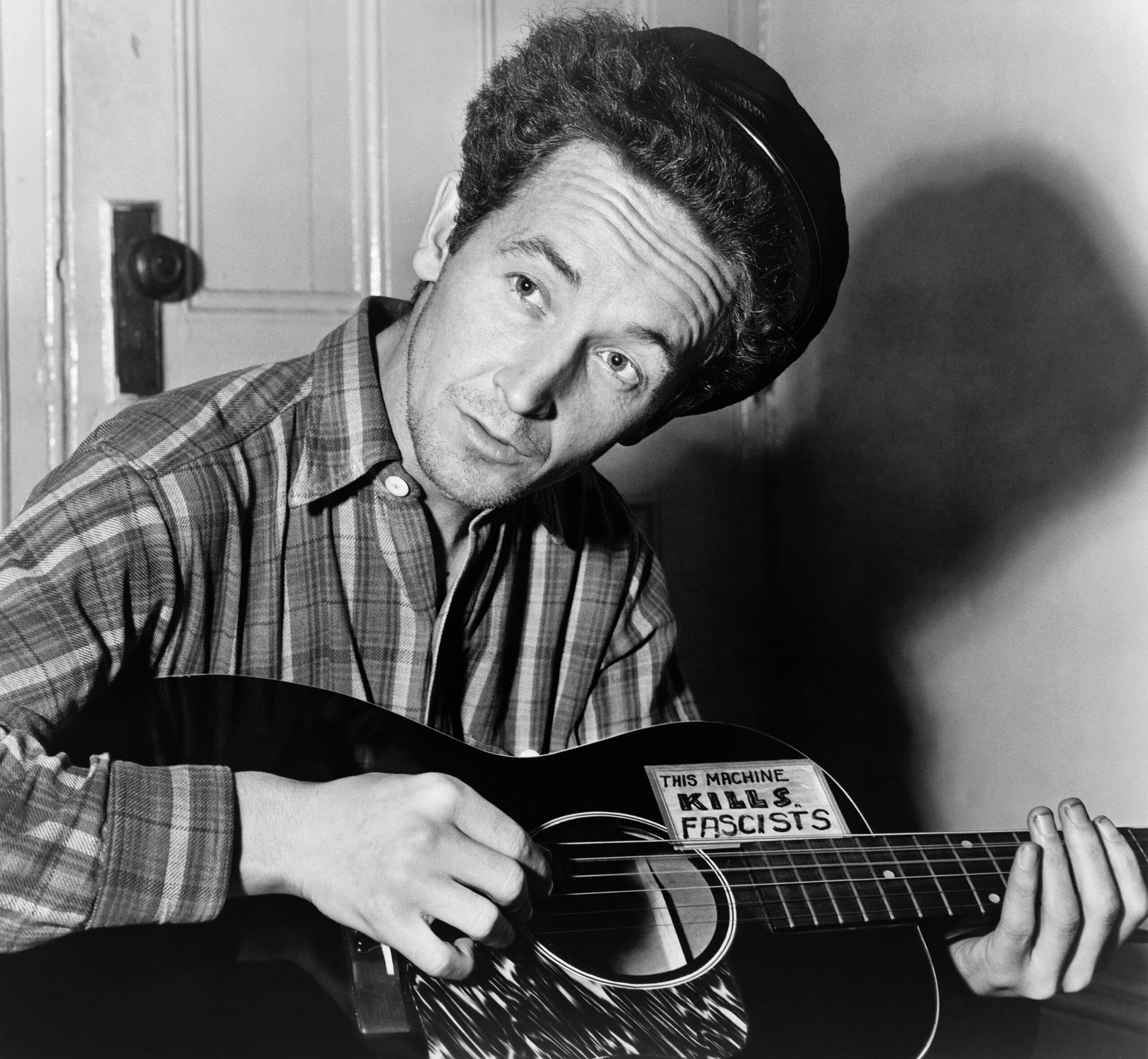
Matthew Battles on WOODY’S GUITAR | Carl Wilson on PALACES OF GOLD | Ramona Lyons on UPRIGHT WOMEN WANTED | Lucy Sante on CAMOUFLAGE | Adelina Vaca on THE LIVES OF OTHERS
Here’s an excerpt from Matthew Battles’ series installment on Woody Guthrie’s guitar:
We might best approach the inscription as a kind of koan, each word alive with challenge. “THIS” — we’re in a direct encounter, nothing abstract; “MACHINE” — a guitar is a contraption, no magic involved; “FASCISTS” — who are these fascists, now, exposed to the fury of this soundhole?; and the crux, “KILLS” — how does music kill, and what dies in the encounter?
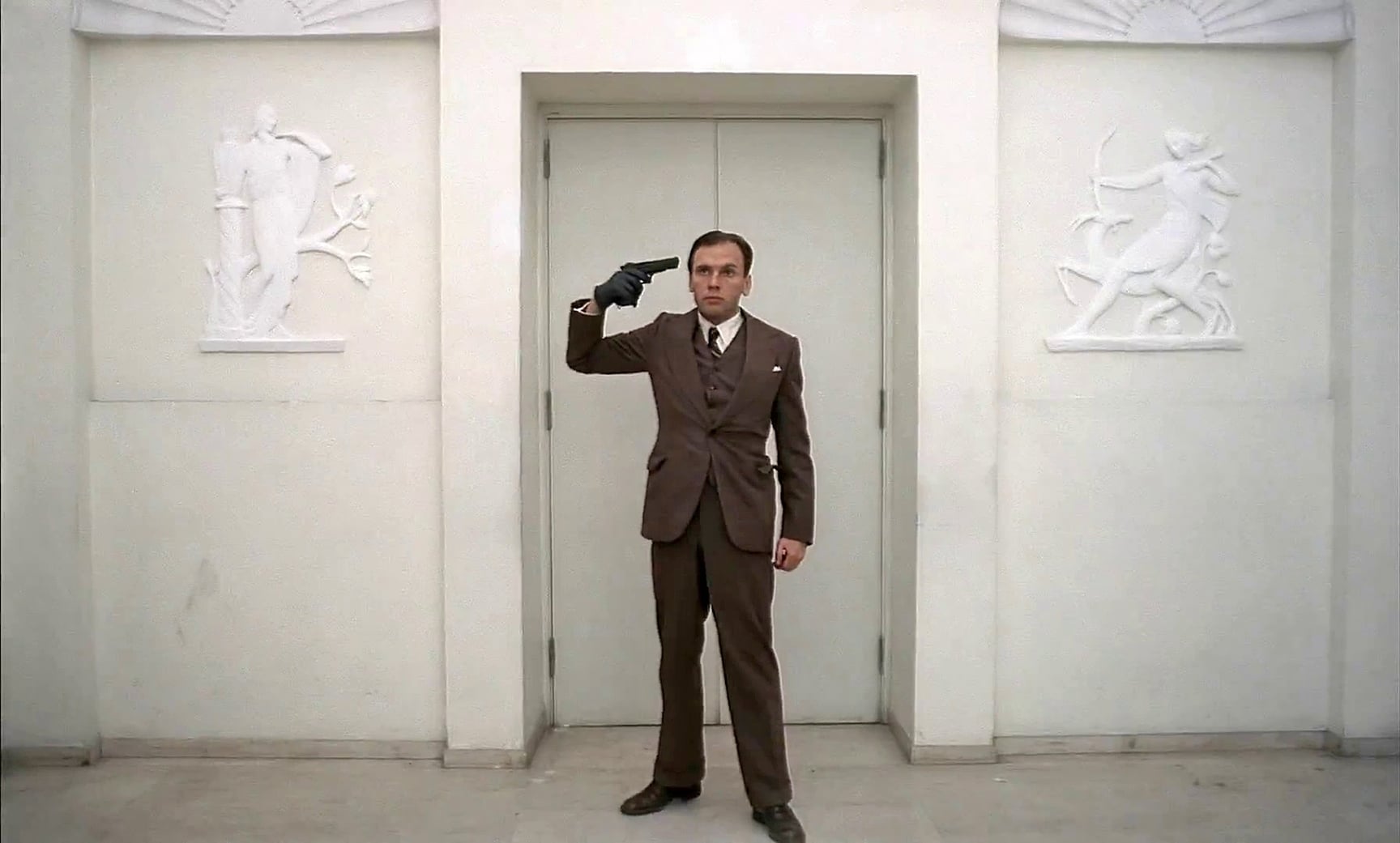
Tom Nealon on THE BARON IN THE TREES | Nikhil Singh on PARIS PEASANT | Mandy Keifetz on THE REVOLUTION WILL NOT BE TELEVISED | Gordon Dahlquist on THE CONFORMIST | Michael Grasso on PYNCHONIAN RESISTANCE
Here’s an excerpt from Gordon Dahlquist’s series installment on Bernardo Bertolucci’s 1970 movie The Conformist:
Trintignant perfectly captures the blend of hesitancy and greed that drives Marcello — the exact point where conformity, no matter how cruel, defines ambition. We do see sources of his damaged psyche — traumatized as a boy by a sexual assault, raised by uncaring parents — yet distress only spins him toward self-interest, without care for the consequences to others.
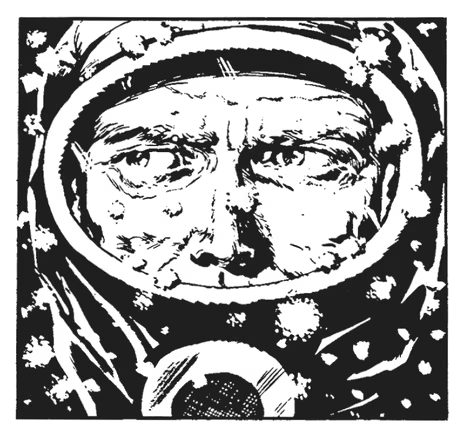
Gabriela Pedranti on THE ETERNAUT | Heather Kapplow on ANTI-FASCIST PASTA | Marc Weidenbaum on (WHAT’S SO FUNNY ’BOUT) PEACE, LOVE, AND UNDERSTANDING | Peggy Nelson on PUPPETS | Sonia Marques on CARNATIONS AGITPROP
Here’s an excerpt from Gabriela Pedranti’s series installment on Héctor Germán Oesterheld and Francisco Solano López’s sci-fi comic The Eternaut:
[The Eternaut’s testimony] includes the uncanny figure of “Them,” extraterrestrial enemies who have come to destroy the planet and will not cease in their terrible attempt… and who at the same time represent so much more, in terms of real-world unequal fights and rights. The hero’s methods, battles, and creative ways of surviving make this story — versus what heroes and fights look like in mainstream (American) narratives — a Latin American gem.
It’s in the surreal and surreptitious, weird and wily spirit of Cahun and Moore, as well as the other artists celebrated by the contributors to this series, that we encourage HILOBROW readers to resist the rise of fascism.
1 Fun fact, from the substack the 70s, probably:
Tadahito Mochinaga, “the father of Japanese stop-motion,” and Rankin/Bass’s primary animator for many years [including on Santa Claus Is Comin’ to Town], actually got his start making propaganda films for the Japanese government during World War II. The most famous film he worked on, Momotaro’s Sea Eagles, depicts its heroes fighting against the demons at Onigashima (“Demon Island”). This battle in actuality was uhhh… the bombing of Pearl Harbor.
JACK KIRBY PANELS | CAPTAIN KIRK SCENES | OLD-SCHOOL HIP HOP | TYPEFACES | NEW WAVE | SQUADS | PUNK | NEO-NOIR MOVIES | COMICS | SCI-FI MOVIES | SIDEKICKS | CARTOONS | TV DEATHS | COUNTRY | PROTO-PUNK | METAL | & more enthusiasms!