
SKIN DEEP (2)
By:
October 8, 2026
One in a series of posts profiling the artists of the Black Cherry Lane: Presence exhibition, which honors the ancestors and descendants of Cherry Lane Cemetery, a burial ground for free and formerly-enslaved people which is now itself buried under a parking lot, and which the artists are imagining a new life and legacy for.
SKIN DEEP: INTRODUCTION by Adam McGovern | JEROME LAGARRIGUE | MARY EDWARDS | BEVERLY Y. SMITH | TIM OKAMURA | THOMAS DOYLE | YELENA TYLKINA | TAHA CLAYTON | GREG SHEA | LAZARUS NAZARIO
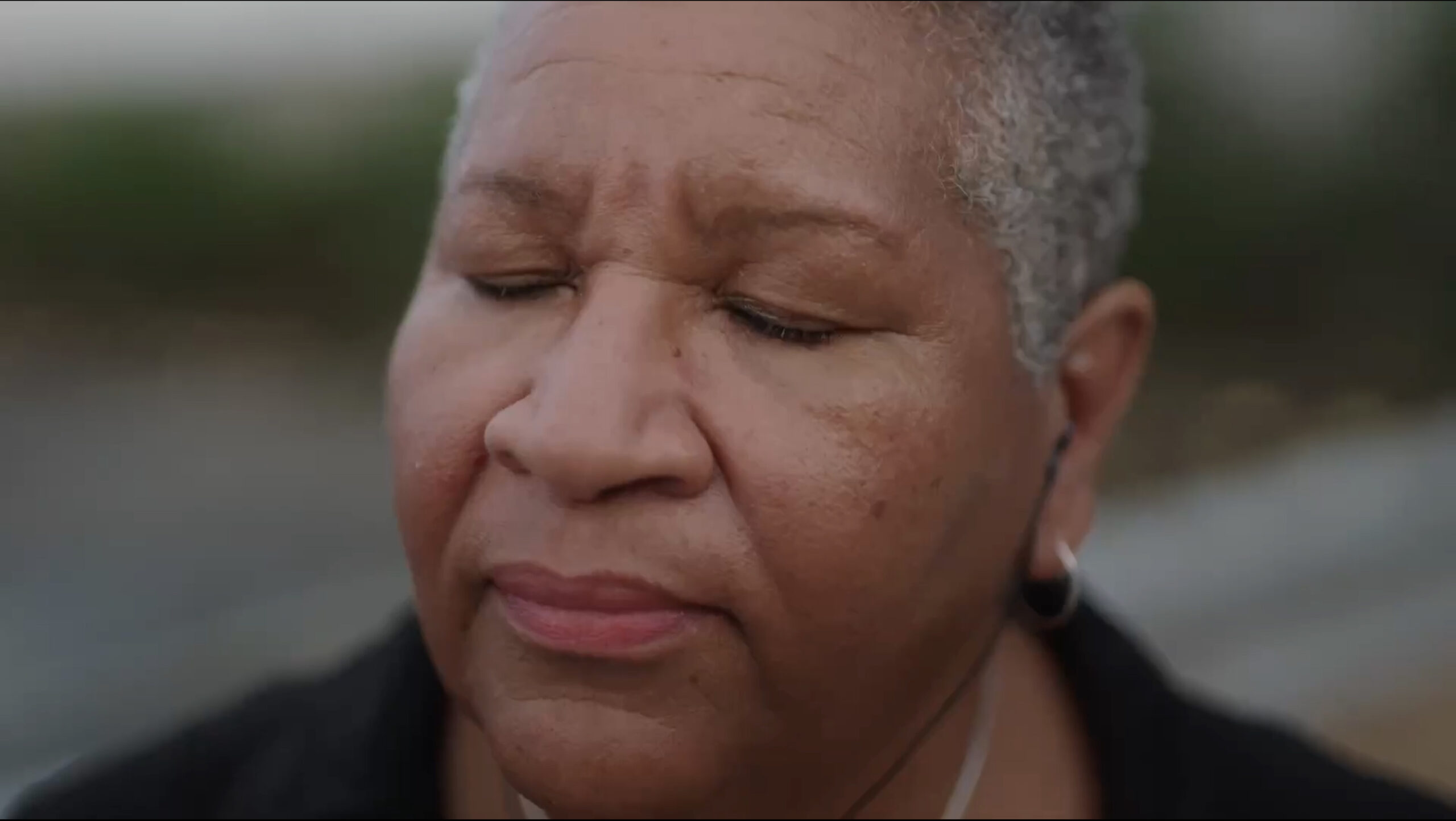
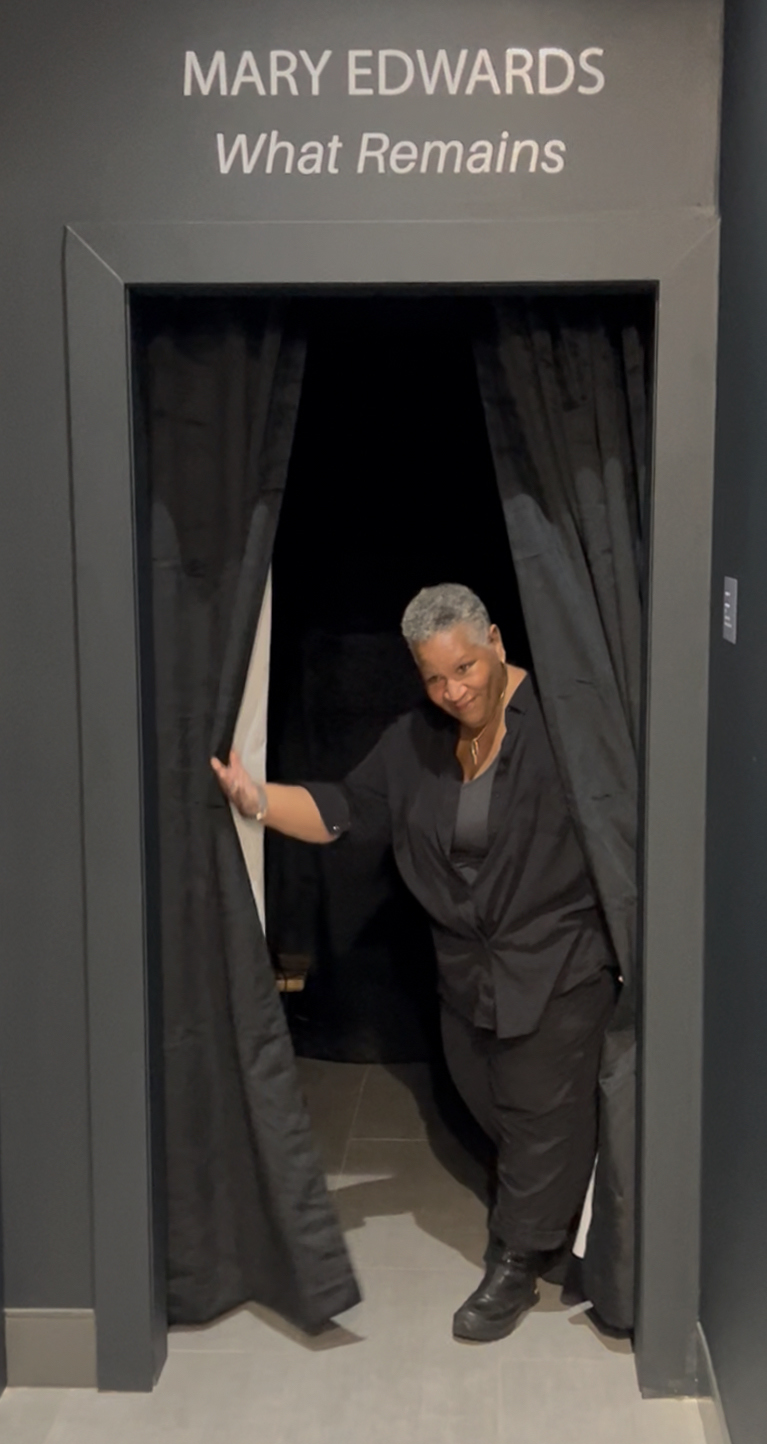
Mary Edwards maps the architecture of the ephemeral. Her soundscapes re-create places unreachable by most (the Arctic, rivers obscured by overdevelopment) or accompany those we can visit (recordings accessed on wilderness walks), and weave human voices symphonically in homage and confirmation of embattled but surviving communities. For the Black Cherry Lane: Presence exhibition, her canvas is pure darkness, a small curtained and unlit space which becomes vast in communion with a looped sonic odyssey through the sounds made by nature and humanity on the instrument of the earth — from natural field to AME church to bulldozed graveyard and current asphalt blacktop, with the signals of newer technology sent back into the ground to try and retrieve matter and memory of what the site and its community were. I joined her for a listening session in an about her soundwork, What Remains:
HILOBROW: Even before there was Light, there was the Word (“Let there be light”), so it could be said that the first art was sound. I’m curious what consideration you give to that, because listening to your work here, to me it’s sculpture, it’s drama; I have a sense of spatiality and story from it…
EDWARDS: I believe that sound is our first sense. We’re in the womb, and as we’re developing, the first [sensations] that we pick up on are sound — even if we have a hearing impairment, we always have the capability of hearing because our bodies do that work for us; if we’re not receiving it through our ears, we’re receiving it through our bones, through our skin, some vibratory sense. That’s why this room is inspired not just by being inside a to-scale cinema, but for me it emerges from the womb, from any kind of ensconcement — from, say, my childhood imaginings when I built forts and I created these little portals from which I was looking outward.
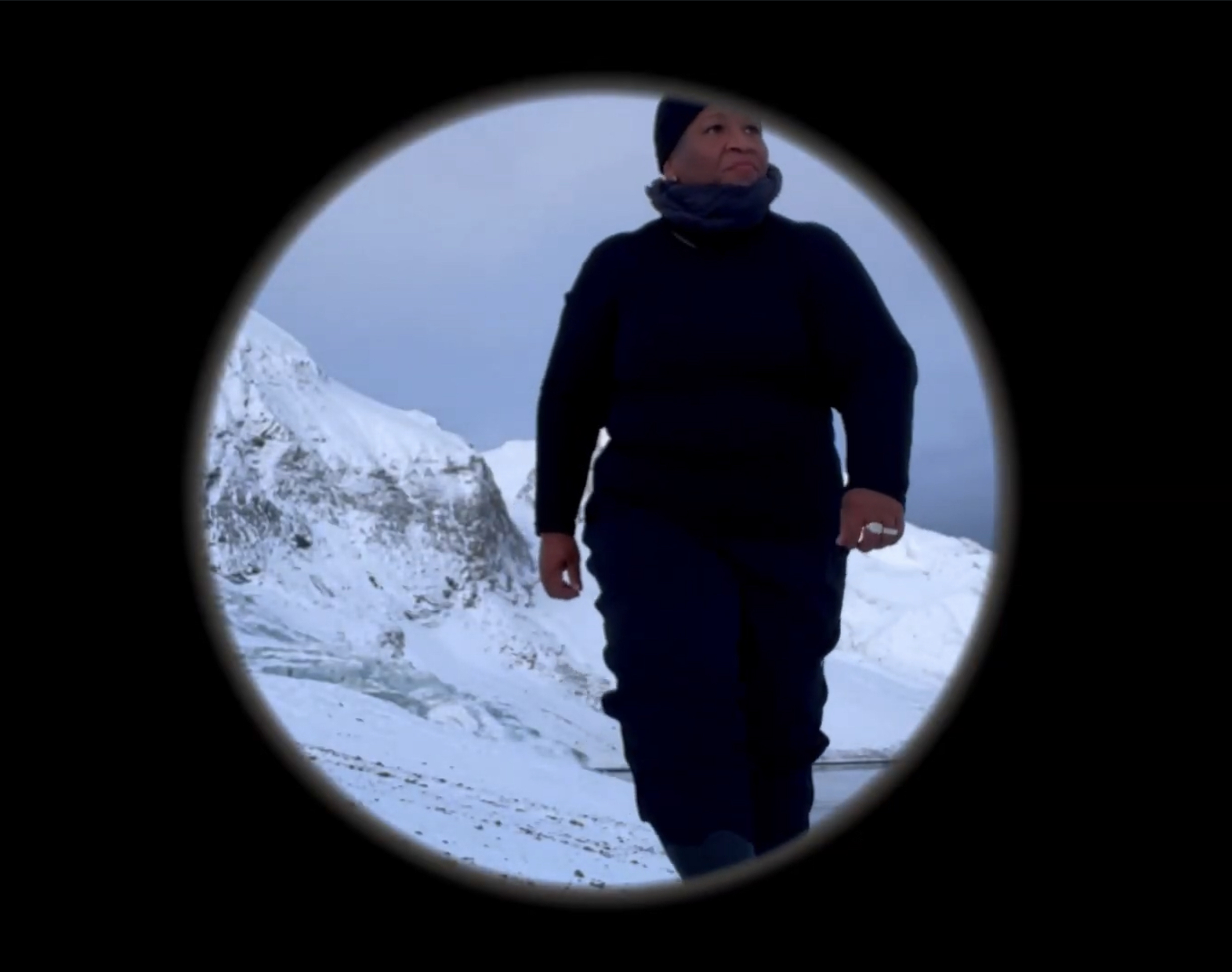
When we’re in the dark at night, and we’re about to enter into our dream state, there’s perhaps a bit of light peeking through, but once we close our eyes, or draw these curtains, we’re now in the darkness of our imagination. When I speak of darkness, I’m speaking not of a place of hauntings, but places that can take us through time. That’s why I wanted to create the environment of this room; there’s a [sense] of being cozy but at the same time opening up this wide world of thought, and imagining place.
HILOBROW: It’s interesting to think of the relationship between shelter and captivity, a womb or a tomb. How do you find those concepts to be reconciled, if you do?
EDWARDS: I do… when I’m invited to create art, especially around something that could be tragic, or, part of the [narrative] is tragedy, I always believe that there’s a hopeful outcome. I like to create the contrast of emotions that one feels when they’re in an unknown space, but I don’t like the idea of anybody feeling chased, or trapped, or captured, but in fact the opposite; that’s there’s a sense of shelter, there’s a sense of refuge, there’s a sense of finding a place to rest until they’re ready to make the next move.
In this piece, we’re looking at a cross-section not only of substrate and other matter, we’re also looking at time, and the different periods going back 150 years. In two minutes and change, it’s giving the listener an opportunity to hear the shift in how the ground was broken to create the church and the cemetery; how the cemetery and the church were used (that’s where the song comes in, the ring shout and the call-and-response); the shifting of slate, both the addition and removal of the headstones. Some of the sounds show the overgrowth and the way nature took over; then we get into the next section of recognizing some of the other natural sources that were there, the stream that was eventually primarily used by the dye works that was present in the 1800s; then flash-forward to the sound of ground-penetrating radar, and that little… digital sparkly-ness that’s sort of a nod to hopefulness. And then back to some of the vibratory sounds that I captured with my geophone, which is a specialized microphone that picks up those vibratory sounds, the sounds that are not necessarily what we hear with the ear but what we can hear, again, from our bodies.
It comes full-circle; I believe there was one time when this land was overgrown, with a grove of trees, and non-native plants; [these] became part of the landscape and then disappeared — but what remains? The bodies beneath. The most important thing, the most important element, that’s a constant. The constant is the knowing that the bodies that lay beneath, they also fed the soil, so whatever was new to the landscape was combined with the nutrients and the breakdown of those bodies; so, there’s never been an absence of what was always there, just in a different form.
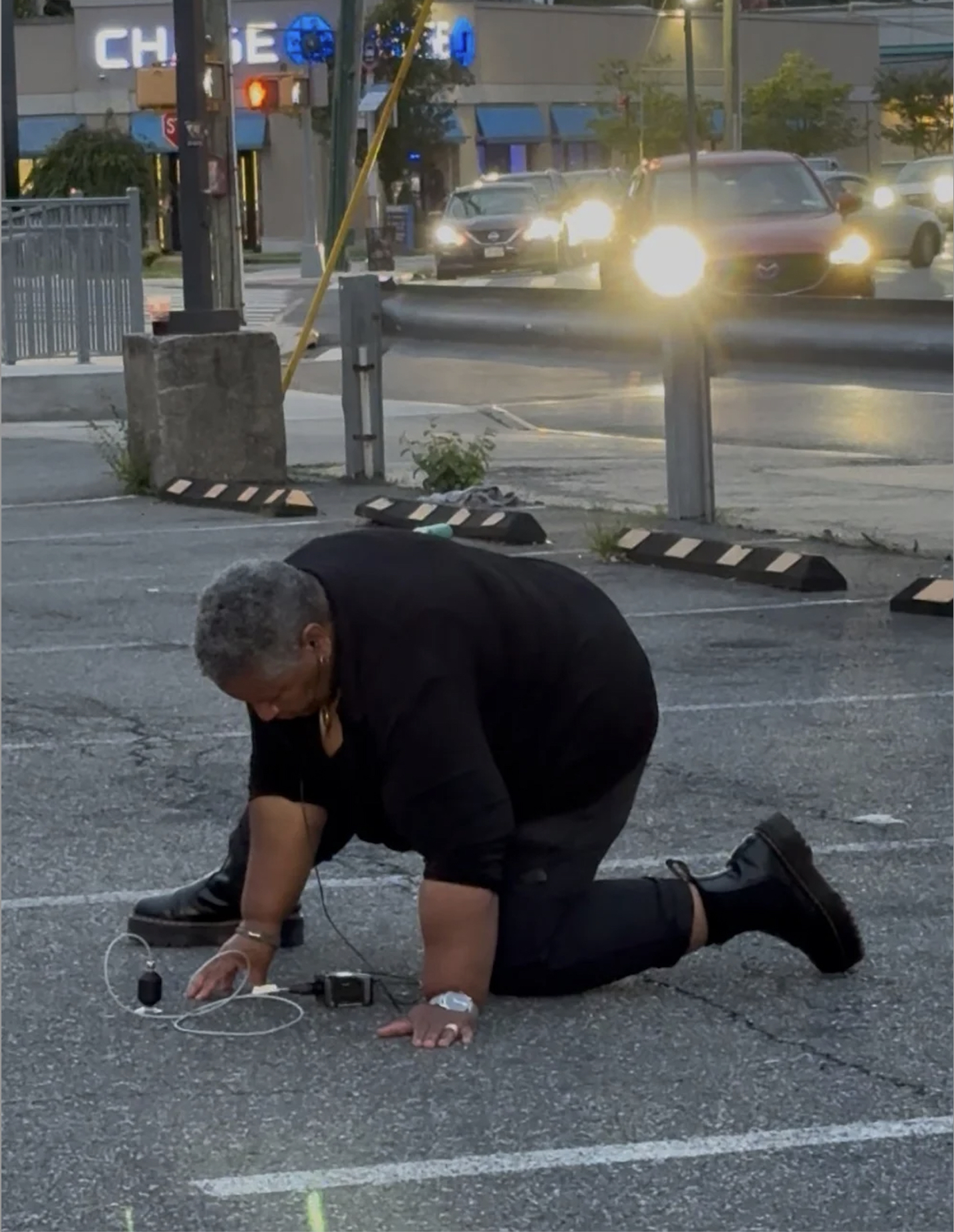
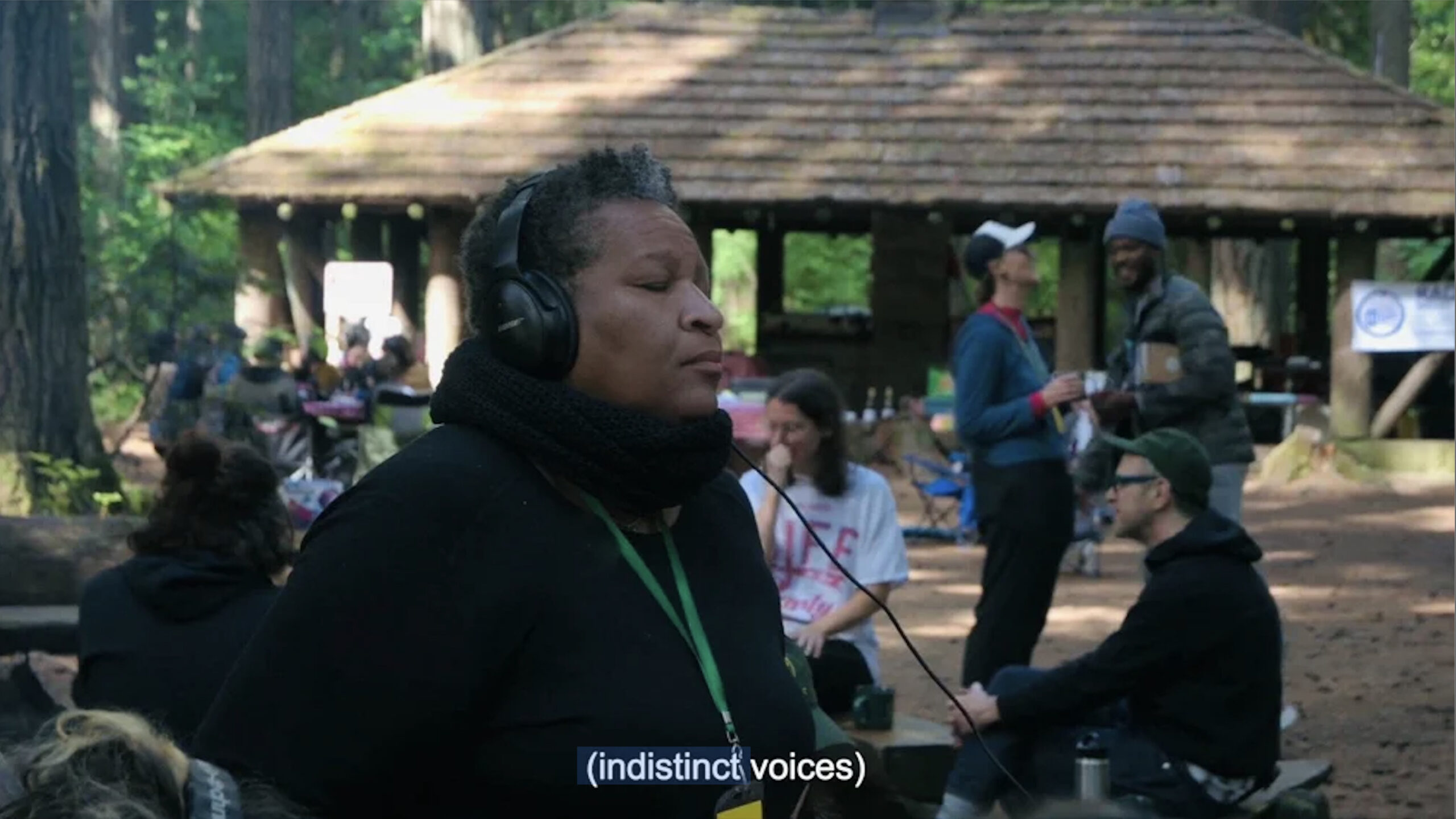
I wanted to add that, the piece itself, while it’s seemingly site-specific, as it pertains to the space that we’re sitting in now, it really is about the actual lot that is the paved-over cemetery; so I’d like to encourage the listener to find the piece — you can find it on my Bandcamp page, or scan the QR code here in the gallery, and take it with you, and use it as a meditation, whether you actually get to that site and you’re able to listen to it there or not, or listen to it here; listen to it in cycles, because it’s a short enough piece that the more you listen to it, you can go deeper and deeper into layers, and find particular strains that resonate with you. With that act of listening, you are now part of that piece; your response, your energy is now part of that piece, and feeds back into the intention of rediscovering this site that was very nearly erased.
HILOBROW: You take it with you, and that situates you amongst it in a way, wherever you are physically.
EDWARDS: And I’ll just say again, I know I mentioned a few times today [at the exhibition’s opening], that when I was about 5 years old, was the first time I had one of those sound encounters, really more of a vibratory encounter with the space, I felt something when I was there. I would just sense these entities. I think that children, and animals, have such a connection with spirited energy. So every time my family and I went shopping over there, there was something for me on some level that I always looked forward to, like something was coming to me, to introduce a new way of listening, a new way of being in the space that didn’t quite resemble the space that I was in. And this happened over the course of many years, and years later I thought, “I don’t know what that means, but I feel like I need to create something in honor of that.” Didn’t have a name for it, didn’t really know if it would translate, because I had no knowledge of the Cherry Lane Cemetery. When I was approached [to participate in the exhibition], I was overjoyed, because I felt like, “Okay, now my mission is going to be accomplished, and I have a name for this thing that I’ve been mediating on for years, and curious about for years.” I knew I wanted to [explore] how one would listen upward — the spirits who are interred below, how would they listen to what’s happening on the ground level. What is it like to feel the ground, what is it like to sense the shifting of the soil, the human-activated spaces being created; to listen from a different perspective.
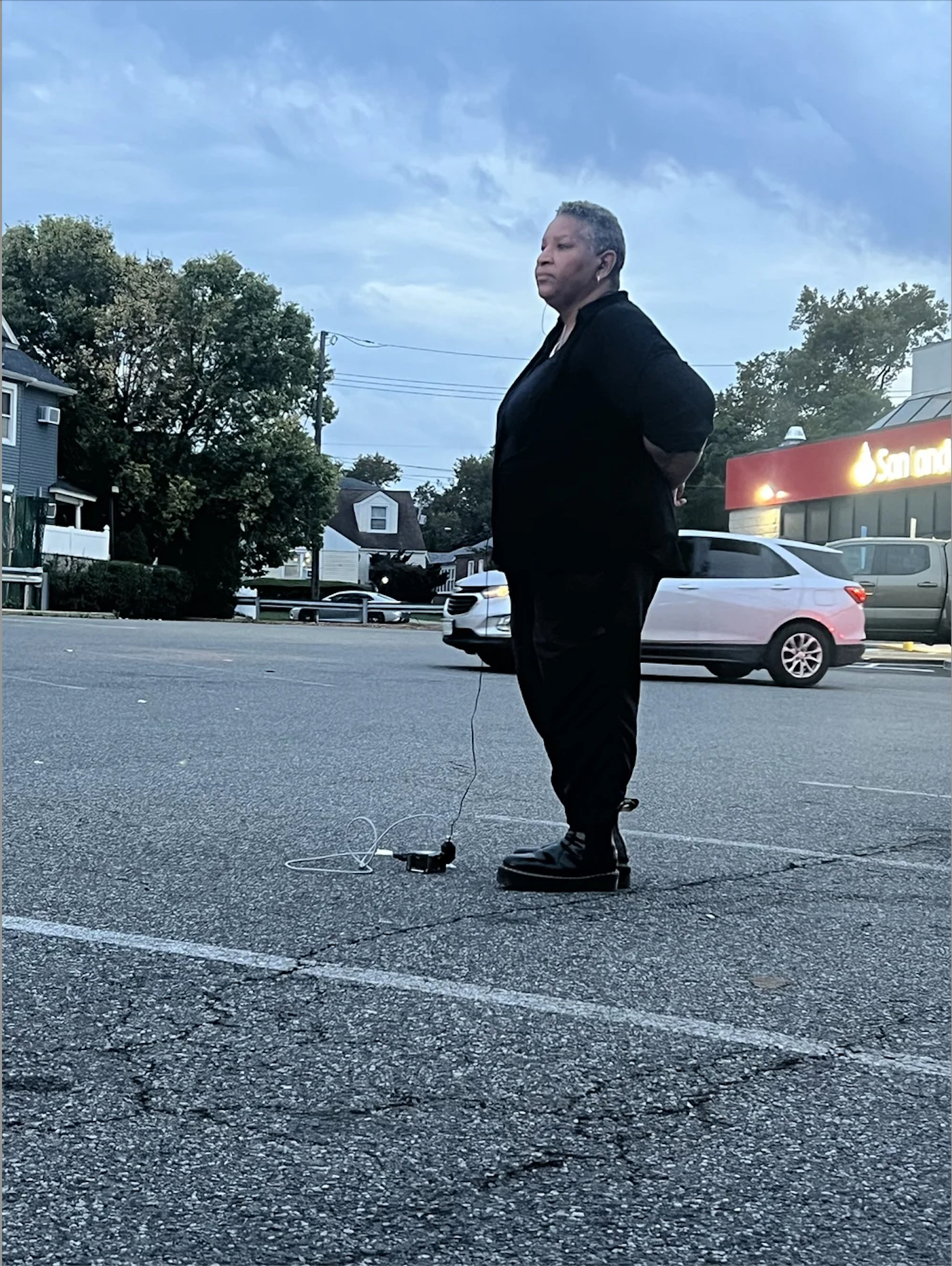
While it might sound very far-out to some, I really do believe that this is not happenstance, this is a calling. When this piece finally had a name, had a shape to it, had a purpose, it all made sense; this was 55 years in the making!
HILOBROW: I think sensitive-enough artists do have a kind of… fore-memory of such things; you yourself deal with wavelengths and vibrations, and to me it’s entirely possible that some of those travel backwards in linear time — like the vibrations along a spiderweb.
EDWARDS: Exactly. Or when you think of guitar-strings, and telephone wires, any kind of network, cable network with lots of filaments, and how the information can jump from one to the other, and it’s nonlinear…
HILOBROW: And you know it’s there before you know what it is.
EDWARDS: Exactly. And I believe time is nonlinear; I also believe that death is not its own entity, that it’s part of the life cycle. So that there’s always a conversation going on between those who passed on and those who are still here.
[Keep watching this space for profiles of all the creators contributing to Black Cherry Lane: Presence, and if you’re anywhere near Staten Island between October 1 and 25, come see what they have to reveal for yourself!]