
SKIN DEEP (4)
By:
October 11, 2026
One in a series of posts profiling the artists of the Black Cherry Lane: Presence exhibition, which honors the ancestors and descendants of Cherry Lane Cemetery, a burial ground for free and formerly-enslaved people which is now itself buried under a parking lot, and which the artists are imagining a new life and legacy for.
SKIN DEEP: INTRODUCTION by Adam McGovern | JEROME LAGARRIGUE | MARY EDWARDS | BEVERLY Y. SMITH | TIM OKAMURA | THOMAS DOYLE | YELENA TYLKINA | TAHA CLAYTON | GREG SHEA | LAZARUS NAZARIO
The best portraits are biographies — a single image with all the years lived by the subject layered in paint, the lines carved by time mirrored in the grooves of the brushstroke, pigments suggesting the glow of inner bloodflow and the animating electricity of thought. A one-photo album of everything that a person experienced, collected in a deceptively static image that is actually the palimpsest of all those moments. Lit and colored more subtly by the idiosyncrasies of expression and essence of attitude that provide the palette for a portrait not just of exteriors, but personality.
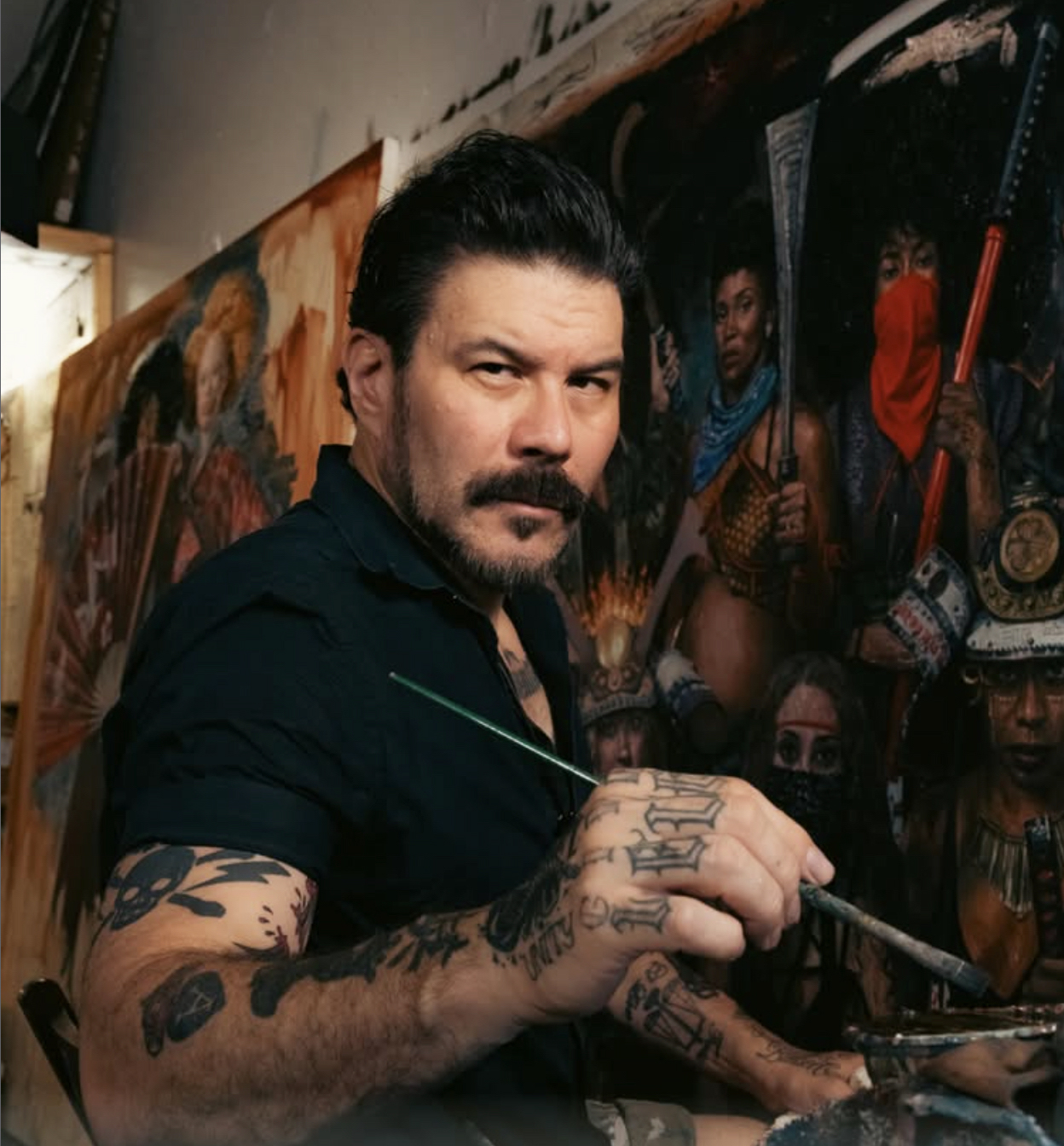
Tim Okamura has devoted much of his life to such studies. Teeming with immediate individual marks which coalesce into serene clarity, his canvases portray celebrities, friends, imagined icons and the everyday people who collectively create history. Okamura’s animated, cohesive work makes sense of our modern overload and rescues identity from the blurred rush of our culture, his technique somehow conveying both motion and monumentality, the dynamism of our lives and the marks we ourselves leave behind.
Encountering David Thomas and Ruth Ann Hills, two descendants of Benjamin Prine, the most famed person interred at the paved-over Cherry Lane Cemetery on Staten Island, Okamura embarked on a family portrait crossing centuries, in which David and Ruth Ann hold up between them a picture of Benjamin, the only known photograph of him or any of the other human lives buried at Cherry Lane. With only the old photograph to go on, Okamura brings forth the lifeforce of this indomitably dignified man, and, putting him in the presence of his living kin, witnesses their family’s persistent honor for our own time and beyond.
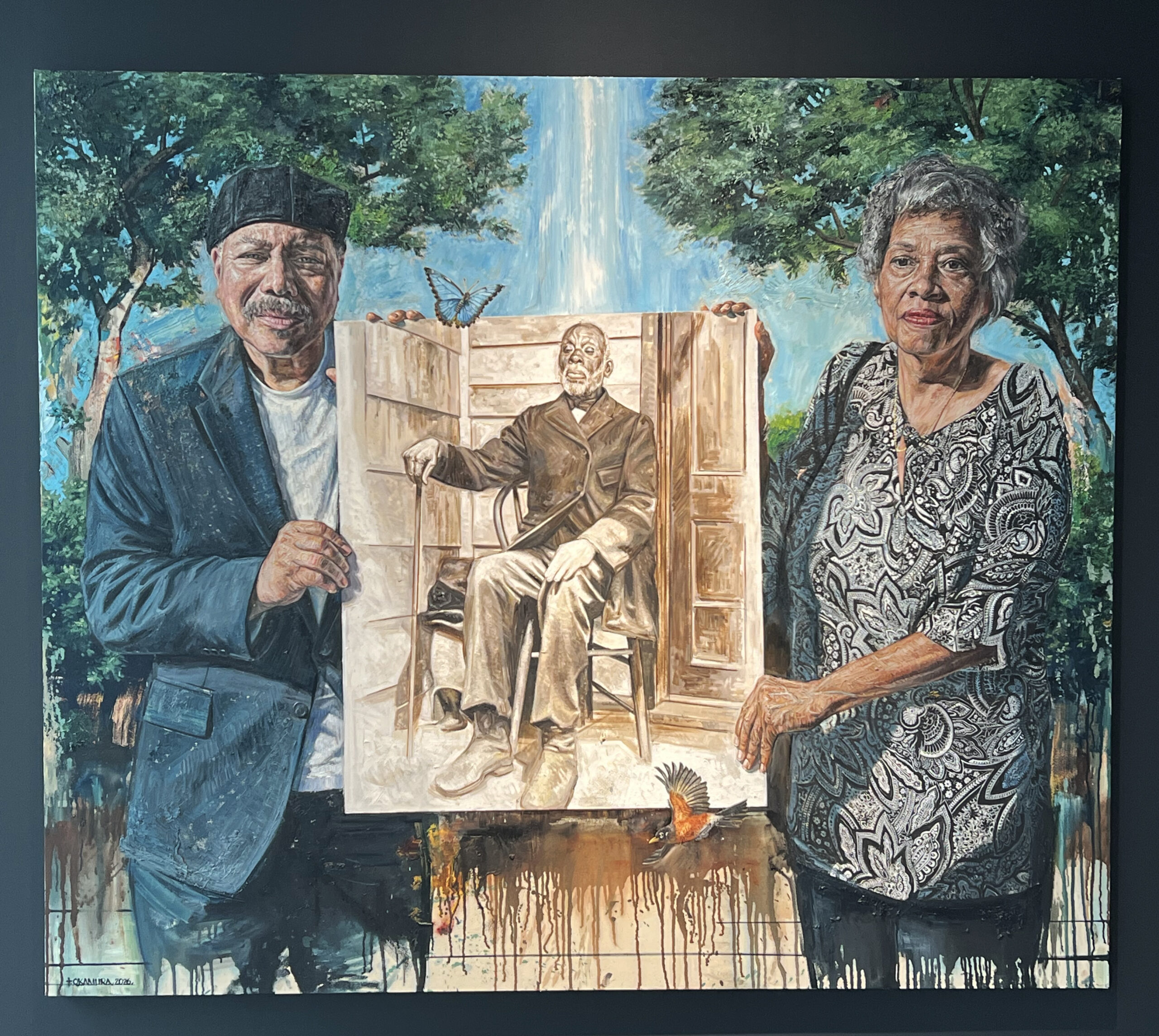
I got to see his painting, Long Lost & Found, at the Black Cherry Lane: Presence exhibition, and speak face-to-face on the opening night:
HILOBROW: At today’s press conference you spoke about the importance of representation, and obviously representation has a dual meaning in this case; both people being able to see themselves, and also the sometimes-embattled reputation of pictorial art (there have been cycles of “representation” and abstraction each falling in and out of favor). Is there a connection between how you want to depict things concretely and how you want people to figuratively “be seen”?
OKAMURA: I think my work has always been about capturing specific people, but also finding, within that, the arrows that point to metaphors for the greater human experience. So for me the perfect outcome is when somebody approaches a painting, and their initial response is like, “Oh, this person is not like me, this is not an experience I can relate to”, but then they spend time with it, and something flips. Where all of a sudden they feel connected to that person. And that’s a huge part of my mission, celebrating the individual, but also really making that connection with everyone’s humanity. Hopefully the work has been successful in that regard.
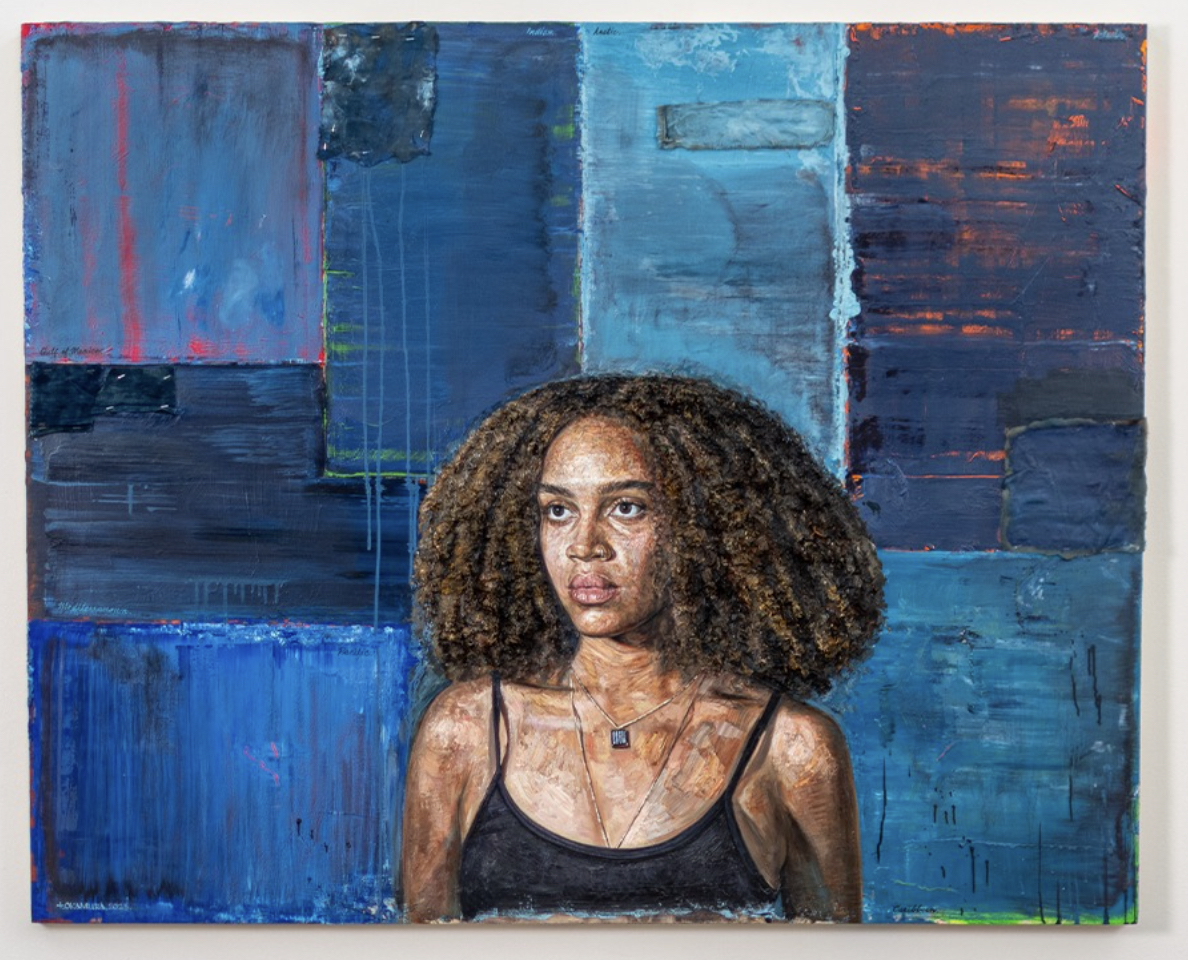
HILOBROW: There’s clearly a strong interest in the physicality of paint application; I guess that translates into a precision of likenesses — even though, once one gets close to [the painting], it could almost be an abstract, in the way that you apply it.
OKAMURA: That’s another thing for me, my work is always about balance; I don’t know if that ties into the fact that I’m a Libra [laughs], but I like the idea of some really tangible, almost sculptural painting, in terms of the likeness and the detail; but also moments of micro-abstraction. Those sometimes happen in the background, they sometimes happen within the figure, but I like the idea that somebody can engage with the painting on multiple levels. It can be, first is that visceral reaction of, “wow, that really looks like that person”, but they can spend time with the painting and find these passages that are more organic, where the chemistry of the paint has done what it’s willed itself to do, and I’ve had to step back, [and] instead of being a proactive navigator of where the paint is going, fall into more of an editing role, where something has happened that I didn’t expect, and then say, “Y’know what, that is now part of the finished piece.” Sometimes that can have its own pitfalls, where you get so in love with some moment of paint, but then you step back and you say “this is actually not serving the painting’s greater good”; this actually needs to be edited out, and painfully so [laughs]. But I think that’s always the back-and-forth with my work; the intentionality, but leaving space for the organic and the “happy accidents” to occur. And when those do serve the painting, leaving them be, allowing them to resonate.
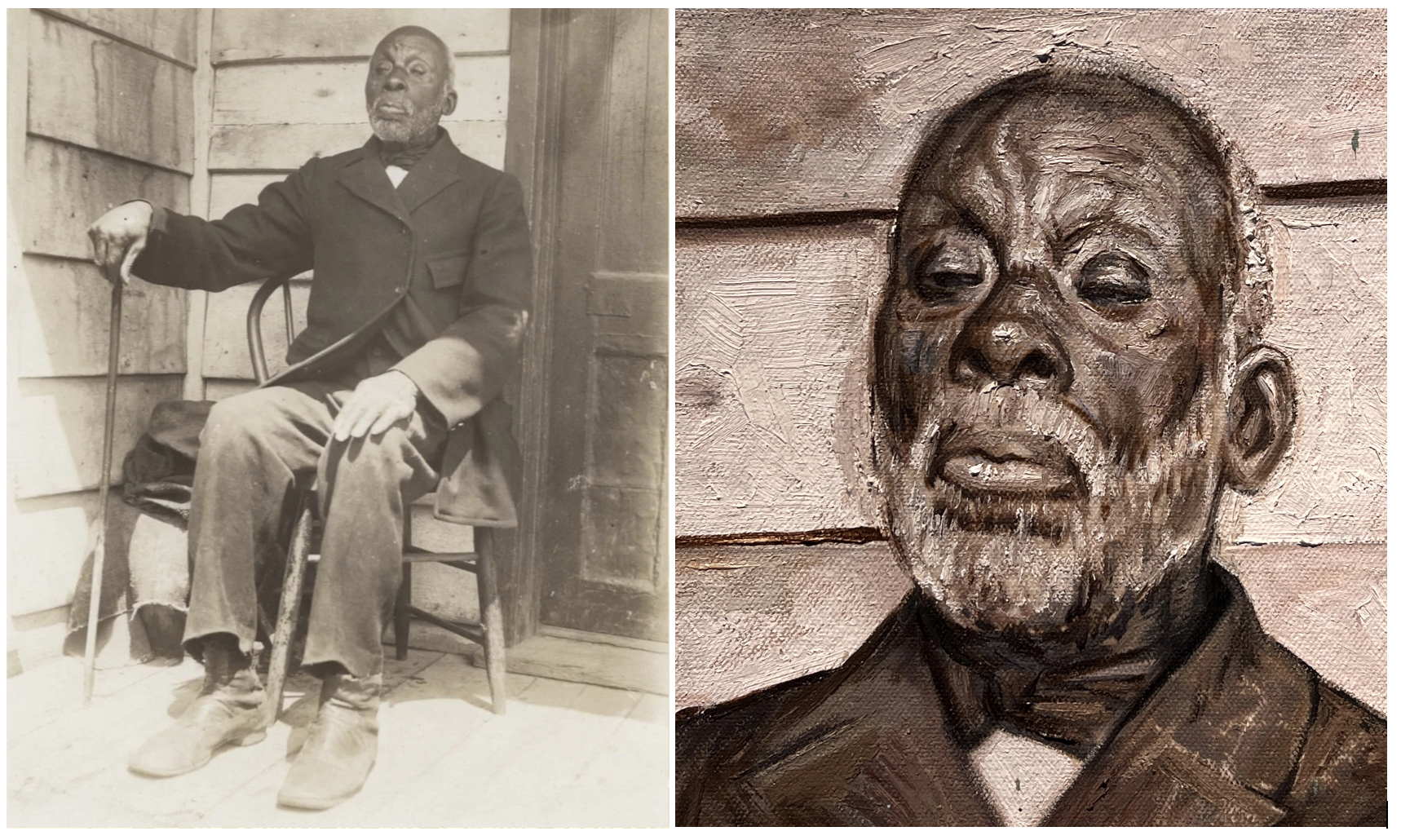
HILOBROW: The unforeseen elements are kin to the unpredictability of humans, of your subjects themselves.
OKAMURA: Yes, and to bring those two things together, it’s always an interesting balancing act.
HILOBROW: It looks like in some cases you leave the space, or set the stage, for some of those happy accidents, as seen in the drips at the bottom of your Cherry Lane portrait.
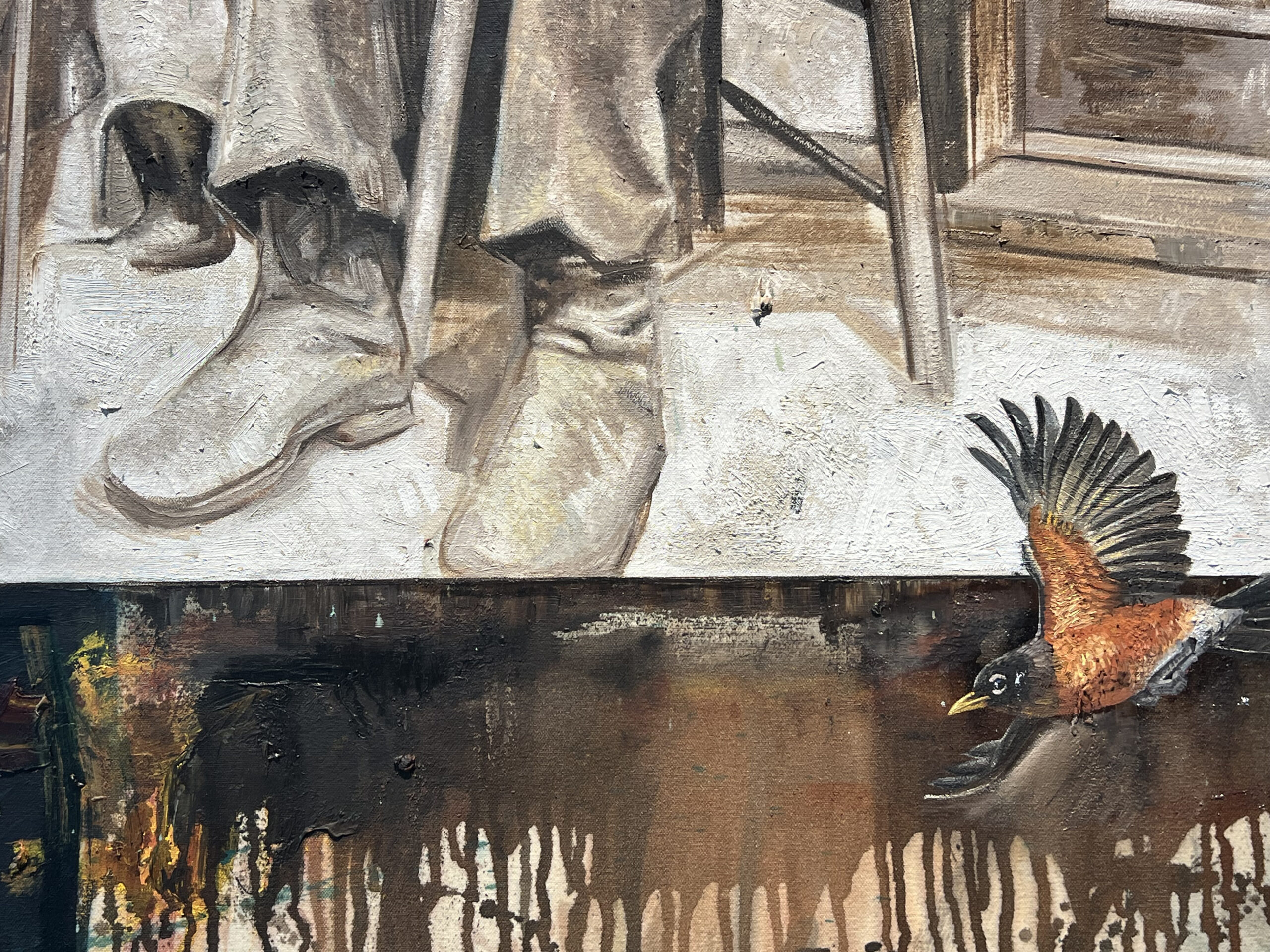
OKAMURA: Yeah, and I think part of that also is a contrast in surface treatments, where there’s some muscle and some body to the paint — years ago I remember seeing, for the first time in-person, a Lucian Freud painting, where it’s just so muscular — so, wanting to incorporate some of that real presence of the paint, the impasto; but then, in other areas, letting it be washy and letting the drips happen, and letting it be very thin, and also leaving parts of the canvas exposed, so you’re kind of building the illusion, and then also breaking the illusion simultaneously, if that makes sense.
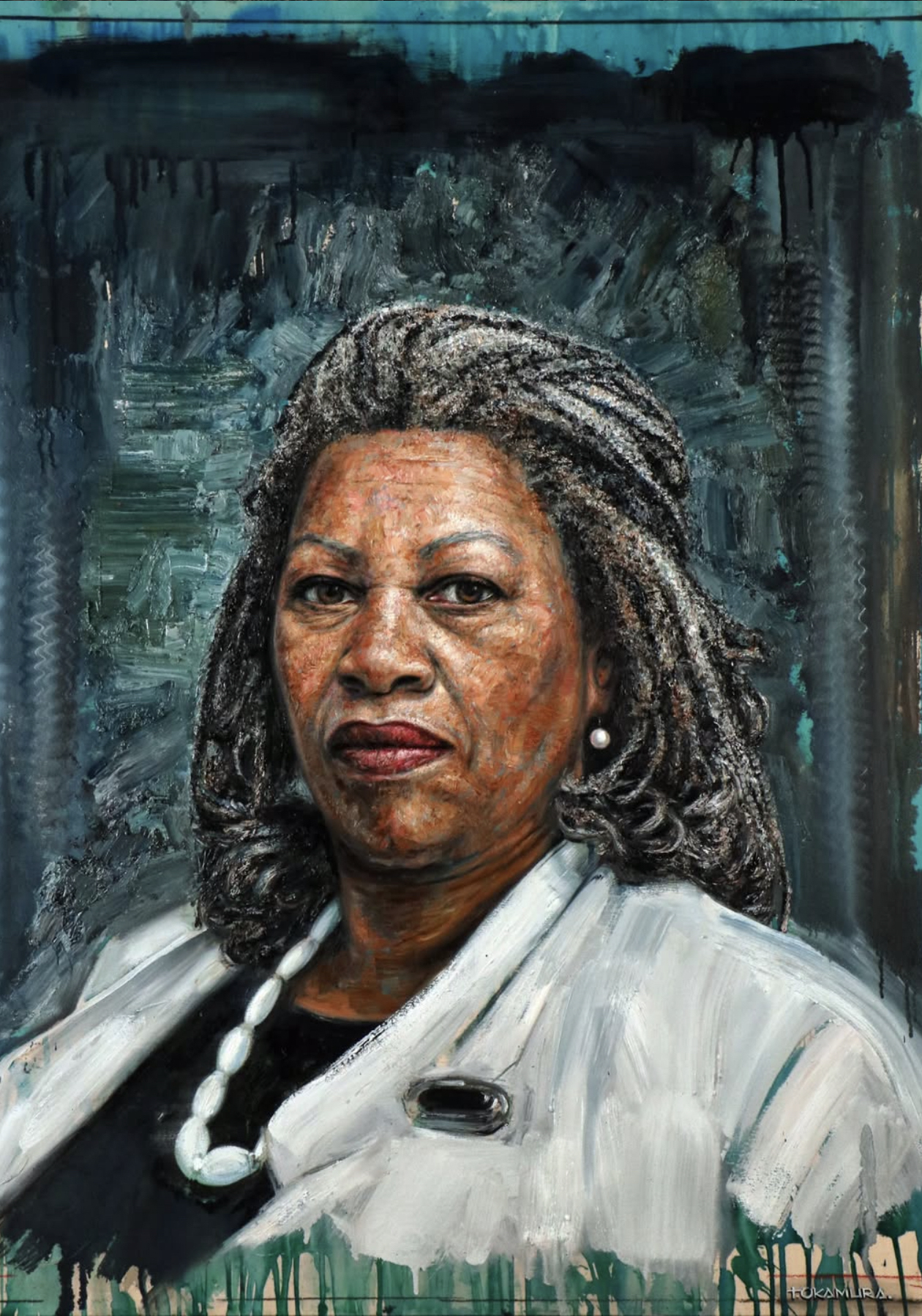
HILOBROW: I know you paint people who are familiar to millions, like Erykah Badu, etc.; what is the continuity of your feelings [between] when you’re doing somebody who’s acclaimed and famous, and ordinary people? David and Ruth Ann are rapidly becoming well-known [smiles], but you know what I mean!
OKAMURA: I think my general approach, on a technical level, is the same. Beyond the likeness and the technical stuff though, is the spiritual component, for me. And I think somebody that is well-known, I think it’s my job as an artist to find some factor, to uncover some…sort of inner truth, that maybe is not normally considered a part of their public persona; so, always trying to investigate a little more deeply and discover something, to dig a little deeper. But the most important thing is celebrating the individual, whether they’re famous or not famous, and secondly, hopefully finding, creating that connection that we can all feel in a soulful way. Where you can spend time with a painting, and come away feeling like, “Yeah, I get that emotion they’re expressing,” or “I understand the pain that is deep down within them.” Those are the things that are intangibles, and it’s something that… there’s a reason why we do visual art, because sometimes words are not enough. And there’s some kind of communication that goes beyond spoken language.
HILOBROW: And some things only become visible secondhand, by creating an image of them, rather than being observable on their own.
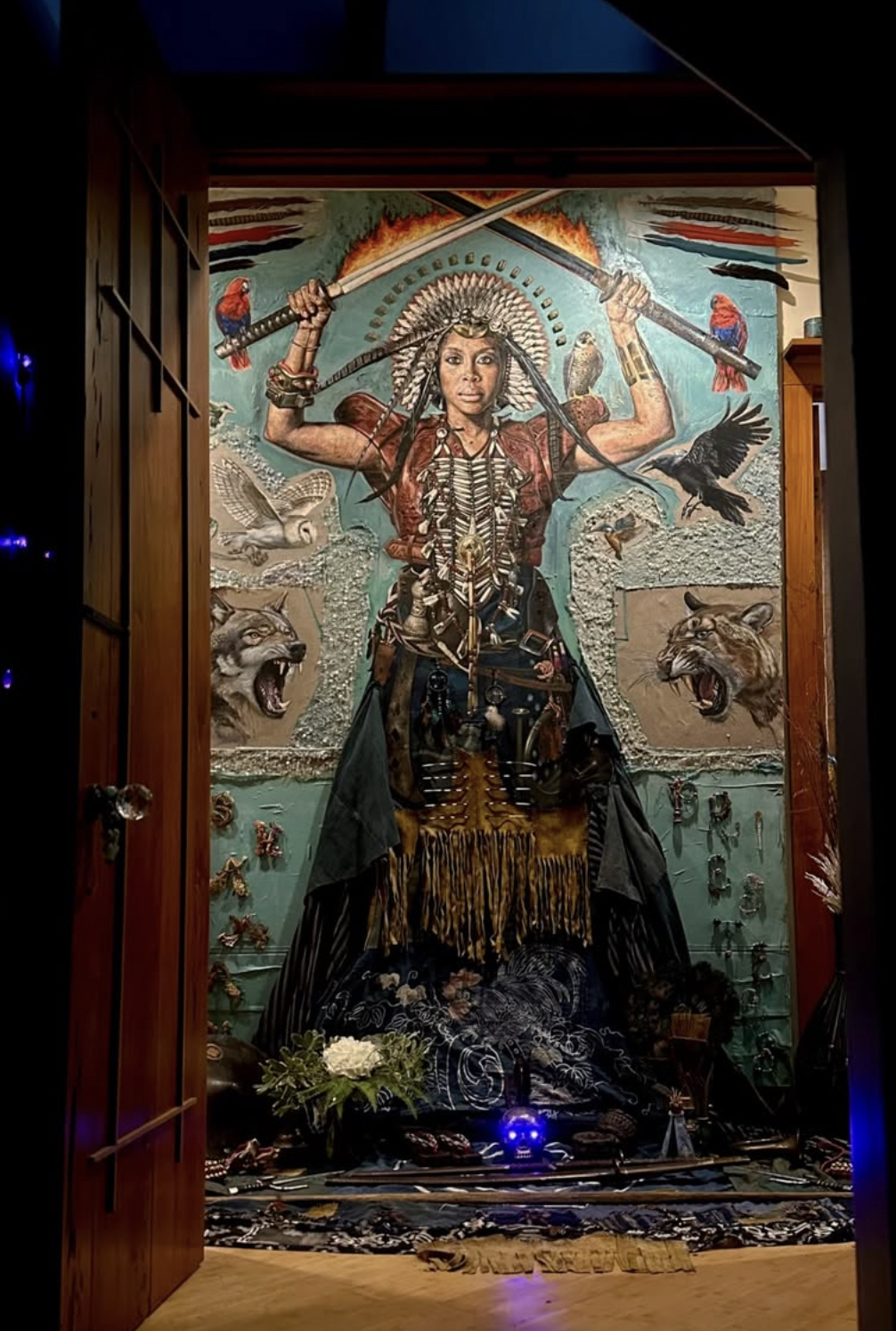
OKAMURA: Exactly, and it just occurred to me as well that, when people experience the original painting in-person — the scale, the texture — you feel in many ways that the energy that went into the piece radiates back out at you. And that can be dampened by seeing it digitally, so that’s another thing that I’m very conscientious of: the energy that’s coming from the original painting; that’s my biggest concern. All the reproductions and ways that people see it, it’s really out of my control in a lot of ways, so I focus on the piece as a painting, and I think about it almost as a sculpture; what’s the dimensionality, what’s your interaction with the tactile nature…
HILOBROW: …the topography…
OKAMURA: Yeah, the topography — when people tell me, “I really wanna touch your painting”…that makes me happy! [laughter]
HILOBROW: And then you call the security guard! But you’re still happy!
OKAMURA: [Laughs] No, no, I encourage people — sometimes the paintings are still wet on the wall too, and they’re like, “Oh, I have paint on my fingers!” and I’m like “This is cool, now you’re a part of it”!
HILOBROW: I love that. And it occurred to me, going back to the question about portraying well-known and less-known people, that with a famous person, it may be even more elusive to find the individual, because everyone’s got their idea of who that person is…
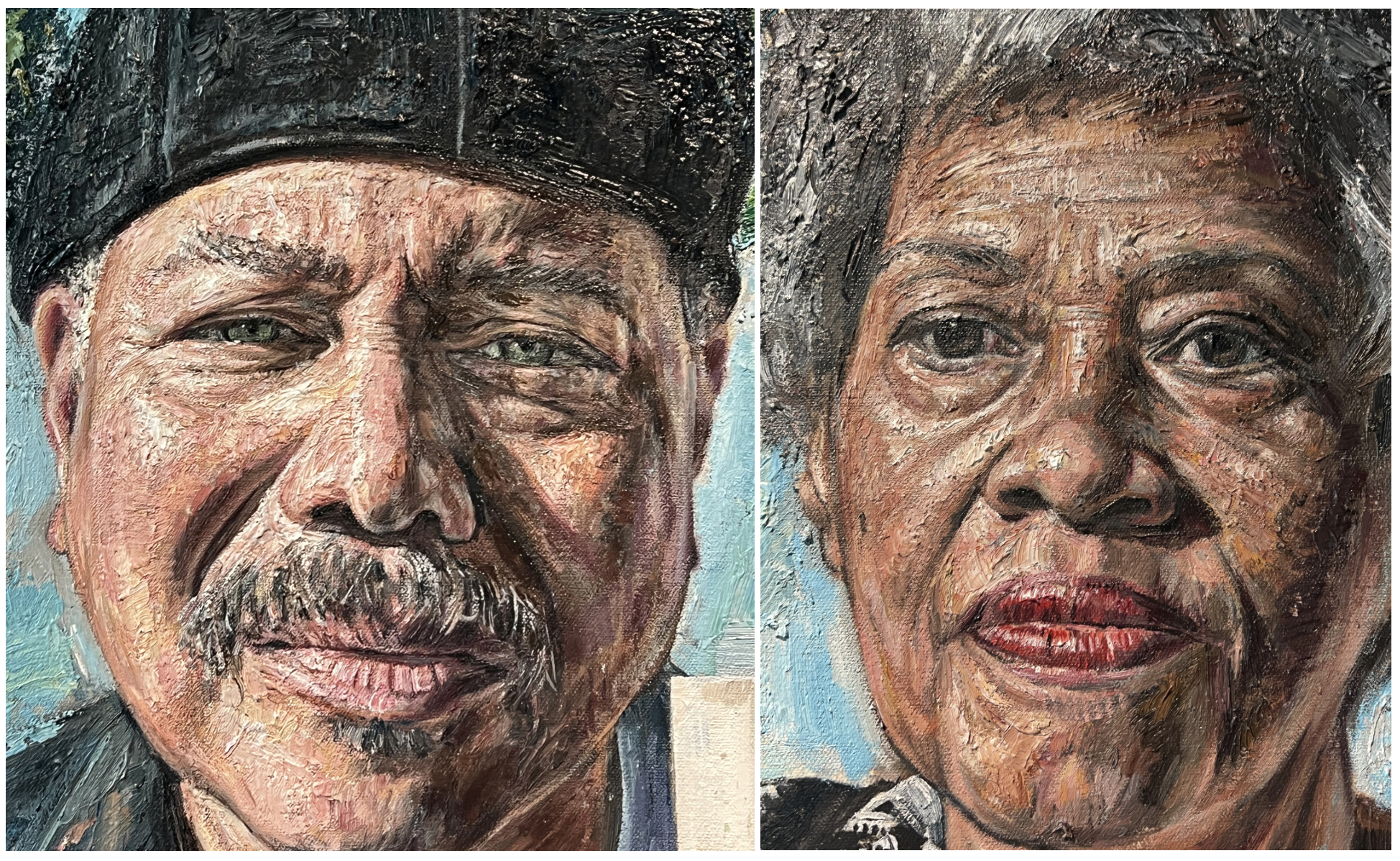
OKAMURA: It’s important to me, if they’re somebody living, to meet with them, and talk with them. Get a sense of their energy. There’s something to be said for aura. Just interacting with their personality. I build a rapport, and then I go in my studio and I spend all this time with them — it’s a very intimate relationship. I met David and Ruth Ann last year, and took away those conversations, and a lot of their emotional resonance, spent a lot of time with [that], and then came back and saw them again. That’s super fulfilling. Being given permission to paint somebody’s portrait is something that I want to honor with doing the best job that I can — I want somebody to recognize themselves.
[Keep watching this space for profiles of all the creators contributing to Black Cherry Lane: Presence, and if you’re anywhere near Staten Island between October 1 and 25, come see what they have to reveal for yourself!]