
SKIN DEEP (INTRO)
By:
October 2, 2026
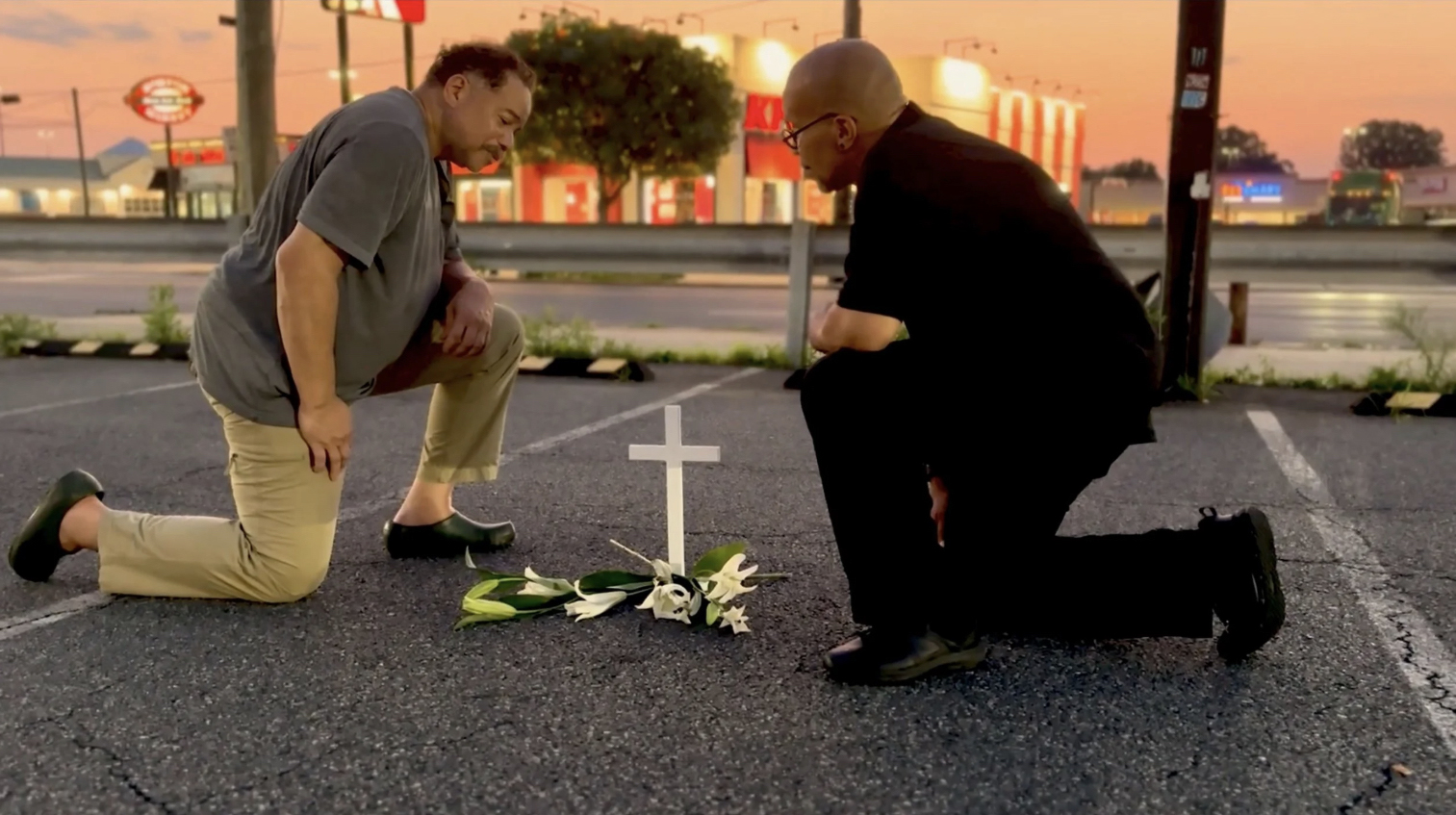
Humanity paints its story in silences and shadows, but history remembers what it’s seen. The first darkness was god’s canvas, filled in with fields and forests then covered over by human industry’s mark.
Cherry Lane Cemetery is a palette of erasures, a literal coverup, black asphalt over concrete, where once there was greenery and life, and beneath that, those who had lived — one point on a phantom map of America’s rejected reality.
More and more such restless truths are coming to light, as the underground nation of disappeared and desecrated graves of the dispossessed gets rediscovered — or just acknowledged and admitted.
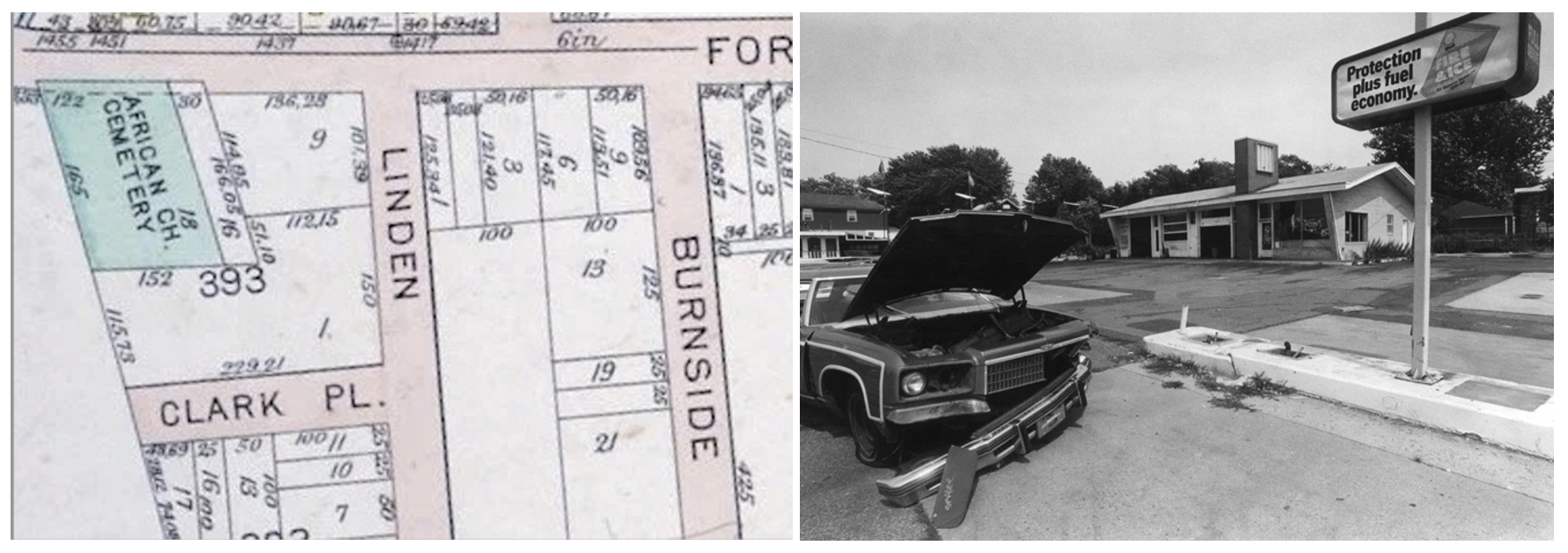
The Second Asbury AME Zion Church, deeded in 1850, once stood on Staten Island, NY, with the Cherry Lane Cemetery beside it. The church was reportedly destroyed by a rioting white mob circa 1880, and over many decades the cemetery fell into disrepair. And then disdain: in 1954 the City seized on a technicality — the lack of a cemetery being specified in the Church’s original deed — as a means to seize the property too, claiming the cemetery thus had no tax-exempt status. The board then overseeing the cemetery grounds was charged an $11,000 bill in back taxes which it couldn’t possibly pay, and the City auctioned the lot for $1,000. With no trace of old headstones and a fading collective memory in a changing neighborhood, title-searchers hired by the developers who won the auction alleged that there was “no evidence” the site had ever been a cemetery. The strain they exerted to “prove” what it was not, tells us all we need to know about the reality they were working to suppress. But the openness with which both free and formerly enslaved Black community members were demeaned in life, death, and posterity is as clear as the notation of the site, on maps of the property as late as 1917, as “African Ch. Cemetery,” and as recently as 2018, as “African Cem.” Off-map and in-reality, the plot became first a Shell station and then, since the 1980s, a strip mall; the remains of possibly hundreds of humans lie under its parking lot.
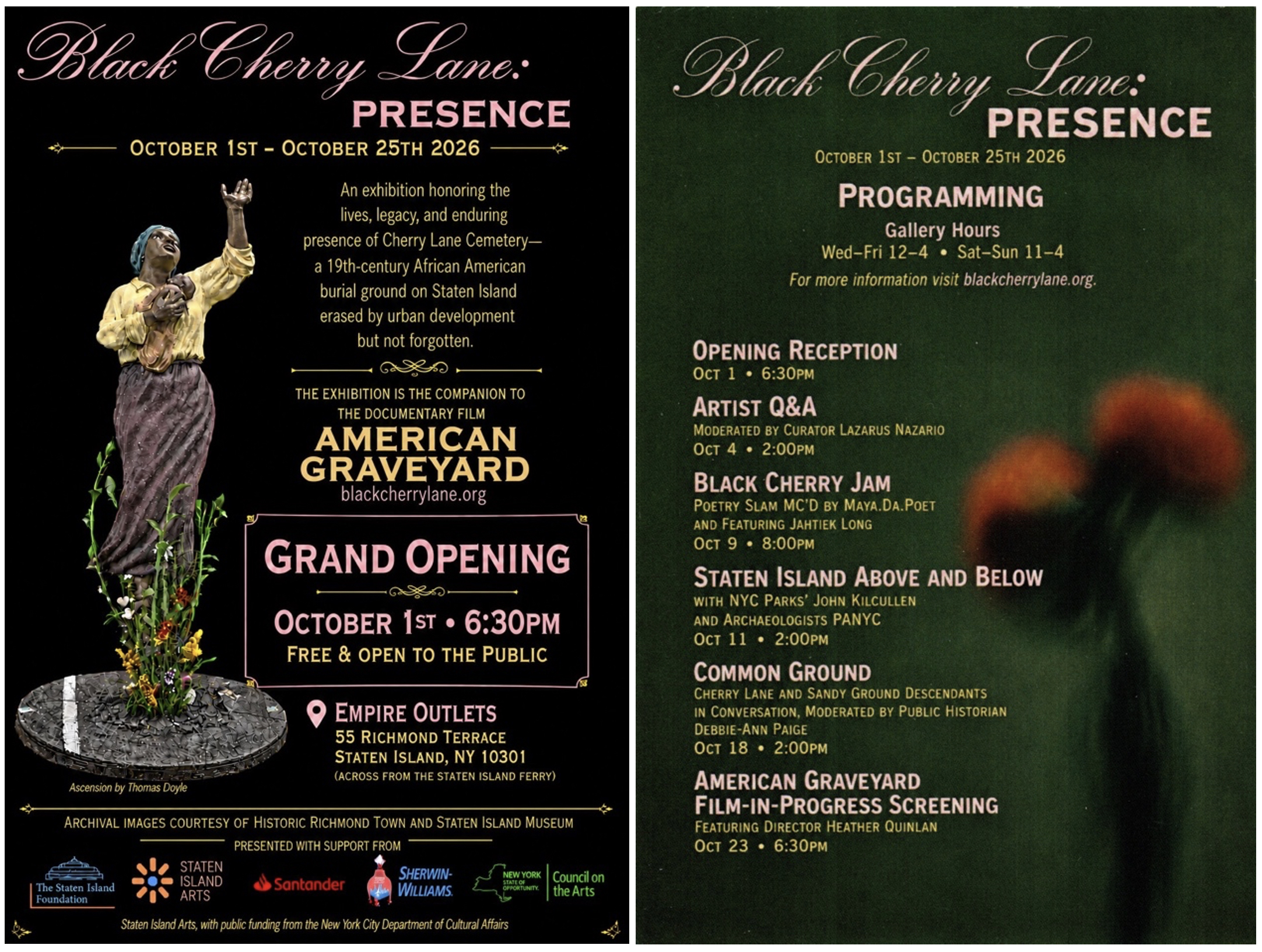
It’s necessary to overlay a different vision, and to bring a lost landscape back into view. Hand-in-hand with an upcoming documentary to record the information long hidden or neglected, and tell the story of Cherry Lane’s legacy in descendants’ own words (American Graveyard, premiering in 2027, the bicentennial of complete emancipation in New York State), the evidence and aspiration of the mind’s eye will be on view from October 1-25, 2026 on Staten Island, at Black Cherry Lane: Presence, an art exhibition imagining the submerged history, enduring importance, and possible future of the site.
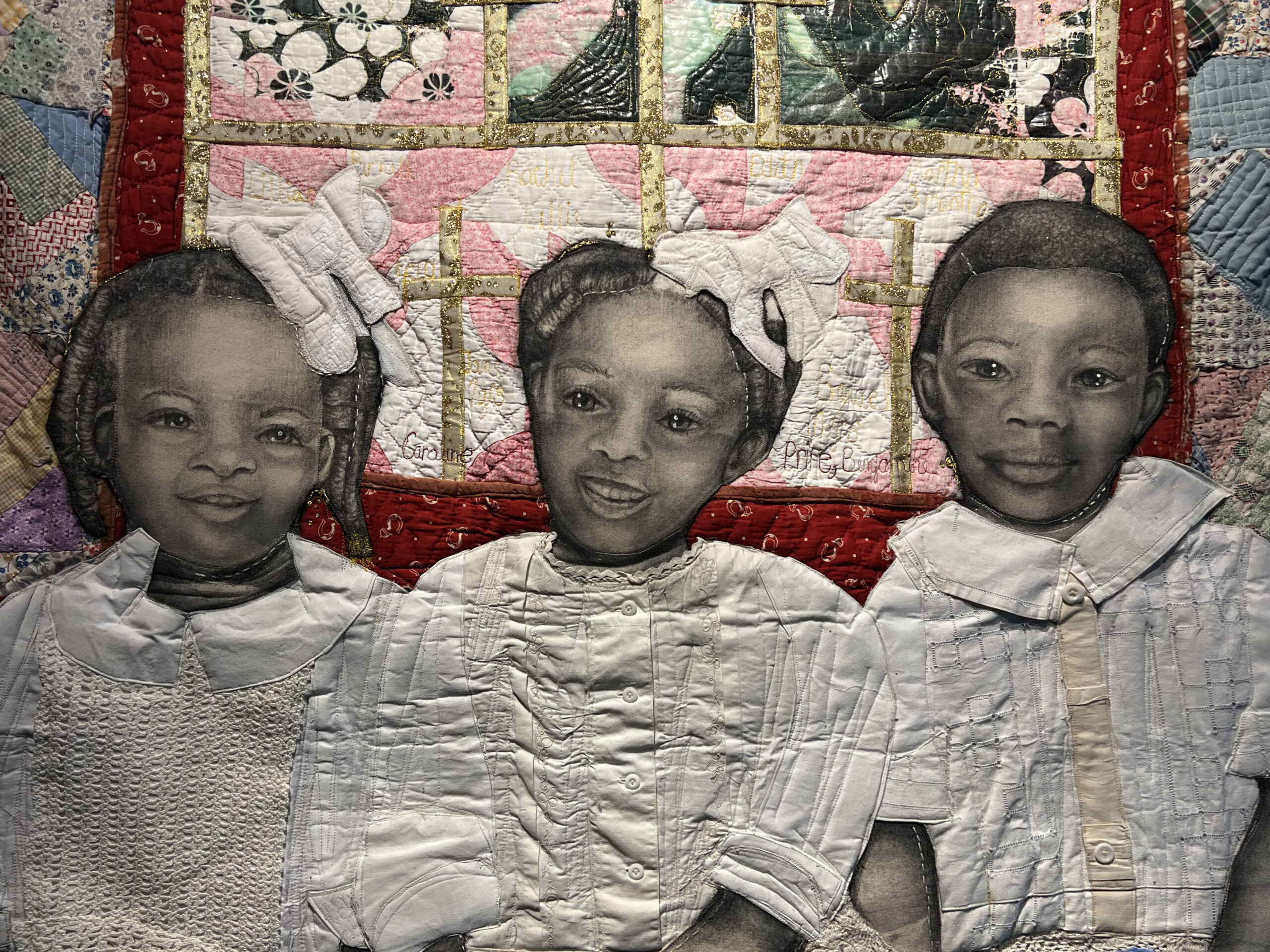
Music coheres from the silences between notes, and paintings, weavings and sculptures are defined by what space flows within and around them; the artists in Black Cherry Lane: Presence reckon with absence and reconcile with the tools that erasure has called them to take up.
Future, present and past are entwined in inventive and unexpected ways; Beverly Y. Smith’s commemorative quilt weaves a golden thread between specific and global families, between the humbly reverent and the sacred domestic; Greg Shea’s tintypes of the contemporary descendants of people buried at Cherry Lane use an antique medium to write these inheritors and their unseen forebears into the same history, and show how much distance has been crossed and how much still lies ahead.
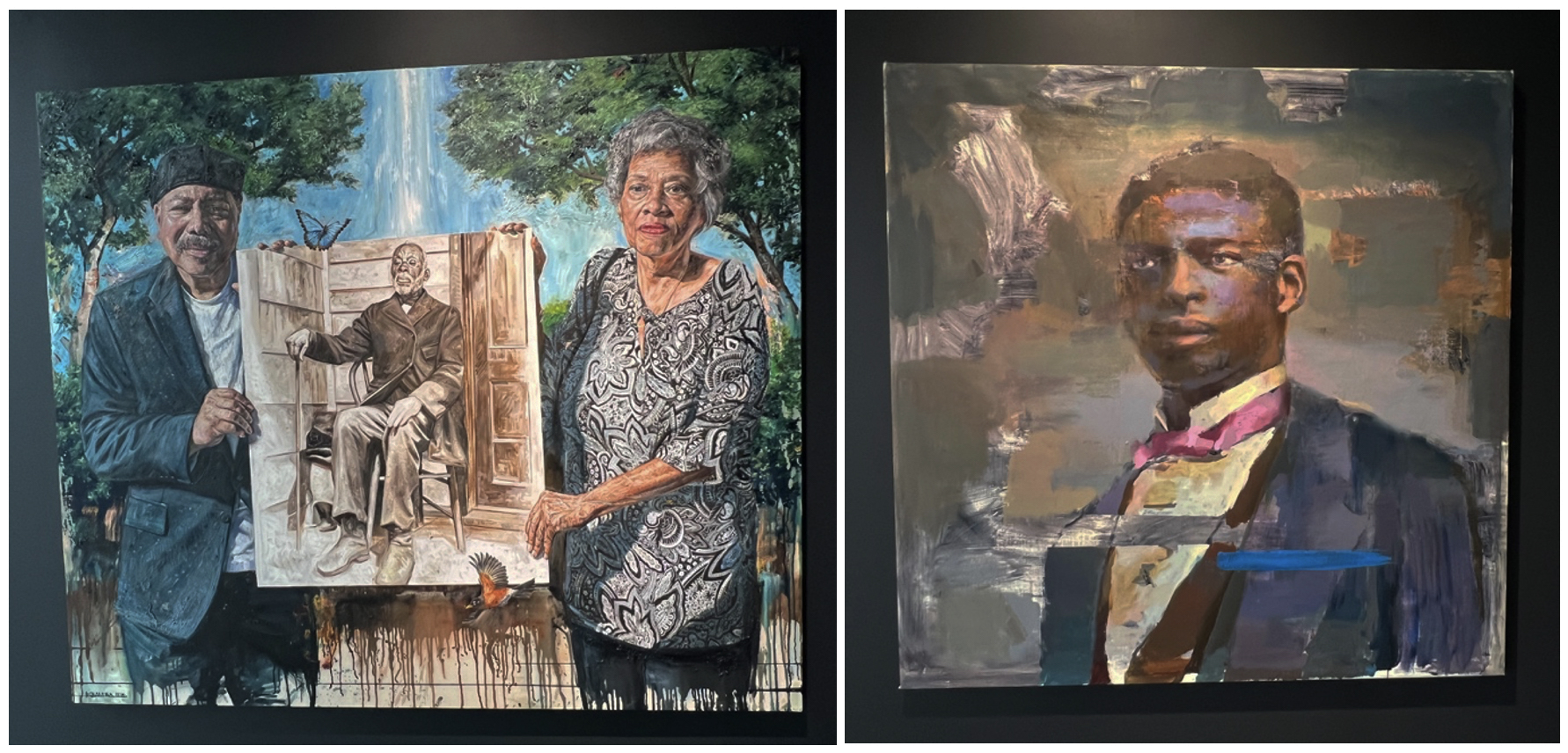
In Tim Okamura’s portrait of descendants David Thomas and Ruth Ann Hills, they themselves are shown holding a portrait of their third great-grandfather Benjamin Prine. (He lived longer than any other formerly-enslaved person on Staten Island, and is the only face of Cherry Lane we have a photo of, since that life lasted some 100 years, and his passing was reported from the New York Times to papers in Iowa.) Okamura’s work leaves flashes of bare canvas interspersed with a thickly applied expressionistic style and a precise, almost op-art handling of pattern. The natural elemental course of the paint dripping toward the bottom, the image dissipating at the edge like the famous portrait of George Washington, signifies unfinished business, and steadfast figures who are noways done with it. This very hand-wrought, gestural aesthetic has a fascinating counterpoint in Jerome Lagarrigue’s portrait of an anonymous ancestor, also painted in vivid consciousness of the brushstroke itself but evoking the glitches of a video feed; a ghost in our contemporary machines of understanding and remembrance.
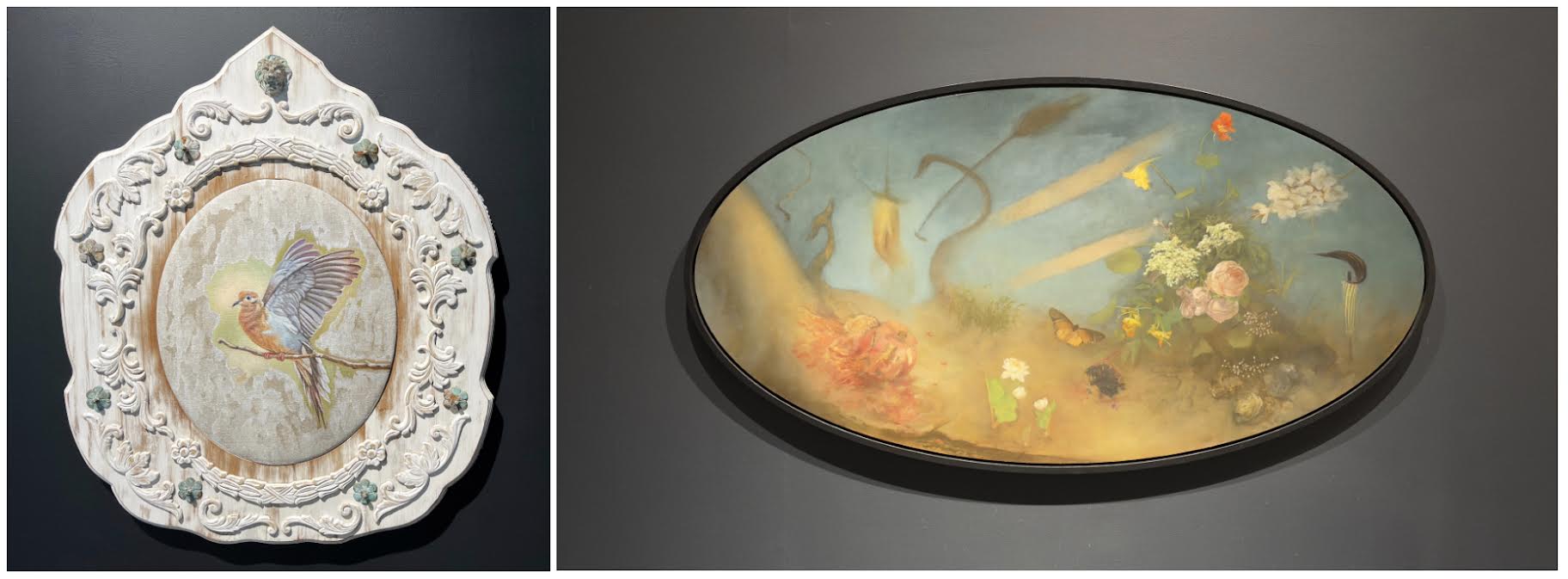
Motifs of butterflies (migration) and birds (escape) recur amongst the artworks like the spirit of an idea flying from heart to heart, as seen in Okamura’s canvas as well as those of Taha Clayton and Lazarus Nazario (who also curated the exhibition). Clayton’s frame is sculpted from the wood of the types of cherry trees that once gave the gravesite its name, and some actual cuttings of such trees appear elsewhere in the gallery, along with archival maps, photos and documents listing the denied, actual burials and other pivotal rediscoveries.
Yelena Tylkina’s images, the stylistic child of graffiti murals and surrealist automatic drawing, swirl the historical record with visionary depictions of the life Prine might have lived in Africa or a free America, the sustaining environment and small industry of this island in past centuries, and archetypal embodiments of power and self-worth. Contrasting this profusion is the spare, darkened room that houses Mary Edwards’ soundwork, which invites visitors to place themselves at the site in a vertical trip through time, spanning the sounds the earth “heard” from gospel-singing parishioners, to rolling bulldozers, to movement across the paved parking lot. It’s a sonic memoir of gradual emergence, and this theme is made elegantly material in Thomas Doyle’s miniature sculpture of an iconic figure who rises on roots triumphally breaking through the shroud of blacktop.
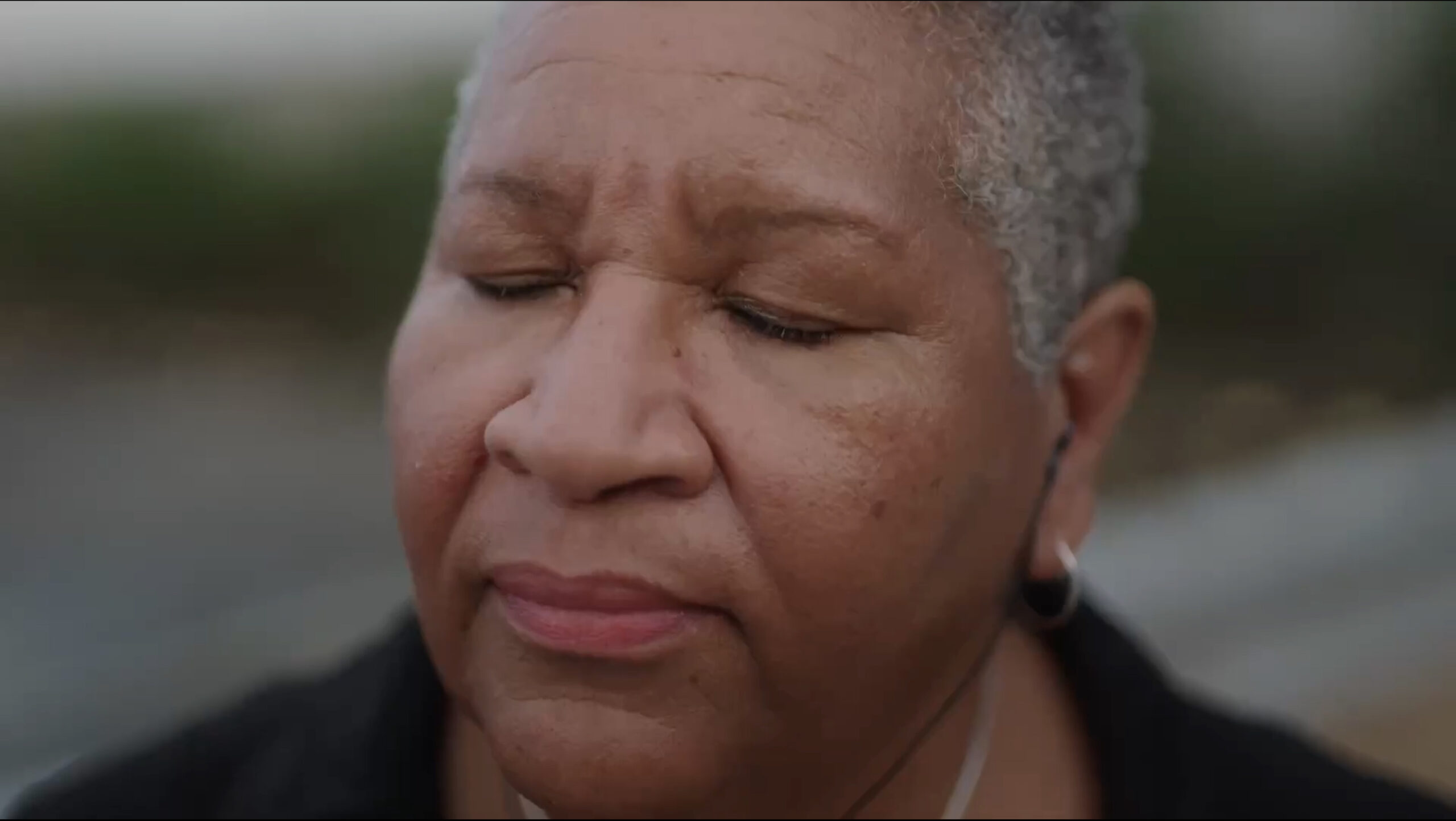
The show also features a video loop of the artists creating these works, by the film’s director Heather Quinlan (to whom, full disclosure, I am proudly married), and a full program across October will include a screening of in-progress footage, as well as talks on diverse related subjects and a poetry slam.
Cherry Lane, once a house of god and a refuge for our fellow Americans, has too long been without form and void. This time, the creators of today and inventors of tomorrow — in art-studios and on film-sets and no less at kitchen tables, in council chambers and on the streets — will bring the light.
[Over the course of the exhibition, I’ll be speaking with some of the artists and other visionaries involved, so please come back to catch their messages!]
SKIN DEEP: INTRODUCTION by Adam McGovern | JEROME LAGARRIGUE | MARY EDWARDS | BEVERLY Y. SMITH | TIM OKAMURA | THOMAS DOYLE | YELENA TYLKINA | TAHA CLAYTON | GREG SHEA | LAZARUS NAZARIO