
SKIN DEEP (3)
By:
October 10, 2026
One in a series of posts profiling the artists of the Black Cherry Lane: Presence exhibition, which honors the ancestors and descendants of Cherry Lane Cemetery, a burial ground for free and formerly-enslaved people which is now itself buried under a parking lot, and which the artists are imagining a new life and legacy for.
SKIN DEEP: INTRODUCTION by Adam McGovern | JEROME LAGARRIGUE | MARY EDWARDS | BEVERLY Y. SMITH | TIM OKAMURA | THOMAS DOYLE | YELENA TYLKINA | TAHA CLAYTON | GREG SHEA | LAZARUS NAZARIO
The past is a patchwork, scraps of memory and embellished legend and preserved record arranged as fully and filled in as faithfully as we can, and held together with the filament of our bloodlines and the paths we choose to continue on. The practiced quilter is like one of the Three Fates spinning out the thread of our finite lifetimes, but working at that sacred task eternally; Beverly Y. Smith is such a soothsayer.
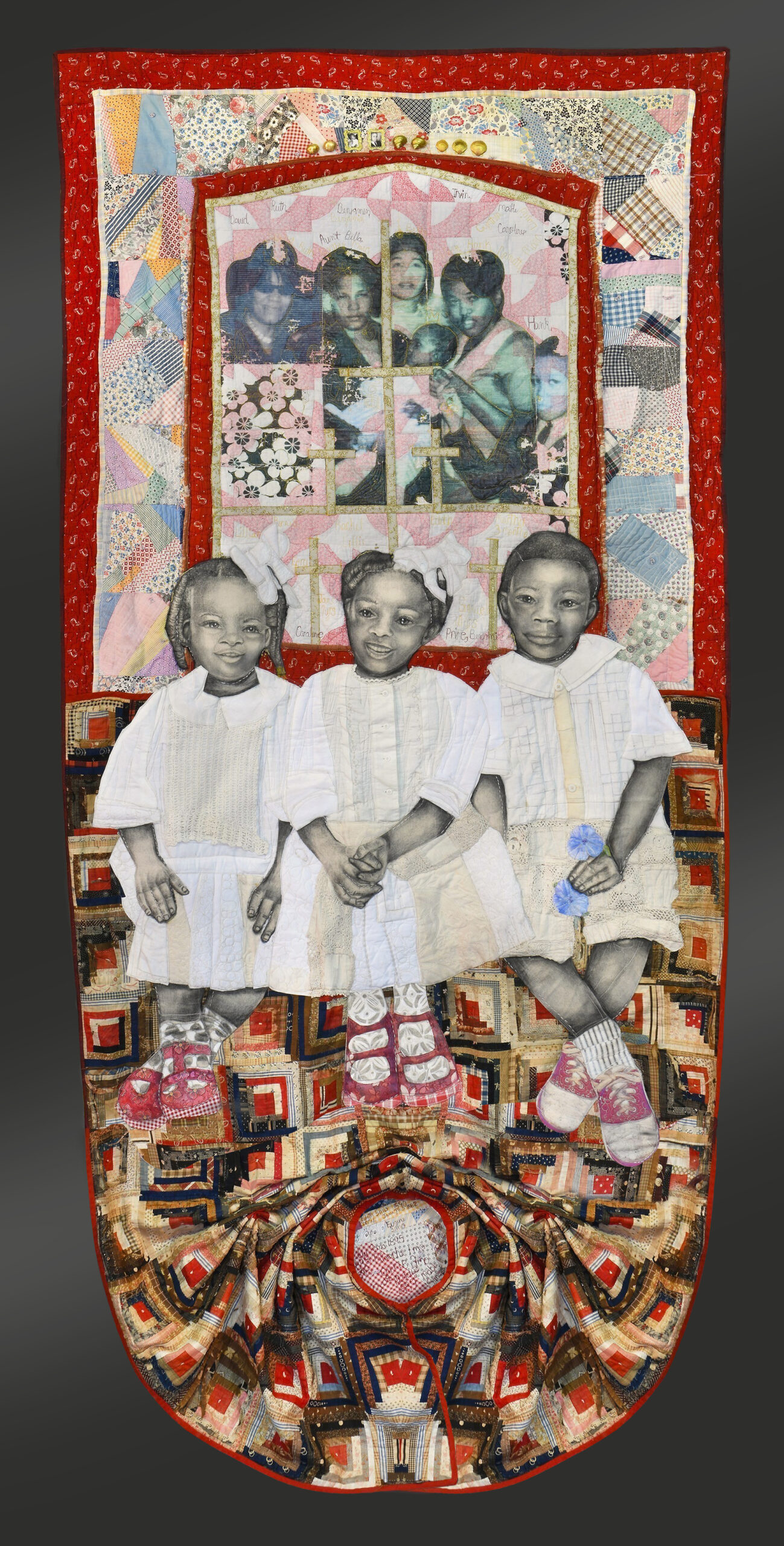
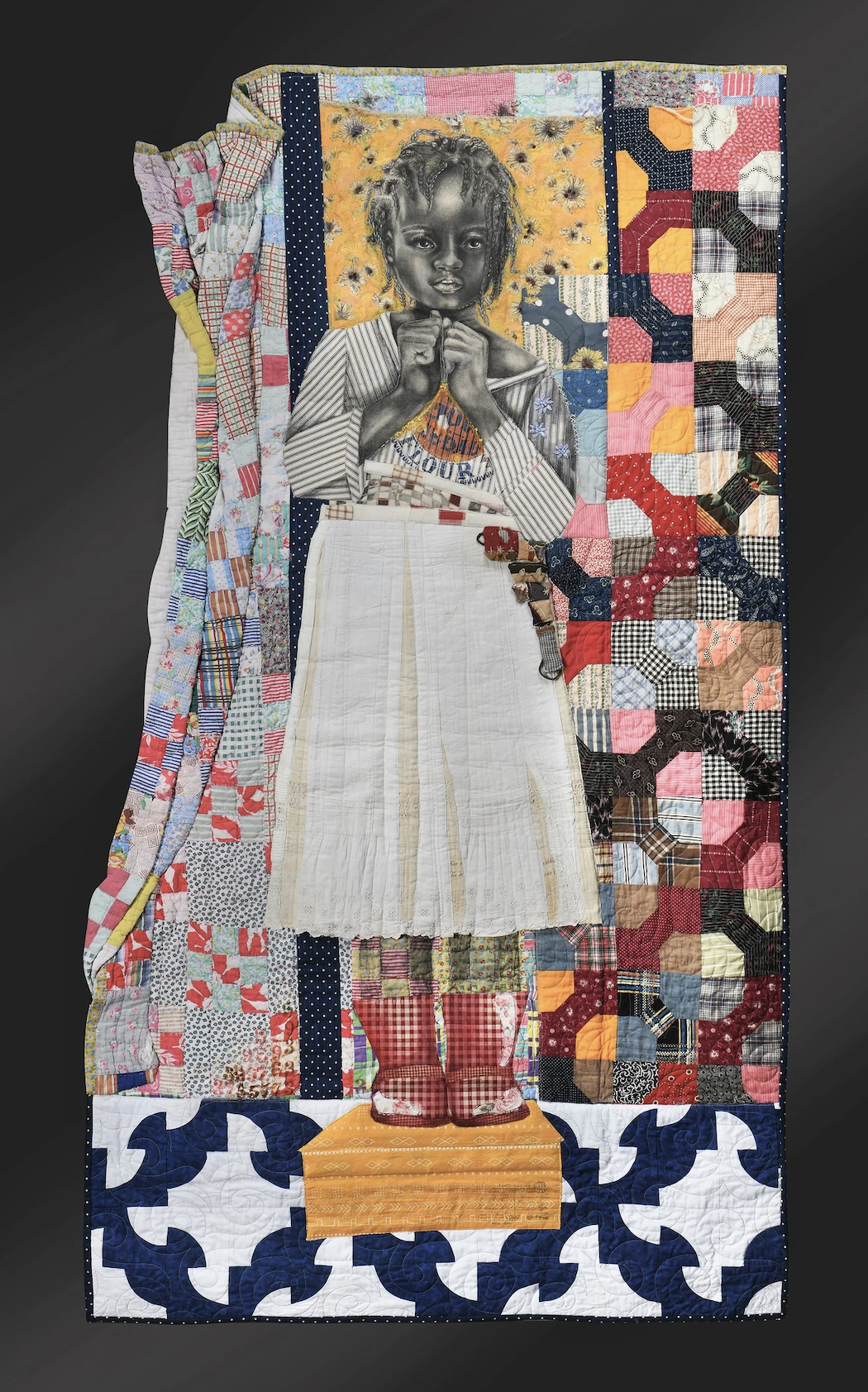
She gets her “material” from the rich mysteries and precious revelations of family history; hers, other people’s, and humanity’s — most powerfully, in her newest work, the branches of family stretching into our time from those buried, forgotten and reborn in memory at Cherry Lane Cemetery, the descendants who embody their ancestors’ true survival. Her mixed-media, monumental quilt in the Black Cherry Lane: Presence exhibition, The Origin of My Descent: Beyond the Grave, is no shroud but rather an ensign of continuance. Taller than any one person, intimate in its details of many individuals, it is woven from the fabric of time and imbued with the grandeur of ordinary mortal life shared fully.
To speak with Beverly is to join a seminar of accumulated wisdom, and our conversation at the exhibition’s opening started right in on a life story many were calling on her to tell:
SMITH: My first influence was as early as 5 years old, from my grandmother in Blacksburg, South Carolina. I used to sleep in this little room right off of her kitchen, and I was the kind of child that never liked being away from home, but when my grandmother would put the heavy quilt over me, I could stay all night long, it was very comforting. At the time I didn’t know that she had my aunts’ old dresses and my uncles’ old jeans that made up her quilt, but when I went to school and studied textiles I found that that became an artform; at the time when my grandmother was doing it, it wasn’t really appreciated. And I remember when my aunts were going off to college, they were embarrassed to take the quilts, because it just seemed old-timey and out-of-date. But in my practice I use a lot of my grandmother’s techniques. And that’s why you can see refurbished garments, old quilt patterns, and I’m really big on the quilt patterns that were used on the Underground Railroad. Like the Log Cabin pattern that’s a part of this particular quilt; it would symbolize a safe house for slaves running away to the North. They say some of them were hung out in plain view, but not everybody knew what those symbols meant. For centuries women have been crocheting, doing all kinds of needlework, and hiding symbols in them during wartime. At the top of this quilt I have what’s called the Drunkard’s Path [pattern], and that would symbolize that the catchers are on your trail, so you need to meander and go a different route to throw them off. I also use a lot of patchwork quilting, because that’s a style my grandmother would use. It’s like jazz notes, they move around. And when I studied textiles, I realized that’s a style that came from Africa. They had a belief that spirits could enter inanimate objects, and that if you make the patterns [so that] they meander all around, it would be hard for the spirits to find their way. Now, I don’t know if I believe in that, but I never take a chance!
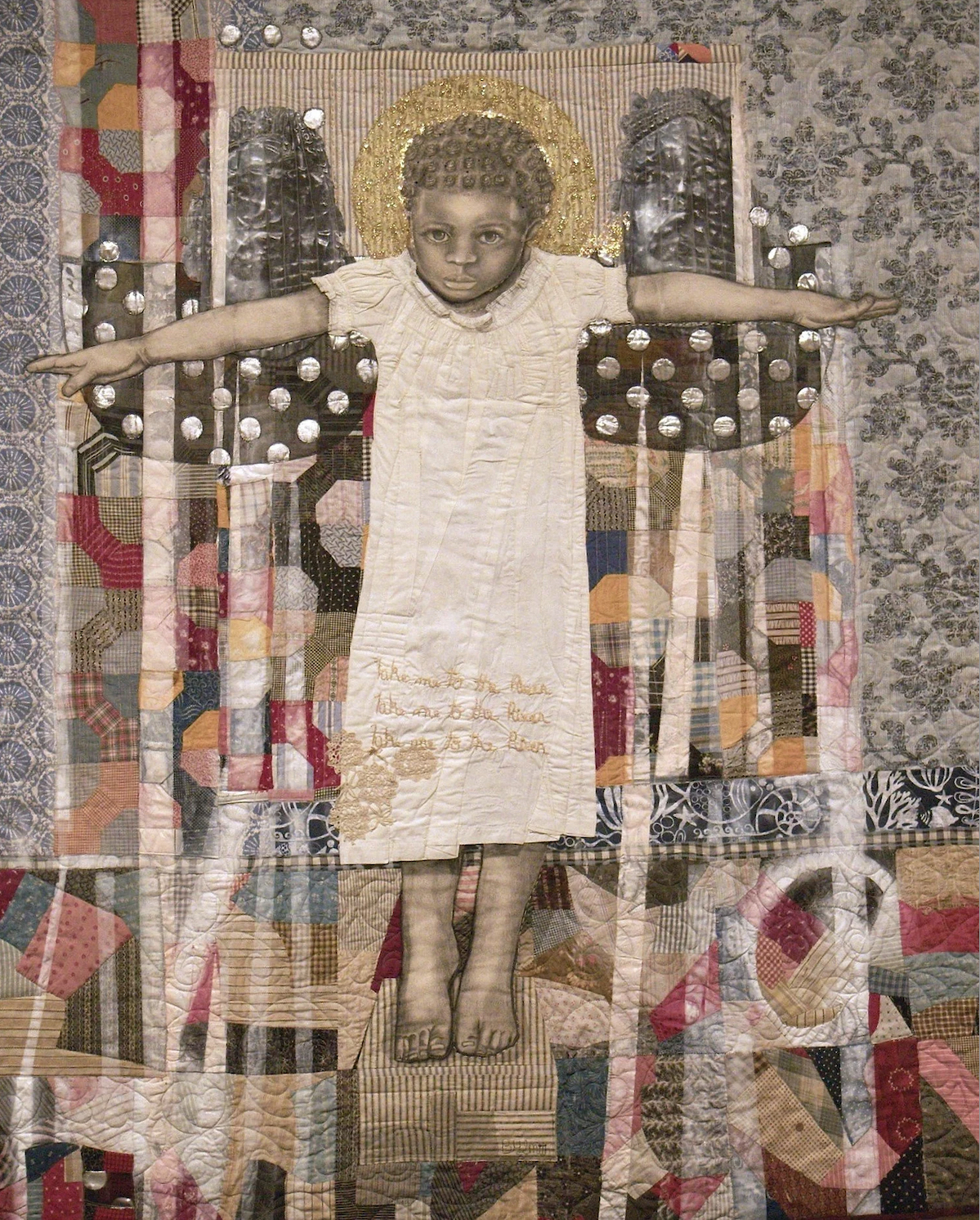
But I started with the figures, and the graphite drawing, when I was at graduate school. I had to fulfill an Advanced Drawing class, and one was not offered that semester, so I was placed in an MFA painting class, and all the students received yards of canvas. So I started drawing on the canvas; I realized how much [the texture] could handle all the gradations of pencil markings, and I could sew through it as well, so it’s like my signature at this point.
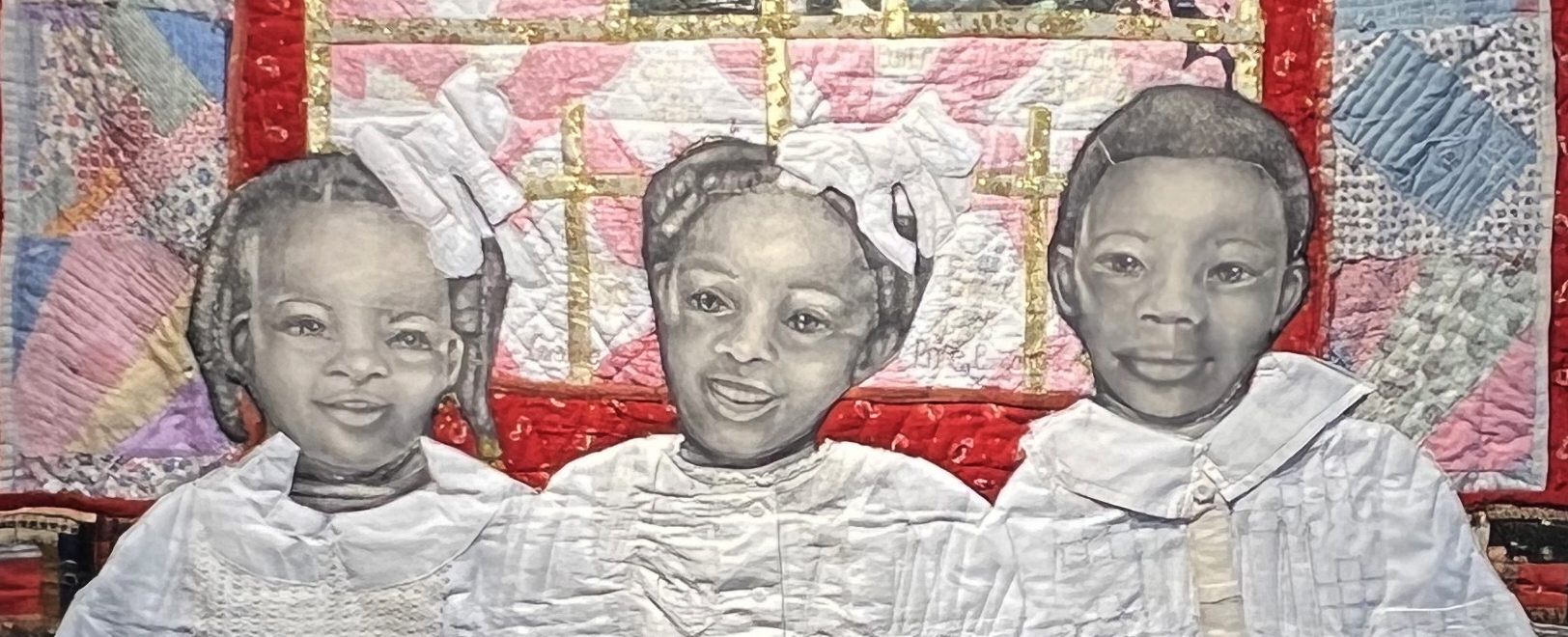
But the figures that you see on this particular quilt, they are from photographs of the Prine family descendants. [Benjamin Prine, the last person born into enslavement to die on Staten Island (as a free man, at age 100, it is thought), is the best-known person buried at Cherry Lane, with many of his descendants among those seeking a more just future for the site.] I love traditional quilts, I love the ingenuity, the preciseness, I just expand upon that technique, and I make a quilting that’s my own. So I may come out of the tradition, and create something that flows beyond that. I also add a lot of names on the quilts, that call out the ancestors that were buried at Cherry Lane, but that’s also a practice of my own, I do a lot of research with graveyards.
HILOBROW: Have you yourself ever used an ancestor’s clothing as a quilting material?
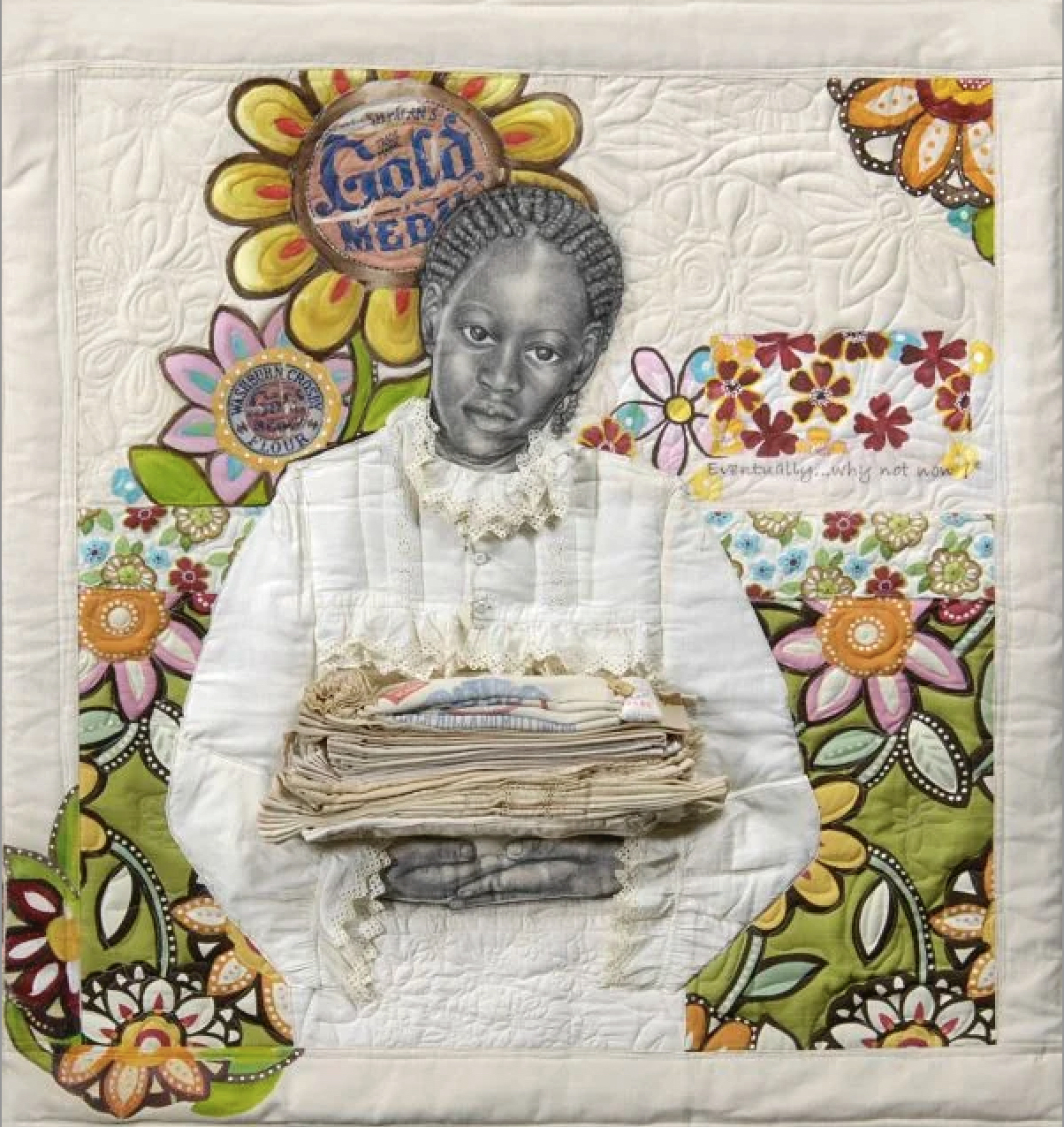
SMITH: I try to use a lot of old clothing; my mother would also sew, and make my play clothes, so a lot of that was still around, so I would incorporate that into my quilts as well — and flour sacks; I collect a lot of vintage flour sacks because my mother was raised by her grandmother, my great-grandmother, during the Great Depression, and they didn’t have a lot of money and they would use flour sacks as garments, so I incorporate a lot of those into my works.
HILOBROW: Did the family supply you with photos of how they looked as kids, or did you extrapolate that from seeing them now?
SMITH: I have photo albums that go way back, black-and-white, and that has a lot to do with why I like the graphite shading, though personally I prefer drawing from life when I can find a living relative to render. I draw my sisters, and nieces and nephews, especially those that still have some of the names of my ancestors from the Blaylock Plantation, I’ve found how those names were passed on. My family took photos very far back, late 1800s, and I like to take those photographs and then the names and add them to my quilt.
When we talk about the graveyards, of Cherry Lane, I think about how important just seeing names and dates on a tombstone, how much that did for me, connected me to my ancestors going way back, and I know the Prine family doesn’t have that luxury, [so] I’m hoping that what we’re doing here will help them have a connection that only comes about when you’re able to physically visit a gravesite and honor those that have passed away.
[Keep watching this space for profiles of all the creators contributing to Black Cherry Lane: Presence, and if you’re anywhere near Staten Island between October 1 and 25, come see what they have to reveal for yourself!]