
SKIN DEEP (9)
By:
October 23, 2026
One in a series of posts profiling the artists of the Black Cherry Lane: Presence exhibition, which honors the ancestors and descendants of Cherry Lane Cemetery, a burial ground for free and formerly-enslaved people which is now itself buried under a parking lot, and which the artists are imagining a new life and legacy for.
SKIN DEEP: INTRODUCTION by Adam McGovern | JEROME LAGARRIGUE | MARY EDWARDS | BEVERLY Y. SMITH | TIM OKAMURA | THOMAS DOYLE | YELENA TYLKINA | TAHA CLAYTON | GREG SHEA | LAZARUS NAZARIO
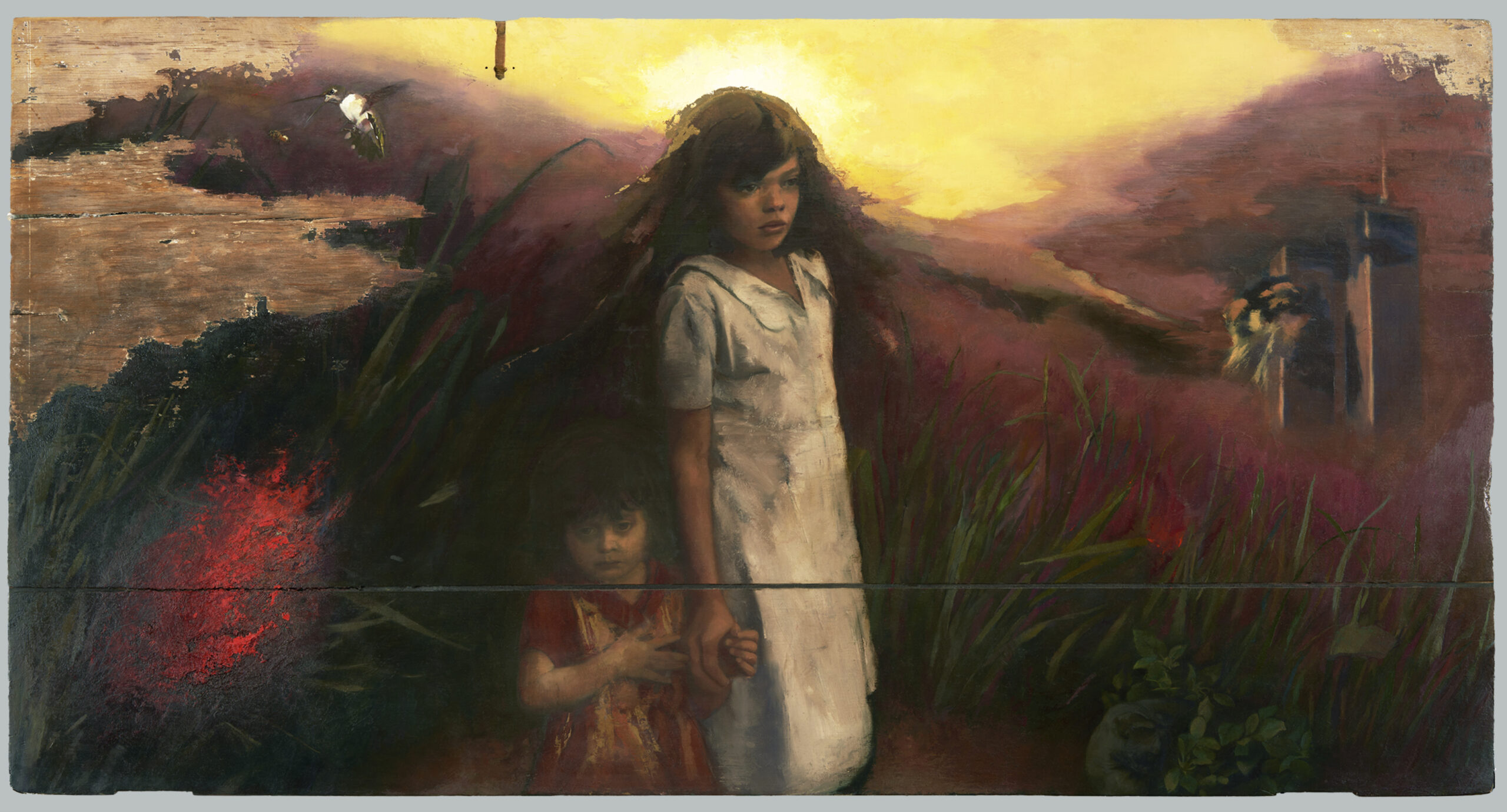
Lazarus Nazario paints landscapes of the human interior. Plantlife is imbued with personhood, atmosphere is ablaze with promise or murky with foreboding, and a spectrum of high emotion busts from figures in a traumatic passion that perhaps only they and we can see. Nazario both curated the Black Cherry Lane: Presence exhibition and provided a striking image, The Congregation, which is like a looking-glass into worlds lost in time and immortal in imagination.
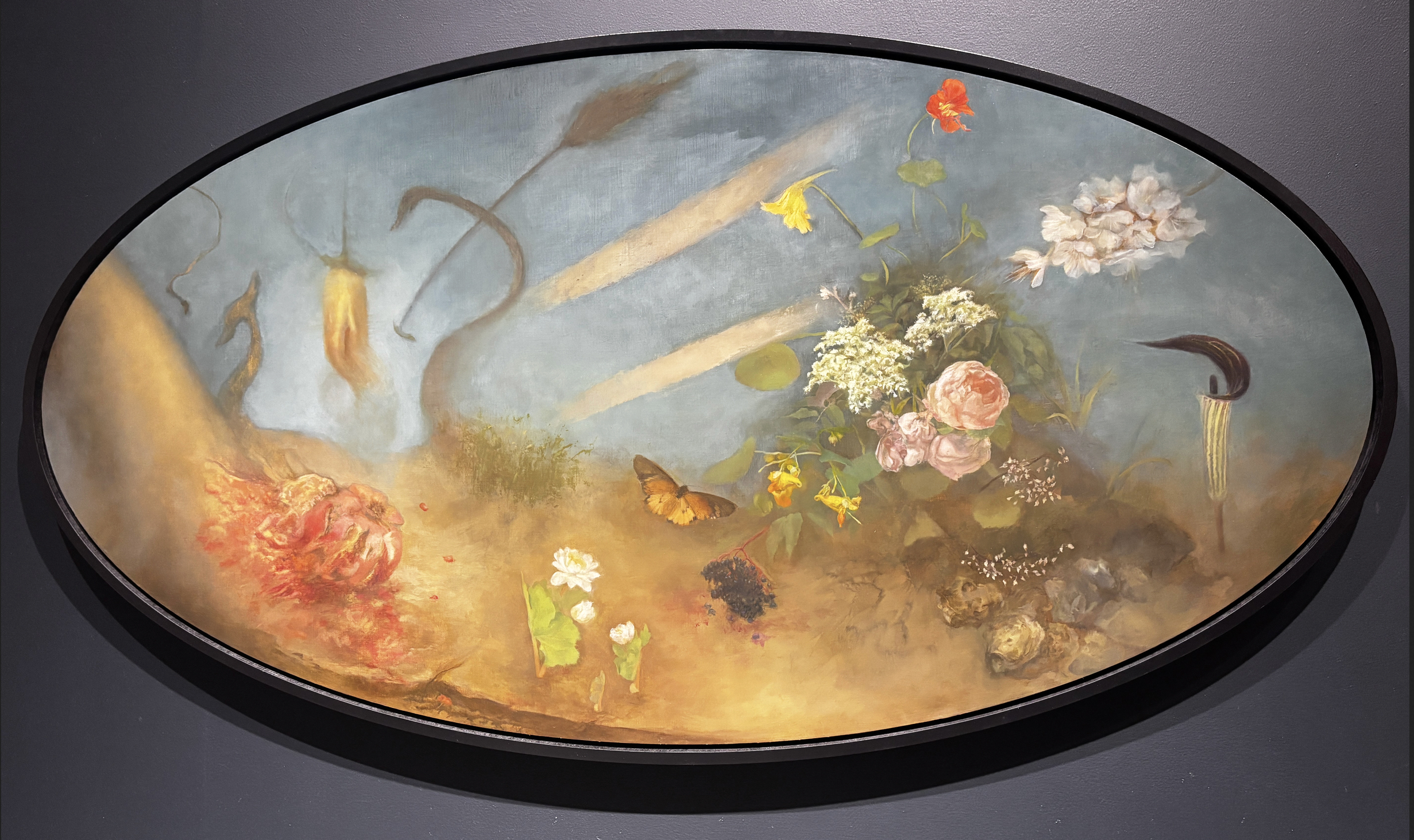
Allegorical to the AME Zion church community erased from what was once Cherry Lane, Staten Island, the scene telescopes time and transmutes the natural world into a misty mirage and a sensual cornucopia; distance across space and centuries, and distinctions between species and narratives, swirled in a delirium of scale and depth and meaning. I spoke with her about what her work seeks to draw out from the darknesses that our selves can be lost in:
HILOBROW: I’m curious about curation itself as an artform; it’s almost as if the different methods and media that you might put together as an individual artist, some harmonious and others fruitfully contrasted, are writ larger when you’re putting together a show. What do you look for when you’re curating a show, and what was your brief to the artists, and your expectations and hopes about what kind of range of work you would see?
NAZARIO: For sure I wanted it to be overarching, so I tried to cast a wide net, because I didn’t want everything to be the same…the same sort of answer to the question. So I was looking for people in very different mediums. One of the first things I asked [exhibition organizer and director of the film it accompanies] Heather when she spoke to me about this was, can it be multidisciplinary; I wanted it to be from different perspectives, [preferably] from very different perspectives, which is why I was completely excited to hear about Mary and her soundscapes, and I loved the idea of Beverly and her quilts, so that everything wasn’t just a painting of something. Not only these different approaches but these different eras, like Greg Shea coming from tintypes.
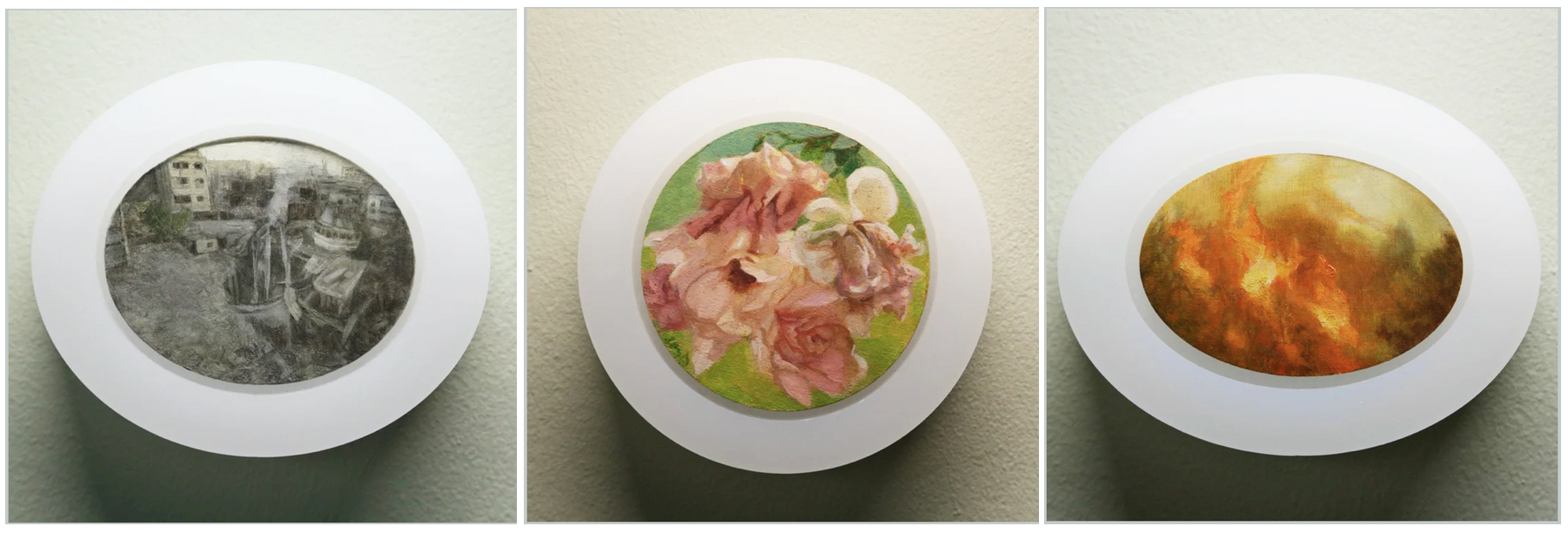
HILOBROW: I’m fascinated by the kind of, tension — tension is a strange word since your image is so peaceful, but the dynamic between the microscopic and the grand. Heretofore I had just happened to mostly see your miniature pieces, and I still get that feeling from this, even though it has a panoramic scale. Do you think in terms of close focus, and scale that up, or what is your spatial [concept]?
NAZARIO: I do, it is kind of important to me that it shows a whole story. I set a stage. I wanted this to be very much a dreamy sort of feel, perhaps what the land…ultimately I thought of the fact that the [ancestors] were in that land, buried within the ground, but that they would somehow make their mark; much like artists make their mark on a painting, they made their mark on this land. Saying they were here, they existed. I wanted to show that, and liked the idea of them coming through the land, in the flora. So it was symbolic for me. It’s interesting because most people took the portraitist type of approach, and I knew that — one of the things that struck me most, to be honest, was the violence; the violence of bulldozing a cemetery. I wanted to speak to the land itself being able to react to that. Being able to have its say, and grow its own roots.
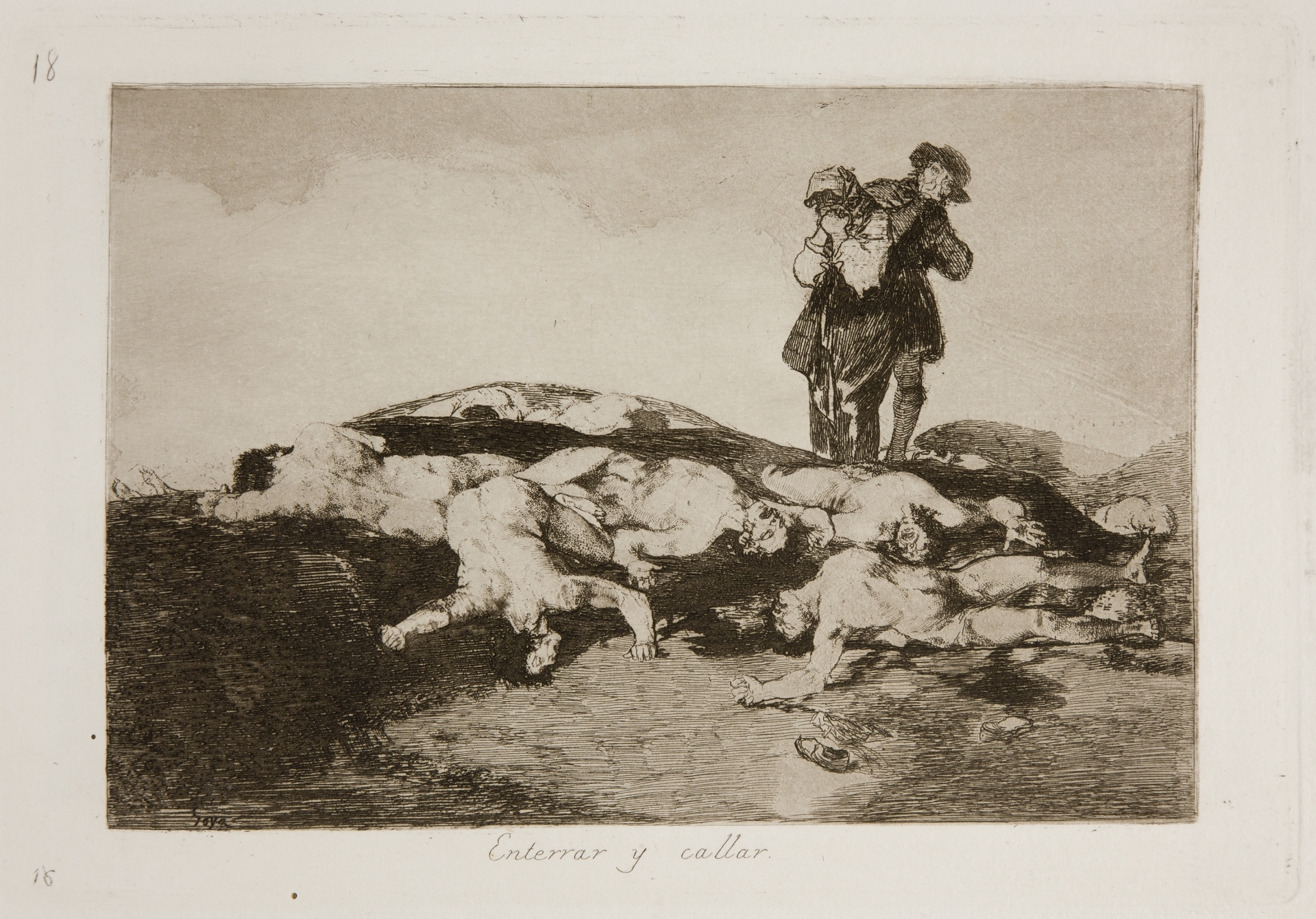
I started off with a very different idea, and it was very much about the people, and I was very much inspired by Goya. There’s a Goya etching called Bury Them and Keep Quiet; it’s just the land, and some people standing above the land, and there’s just a bunch of bodies strewn across the land; a wartime image. And I came upon this and it struck me like a brick, “bury them and keep quiet,” that’s exactly what we’re talking about. So the first studies of what I tried to do were like that; a big cherry tree and bodies on the land, you couldn’t tell if they were just [resting] on the land or buried underneath. But then I went to see this exhibition of Rachel Ruysch in Boston, and her extraordinary floral and botanical paintings.
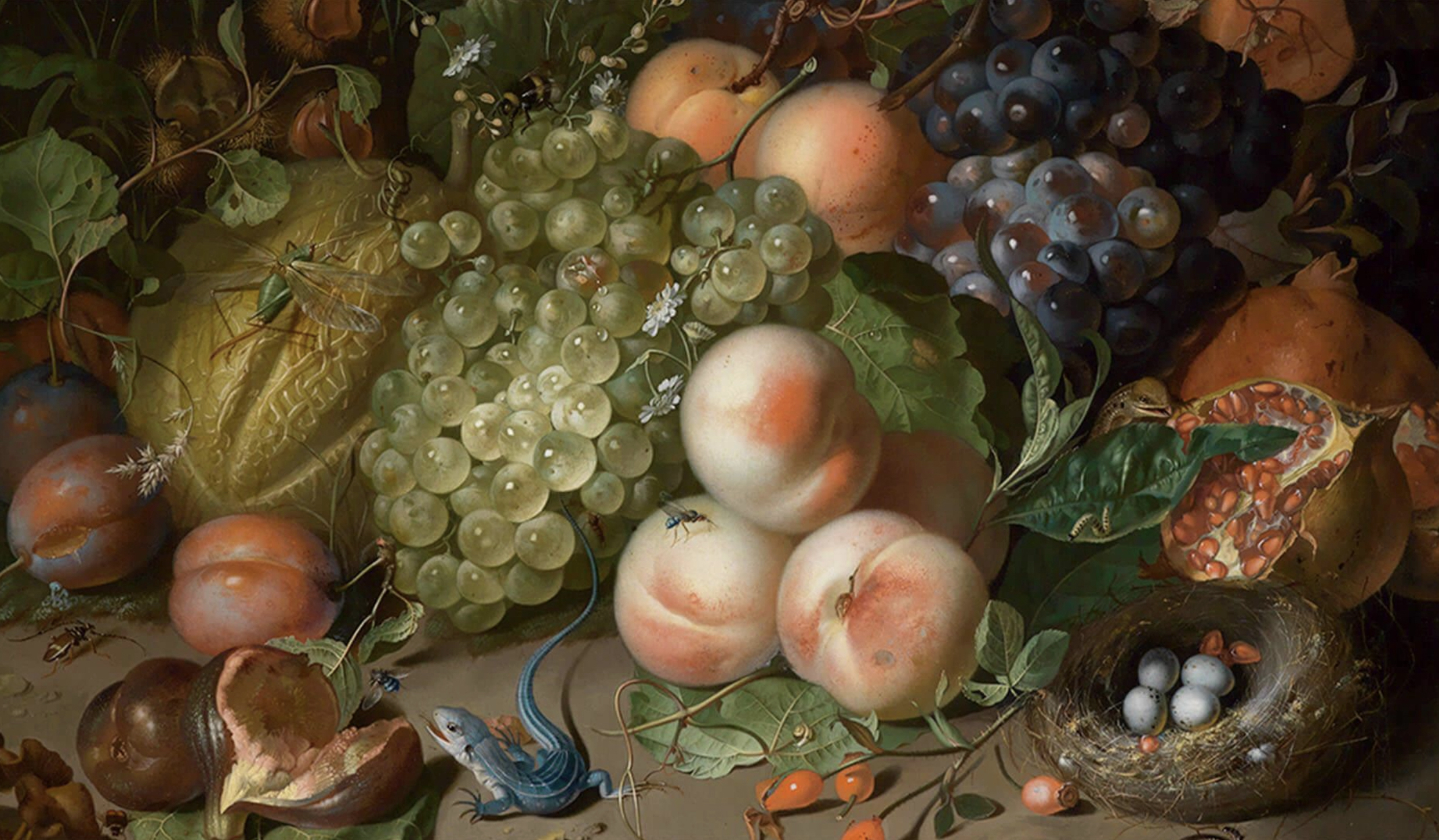
Originally, before I got into this whole Goya thing, the first image I had in my mind [was] an overgrown lot, the overgown lot that had turned into the thing that felt safe [for government and developers] to be able to take; “it wasn’t a cemetery, it was just an abandoned lot.” After having seen the Rachel Ruysch exhibition, I made this study which returned to that idea. I realized, that’s what I have to do, and it’s going to be symbolic — I hemmed and hawed forever over [the theme of] the people and the land, [but] I’ve really enjoyed the idea of making this symbolic reference that they existed, and were part of that land, and I wanted them to come back up, through the land, in the flora.
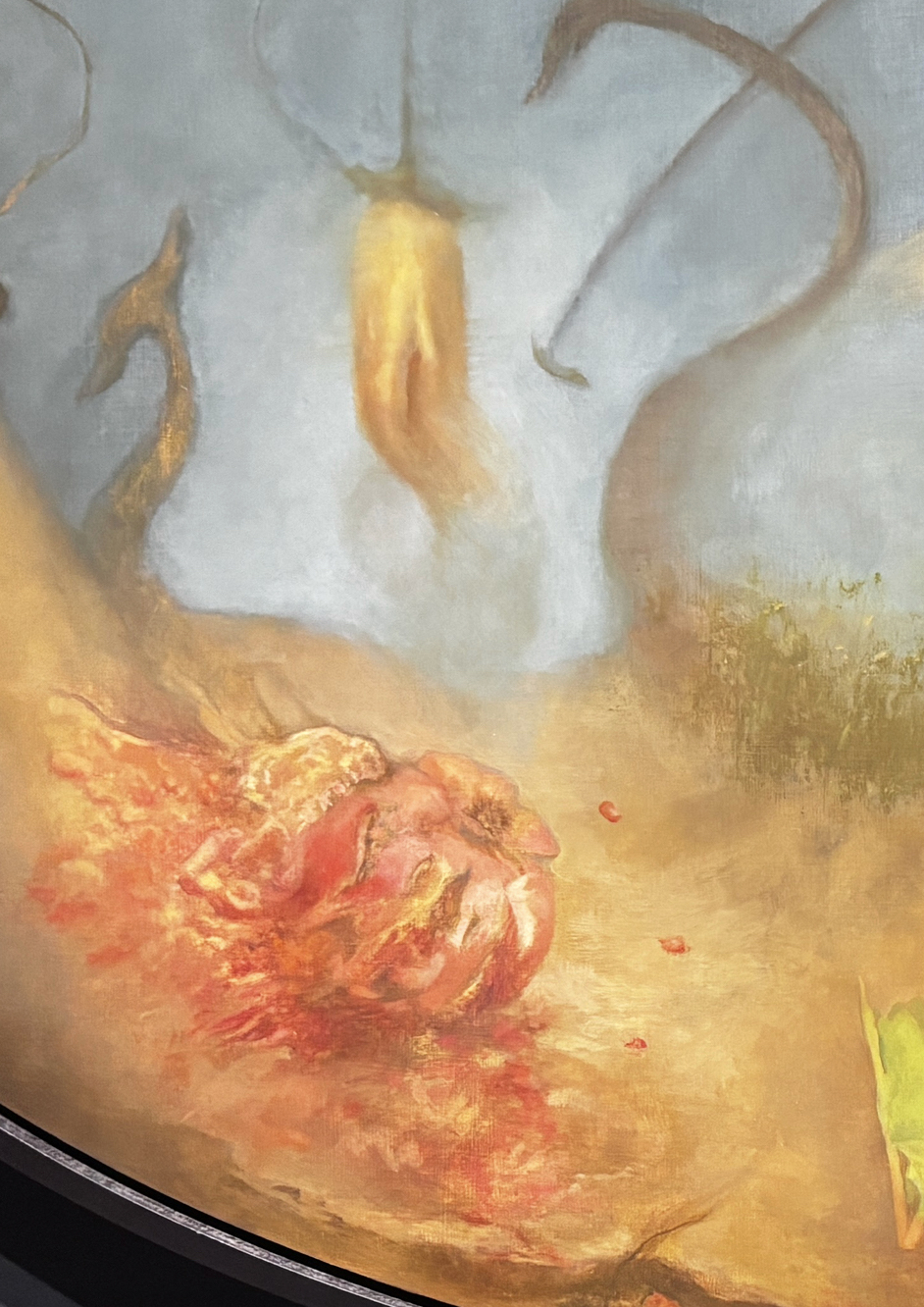
Flowers could represent people, a Jack-in-the-pulpit could represent the preacher, and [the garden] represents the congregation, bloodroot and pomegranate — the red seeds that come out of the pomegranate, I loved the idea of the past coming through to the present and sewing the seeds that are what we see now as the descendants. The nasturtiums, actually, represent battle; I didn’t realize that since I just really love nasturtiums, but apparently they represent a battle, because of the shield-like look of the leaves [a fateful-seeming confluence with Taha Clayton’s piece not just in the same show but on the same wall.].
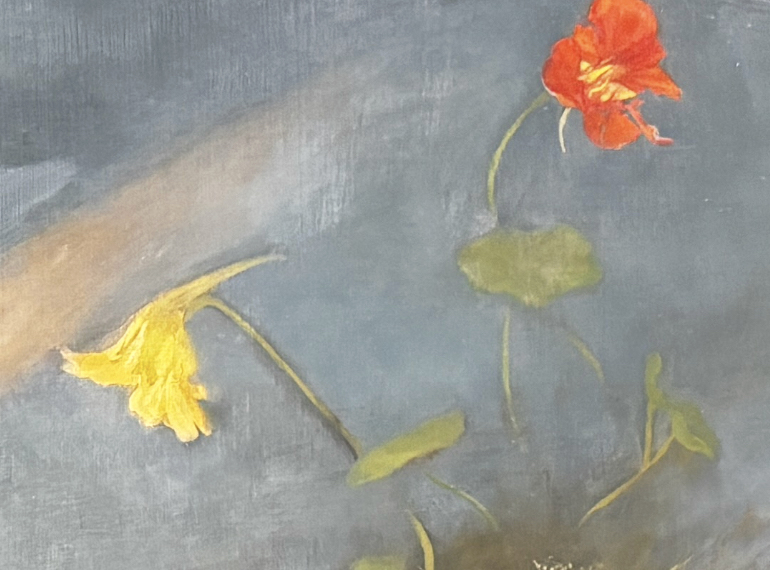
I liked the idea of there being sort of a battle-worn one, and then another one that was lit from within as if it knew what was happening, but it almost wasn’t even lighting anything because what [had been] there was no longer there anymore. So it’s sort of these collapsed moments of time.
HILOBROW: It’s interesting how many references and associations converge in that; of course I’m thinking of finding your way back out of Hades with pomegranate seeds — everyone can bring a different reference to it.
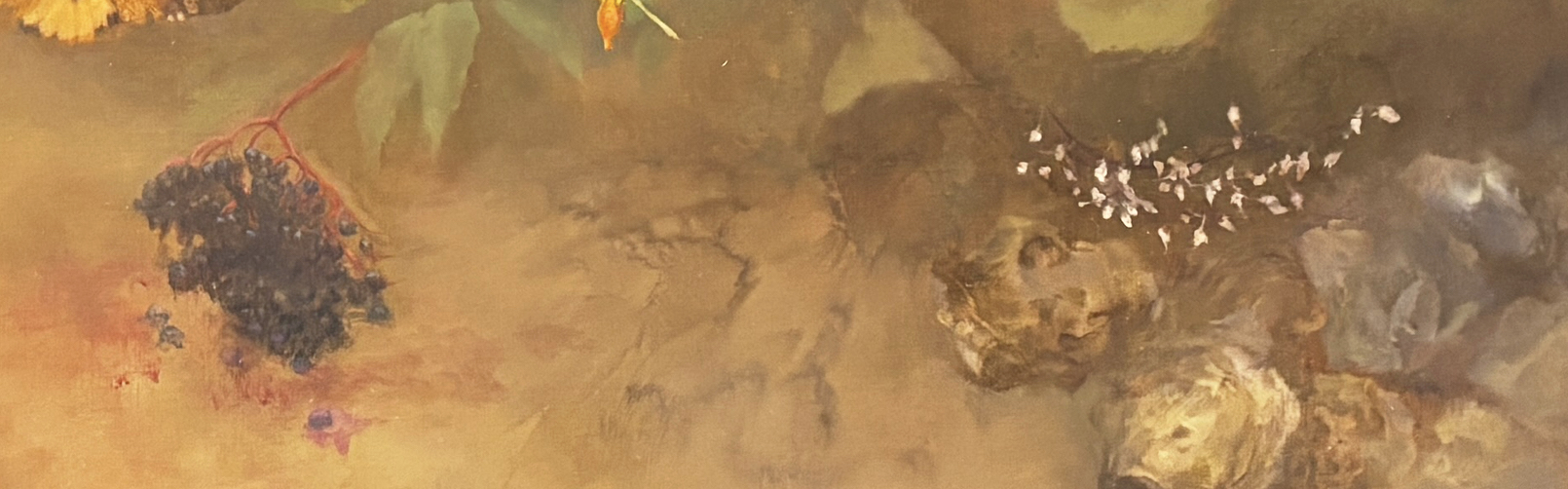
NAZARIO: There’s a lot of symbolism going on throughout the whole thing. Like the black elderberry, the little white flowers and that little group of berries; black elderberry as a plant is symbolic of the bridge between realms, so that’s perfect —
HILOBROW: Past and present, underworld and above…
NAZARIO: …All coming together. And the actual berries are symbolic of resilience and [the balance of] bitterness and sweetness. You wouldn’t normally see them flowering and berrying at the same time, so there are these collapsed moments of time. The butterfly is an African Queen, which I didn’t even realize, I just found a butterfly that was really beautiful and I went to look it up; it said “African Queen” and I was, like, “Come ON”! Now it has to be that [laughs].
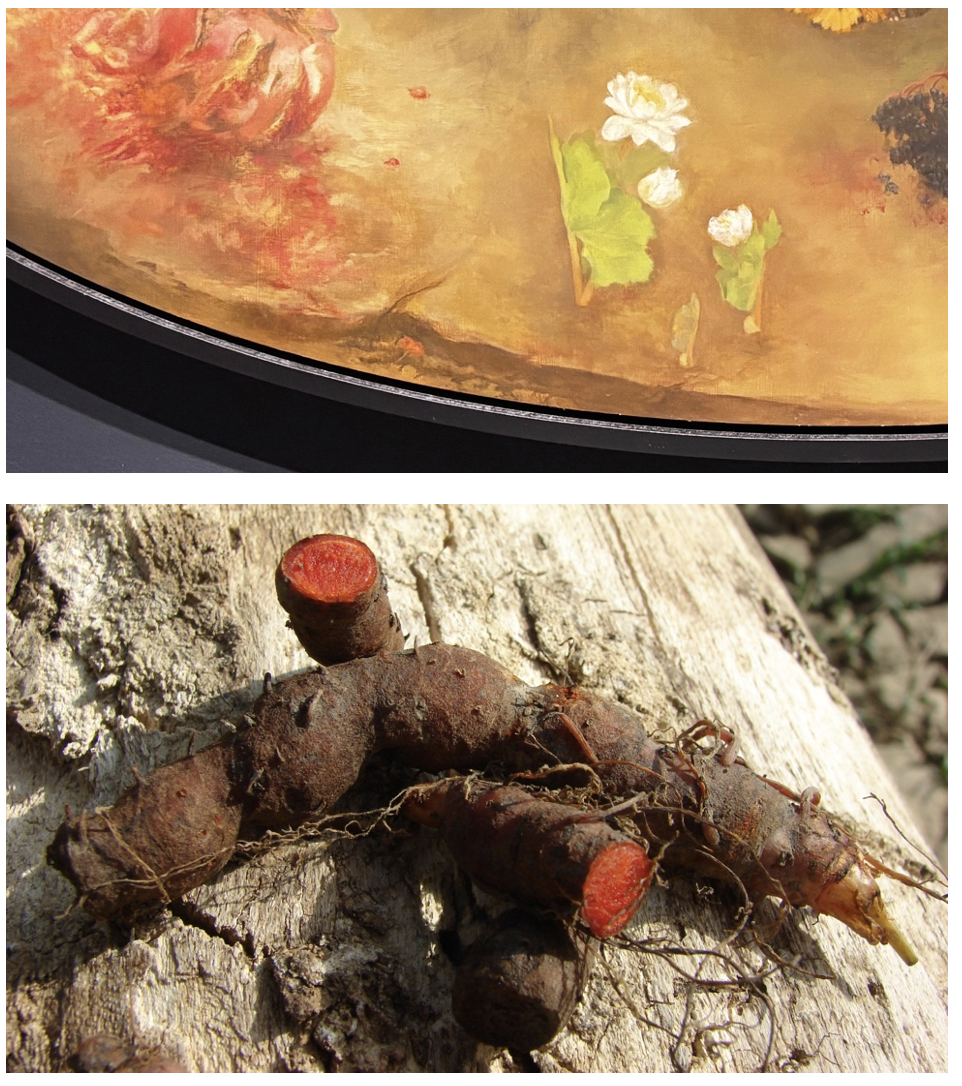
The bloodroot flowers, there’s a crack in the earth and you can kind of see their roots in it; that little white flower is called bloodroot, it’s a beautiful flower that starts to come up in the beginning of spring, and if you dig down you can fund the tubular roots of it, and if you break it open, just shiny red juice comes out; they used to use it as a bright red dye.
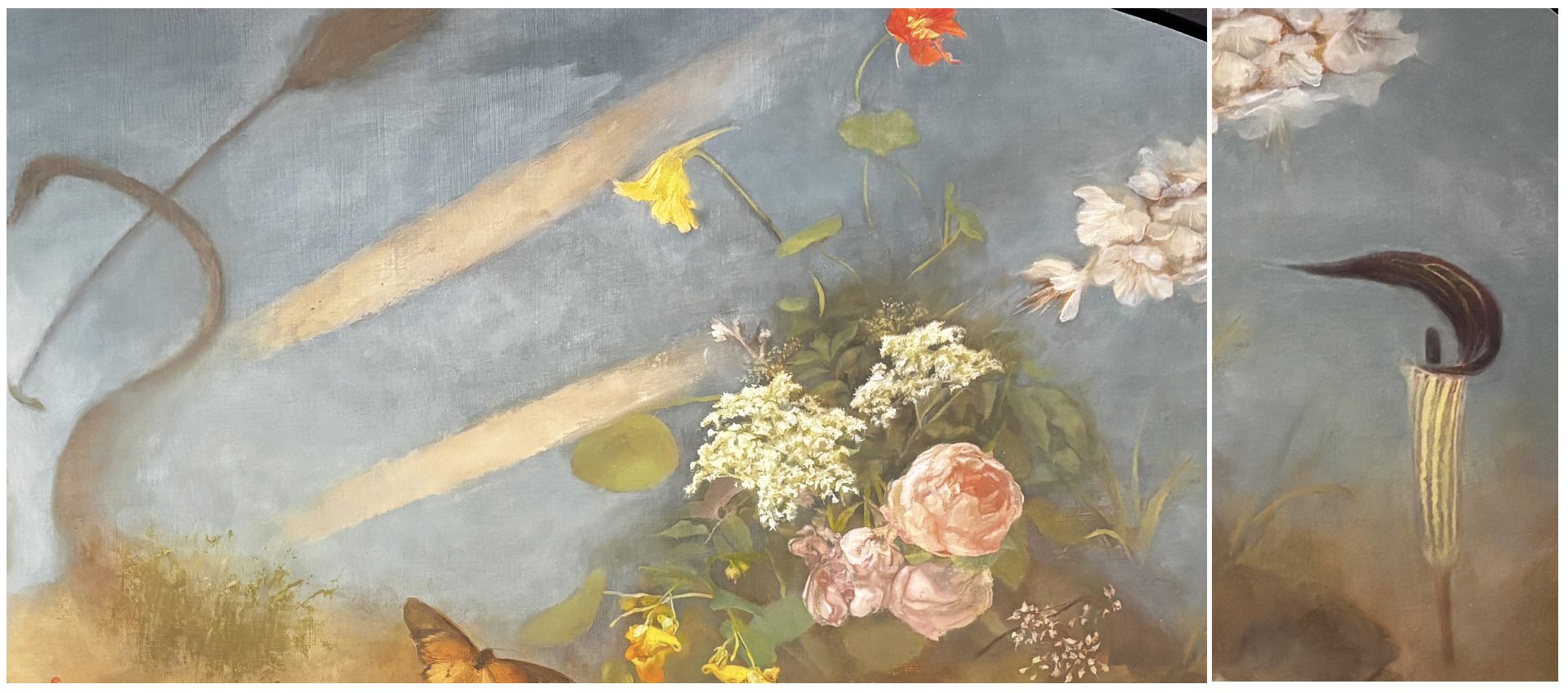
I thought of [the ancestors’] blood being in the roots; everything was symbolic and I thought, I have to place all of these things together to show that. The white bars you see in the background are like a fence being knocked down, of the space when it first went into ruin; to the right you see this Jack-in-the-pulpit, which obviously is a stand-in for the church, and above it is the cherry blossom branch, and all the way to the left is the tree itself, sort of spinning out this branch on the other side, with everything else contained in the middle. The roses actually are roses from my mom’s memorial garden outside the window of my studio; I pulled them straight from that to have a little bit of personal…
HILOBROW: …like, self-portraiture in an abstracted way.
NAZARIO: Exactly.
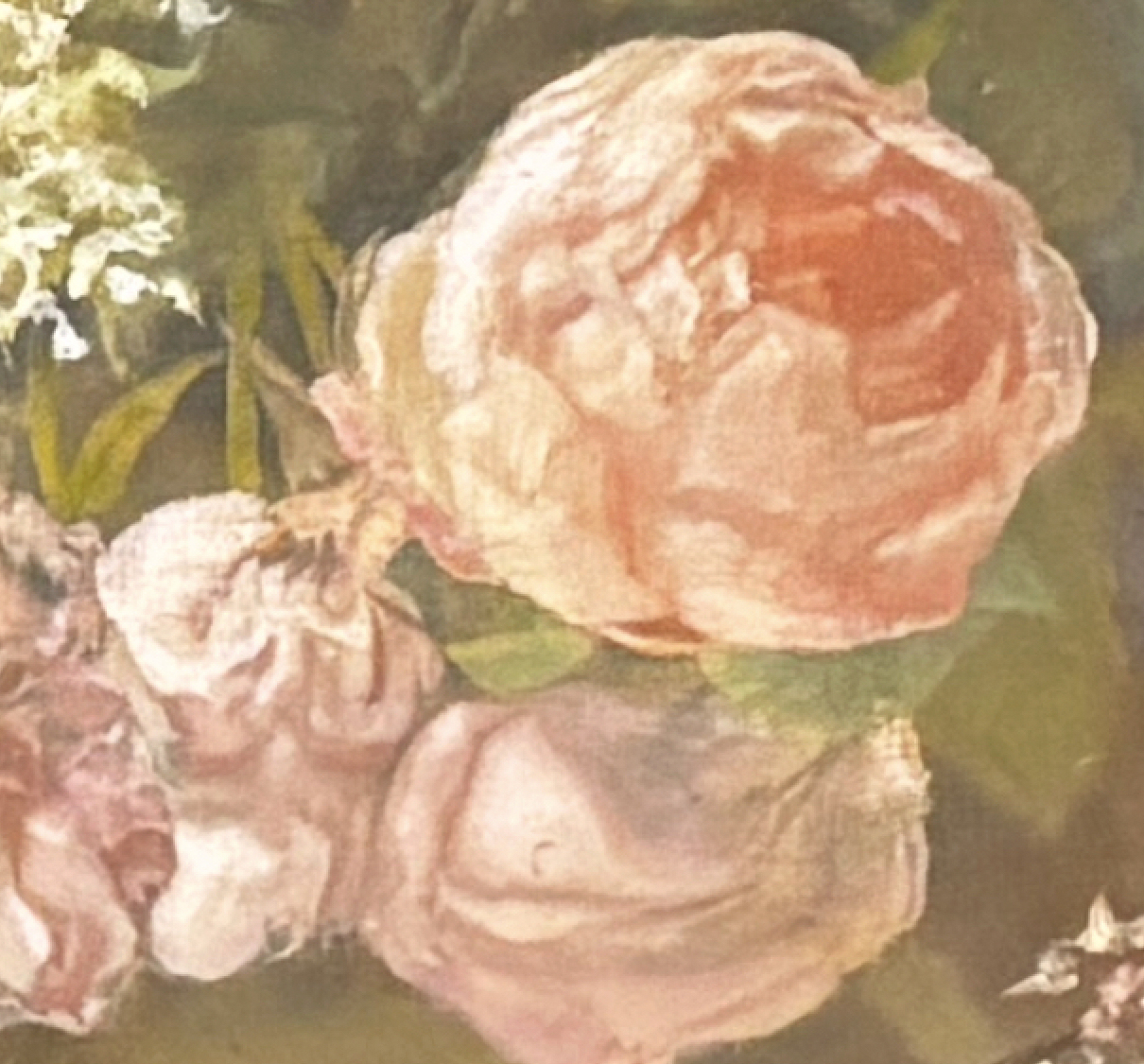
HILOBROW: I get this Edenic, like, Rousseau state-of-nature feeling, but of course, since paradise was lost, it implies violence as well, but also that there’s a way for us to return to that state.
NAZARIO: It was a violent act, the cemetery being paved over; that struck me. I knew that most folks would probably focus on the people, which is good, but I knew that I wanted to speak to the actual space of the land, that violent act…and how could I bring that around to be life-affirming.
It was a revolutionary act for a slave woman to bury her child, so here you have all these buried children, and I wanted to speak to the violence and the greed of [covering] that, but then that it could somehow pull through [due] to the resilience of the people. That they left a mark and we can remember that. They existed, they were there, and it matters.
[Click the links at the top for profiles of all the creators contributing to Black Cherry Lane: Presence, and if you’re anywhere near Staten Island between October 1 and 25, come see what they have to reveal for yourself!]