
MEDIA DIET
By:
October 9, 2026
A weekly series exploring the media “input” of a group of people — HILOBROW’s friends and contributors — whose “output” we admire.
Mariane has been a valued HILOBROW contributor since 2021. Her first post was on the topic of MINI WINDSOCK. Her most recent contributions to this publication include: ON MY RADIO | MIRANDA PRIESTLY | PARANORMAL ACTIVITY.
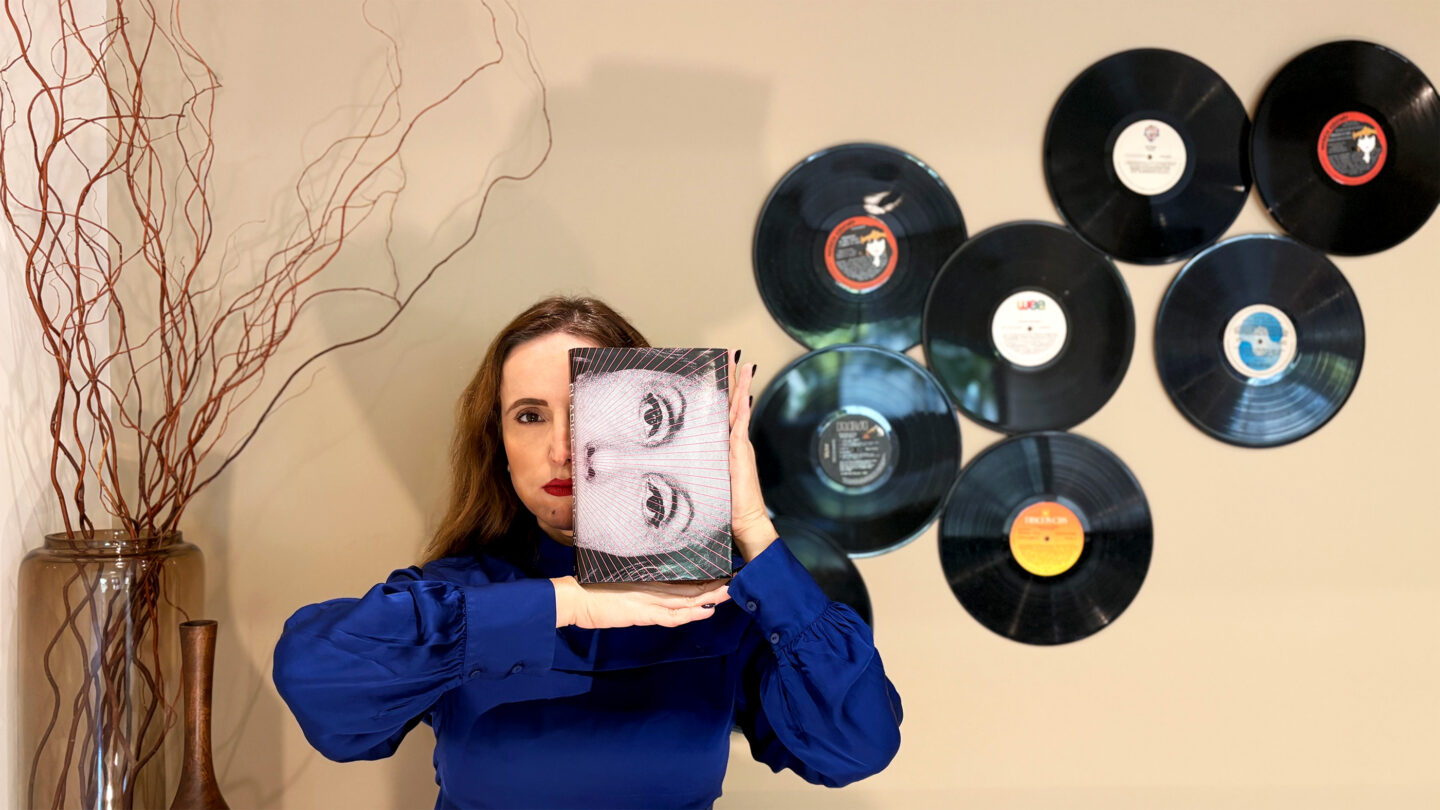
São Paulo…
HILOBROW: What music, genres, particular artists and songs, do you listen to during a typical day?
MARIANE CARA: Music is at the core of my daily media diet, and that’s mostly because of its unique ability to bring together so many forms of artistic expression: rhythm, storytelling, instrumentation, poetry, voice and dramatization, all blending into an immersive experience.
Unlike the rational mindset we semioticians are often trained to prioritize, music speaks directly to the visceral, and that’s exactly what enchants me. I experience it as a dialogue between sound, the body, and the soul. Few other art forms capture the Zeitgeist (and the sensory semiosphere around it) as vividly as music does. To tune into these nuances, I often organize my listening by era, tracing the shifts in mood and texture that each period carries.
Lately, I’ve been deep into the soundscape of the 1970s. I’m an ’80s kid, and that era holds its own nostalgic charm, but the ’70s have this magnetic pull. The grooves of Funk and Soul, the epic journeys of Progressive Rock, the raw energy of Disco, and the bold spirit of early Electronic Music all come together in a way that feels both grounded and transcendent. That blend still amazes me every time I listen.
HILOBROW: What’s the best TV series you’ve seen recently?
MARIANE CARA: This is a tough question. Watching so many series across different platforms has changed how I engage with them. I no longer fall for entire shows. I get attached to standout episodes. Here are two recent ones that stayed with me:
Black Mirror – S7, E5: “Eulogy” (Netflix)
So much could be said about this episode on memory, but I choose to focus on the richness of reflecting on the technical image, especially the analog photograph, in the face of vanishing traces and the reconstruction of memory through AI. Drawing from Vilém Flusser’s philosophy, technical images are not mirrors of reality but conceptual constructs, products of apparatuses that encode and reframe the world rather than simply represent it.
In “Eulogy,” the experience of Paul Giamatti’s character marks the shift from image as index to image as code, generated and modulated by algorithmic systems. Memory, in this context, ceases to be the raw experience of irretrievable loss and becomes a curated simulation.
And yet, the idea of walking through an old photographic image, of inhabiting a moment once captured on film, remains deeply seductive.
The Big Door Prize – S1, E4: “Father Reuben” (Apple TV+)
For those who haven’t seen this lesser-known series, The Big Door Prize centers on a machine (a kind of electronic Pandora’s box) that mysteriously appears in a small-town grocery store and reveals each person’s “life potential.”
In this episode, the spotlight turns to Father Reuben, a priest who has recently arrived in the area. When he finally decides to use the machine, it prints out a single word: Father. The townspeople quickly take it as a sign that he was always meant to lead, after all, many expect religious figures to be somehow chosen.
But for Reuben, the result strikes much deeper. As he grapples with the meaning behind the word, the episode unpacks powerful questions about identity and the weight of perceived destiny.
HILOBROW: What are your reading habits?
MARIANE CARA: It’s less like a peaceful, Zen retreat and more like a campfire. To break the loop of nonstop screen time that fills my workdays, I’ve been returning to the comfort of Brazilian cronistas.
Lately, I’ve been spending time with Millôr Fernandes: writer, illustrator, playwright, known for his creative voice and dry humor. A true force in the late 20th century. His blend of words and visuals still feels strikingly fresh.
But the most special literary moment I’ve had recently wasn’t just about Millôr. It happened while I was visiting my parents. Among pill boxes and little tables, I spotted an untouched copy of Todos os Contos (The Complete Stories) by Clarice Lispector. My dad looked over and said, “The book is there if someone wants to take it home.”
Of course, I grabbed it instantly and asked them to sign the first page. My mom’s memory is fading, and my dad’s hands aren’t so steady anymore, worn by time. Still, they both said yes.
Now I hold a quiet little treasure. Not just Clarice’s stories, but a memory signed with love. A bit shaky, a bit uneven, and absolutely precious.
Note: This Q&A was cross-posted from our sister website, SEMIOVOX.
MEDIA DIET series: MATTHEW BATTLES | ADRIENNE CREW | HOLLY INTERLANDI | CAROLYN KELLOGG | MARK KINGWELL | FLOURISH KLINK | ADAM McGOVERN | CHARLIE MITCHELL | TOM NEALON | ANNIE NOCENTI | GARY PANTER | LYNN PERIL | JONATHAN PINCHERA | NICHOLAS ROMBES | CARLO ROTELLA | LUCY SANTE | SETH | MIKE WATT | JUDITH ZISSMAN | & many others! Visit the SERIES INDEX.