
MEDIA DIET
By:
September 17, 2026
A weekly series exploring the media “input” of a group of people — HILOBROW’s friends and contributors — whose “output” we admire.
Susan has been a valued HILOBROW contributor since 2019. Her first post was on the topic of BLOOM COUNTY. Her most recent contributions to this publication include: TIME | LOVE BOAT | HOUSEKEEPING.
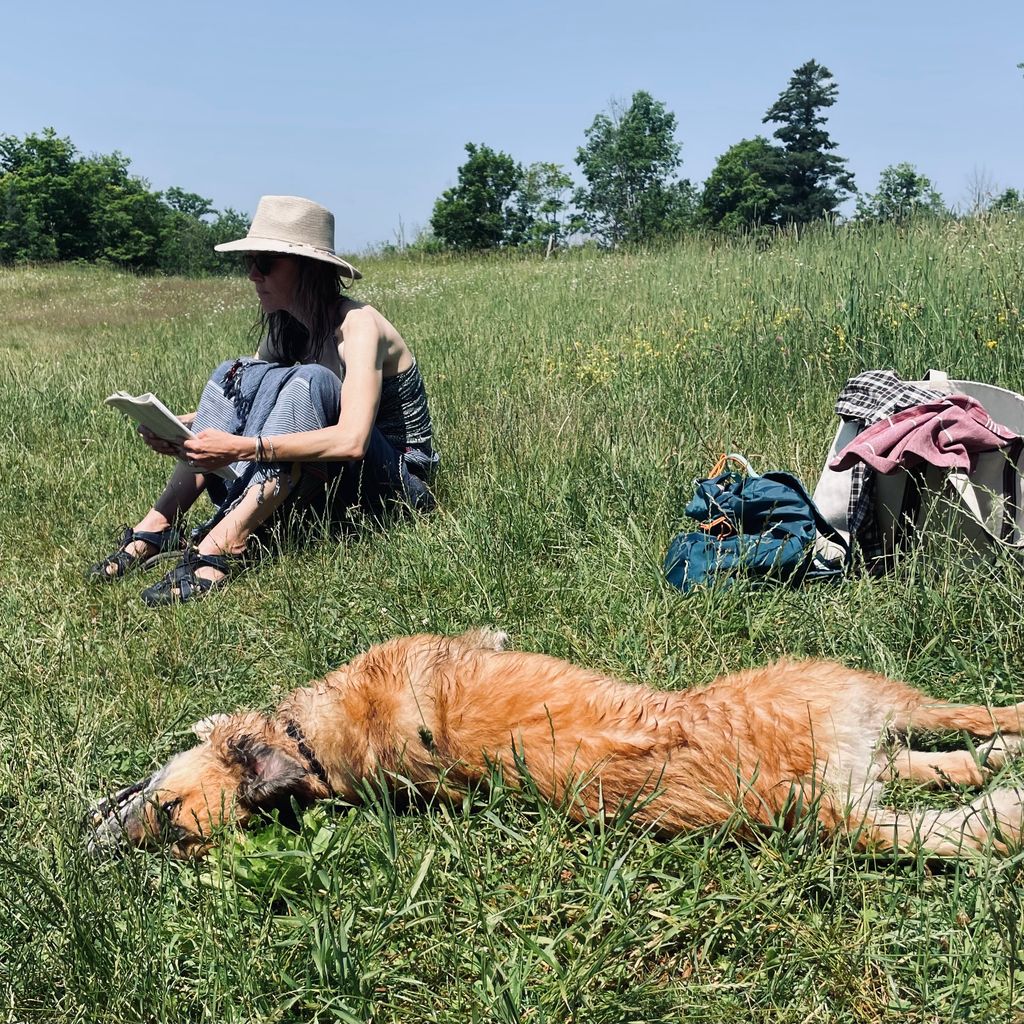
Kingston, NY…
HILOBROW: What are your reading habits?
SUSAN ROE: I read every night, as well as — when I am able — at lunch and post-morning coffee (my most productive time). When reading nonfiction books, I usually take notes and underline. I loved note-taking as a student, and the practice has never left me. Note-taking helps me absorb and better understand what I have read — just like my teachers said it would.
For classic novels, I recently started a new reading practice. My mom is 85 years old and we see each other only a couple of times a year. Though we stay in touch, neither of us loves talking on the phone. So I was looking for another way to connect with her. Then she gave me her mother’s Rockwell Kent edition of Moby Dick, which I had never read. Nor had she. So last year I suggested that she get her own copy, and that we read two chapters a week — then send each other one or two lines from each chapter that stuck out to us. No other commentary needed. This turned into a great way to get through Moby Dick, and it was also a great way for us to remain connected. Since then we’ve read The Adventures of Huckleberry Finn and Percival Everett’s James in the same manner. Next up, we are considering The Odyssey.
I always have a natural history book going. I take a lot of notes on this material. I don’t think I will ever get bored of the way it feels to read, for example, Laura Poppick’s reminder “that we are the product of a system that has been humming for 4.54 billion years, and that we carry its beginnings in our bones.” That’s from Poppick’s Strata: Stories from Deep Time, which I’ve just read. I also recommend David George Haskell’s How Flowers Made our World. These were both recommended by Chicory Naturalist, a fantastic nature-focused book and gift shop here in Kingston.
I also read a lot of contemporary fiction. I’ll alternate between a more writerly novel and something more “digestible.” Speaking of the latter category, I’m two books into Rebecca Yarros’ Empyrean series — extremely hot romantasy about dragon riders who discover they are citizens of an authoritarian state that has erased important history. Did I mention the hot dragon riders?
HILOBROW: What’s the best TV series you’ve ever seen?
SUSAN ROE: Ab Fab, Broad City, Hacks, Mary Tyler Moore. Funny women are the best.
HILOBROW: What work of nonfiction (old or new) would you recommend to someone trying to make sense of today’s world?
SUSAN ROE: Over the years, I have read a lot of workplace and economic history. I used to believe that if we could figure out how to treat each other better in the workplace, by disrupting inequities and redistributing power, then those rebalanced relationships would emanate out into the world. I worked in HR in an effort to accomplish all this by altering compensation structures and paying people more, coaching managers on how to provide better feedback and training, and encouraging management to provide more transparency about their business decisions. I learned a lot and helped make some good, impactful changes. I have been out of the HR/workplace game for a while, but lately I have been returning to economic history. I’m particularly fascinated with the “financialization” of the economy — that is, the shift away from making, selling, and trading products to economic activity and profit-making that occurs primarily via financial tools. This is a profound change that has occurred since the 1970s; we should be talking about it more. I recommend these titles: Greta R. Kippner’s Capitalizing on Crisis: The Political Origins of the Rise of Finance (2011) and Katharina Pistor’s The Code of Capital: How the Law Creates Wealth and Inequality (2019).
I also try to center learning more about racism as key to our history and present. Structural racism makes all of this possible, and continues the inequities that this is all built on. I recommend, for example: Heather McGee’s The Sum of Us: What Racism Costs Everyone and How We can Prosper Together (2022).
MEDIA DIET series: MATTHEW BATTLES | ADRIENNE CREW | HOLLY INTERLANDI | CAROLYN KELLOGG | MARK KINGWELL | FLOURISH KLINK | ADAM McGOVERN | CHARLIE MITCHELL | TOM NEALON | ANNIE NOCENTI | GARY PANTER | LYNN PERIL | JONATHAN PINCHERA | NICHOLAS ROMBES | CARLO ROTELLA | LUCY SANTE | SETH | MIKE WATT | JUDITH ZISSMAN | & many others! Visit the SERIES INDEX.