
SKIN DEEP (8)
By:
October 21, 2026
One in a series of posts profiling the artists of the Black Cherry Lane: Presence exhibition, which honors the ancestors and descendants of Cherry Lane Cemetery, a burial ground for free and formerly-enslaved people which is now itself buried under a parking lot, and which the artists are imagining a new life and legacy for.
SKIN DEEP: INTRODUCTION by Adam McGovern | JEROME LAGARRIGUE | MARY EDWARDS | BEVERLY Y. SMITH | TIM OKAMURA | THOMAS DOYLE | YELENA TYLKINA | TAHA CLAYTON | GREG SHEA | LAZARUS NAZARIO
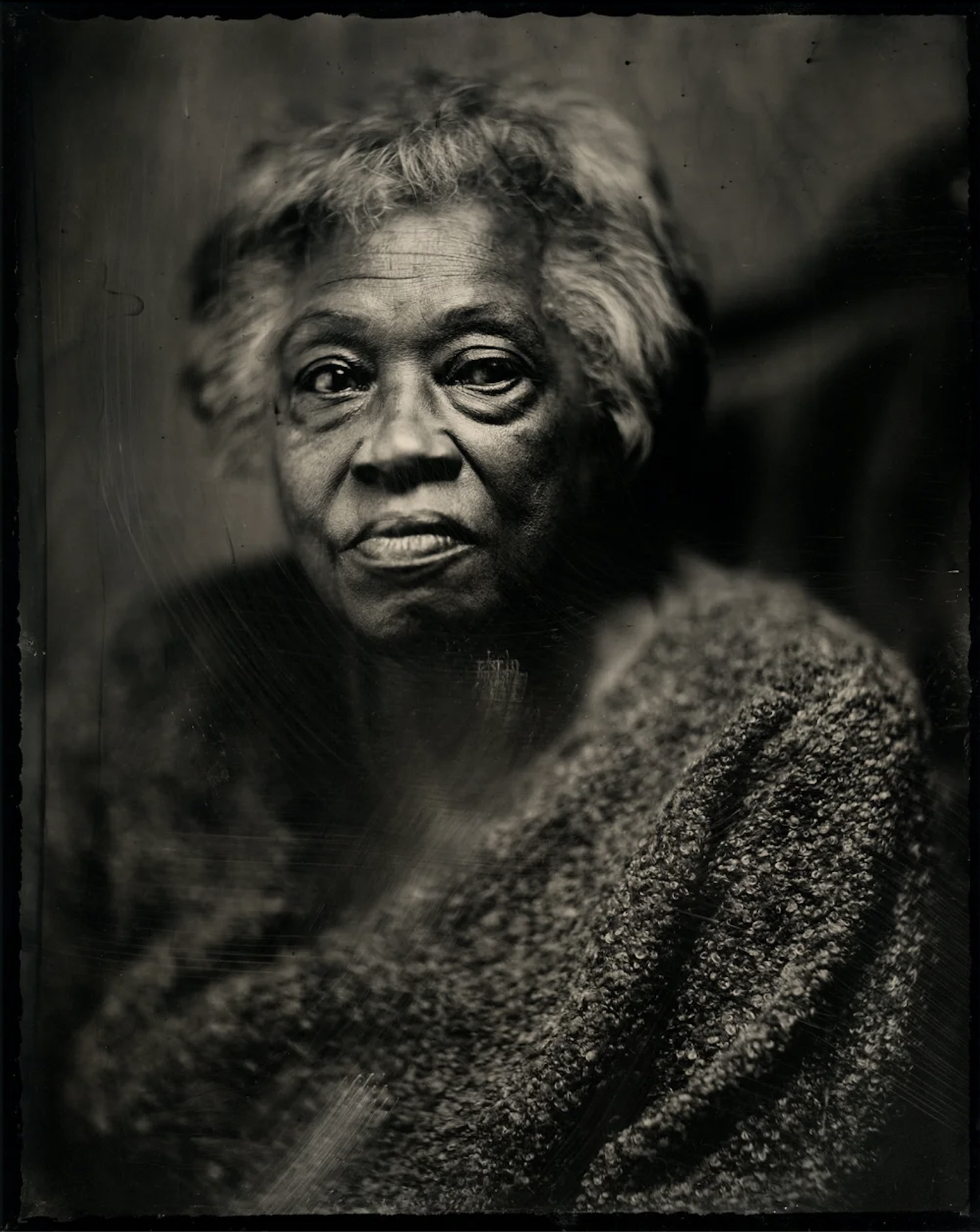
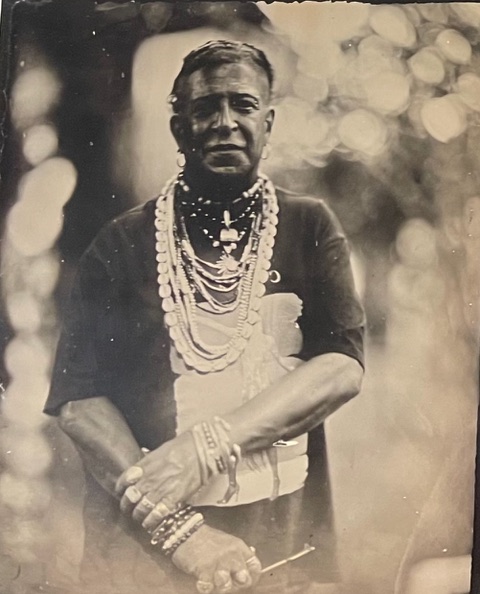
There’s always more of the past, though we often have to go looking for it, and seldom get to keep much. Our current history is being written in evanescent media on a cloud that could dissolve any day. Greg Shea has set himself on a mission to fashion time that you can hold in your hand. He works in the antique method of wet-plate collodion photography, in which a photo-sensitive solution is coated on a plate of metal and a long exposure in a boxy camera imprints the image in the lens right onto the plate (silver in this case, though the method has been known since the 1800s as “tintype” photography). It’s the medium in which the lives of Cherry Lane might’ve been recorded, had the world they lived in let them be visible. With many of their descendants portrayed this way for the Black Cherry Lane: Presence exhibition, a legacy that couldn’t be broken is given a record that can last that long. I spoke with Shea about what maintains his artform and his faith:
HILOBROW: Could you briefly describe how you came to this medium?
SHEA: I’m a fine artist and illustrator, and about 8 years ago I started seeing other photographers online who were working in this process. I was doing some digital photography at the time, and this really appealed to me, because it’s this historic 19th century process that I thought was dead, but is still viable. So I started following people that were making images, and I related to it because I have an ambrotype [the tintype’s predecessor] of my great-great grandfather from 1859 that’s in the same process. I love that I have this image of him, but [there’s] no context, and no way to connect to the person, so I thought if I could work in this process I could connect to modern living people, and create these artifacts that can then be passed on and appreciated, and have the same effect.
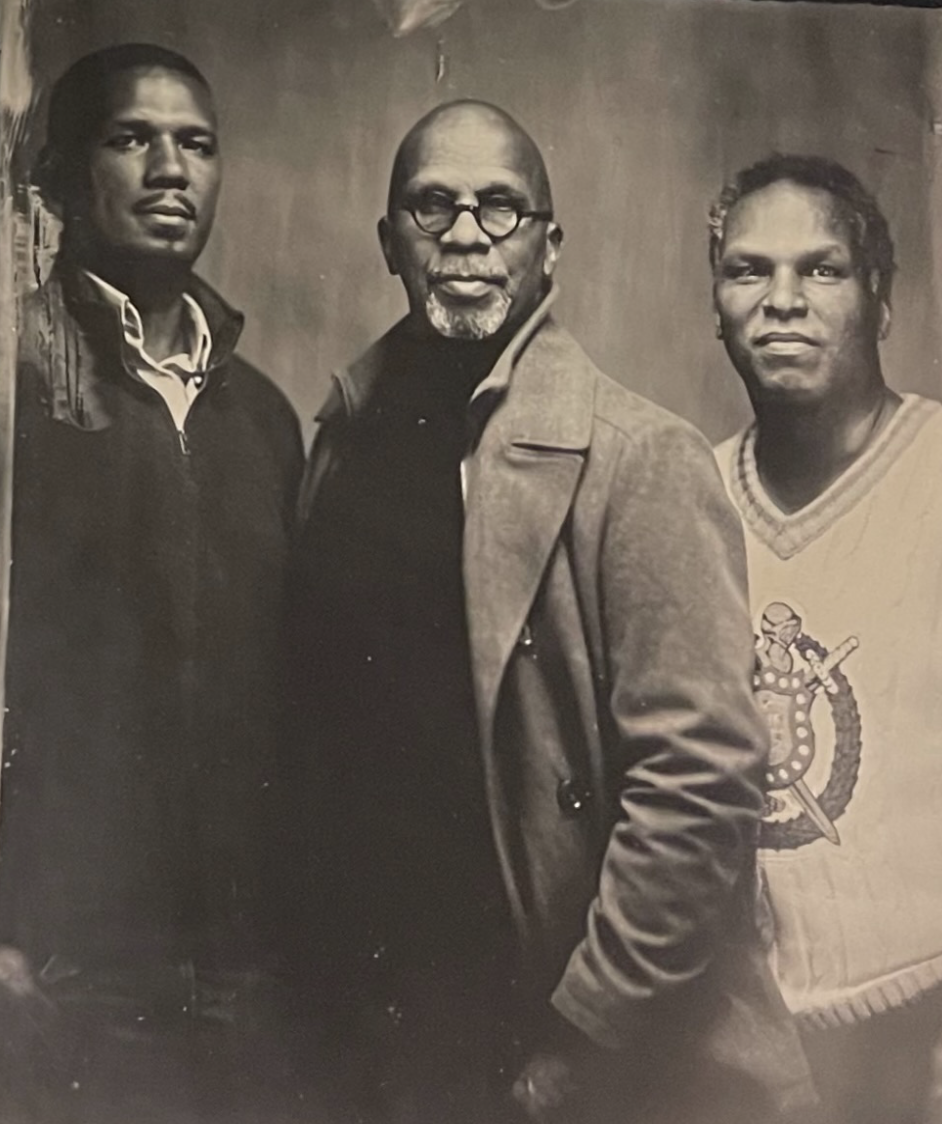
So I spent about two years acquiring used equipment, and researching, and teaching myself how to do the process. I made my first plate July 6, 2020 during Covid, and took off from there, got a studio, and probably made about a thousand plates so far. And it’s been a great way to connect to people and…I’ve become far more prolific making these tintypes than I ever was making paintings and drawings [smiles]. So it scratches a good art itch, allows me to be creative and produce these images, some of which I sell, some of which I do for gallery exhibition work, and some I just keep for myself.
HILOBROW: It could be considered an interesting postmodern juxtaposition, that you use this ancient technique with present-day subjects. Is there any kind of commentary on…not so much contemporary art, but culture and technology, in your going back to this?
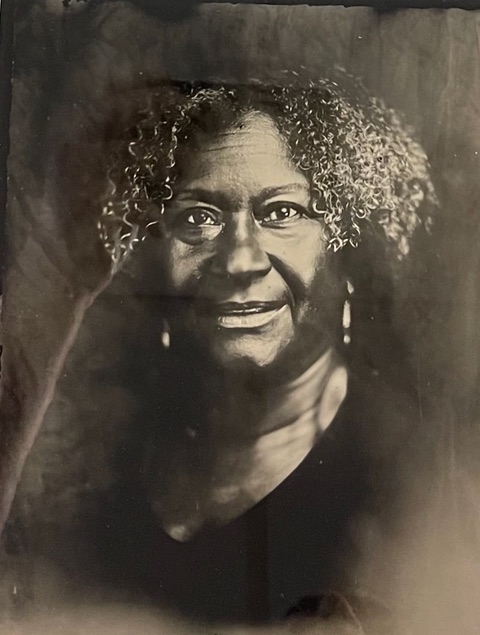
SHEA: I am absolutely a handcrafts guy; handmade is always preferable to me than machine-made, mass-produced; and in the digital age, where everybody’s got a camera in their pocket and they can make a thousand photos in a day, this is very methodical and deliberate and sort-of slowed down. And I appreciate that; I’m also a cabinetmaker and a silversmith and a woodcarver so I do a lot of hands-on, handmade things, and this fits well within that genre. They’re handmade, unique, one-of-a-kind photographs.
I’m not a luddite, I’m not resisting technology, I use technology to good effect where appropriate, but I don’t think it belongs everywhere, and I like the idea of creating an object that people can hold in their hands that can live a couple hundred years, that they can pass on. You’re not gonna do that with a digital file or a floppy disk or a, whatever, memory stick that you’re not going to be able to read in 10 years. So that’s important. This is a way of archiving moments, and images of people and…just saying that these people matter, and they have stories, and they have lives, and I like to take a little piece of that, and a moment, and preserve that and pass it on to the future.
HILOBROW: I love that it’s an ephemeral moment captured in so physical an artifact.
SHEA: And in pure metallic silver that is not gonna degrade if it’s taken care of, so it can last forever.
HILOBROW: As far as I’m concerned, that’s more tech-savvy, cuz as you mentioned, all these magnetic and digital media go obsolete; aren’t there like, hundreds of hours of data that the Mars rover in the 1970s sent back that they still haven’t reviewed and now they can’t cuz they don’t have the equipment? For all we know we could be invaded tomorrow! [laughs]
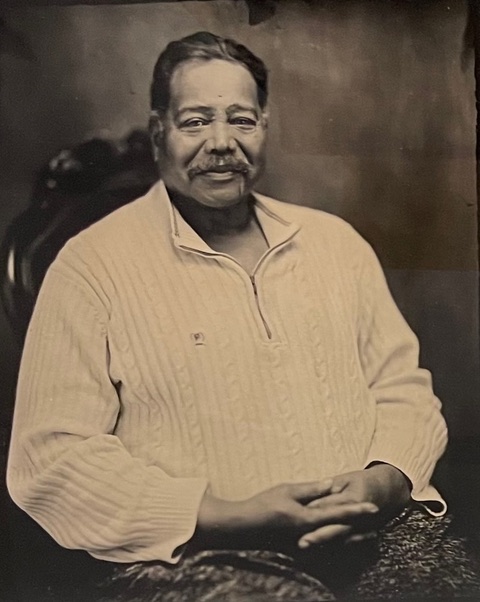
SHEA: This image of my great-great grandfather I have, it’s 180 years old or whatever and it looks like the day it was made, it’s in perfect condition, and that just blows my mind, that if you care enough to preserve something, this is a great way to do that.
HILOBROW: So I imagine you felt a connection between the quest you had to go on for your own ancestor, and what you were bequeathing to David and Ruth Ann and the rest of the descendants?
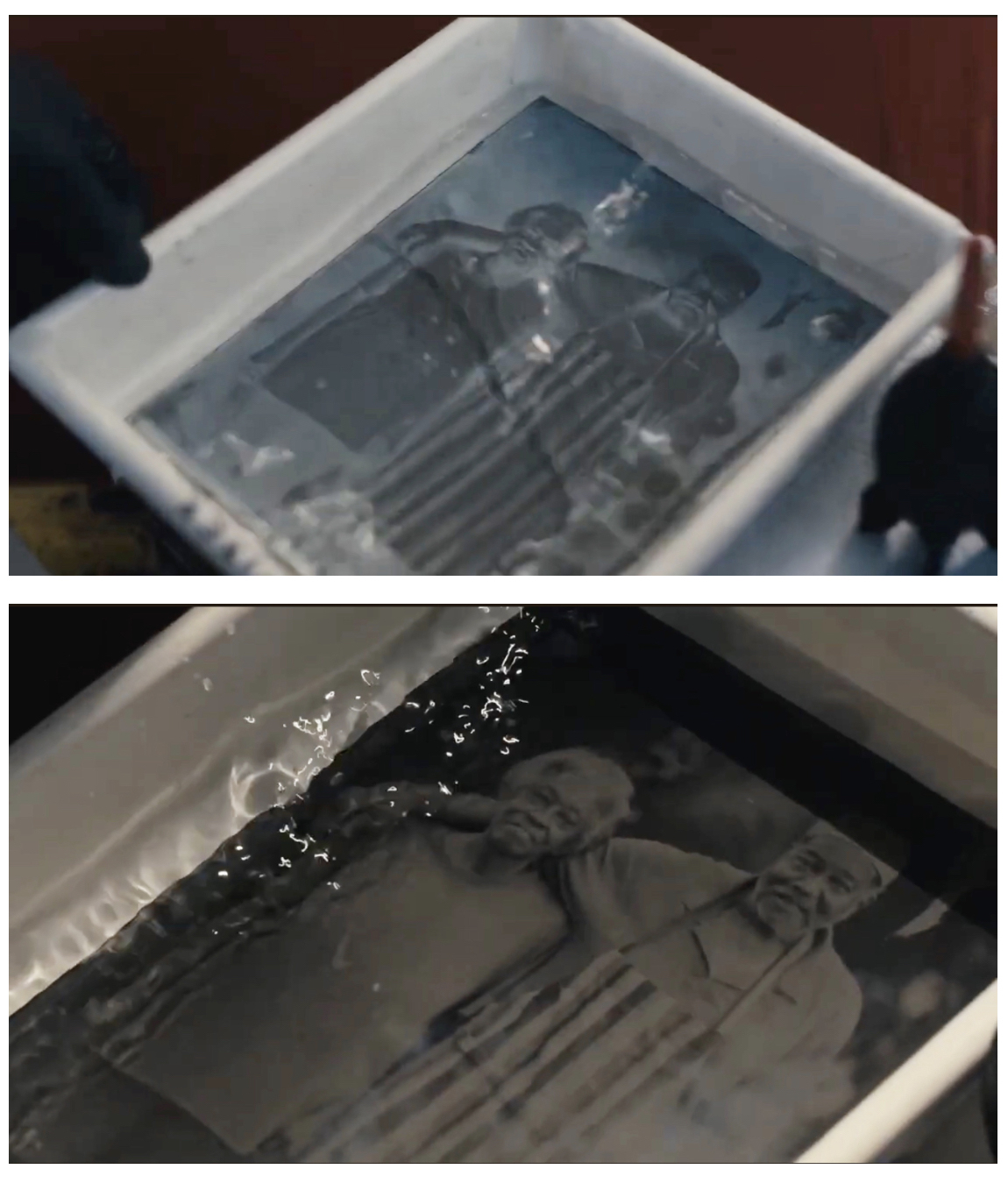
SHEA: Absolutely. In [my great-great grandfather’s] case, in the photo that I have, he’s standing and he’s got a little toolbox of his woodworking tools on his shoulder; he was a builder, he used to make churches; I have his patent information for his improved washing machine from 1875. So he did all these things, but he’s just gone in this sort of fog of the past. And I like being able, through that one single image, to pull something out and be able to remember him; and now I can interact with these living descendants of Cherry Lane, and give them something [so] that maybe someday their descendants can do the same thing — I’m puttin’ a name on the back, and a date, so at least they can have a true idea of who it was; and then from there, why did these people matter. And then, it’s not just this single image that’s anonymous, and floating in the void of time where everything gets lost; somebody can remember this thing and appreciate it.
HILOBROW: It’s like a portrait and a portal in some ways.
SHEA: Absolutely. It’s like a weird kind of…spiritual research. How does this connection work, why do these people matter, and then sometimes you find actual details, and it all seems like, this is why this [is meaningful]. I feel like it’s good work.
[Keep watching this space for profiles of all the creators contributing to Black Cherry Lane: Presence, and if you’re anywhere near Staten Island between October 1 and 25, come see what they have to reveal for yourself!]