
SKIN DEEP (7)
By:
October 18, 2026
One in a series of posts profiling the artists of the Black Cherry Lane: Presence exhibition, which honors the ancestors and descendants of Cherry Lane Cemetery, a burial ground for free and formerly-enslaved people which is now itself buried under a parking lot, and which the artists are imagining a new life and legacy for.
SKIN DEEP: INTRODUCTION by Adam McGovern | JEROME LAGARRIGUE | MARY EDWARDS | BEVERLY Y. SMITH | TIM OKAMURA | THOMAS DOYLE | YELENA TYLKINA | TAHA CLAYTON | GREG SHEA | LAZARUS NAZARIO
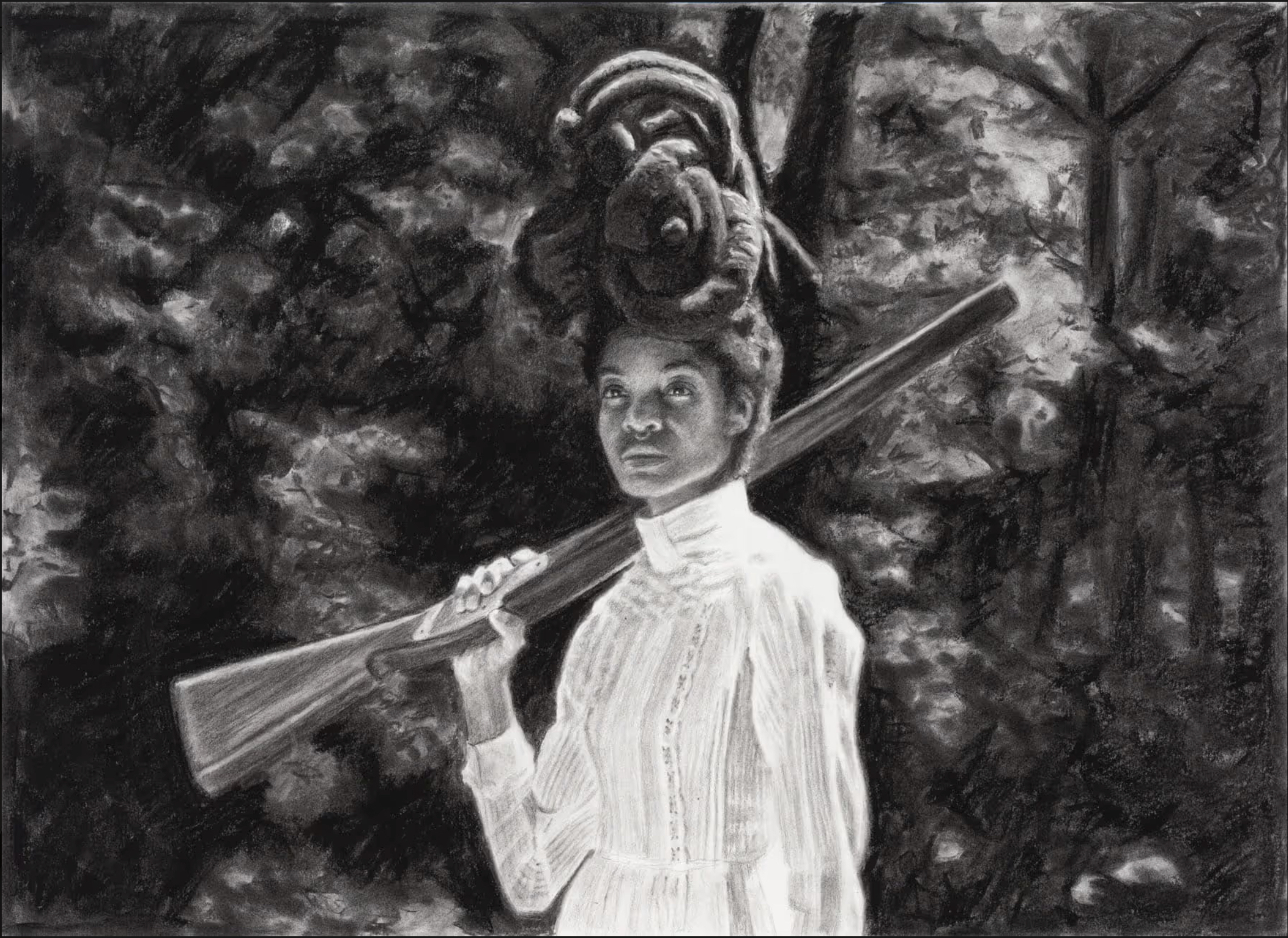
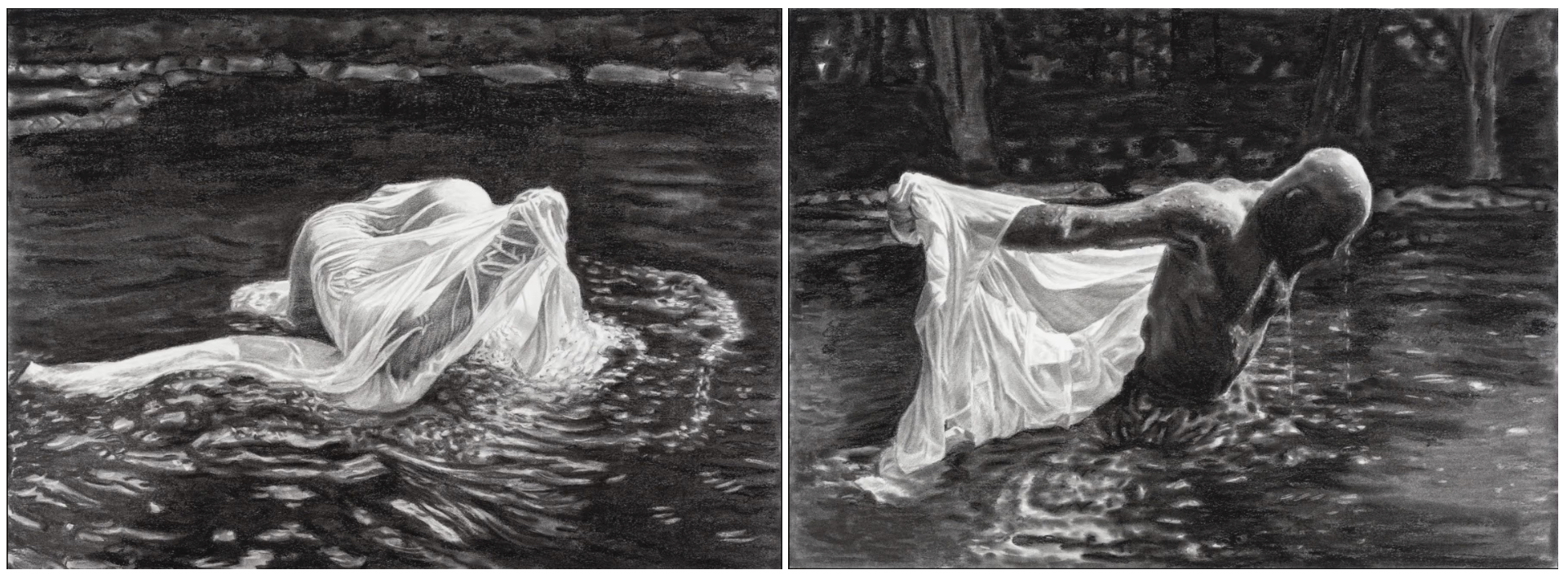
Taha Clayton is a careful observer of the unseen. Rich in detail, his subjects have a very particular presence while at the same time they could be anyone, yet in a way that is compendious rather than anonymous, in purposeful stances or insistent joy that shows each viewer what they themselves could be.
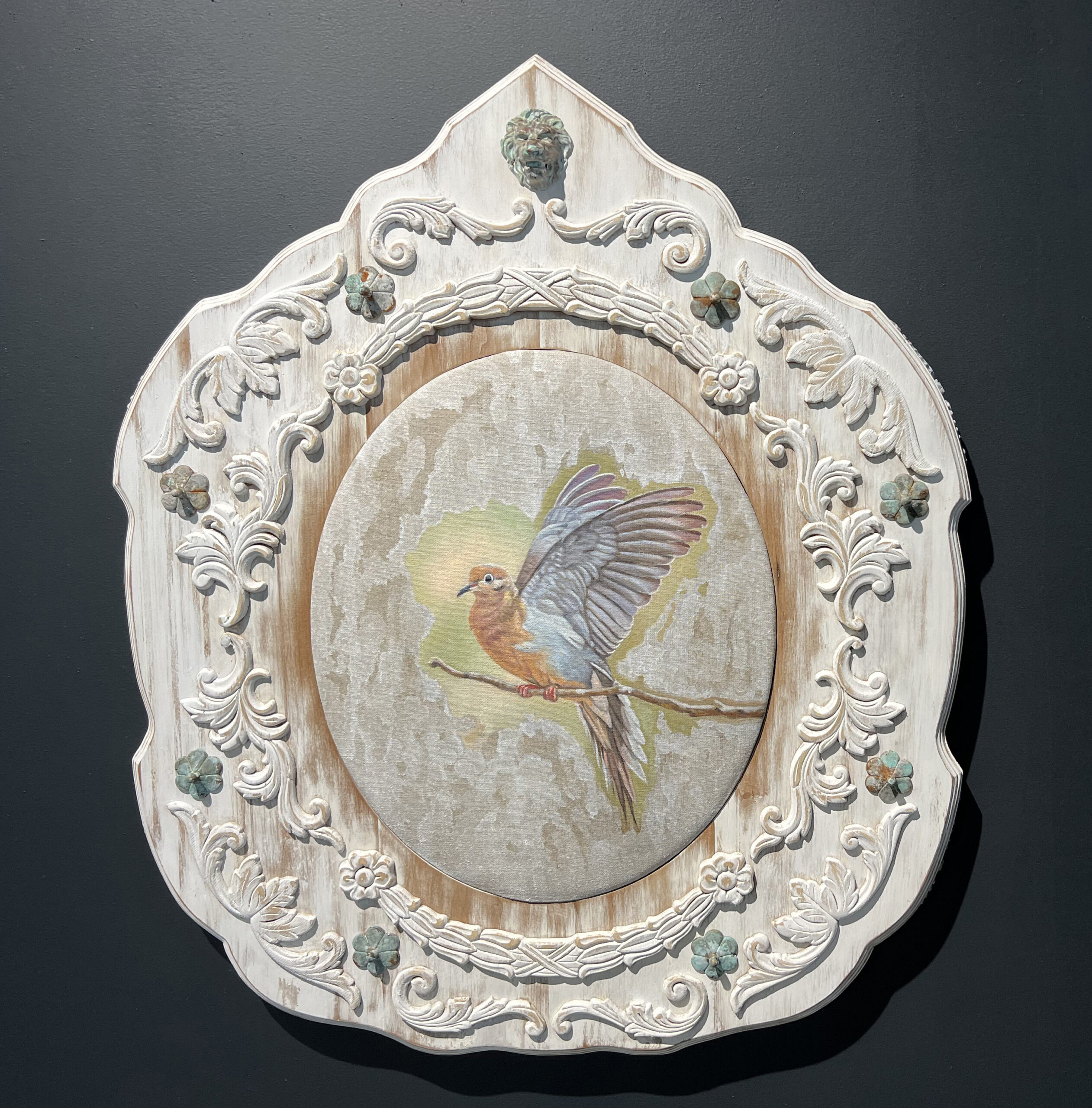
For Clayton, as important as seeing is seeing through, to truths layered under the visible, or the socially noticed. Fittingly for the Black Cherry Lane: Presence exhibition, he has contributed an art-object that could be a church window, or an opening to our souls. A dove of peace is encircled by a heraldic border, garlanded by metal flowers but guarded by an overlooking lion’s head; an image of serenity with talismans of strength.
A Shield for the Morning Bird harkens to the vibrant life of the AME Zion church that once stood at Cherry Lane, and the tranquil green setting it and its burial ground were once enveloped in. I spoke with him, to be guided beneath the surface of his work:
HILOBROW: Your piece in this exhibition seems a little atypical, I’ve seen mostly human figures in your work. What was your thought process, between learning of this issue, meeting the descendants, and your psyche arriving at that image?
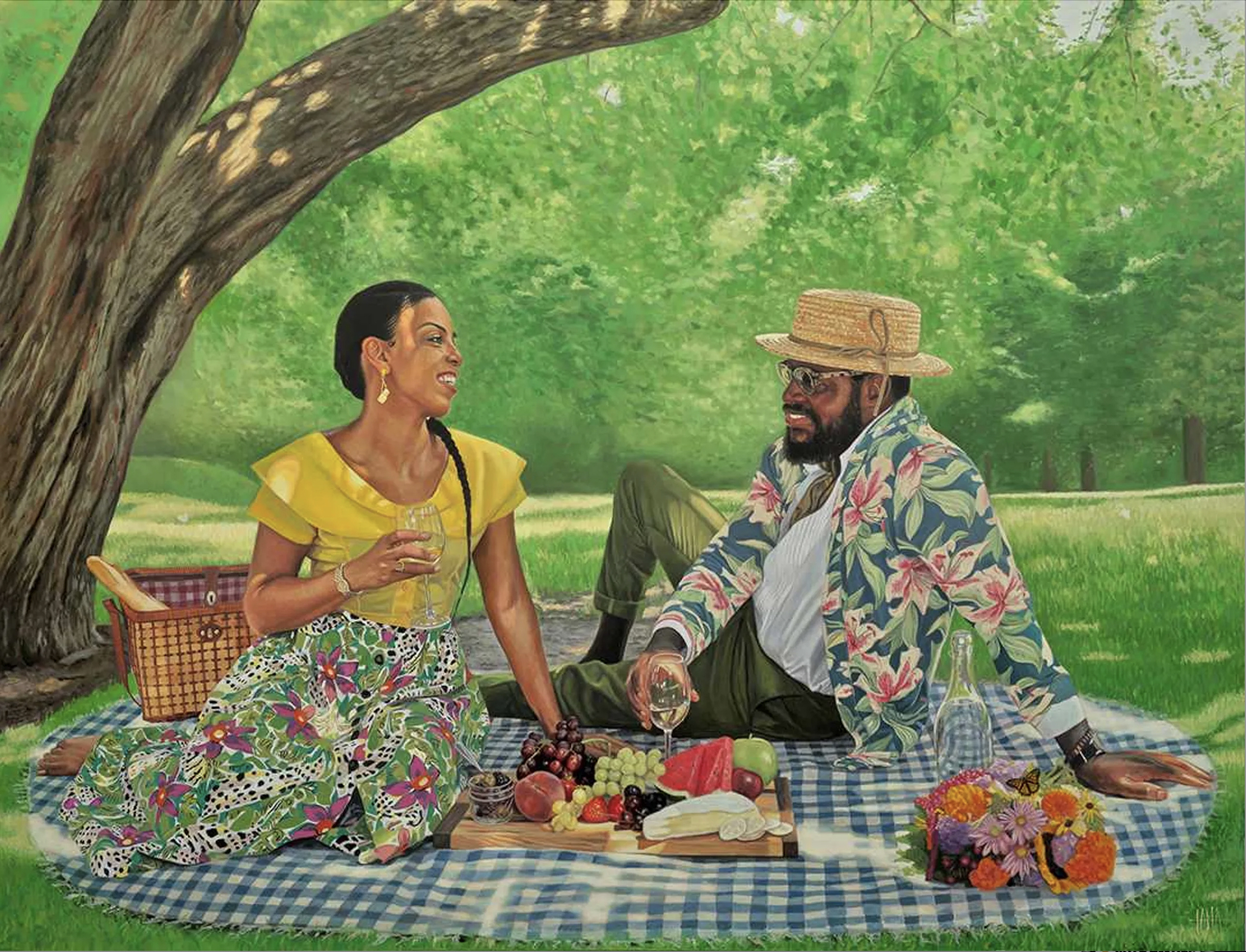
CLAYTON: Usually I will paint figurative work, but with this piece I found if I got someone to pose, it would be about [a specific] person, and it might not show what this whole project is about. So I really wanted to step away from that so people can maybe find the spirit in the work.
I had been working on a Shields series, and I thought that would run well with [the other artist’s pieces]. It’s about us protecting history, guarding history, but also the spirits guarding us and giving us direction. I knew I wanted to bring in some woodwork, that aspect of my work. In research, looking through church symbols, I found the mourning dove — the idea of mourning, loss, and that [it relates to] symbols of the Holy Spirit; I thought this might lend well to this series. Imagery of protection, and resilience, and armor and almost… going into battle — we’re almost going to battle against politicians, folks who want to deny history, and not fund, and not focus on truth that existed. So I started looking at the shields, the imagery on these shields, as symbols going into battle, but a battle for the spirit, battle for the soul, battle for a place.
HILOBROW: I could see your piece being positioned on an altar, in a house of worship; it gives me that feeling.
CLAYTON: I was looking into possibly creating an altar, and these ideas started evolving. I played with aging [the frame]; I painted it like a white church, but then I started removing the paint and showing the wood coming through, to almost [signify] what’s been covered up. The wood ended up not being a frame but just as much a part of the piece as the painting, so it’s more of a sculptural aspect.
HILOBROW: Did you find the frame as it is, or did you carve it?
CLAYTON: I carved it. It was just slabs of cherry wood. [This evokes the trees for which the site once was named.] The original [frame] was more “church-shaped” but I just didn’t feel it had movement, it just was very boxy and hard. Too rigid. That’s when giving it movement, and carving a hole in the center and putting a [painting] inside that and giving that dimension, evolved. It’s not like painting [by itself], where you can just kind of throw more on and cover it, you [need to] have a plan, which is hard when you vibe off of flowing; when you have to sit and really prep, it sometimes kills the flow.
HILOBROW: You have the counterpoint between the fluidity of the painting at the center, and the…I was gonna say the permanence of the carving, but it does feel very alive to me, the frame itself. I feel it having moved through time; it doesn’t seem that stationery or solid.
CLAYTON: This [mix] is more of a new process for me; with painting I know exactly what I’m doing, but with the sculpture what I’ve been doing lately is sitting there and letting it happen organically; I don’t always know what I’m doing until it’s done, [and follow] what feels right in the moment.
HILOBROW: I tend to see sculptural materials as much less flexible and forgiving than paint, so it’s fascinating to me to think of sculpture as improvisational.
CLAYTON: This is the first time I’ve tried to bridge the two; flowing improv and controlled, tight.
HILOBROW: So have your other shields been just carving, or just painting…?
CLAYTON: They were clay, then cast into ceramics; then with that I started doing different painting techniques, some hand-painting, some glazing, trying ways to find the techniques I’m looking for. So this is the start of a lot of stuff — Tim and I were talking about this a little while ago, this aspect of having a background in building and carpentry and joining it [in]. This is something I’ve been pursuing, so the growth in that, me focusing and working on this show, has evolved my vision as an artist.
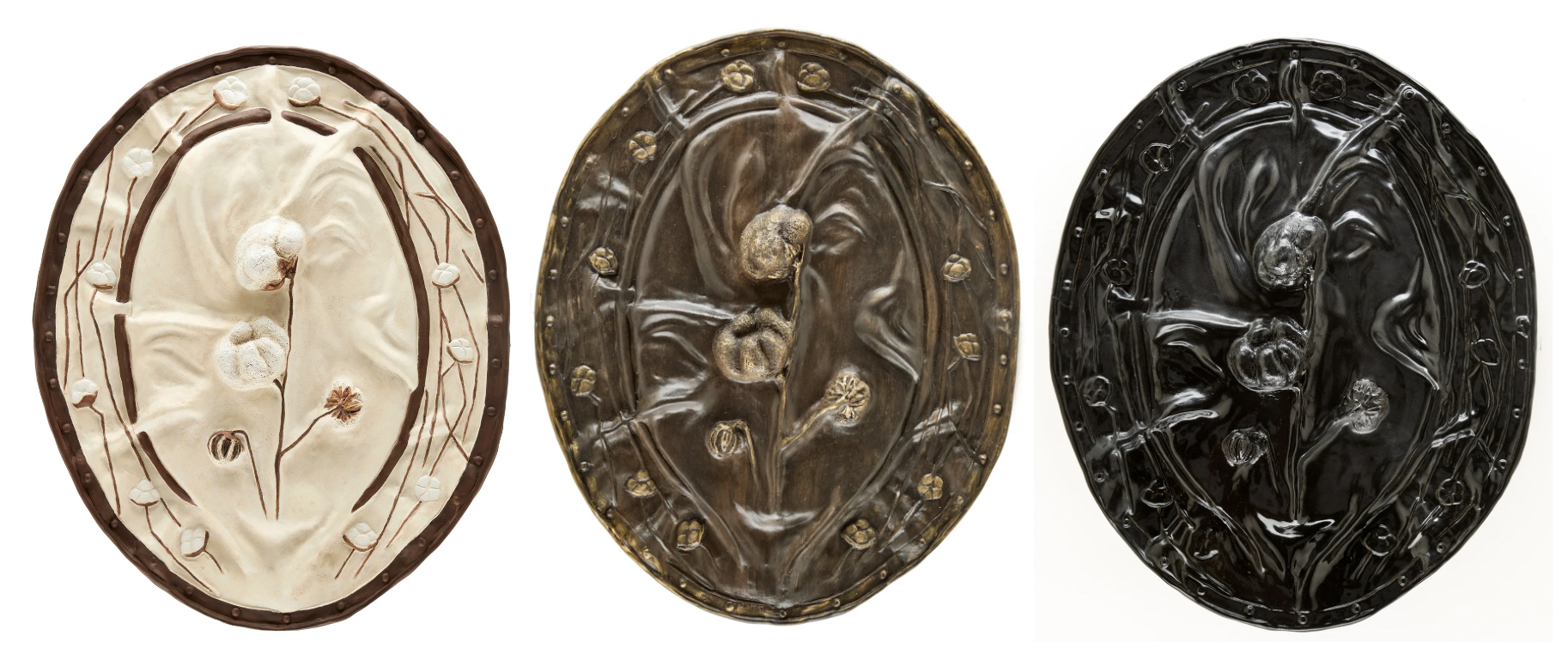
HILOBROW: Are the other shields abstract, or are they representational specifically of some themes?
CLAYTON: They are a little abstract, more floral, and that’s where I’m really starting to work from life, as opposed to a photo I might have taken or found; or draping fabric on a table and just playing with composition and sculpting from that…and then going in with color; I did one that was more marble technique, and another that has a wood technique — so just playing off those things, that series is called Ancestral Alchemy, and the idea of an artist being like an alchemist; alchemists would try and turn [other] metals into gold. So I started looking at that perspective of, as an artist I can create something from nothing, so you could also take a negative situation and you can actually turn it and spin it. So artists have the ability to kind-of bend matter…so with [A Shield for the Morning Bird], instead of going into it with trauma, it’s focusing more on the life that existed and the beauty, and that’s [the reason for] the mourning dove, it’s about rest and peace and the spirit being able to feel light and free. If the only time, if people are talking about it and it’s always trapped in pain, then that spirit almost never gets to live and break out of that. That’s why the dove needs the shield, in its freedom, so the spirits are…giving them their freedom and respect, and then the lion [signifying] we are to protect the legacy.
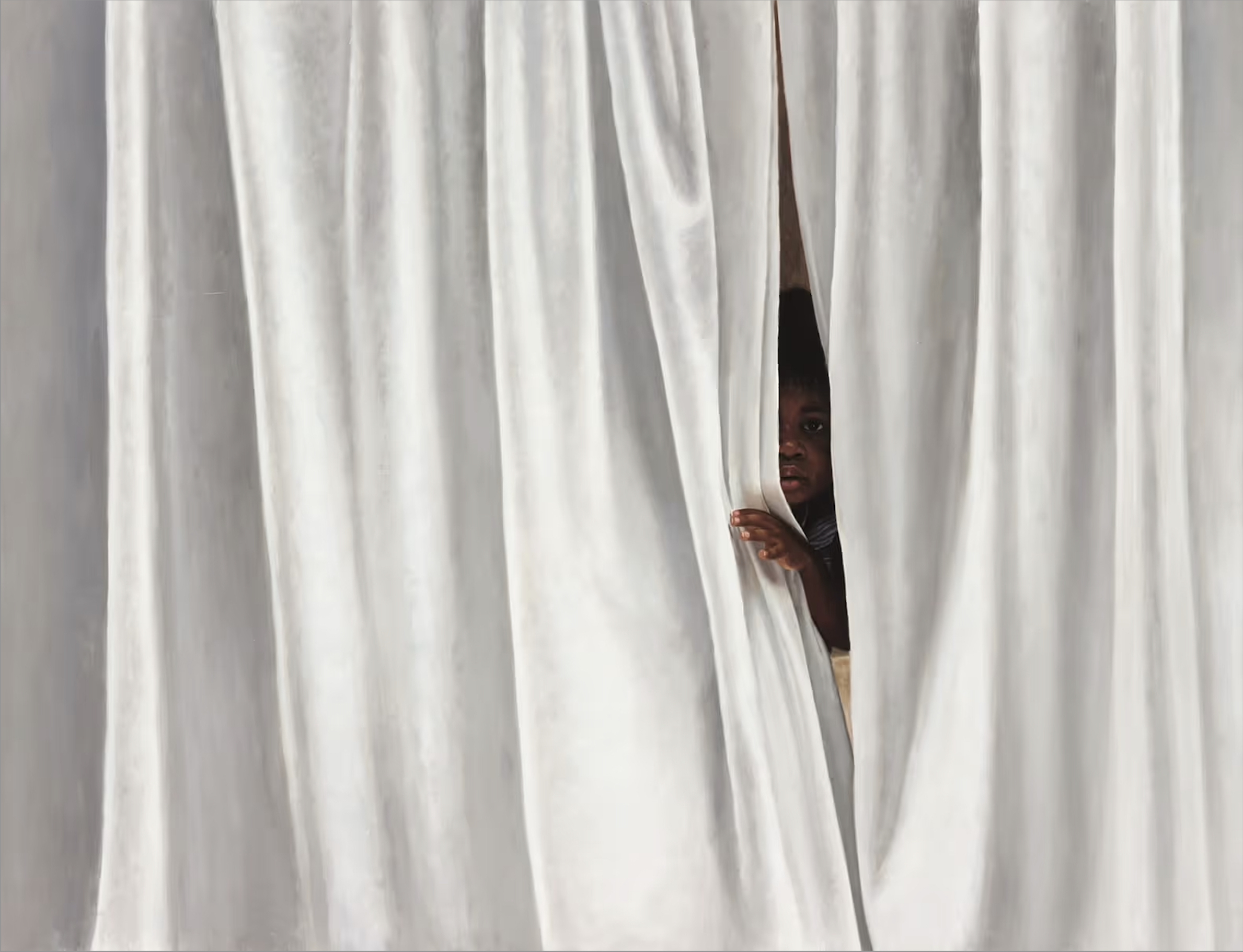
HILOBROW: Do you feel there are certain historical events or human experiences that are so painful that they’re better dealt with in symbols and metaphor? You may have just answered that in terms of what joyous things to bring out, not disregarding the pain, but accentuating something else…
CLAYTON: If I were to do my own show, I would probably lay it out the way this show is; I would have some drawings, some paintings, some abstract, some sculpture — because it gives a well-rounded perspective to an idea or an experience. With me focusing on this, and someone else doing, like Tim doing the portrait, you’re allowing the viewer to get the whole story. Some things are better left in just abstract thought, some things are better as, “No, we’re specifically talking about this right here”; but I just think giving…I started looking at art a long time ago as like an album, a musical album, you might have the song about pain, and then a song of perseverance, a song about joy with your friends, so you’re giving a full human experience. As opposed to just “we only go out and club,” or “we only go through pain”; no, you enjoy time with your family, but you might also have struggles at work. So, this story is complex, and every angle deserves to be focused on. That’s why, getting a collective like this, we’re able to do that, and each piece can tell its own story. And that’s how I would approach [it] even if I did my own show, because some things just don’t tell the same story as others.
[Keep watching this space for profiles of all the creators contributing to Black Cherry Lane: Presence, and if you’re anywhere near Staten Island between October 1 and 25, come see what they have to reveal for yourself!]