
OMAC YOUR ENTHUSIASM (intro)
By:
April 1, 2026
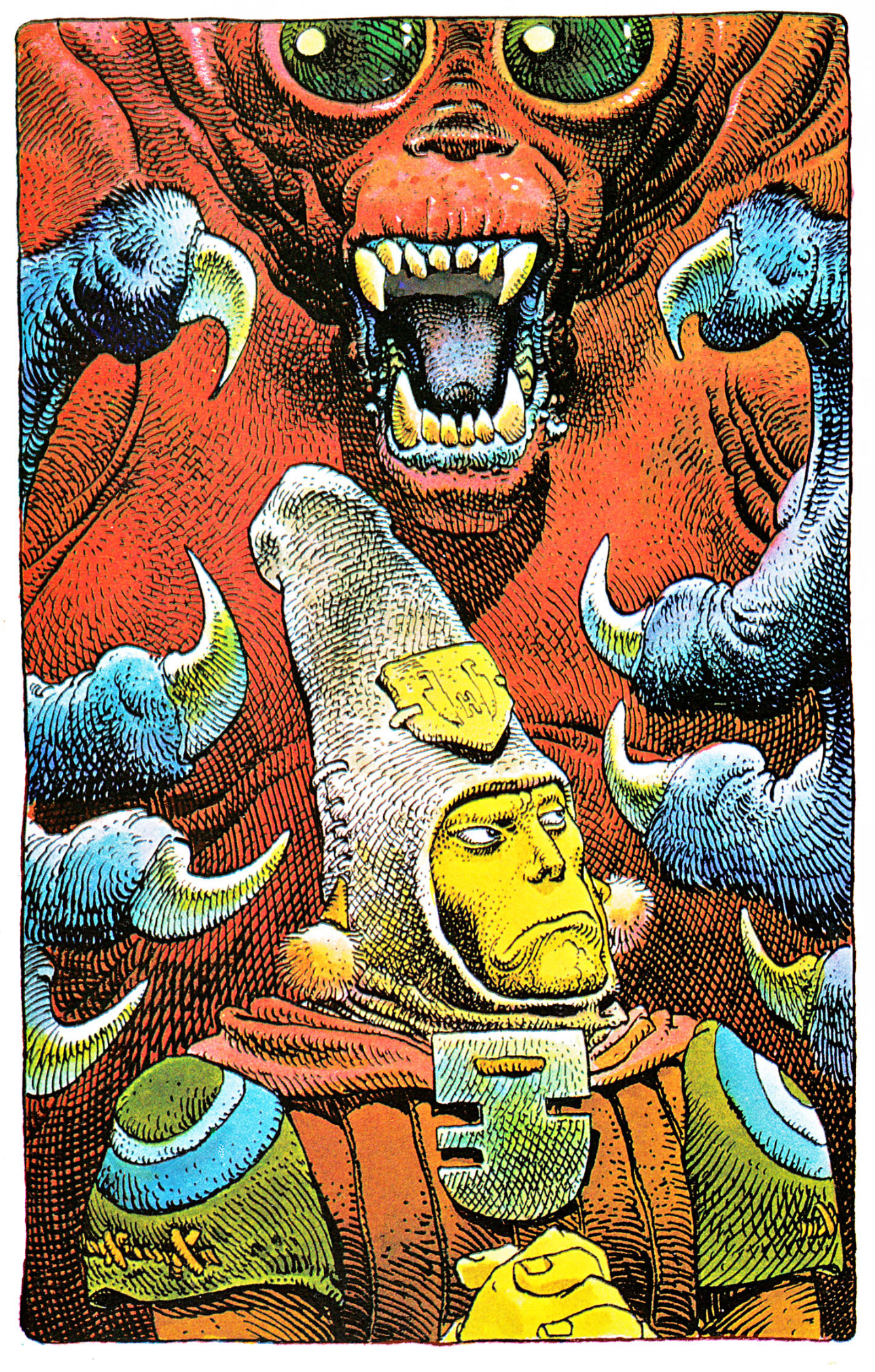
OMAC YOUR ENTHUSIASM is a prequel of sorts to HILOBROW’s 2024 series VURT YOUR ENTHUSIASM, which was dedicated to some of our favorite Eighties (1984–1993) sf novels and comics. This time around, I asked 25 HILOBROW contributors to write about a favorite sf novel or comic from the Seventies (1974–1983). As ever, I’m delighted with the resulting series!
A few years back, I compiled a list of my own favorite sf novels and comics from the genre’s so-called New Wave era, which according to my eccentric periodization scheme begins c. 1964 with the likes of Philip K. Dick’s Martian Time-Slip, Michael Moorcock’s takeover of the British sf magazine New Worlds, and Jack Kirby’s initial far-out experiments with the comic-book form, and ends c. 1983 — i.e., just before the advent of William Gibson’s Neuromancer. Writing at the time, rather hurriedly and elliptically, about the second half of sf’s New Wave era, I offered the following analysis:
If adventure novels in the Sixties troubled their readers’ faith in fixed, universal categories, and in certainty, Seventies adventure replaced these relics with difference, process, anomaly. The science fiction of the [1974–1993 era was] is as far-out as it gets, the final flourish of New Wave before the advent of cyberpunk. All binary oppositions (past/present, liberal/conservative, innocent/guilty, utopian/anti-utopian) are overthrown. Ambivalence, indeterminacy, and undecidability of things: In Seventies adventures, these are the anti-anti-utopian new normal.
Surveying the essays submitted by this series’ contributors, I notice (through my own biased filter, of course) themes and tropes such as:
- post-apocalyptic nomadism (not to mention: hitchhiking);
- the resurgence (bad) of ignorance, superstition, barbarism, fascism (Michael Grasso on Flow My Tears, The Policeman Said: “Dick projected, as is his wont, his own contemporary trends — the development of an electronic surveillance state; student radicals shot dead, sent to prison, or induced into becoming informers; a middle-class mass mystified by moronic television; racial strife driven by eugenicist fervor — into a future full of horrors”);
- but also the resurgence (good) of shaman-esque psychedelic journeys guided and unguided, mindful experiences of the startling beauty on offer in this and on other worlds, wise reminders that reality is almost stranger than we can apprehend (Tom Nealon on Dhalgren: “Surely the miasma of unknowing that hangs over the novel is meant to be pierced?”), and a fierce appreciation for the importance of living in harmony with nature;
- plus an anthropological and/or sociological quest for models of good-enough community, pursued by intrepid activists who may have wised up about Sixties-style flower-child utopianism (who may indeed have nearly gone mad or succumbed to despair), but who remain stubbornly, sweatily determined not to continue repeating humankind’s foolishness.
Enlightenment values troubled, yes very much so… but hope abandoned, no.
Below is the OMAC lineup; the series kicks off tomorrow. Enjoy!
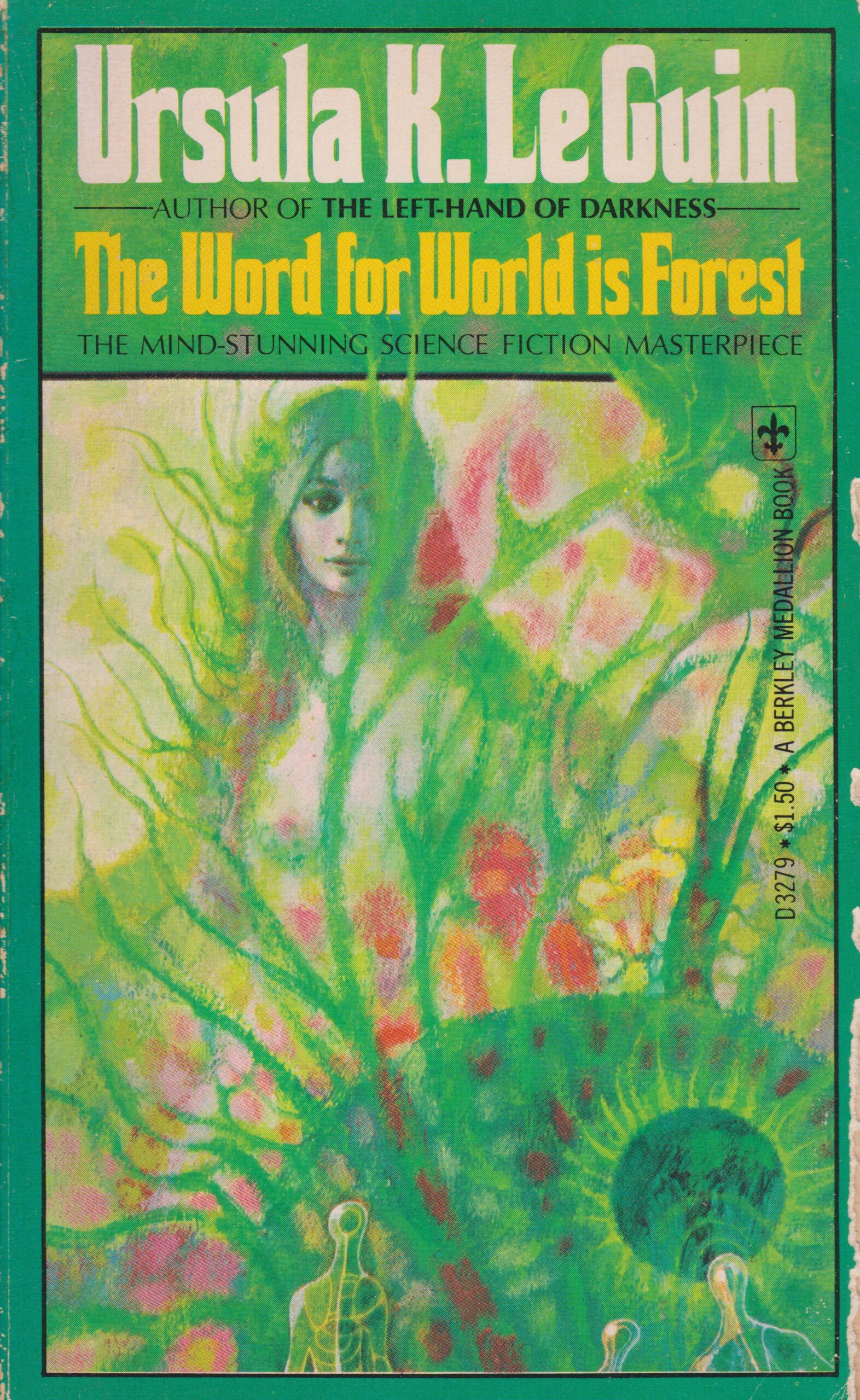
Mark Kingwell on RIDDLEY WALKER | Carlo Rotella on THE FACE | Sara Ryan on DREAMSNAKE | Matthew Battles on THE WORD FOR WORLD IS FOREST | Ramona Lyons on HIGH-RISE
Here’s an excerpt from Matthew Battles’ installment on Ursula K. Le Guin’s The Word for World is Forest:
His band broken, his wife raped and killed by a Terran invader, Selver becomes a refugee who takes up work as a kind of dogsbody to an anthropologist, Raj Lyubov. In Lyubov’s company, he begins to understand his culture as distinct. His people and their relationship with the forest no longer comprise the entirety of things, but are merely one world among many, a “culture” to be explained, justified, and above all defended from their invaders.
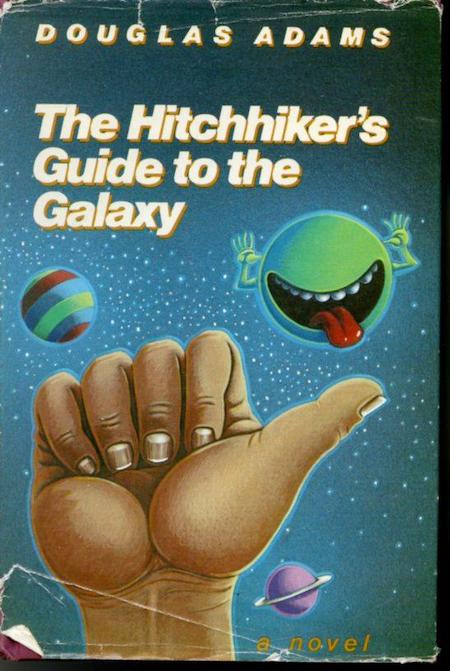
Adam McGovern on SHADRACH IN THE FURNACE | Deb Chachra on HITCHHIKER’S GUIDE TO THE GALAXY | Tom Nealon on DHALGREN | Michael Grasso on FLOW MY TEARS, THE POLICEMAN SAID | Stephanie Burt on BRIGHTNESS FALLS FROM THE AIR
Here’s an excerpt from Deb Chachra’s installment on Douglas Adams’ The Hitchhiker’s Guide to the Galaxy:
The Hitchhiker’s Guide to the Galaxy taught me that the universe is an absurd and bewildering place, that the effects of my actions might be unpredictable or unknowable, and that I could make my peace with this. Even if all I could do was muddle along and try to be a good person, that was okay.
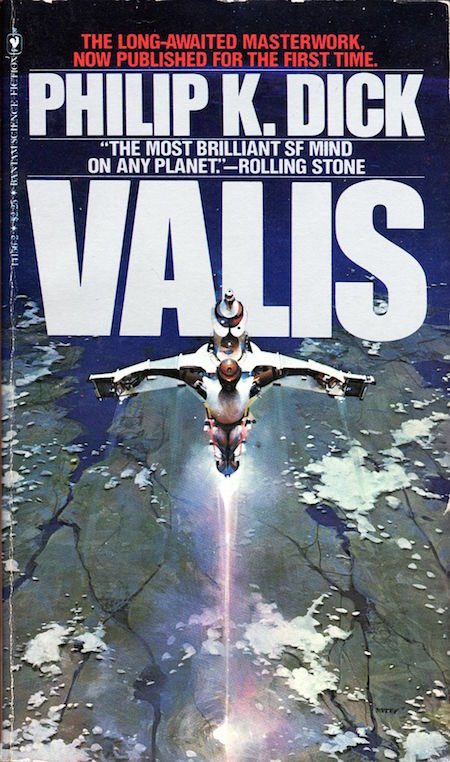
Nikhil Singh on SABRE | Gordon Dahlquist on VALIS | Miranda Mellis on THE DISPOSSESSED | Marc Weidenbaum on SOFTWARE | Peggy Nelson on THE TRANSMIGRATION OF TIMOTHY ARCHER
Here’s an excerpt from Gordon Dahlquist’s installment on Philip K. Dick’s VALIS:
What’s astonishing about VALIS is Dick’s decision to lay himself completely open, practically an autopsy subject, in a confessional whose tender self-exposure approaches — again, explicitly, relentlessly — the edge of self-destruction. Yet this strategy unfolds through his absolute writerly control. He’s an old pro writing for his life and the simple story is in fact masterful. The psychosis of the book is the psychosis of the time, and its lapses perhaps only mercy.
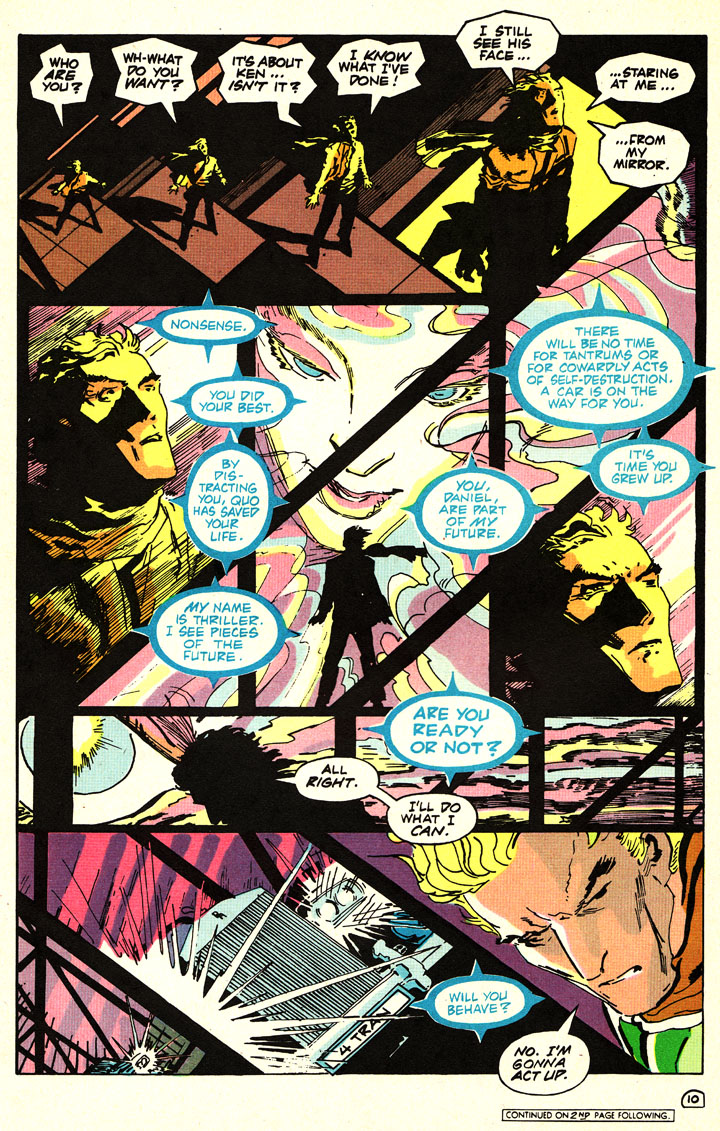
Josh Glenn on ENGINE SUMMER | Mimi Lipson on A SCANNER DARKLY | Douglas Wolk on THRILLER | David Hirmes on ARZACH | Anthony Miller on THE SHOCKWAVE RIDER
Here’s an excerpt from Douglas Wolk’s installment on Robert Loren Fleming and Trevor von Eeden’s comic Thriller:
What Fleming and Von Eeden got right about their future was its unabated waves of information overload, and the frustrating joy of grabbing a little bit of understanding as everything zooms violently past.

Annie Nocenti on JIMBO | Seth on MR. MACHINE | Alex Brook Lynn on JUDGE DREDD | Joe Alterio on THE INCAL | Jason Grote on JOSIE AND THE ELEVATOR.
Here’s an excerpt from Annie Nocenti’s installment on Gary Panter’s comic JIMBO:
Crowned a “Punk Everyman,” Jimbo’s tender hijinks unfold as existential science fiction of the soul. His celestial searching collapses time and telescopes space, with an ever-deepening undercurrent of empathy and love. Gary Panter’s stories are primal poems that seep into the brainpan, take hold, resonate, help guide your own meander.
PS: Finally, here are a few additional favorite sf novels and comics from 1974–1983 that, alas, we weren’t able to include in the series:
Jack Kirby’s comic OMAC debuts in 1974 | John Crowley’s The Deep (1975) | Joanna Russ’s The Female Man (1975) | Jack Kirby’s comic The Eternals debuts in 1976 | Octavia E. Butler’s Patternmaster (1976) | Samuel R. Delany’s Trouble on Triton (1976) | Moebius’s / Dan O’Bannon’s comic “The Long Tomorrow” (1976) | Moebius’s comic The Garage Hermetic debuts in 1976 | Joanna Russ’s We Who Are About To… (1976/77) | John Varley’s The Ophiuchi Hotline (1977) | John Wagner and Carlos Ezquerra’s comic Judge Dredd debuts in 1977 | Octavia E. Butler’s Mind of My Mind (1977) | Octavia E. Butler’s Survivor (1978) | Octavia E. Butler’s Wild Seed (1980) | John Sladek’s Roderick (1980) | John Harrison’s In Viriconium (1982) | Katsuhiro Otomo’s comic Akira debuts in 1982 | Frank Miller’s comic Rōnin debuts in 1983.
JACK KIRBY PANELS | CAPTAIN KIRK SCENES | OLD-SCHOOL HIP HOP | TYPEFACES | NEW WAVE | SQUADS | PUNK | NEO-NOIR MOVIES | COMICS | SCI-FI MOVIES | SIDEKICKS | CARTOONS | TV DEATHS | COUNTRY | PROTO-PUNK | METAL | & more enthusiasms!