
“LET LOBACHEVKIAN SPACE / STREAM…”
By:
July 21, 2026
A series dedicated to poems, published c. 1900–1935, the Radium Age sf-adjacent themes of which include: dystopia and utopia, far-out mathematics and the fourth dimension, Afro-futurism, catastrophe, future war, new technologies, scientific breakthrough, dehumanization, cosmic awe, disenchantment and unseen forces, unknowable aliens and singularity. Research and selection by Joshua Glenn; thematic index here.
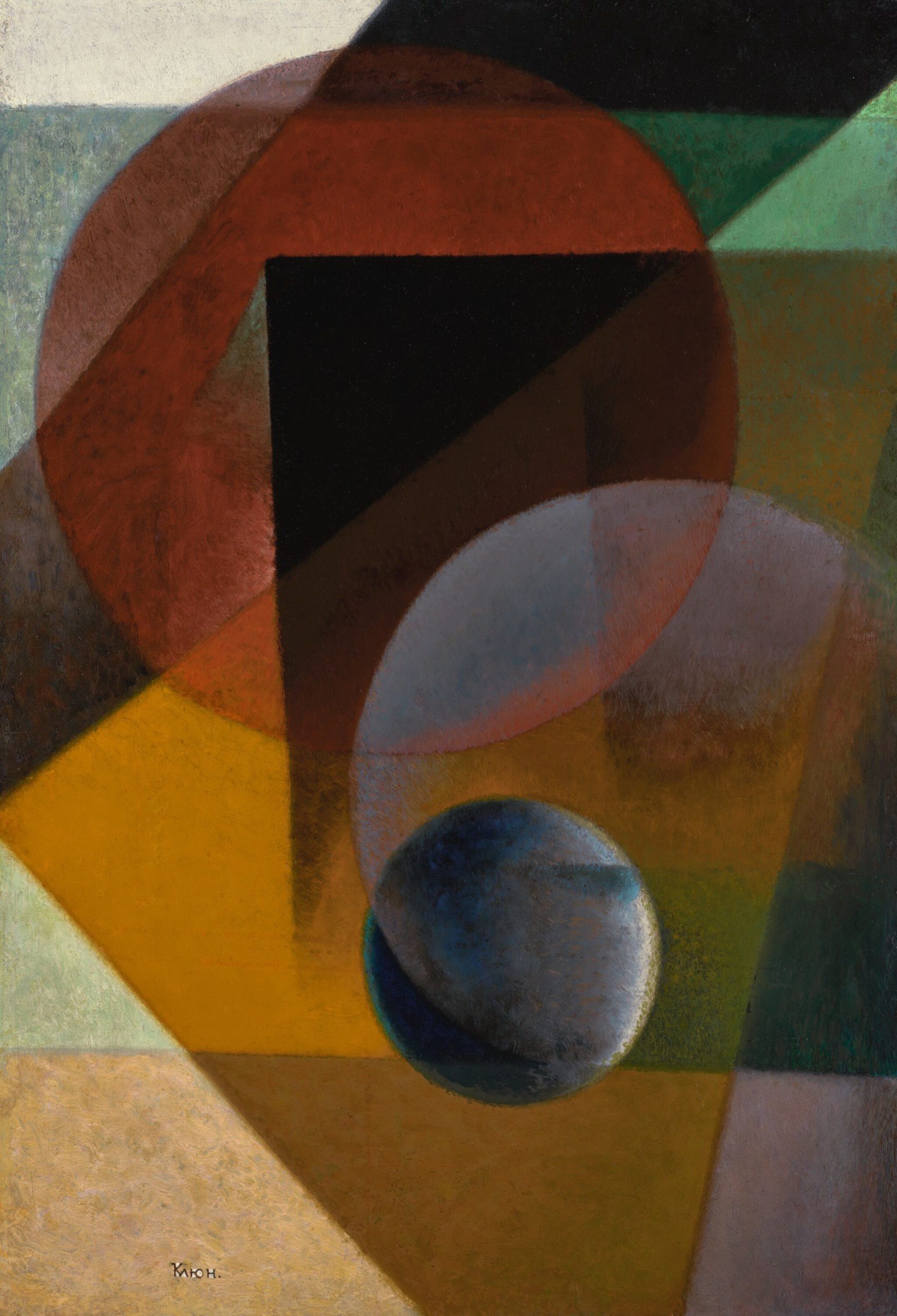
Slave of the rich, go laugh in his face.
You are poor and have nothing, and
poverty tears you,
you crawled like a have-not at a king’s feet,
and then you kissed him.
You are ailing and sick with a great hurt
and must open the fiery gates of dawn:
Tear out the dripping beard of Aquarius,
and the Dog Stars, whip them yelping from
heaven.
And from this moment on, let
Lobachevskian space
stream from the flagpoles of night-loving
Petrograd.
The Time of the Takers is over; the Might of
the Makers
parades; T has fallen; M occupies the stage.
These are the high priests of LIGHTLAND,
and “Workers of the World” is their
banner’s device.
This is the havoc that Razin unleashed,
come home at last to roost in the clouds
over Petrograd!
And its mad rush is the theoretical system
of Lobachevsky, and Lobachevskian space
itself.
Let Lobachevsky’s curves descend
as ornaments over all the city,
let them rest like strongbows on the
sweating shoulders of Universal Labor,
and the lightning will wail, complaining and
crackling,
when it finds itself harnessed, condemned
to a life at hard labor.
— Excerpt from “Ladomir” (“World-Harmony” or “Lightland,” 1920/21), a major utopian poem by Khlebnikov that depicts a vision of the future in which technological progress, nature, and humanity unite. Khlebnikov originally titled the work “Insurrection.” Translation by Paul Schmidt.
Nikolai Lobachevsky (1792–1856) was a Russian mathematician recognized as a founder of non-Euclidean, “hyperbolic” / curved geometry. His work, largely ignored during his lifetime, later became foundational for modern physics, including Einstein’s theory of relativity. By proving that geometry could be non-Euclidean — meaning space can bend and parallel lines can behave differently than in standard geometry — Lobachevsky supplied the framework required for Einstein’s theories. Instead of treating gravity as an invisible pulling force, Einstein showed that massive objects like the Sun actually bend the fabric of space. Gravity, that is to say, is the physical curving of the universe.
For Khlebnikov, who studied mathematics at the University of Kazan (where Lobachevsky worked) Lobachevsky’s work was a symbol of intellectual rebellion — and a tool to break free from traditional limits. For example, as in this poem, one could use this idea of flexible, alternative spaces when imagining a futuristic, utopian city. Some contemporaries called Khlebnikov the “Lobachevsky of words.”
RADIUM AGE PROTO-SF POETRY: Stephen Spender’s THE PYLONS | George Sterling’s THE TESTIMONY OF THE SUNS | Archibald MacLeish’s EINSTEIN | Thomas Thornely’s THE ATOM | C.S. Lewis’s DYMER | Stephen Vincent Benét’s METROPOLITAN NIGHTMARE | Robert Frost’s FIRE AND ICE | Aldous Huxley’s FIFTH PHILOSOPHER’S SONG | Sara Teasdale’s “THERE WILL COME SOFT RAINS” | Edith Södergran’s ON FOOT I HAD TO… | Robert Graves’s WELSH INCIDENT | Nancy Cunard’s ZEPPELINS | D.H. Lawrence’s WELLSIAN FUTURES | & many more.