
GOLIAH (1)
By:
July 8, 2026
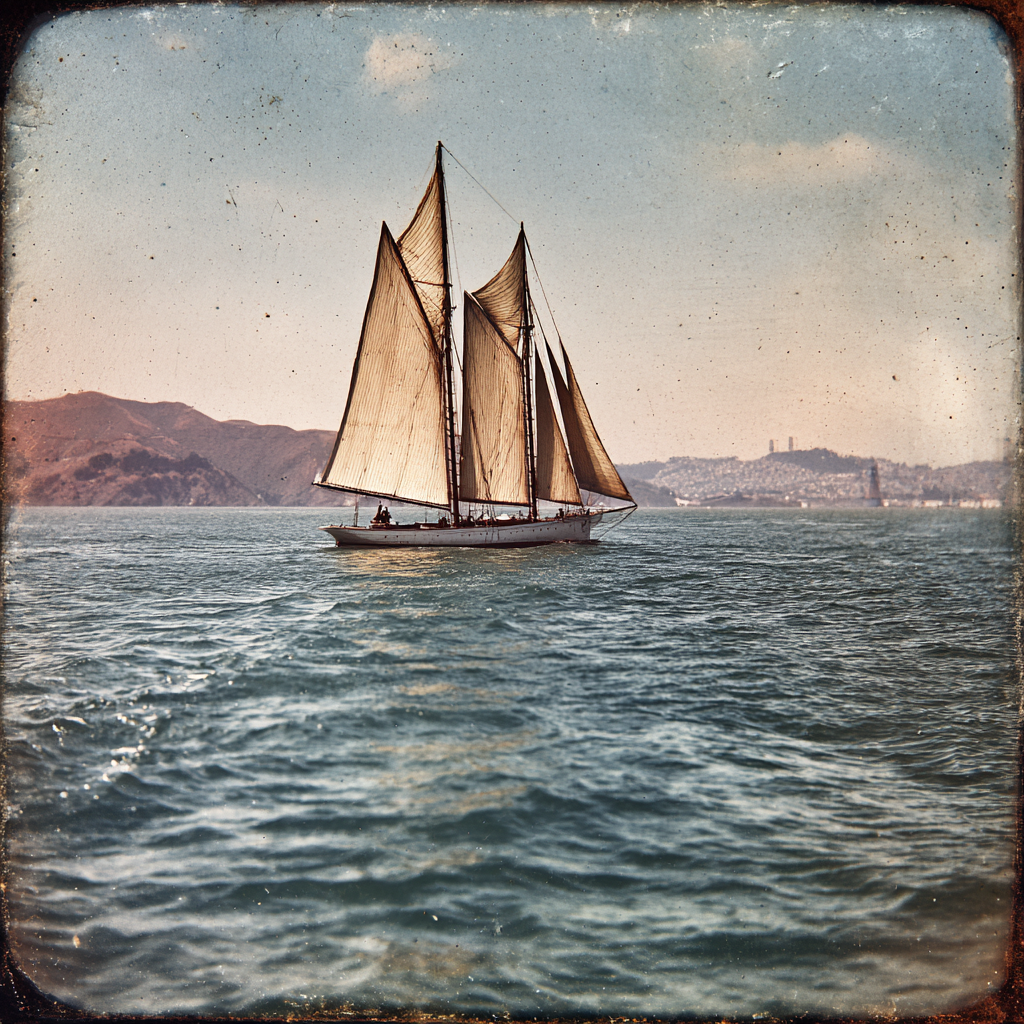
Goliah is a 1908 proto-sf novella by Jack London. It depicts a world transformed by a mysterious figure who ushers in a global, socialist utopia — forcing industrialists and politicians to comply. It originally appeared in The Red Magazine (December 1908). HiLoBooks is pleased to serialize the story for HILOBROW’s readers.
ALL INSTALLMENTS: 1 | 2 | 3 | 4 | 5.
In 1924 — to be precise, on the morning of January 3 — the city of San Francisco awoke to read in one of its daily papers a curious letter, which had been received by Walter Bassett and which had evidently been written by some crank. Walter Bassett was the greatest captain of industry west of the Rockies, and was one of the small group that controlled the nation in everything but name. As such, he was the recipient of lucubrations from countless cranks; but this particular lucubration was so different from the average ruck of similar letters that, instead of putting it into the waste-basket, he had turned it over to a reporter. It was signed “Goliah,” and the superscription gave his address as “Palgrave Island.” The letter was as follows:
“Mr. Walter Bassett,
“Dear Sir:“I am inviting you, with nine of your fellow-captains of industry, to visit me here on my island for the purpose of considering plans for the reconstruction of society upon a more rational basis. Up to the present, social evolution has been a blind and aimless, blundering thing. The time has come for a change. Man has risen from the vitalized slime of the primeval sea to the mastery of matter; but he has not yet mastered society. Man is to-day as much the slave to his collective stupidity, as a hundred thousand generations ago he was a slave to matter.
“There are two theoretical methods whereby man may become the master of society, and make of society an intelligent and efficacious device for the pursuit and capture of happiness and laughter. The first theory advances the proposition that no government can be wiser or better than the people that compose that government; that reform and development must spring from the individual; that in so far as the individuals become wiser and better, by that much will their government become wiser and better; in short, that the majority of individuals must become wiser and better, before their government becomes wiser and better. The mob, the political convention, the abysmal brutality and stupid ignorance of all concourses of people, give the lie to this theory. In a mob the collective intelligence and mercy is that of the least intelligent and most brutal members that compose the mob. On the other hand, a thousand passengers will surrender themselves to the wisdom and discretion of the captain, when their ship is in a storm on the sea. In such matter, he is the wisest and most experienced among them.
“The second theory advances the proposition that the majority of the people are not pioneers, that they are weighted down by the inertia of the established; that the government that is representative of them represents only their feebleness, and futility, and brutishness; that this blind thing called government is not the serf of their wills, but that they are the serfs of it; in short, speaking always of the great mass, that they do not make government, but that government makes them, and that government is and has been a stupid and awful monster, misbegotten of the glimmerings of intelligence that come from the inertia-crushed mass.
“Personally, I incline to the second theory. Also, I am impatient. For a hundred thousand generations, from the first social groups of our savage forbears, government has remained a monster. To-day, the inertia-crushed mass has less laughter in it than ever before. In spite of man’s mastery of matter, human suffering and misery and degradation mar the fair world.
“Wherefore I have decided to step in and become captain of this world-ship for a while. I have the intelligence and the wide vision of the skilled expert. Also, I have the power. I shall be obeyed. The men of all the world shall perform my bidding and make governments so that they shall become laughter-producers. These modelled governments I have in mind shall not make the people happy, wise, and noble by decree; but they shall give opportunity for the people to become happy, wise, and noble.
“I have spoken. I have invited you, and nine of your fellow-captains, to confer with me. On March third the yacht Energon will sail from San Francisco. You are requested to be on board the night before. This is serious. The affairs of the world must be handled for a time by a strong hand. Mine is that strong hand. If you fail to obey my summons, you will die. Candidly, I do not expect that you will obey. But your death for failure to obey will cause obedience on the part of those I subsequently summon. You will have served a purpose. And please remember that I have no unscientific sentimentality about the value of human life. I carry always in the background of my consciousness the innumerable billions of lives that are to laugh and be happy in future æons on the earth.
“Yours for the reconstruction of society,
“Goliah.”
The publication of this letter did not cause even local amusement. Men might have smiled to themselves as they read it, but it was so palpably the handiwork of a crank that it did not merit discussion. Interest did not arouse till next morning. An Associated Press despatch to the Eastern states, followed by interviews by eager-nosed reporters, had brought out the names of the other nine captains of industry who had received similar letters, but who had not thought the matter of sufficient importance to be made public. But the interest aroused was mild, and it would have died out quickly had not Gabberton cartooned a chronic presidential aspirant as “Goliah.” Then came the song that was sung hilariously from sea to sea, with the refrain, “Goliah will catch you if you don’t watch out.”
The weeks passed and the incident was forgotten. Walter Bassett had forgotten it likewise; but on the evening of February 22, he was called to the telephone by the Collector of the Port. “I just wanted to tell you,” said the latter, “that the yacht Energon has arrived and gone to anchor in the stream off Pier Seven.”
What happened that night Walter Bassett has never divulged. But it is known that he rode down in his auto to the water front, chartered one of Crowley’s launches, and was put aboard the strange yacht. It is further known that when he returned to the shore, three hours later, he immediately despatched a sheaf of telegrams to his nine fellow-captains of industry who had received letters from Goliah. These telegrams were similarly worded, and read: “The yacht Energon has arrived. There is something in this. I advise you to come.”
Bassett was laughed at for his pains. It was a huge laugh that went up (for his telegrams had been made public), and the popular song on Goliah revived and became more popular than ever. Goliah and Bassett were cartooned and lampooned unmercifully, the former, as the Old Man of the Sea, riding on the latter’s neck. The laugh tittered and rippled through clubs and social circles, was restrainedly merry in the editorial columns, and broke out in loud guffaws in the comic weeklies. There was a serious side as well, and Bassett’s sanity was gravely questioned by many, and especially by his business associates.
Bassett had ever been a short-tempered man, and after he sent the second sheaf of telegrams to his brother captains, and had been laughed at again, he remained silent. In this second sheaf he had said: “Come, I implore you. As you value your life, come.” He arranged all his business affairs for an absence, and on the night of March 2 went on board the Energon. The latter, properly cleared, sailed next morning. And next morning the newsboys in every city and town were crying “Extra.”
In the slang of the day, Goliah had delivered the goods. The nine captains of industry who had failed to accept his invitation were dead. A sort of violent disintegration of the tissues was the report of the various autopsies held on the bodies of the slain millionaires; yet the surgeons and physicians (the most highly skilled in the land had participated) would not venture the opinion that the men had been slain. Much less would they venture the conclusion, “at the hands of parties unknown.” It was all too mysterious. They were stunned. Their scientific credulity broke down. They had no warrant in the whole domain of science for believing that an anonymous person on Palgrave Island had murdered the poor gentlemen.
One thing was quickly learned, however; namely, that Palgrave Island was no myth. It was charted and well known to all navigators, lying on the line of 160 west longitude, right at its intersection by the tenth parallel north latitude, and only a few miles away from Diana Shoal. Like Midway and Fanning, Palgrave Island was isolated, volcanic and coral in formation. Furthermore, it was uninhabited. A survey ship, in 1887, had visited the place and reported the existence of several springs and of a good harbour that was very dangerous of approach. And that was all that was known of the tiny speck of land that was soon to have focussed on it the awed attention of the world.
RADIUM AGE PROTO-SF: “Radium Age” is Josh Glenn’s name for the nascent sf genre’s c. 1900–1935 era, a period which saw the discovery of radioactivity, i.e., the revelation that matter itself is constantly in movement — a fitting metaphor for the first decades of the 20th century, during which old scientific, religious, political, and social certainties were shattered. More info here.
SERIALIZED BY HILOBOOKS: James Parker’s Cocky the Fox | Annalee Newitz’s “The Great Oxygen Race” | Matthew Battles’s “Imago” | & many more original and reissued novels and stories.