
CAHUN YOUR ENTHUSIASM (12)
By:
February 11, 2026
One in a series of enthusiastic posts, contributed by 25 HILOBROW friends and regulars, analyzing and celebrating our favorite… anti-fascist art! Series edited by Josh Glenn.
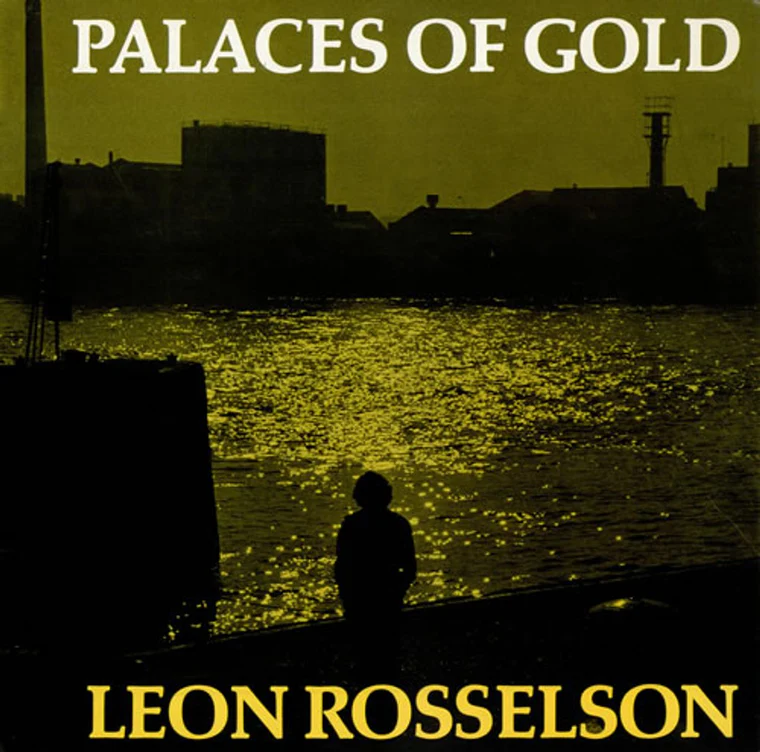
PALACES OF GOLD | LEON ROSSELSON | 1968
When I was about 14, I watched and rewatched a documentary I’d videotaped from TVOntario, the provincial “educational” channel, our rinky-dink version of PBS. It had a lasting impact on my tastes and my politics, but I only recently found out what it was: the “War and Protest Songs” chapter of Tony Parsons’ 17-part 1977 British TV series All You Need is Love: The Story of Popular Music, which you can now see online. Rewatching it for the first time in about 35 years, I found I still have passages memorized. Key to its effect was that it barely explained who or what anything on screen was, just plunging directly into the often startling music and ideas, sometimes accompanied by old patriotic newsreels but elsewhere by shocking footage of piled-up skulls or bodies on fire.
I’d read enough to get the context of anti-war and civil-rights protests, which explained most of what Pete Seeger and Joan Baez were talking about. I knew Leonard Cohen’s stuff too, though it was only through the show that I realized “Story of Isaac” was actually a song about Vietnam. And Cohen’s reading in it of a poem that begins, “The killers that run the other countries/ Are trying to get us to overthrow / The killers that run our own,” still echoes in my head and unsettles my ideologies.
But one of the songs was completely different.
Leon Rosselson is a British Jewish singer-songwriter, author, and activist who is still out there agitating and disturbing the mental peace at 91. In the early 1960s he regularly contributed satirical songs to the David Frost comedic-news show That Was the Week That Was, making him kind of England’s version of Tom Lehrer, who did the same for the American version. But Rosselson was also a committed socialist, which made him simultaneously the British Phil Ochs.
If people in North America know Rosselson at all, it’s as the writer of “The World Turned Upside Down,” which Billy Bragg covered on punk-rock guitar for his 1985 Between the Wars EP, a benefit recording for the British miners’ strike that went to #15 on the UK charts: “In 1649, St. George’s Hill / A ragged band they called the Diggers came to show the people’s will…” It’s a translation to song of Christopher Hill’s 1972 landmark book of social history about 17th-century English radical groups, without which (along with E.P. Thompson’s The Making of the English Working Class) there’d be no Howard Zinn et al.
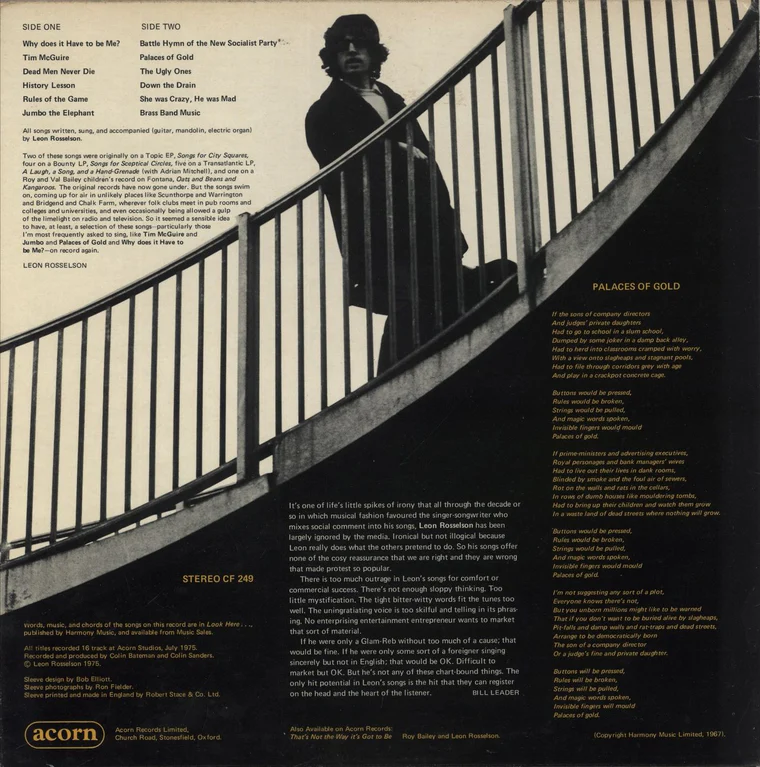
In the lyrics of “The World Turned Upside Down,” the Diggers proclaim of the aristocracy, in the age of the enclosure of the commons, “By theft and murder, they took the land / Now everywhere the walls spring up at their command.” The song a young bespectacled Rosselson sings in the Parsons episode, “Palaces of Gold,” is about similar transformative processes, but more abstractly, and in our time: If moneyed professionals found somehow, he sings over rippling acoustic guitar, that their own kids were going to school in cramped, blighted classrooms or living in foul, rat-infested housing, the way poor children do, “Buttons would be pressed / Rules would be broken / Strings would be pulled / And magic words spoken / Invisible fingers would mold / Palaces of gold.”
Not, of course, that it’s a conspiracy. No, it’s just a system.
I’m not suggesting any sort of a
plot,
Everyone knows there’s not —
But you unborn millions might
like to be warned
That if you don’t want to be
buried alive by slag heaps,
Pitfalls and damp walls and rat
traps and dead streets,
Best arrange to be
democratically born
The son of a company director
Or a judge’s fine and private
daughter.
If so, those “invisible fingers” (which I now recognize as a mockery of Adam Smith’s invisible hand) will mysteriously go to work for you. Plucking at strings, like the ones on Rosselson’s guitar.
I prided myself on picking up on the cleverness of the line about arranging to be “democratically born” wealthy, but it also roused my 14-year-old sense of unfairness. This was the first real Marxist social critique I’d encountered, like a more precise version of John Lennon’s “Working Class Hero.” Both smacked me hard as a middle-class kid who was better off than most of my peers in our depressed working-class town, but also someone with parents raised by farmers and factory workers. I only learned decades later that Rosselson’s song was inspired by the disaster at Aberfan in 1966, where a literal slag heap of mining waste on a hill above a school and some row housing in a village in Wales collapsed in a rainstorm and buried 116 children and 28 adults alive. (You may recall the episode of The Crown that treated it as a supposedly formative event in young Charles’ life as the Prince of Wales.)
Everything in the song is equally true today. Truer. On the former East Wing of the White House, some highly visible (and short) fingers are busy molding a ballroom of gold.
Originally, after hearing it, I had no way of finding out anything more about it or Rosselson. I never saw his albums in record stores, or his name in any folk-music books. He might as well have been fictional, until a few years later I heard the Billy Bragg cover. Of course today his work can be found in the new enclosures of streaming. I’ve discovered more favourites like “Stand Up for Judas,” a song that argues (with dubious historical accuracy) that the great New Testament baddie acted as he did because Jesus was selling the Jewish people out to the Roman occupiers. “So stand up, stand up for Judas and the cause that Judas served / It was Jesus who betrayed the poor with his Word.” As an ex-Catholic-schoolboy, it still gives me transgressive shivers.
But at 14, one song could be enough. One song could contain the whole world, or break it open so you could see the teeth that turn its gears.
CAHUN YOUR ENTHUSIASM: INTRODUCTION by Josh Glenn | Mark Kingwell on ONCE UPON A HONEYMOON | Lynn Peril on ZAZOUS | Judith Zissman on DIE GEDANKEN SIND FREI | Annie Nocenti on MEDIUM COOL | Mike Watt on FASCIST | William Nericcio on LALO ALCARAZ | Josh Glenn on THE LADY VANISHES | Carlo Rotella on INQUIETUD | Heather Quinlan on CASABLANCA | Adam McGovern on HEART OF GLASS (MAD JENNY) | Matthew Battles on WOODY’S GUITAR | Carl Wilson on PALACES OF GOLD | Ramona Lyons on UPRIGHT WOMEN WANTED | Lucy Sante on CAMOUFLAGE | Adelina Vaca on THE LIVES OF OTHERS | Tom Nealon on THE BARON IN THE TREES | Nikhil Singh on PARIS PEASANT | Mandy Keifetz on THE REVOLUTION WILL NOT BE TELEVISED | Gordon Dahlquist on THE CONFORMIST | Michael Grasso on PYNCHONIAN RESISTANCE | Gabriela Pedranti on THE ETERNAUT | Heather Kapplow on ANTI-FASCIST PASTA | Marc Weidenbaum on (WHAT’S SO FUNNY ’BOUT) PEACE, LOVE, AND UNDERSTANDING | Peggy Nelson on PUPPETS | Sonia Marques on CARNATIONS AGITPROP.
JACK KIRBY PANELS | CAPTAIN KIRK SCENES | OLD-SCHOOL HIP HOP | TYPEFACES | NEW WAVE | SQUADS | PUNK | NEO-NOIR MOVIES | COMICS | SCI-FI MOVIES | SIDEKICKS | CARTOONS | TV DEATHS | COUNTRY | PROTO-PUNK | METAL | & more enthusiasms!