
ECO-CATASTROPHE
By:
May 16, 2026
An installment in EMANATIONS, a series of posts featuring 10 of Josh Glenn’s favorite examples of Radium Age-era fine art that explore a particular proto-sf-adjacent theme. In this case, that theme is CATASTROPHE. The sub-theme, meanwhile, is…
DELUGE (IV)
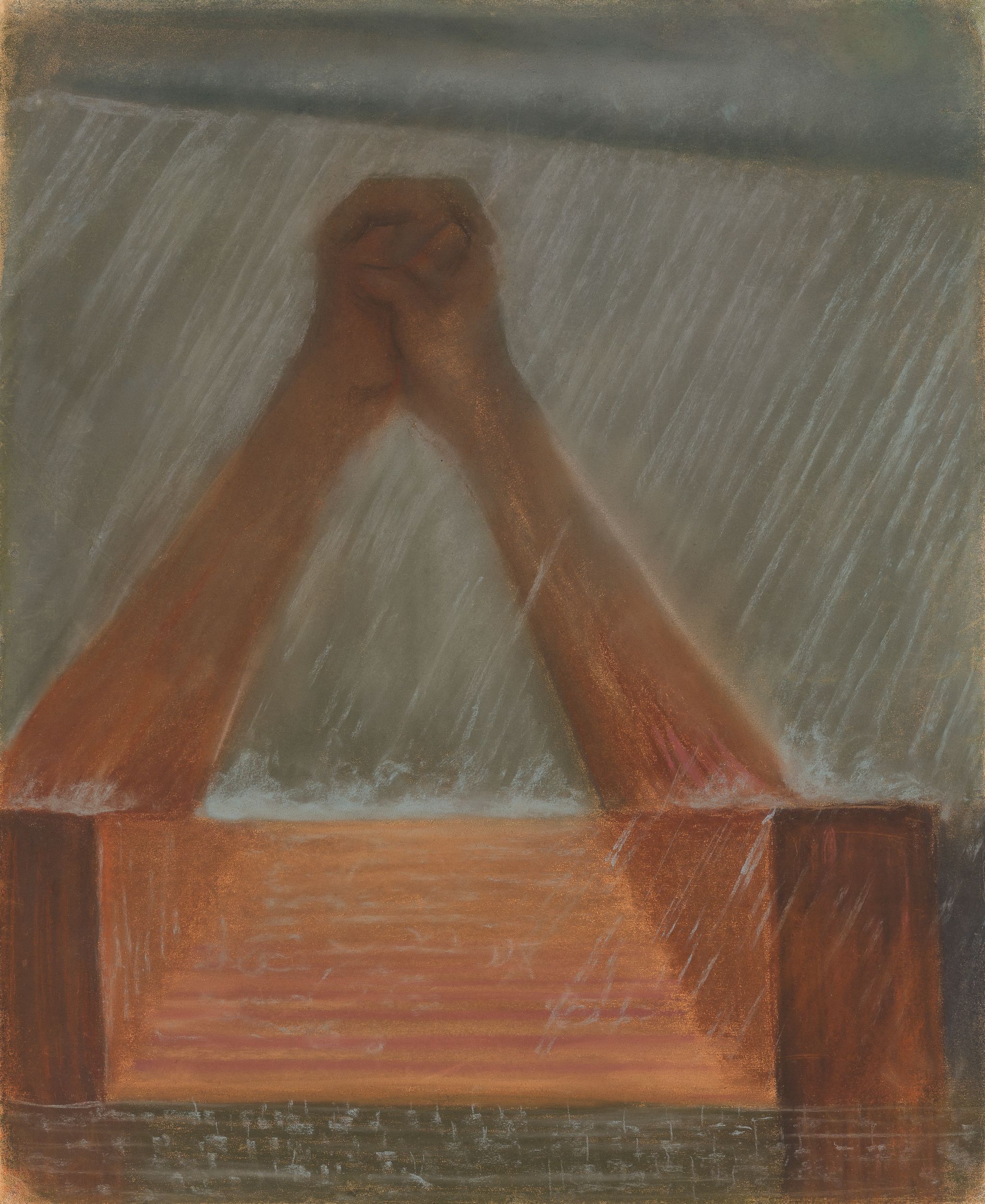
“Deluge” (Tvanas) is a five-part symbolic cycle of pastels that depict the cosmic, apocalyptic destruction of a sinful world. The cycle focuses on themes of divine judgment, the end of civilization, and transformation — rather than the biblical narrative of salvation. “Deluge IV” features gates that resemble enormous, clasped, pleading hands raised towards the sky for mercy.
FINALE
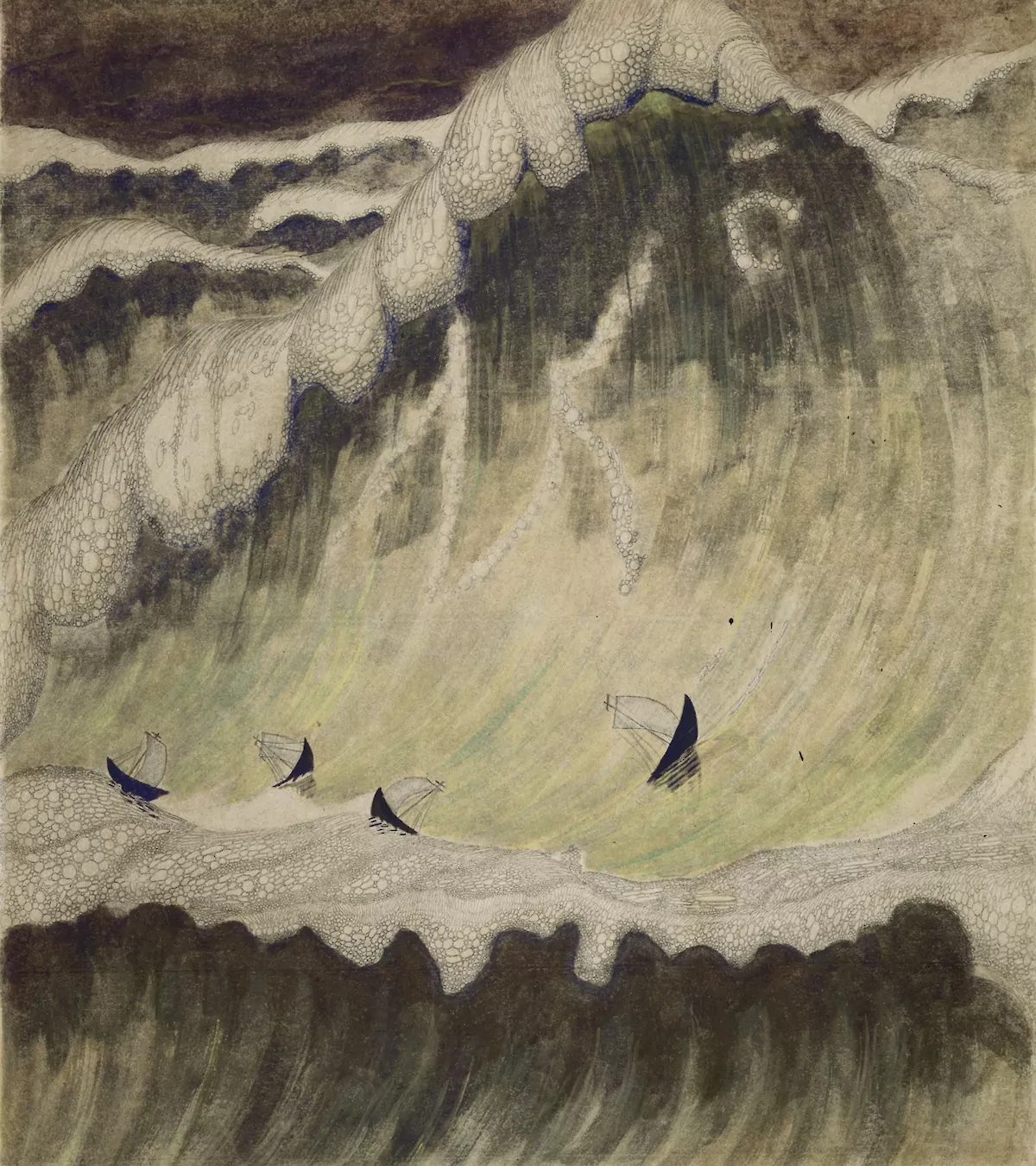
“Finale,” part of the artist’s series Sonata No. 5 (Sonata of the Sea), is a Symbolist painting depicting a stormy, majestic sea. The massive, towering wave (symbolizing the sublime / terrifying power of nature) threatening small boats is most likely inspired by Hokusai’s Great Wave. As part of Čiurlionis’s “painted sonata,” this painting functions as the dramatic, fast-paced conclusion to the series, its emotional climax (following the slower, more melancholic Andante).
Fun fact: On the wave, the artist’s initials are formed from bubbles.
SKETCH FOR COMPOSITION (II)
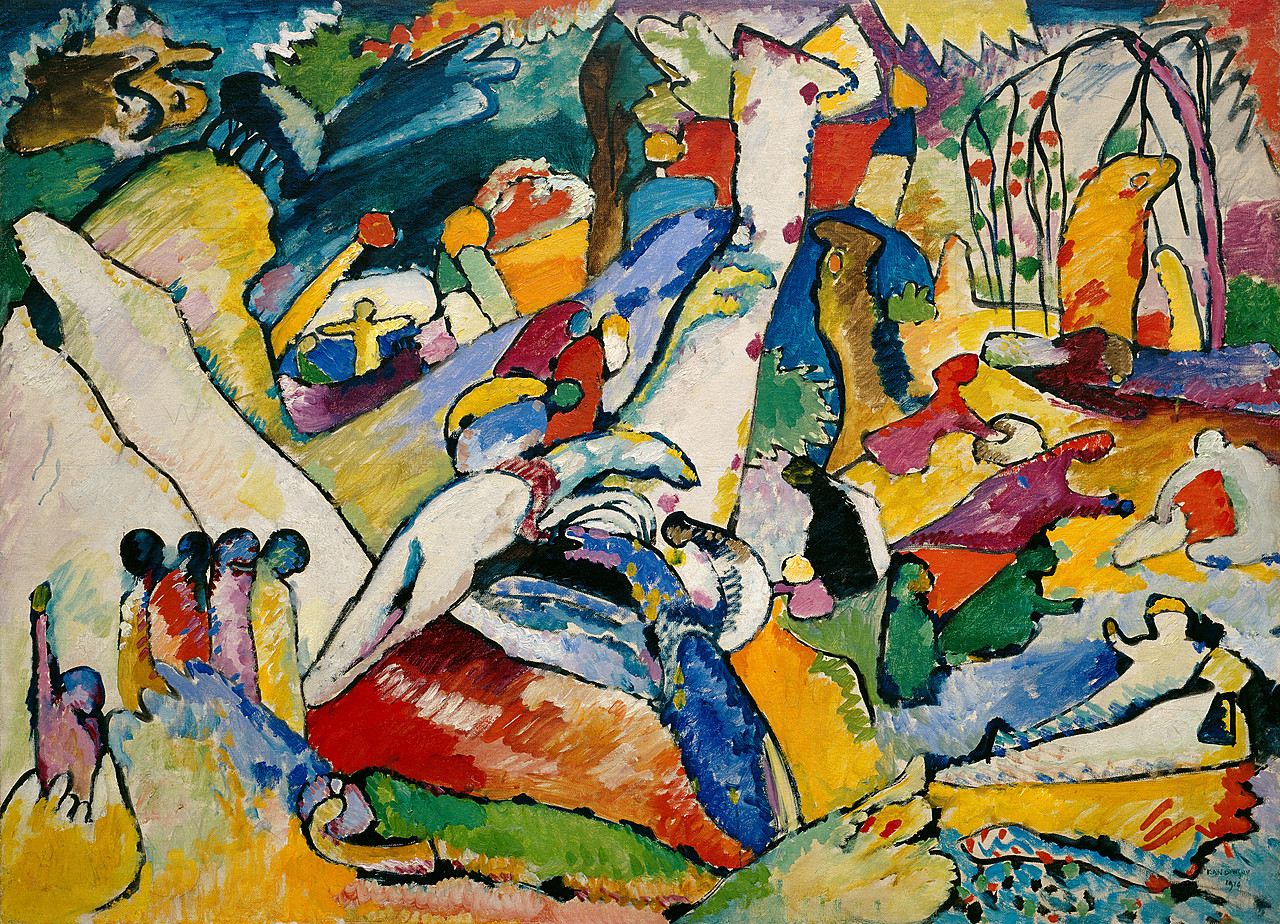
From the Guggenheim’s website:
By 1910 many of the artist’s abstract canvases shared a common literary source, the Revelation of Saint John the Divine; the rider came to signify the Horsemen of the Apocalypse, who will bring epic destruction after which the world will be redeemed. In both Sketch for Composition II and Improvisation 28 (second version) Kandinsky depicted—through highly schematized means — cataclysmic events on one side of the canvas and the paradise of spiritual salvation on the other.
Inspired by the Book of Revelation, this painting features an abstracted horse and rider (always a symbol, for this artist, of his dream of a better, more spiritual future) and on the left side of the canvas, what appear to be everything from flood, fire, and storm to a cataclysmic earthquake.
APOCALYPTIC LANDSCAPE
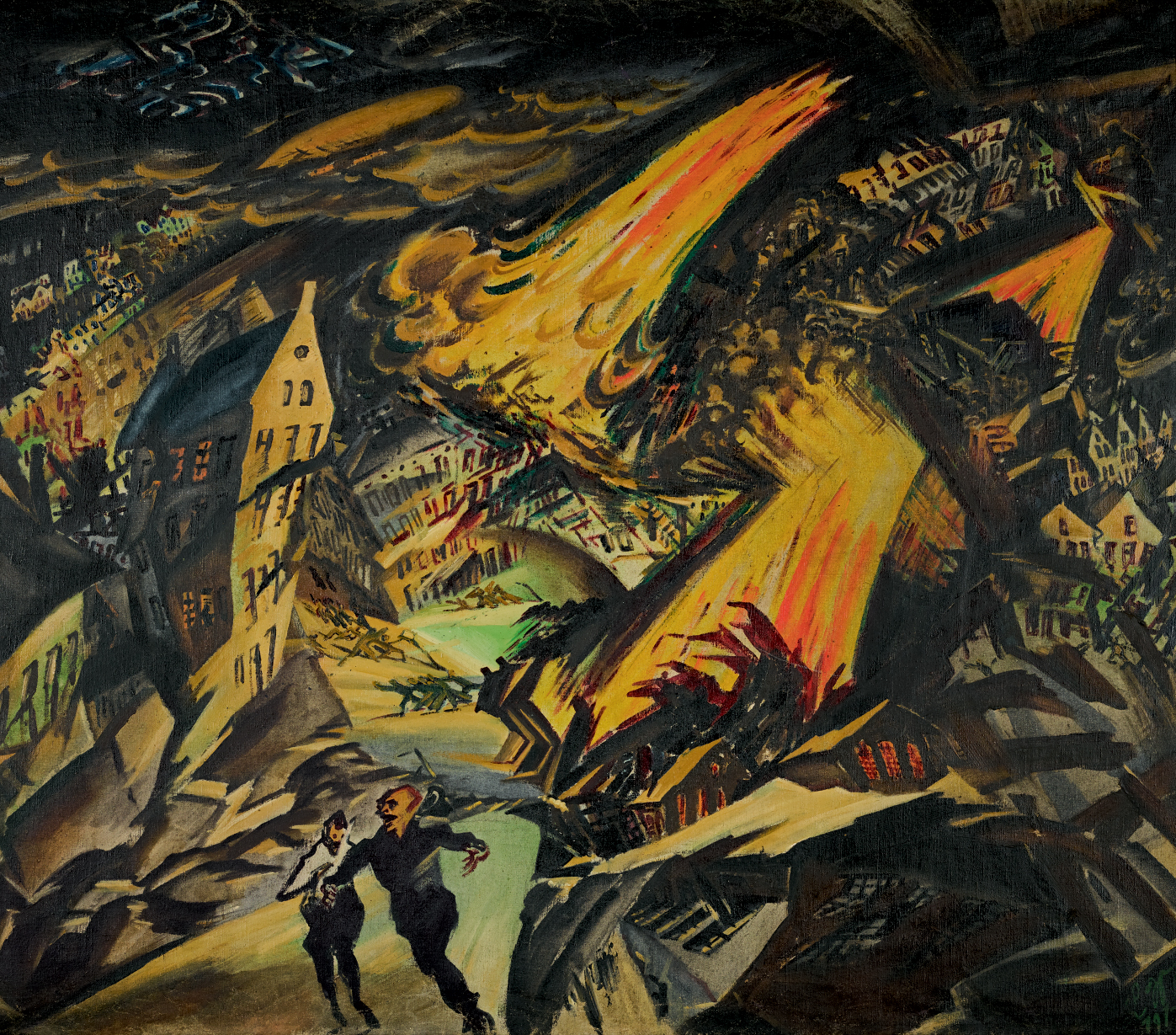
This devastating scene is one among approximately 15 paintings from Meidner’s series of apocalyptic landscapes executed between 1912 and 1916.
The series depicts urban chaos: shattered buildings, fractured streets, comet-streaked skies, panicking figures. Meidner later described his Apocalyptic Landscapes series as a prediction of ca coming “universal storm.” Meidner’s fervent — utopian, in a way — desire was to see the existing, corrupt European society destroyed, paving the way for a necessary, revolutionary renewal.
FATE OF THE ANIMALS
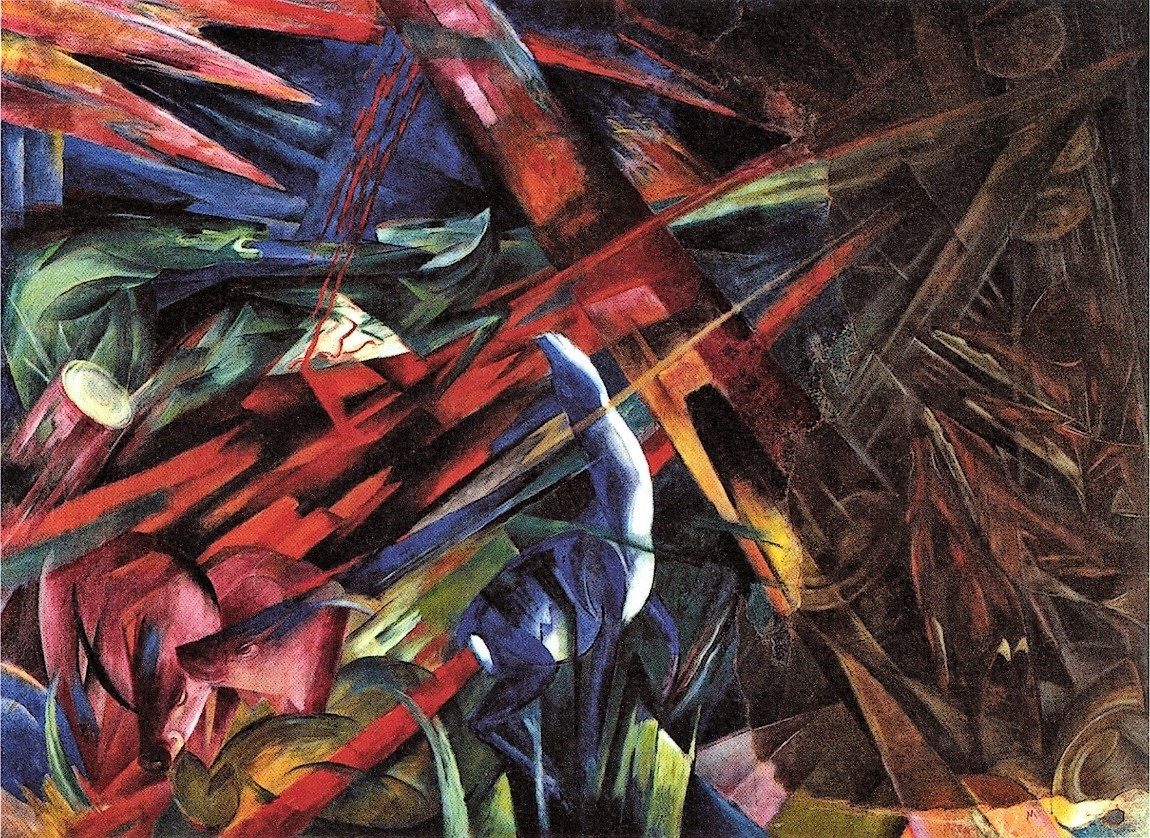
Marc’s Expressionist painting depicts a chaotic, apocalyptic forest fire, symbolizing the destruction of nature — and perhaps a premonition of World War I too? Animals — in an agonized, diagonal composition — are shown being destroyed by fire and falling trees. This semi-abstract painting, a “horrible and shattering” (as he himself put it) vision of impending conflict, marks a pivot in the direction of total abstraction before the artist’s death in 1916.
Marc painted this phrase on the back of the canvas: “And All Being is Flaming Suffering.”
BURNING CITY
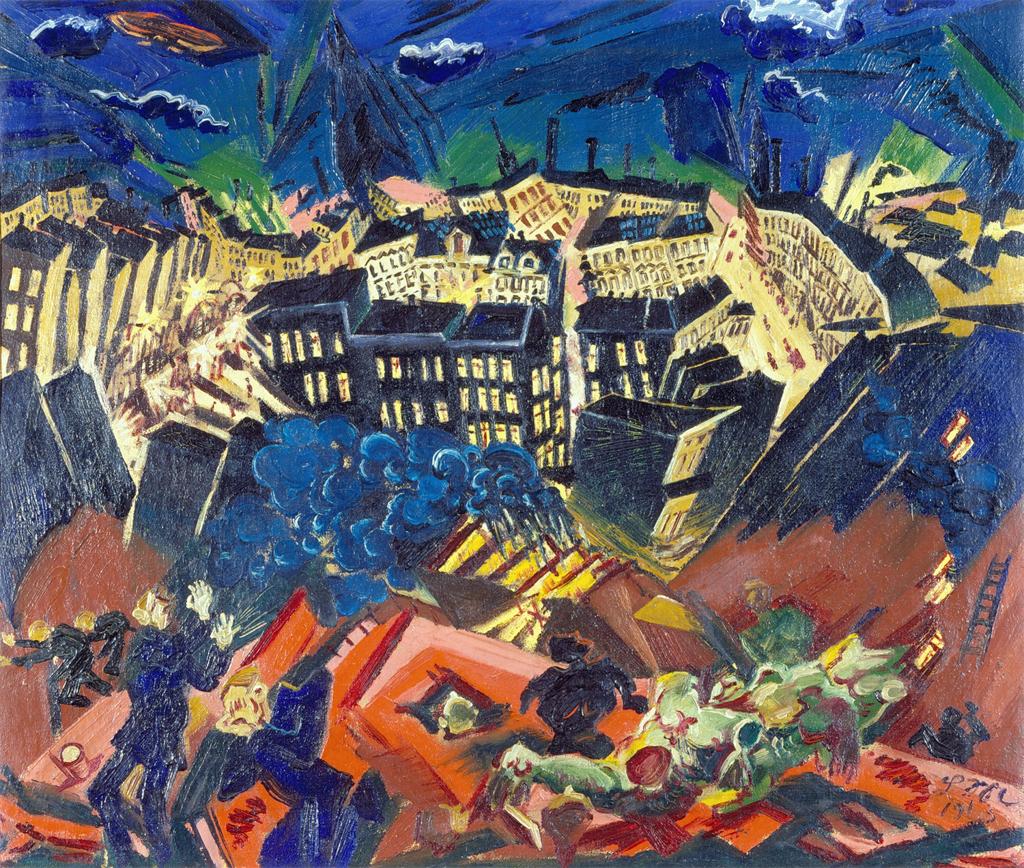
This painting suggests Meidner’s violent, psychological reaction to the industrial, crowded modern metropolis. I include it in the CATASTROPHE sub-category ECO-CATASTROPHE because to this viewer it seems to suggest that the Earth itself is obliterating Berlin.
Meidner wrote the following in his journal in 1913: “The giggles of the city ignite against my skin. I hear eruptions at the base of my skull. The houses near. Their catastrophes explode from their windows, stairways silently collapse. People laugh beneath the ruins.”
IMPROVISATION. DELUGE.
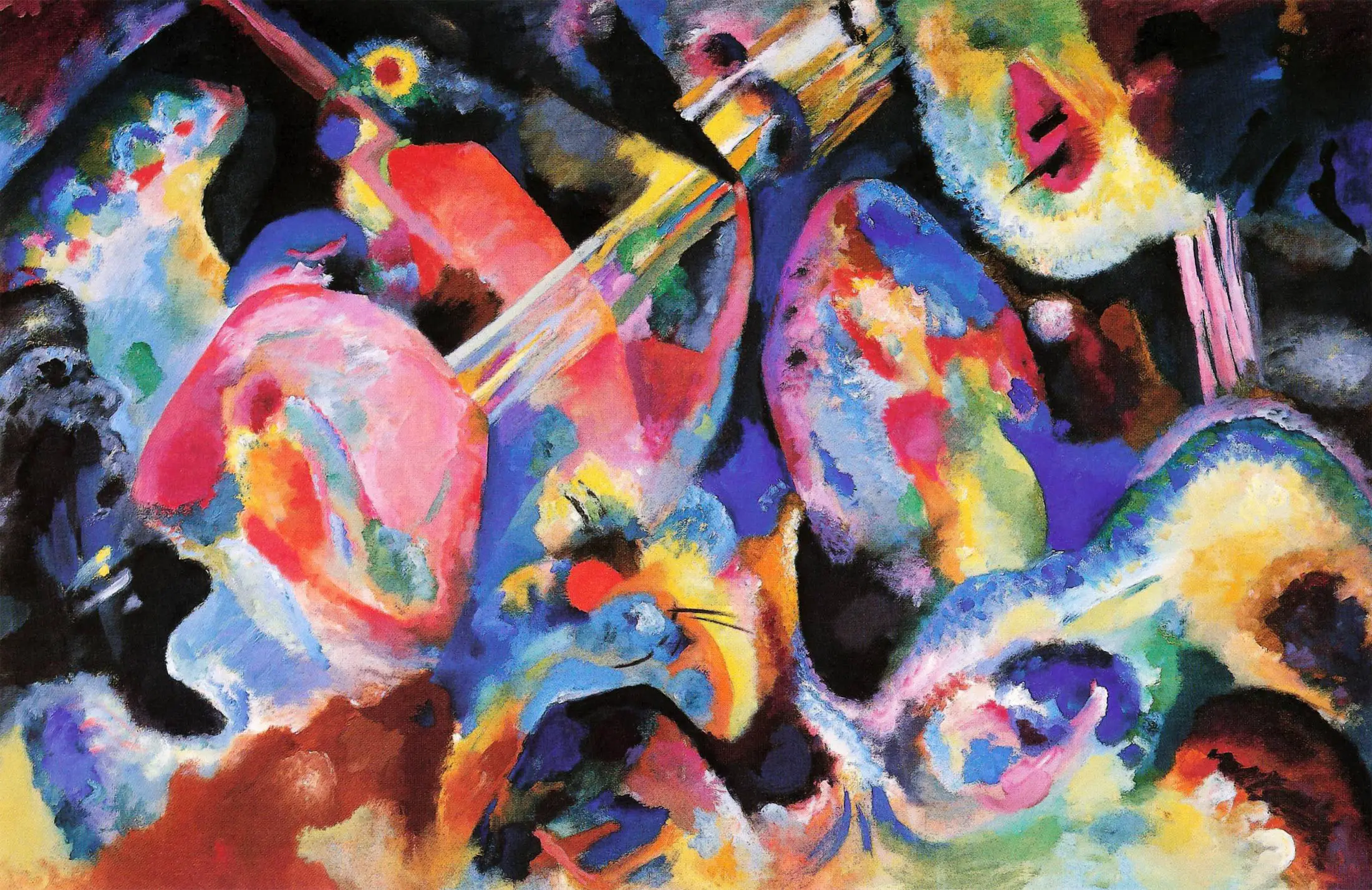
Kandinsky’s painting represents a Biblical-ish deluge. Semi-abstract forms suggest, rather than explicitly illustrate the destruction of an old world and the birth of a new one. Subtle remnants of landscapes and other figurative elements peek through. Again, as with all of Kandinsky’s apocalypses from this era, what we’re looking at is a depiction of the artist’s own chaotic, emotional, and spiritual transition; it’s not intended to be a literal depiction of a flood.
PETRIFIED FOREST
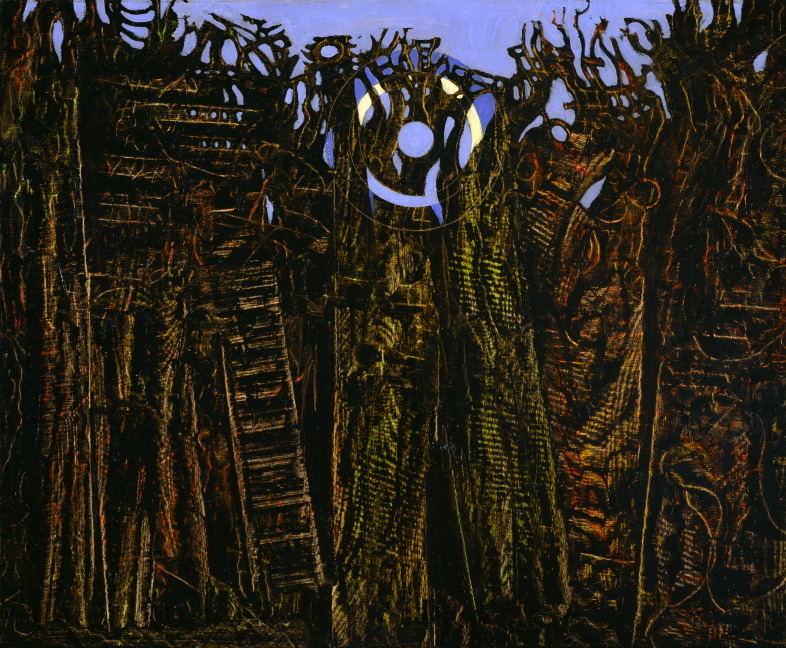
Ernst here conjures up a dark, impenetrable — and, according some critics, apocalyptic — woodland. Ernst used grattage (scraping oil paint from the canvas) to create texture, which allowed for a sense of automatism and “mythic,” unexpected forms to emerge. The painting is both figurative and literal; it symbolizes the mystery of the unconscious mind and the impending destruction of the natural world.
THE LAST DAY
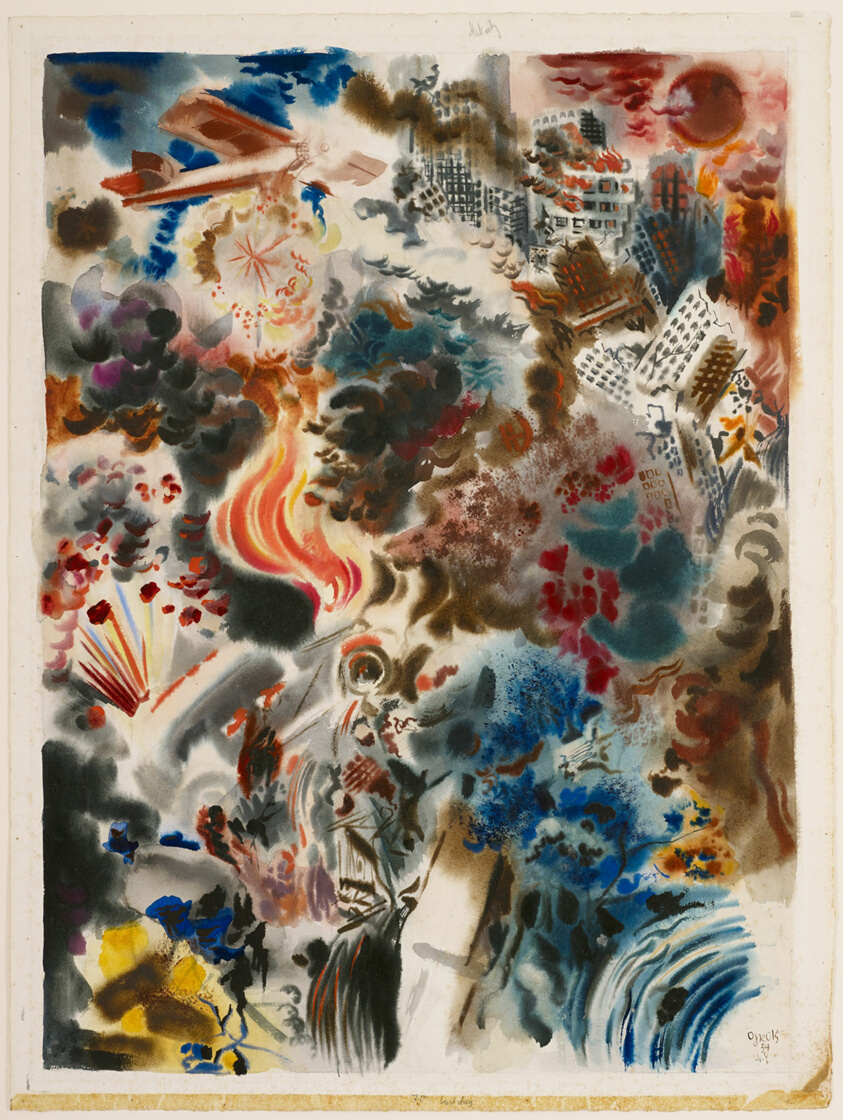
From the Art Institute of Chicago’s website:
Grosz left Germany only eighteen days before Hitler seized power in January 1933. Because of his relentless political satire and criticism of the state, he would undoubtedly have been the target of persecution and execution by the new Nazi regime. Between 1933, when he arrived in New York, and 1936, he worked on a series of watercolors representing his first impressions of the metropolis. The Last Day does seem to be based on the Manhattan skyline, but Grosz’s treatment of it is more a foreshadowing of his apocalyptic paintings of the late 1930s.
As Max Page’s book The City’s End: Two Centuries of Fantasies, Fears, and Premonitions of New York’s Destruction informs us, at least since the early 19th century writers and artists have gleefully imagined the destruction of New York.
Also see HILOBROW’s serialization of Van Tassel Sutphen’s The Doomsman (1905–1906), set in a shattered, overgrown NYC.
FLOOD
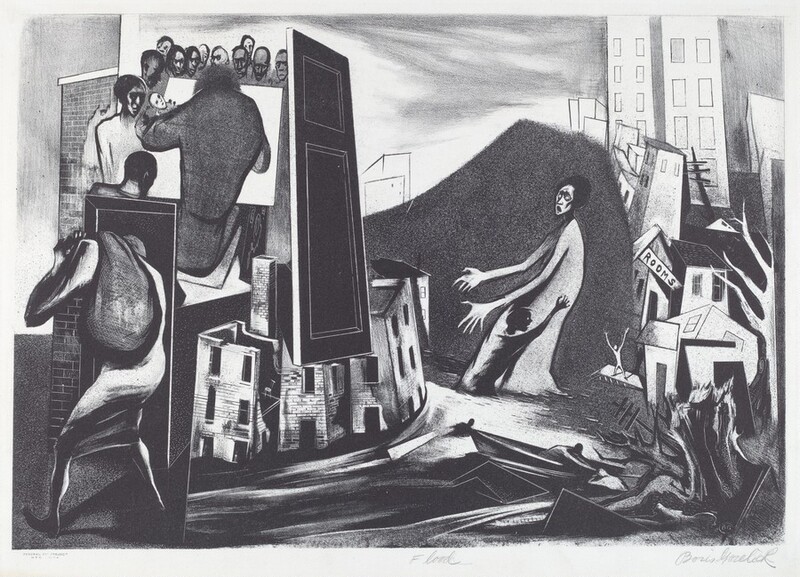
Gorelick (1911–1984w) was a member of the Communist Party and helped to found the Artists Union with other Party members. He also served on the executive committee of the Artists’ Congress Against War and Fascism in 1935. He was known primarily for his political prints, which incorporated Surrealist techniques.
The print depicts a group of figures caught in a flood. Like much of Gorelick’s work from this era — such as his pieces on mine disasters and industrial strife — it uses dramatic, often distorted gestures to express the artist’s outrage and protest regarding the struggles of America’s working class and the poor.
Josh Glenn’s EMANATIONS series includes the following installments: CATASTROPHE: DECLINE & FALL | DYING EARTH | ECO-CATASTROPHE. COSMIC AWE: DEEP TIME | STARS WHEEL IN PURPLE | IS THERE LIFE ON MARS. DEHUMANIZATION: CYBORG MANIFESTO | MECHANIZATION. & many others.
MORE RADIUM AGE SCI FI ON HILOBROW: RADIUM AGE SERIES from THE MIT PRESS: In-depth info on each book in the series; a sneak peek at what’s coming in the months ahead; the secret identity of the series’ advisory panel; and more. | RADIUM AGE: TIMELINE: Notes on proto-sf publications and related events from 1900–1935. | RADIUM AGE POETRY: Proto-sf and science-related poetry from 1900–1935. | RADIUM AGE ART: Proto-sf and science-related fine art from 1900–1935. | RADIUM AGE 100: A list (now somewhat outdated) of Josh’s 100 favorite proto-sf novels from the genre’s emergent Radium Age | SISTERS OF THE RADIUM AGE: A resource compiled by Lisa Yaszek.