
THE DICTATOR (5)
By:
November 3, 2026
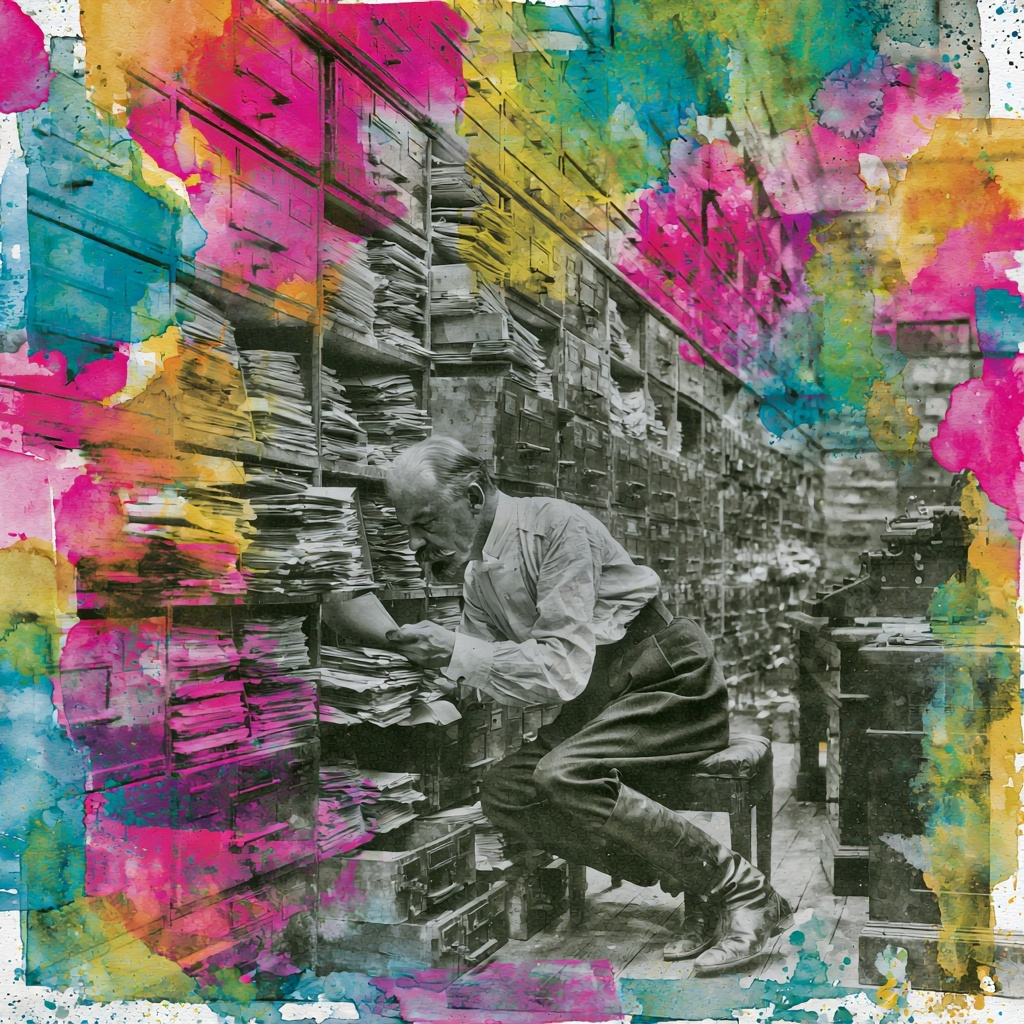
Yefim Zozulya’s “The Dictator: The Story of Ak and Humanity” is a darkly humorous parody of Bolshevik utopian eugenics. This thinly veiled critique of the Soviet regime, which was first published in the only issue of magazine Zori (Зори, spring 1919), Kyiv, would inspire and influence Yevgeny Zamyatin’s much better-known anti-utopia We. Translated into English by the Russian-American anarchist and author Alexander Berkman. HiLoBooks is pleased to serialize this story for HILOBROW’s readers.
ALL INSTALLMENTS: 1 | 2 | 3 | 4 | 5.
9. The posters were put up.
People ran through the streets out of breath, with buckets full of glue. Stacks of huge pink posters unfurled with a cheerful crackling rustle and stuck to building walls. Their text was clear, crisp, and so simple.
Here it is:
To everyone, without exception:
From the moment this announcement is published, all citizens of the city are permitted to live. Be fruitful and multiply, and fill the earth. The Board of Supreme Determination has fulfilled its solemn duty and is hereby renamed the Board of Supreme Sensitivity. Citizens, you are all beautiful, and your right to life is inalienable.
The Board of Supreme Sensitivity charges special three-member commissions with the task of visiting apartments daily and congratulating the residents on the fact of their existence. They’re to write down their observations in the special Joyous Protocols.
Members of the commission have the right to interview citizens about their lives, and the citizens may, if they wish, answer in detail. The latter is preferred. Joyous observations are to be stored in the Pink Cabinet for posterity.
10. Life returned to normal.
Doors, windows, and balconies opened. Loud human voices, laughter, singing, and music burst from them. Fat, incapable girls studied the piano. Gramophones roared day and night. People played violins, clarinets, and guitars. Men took off their jackets in the evenings, sat with their legs spread wide on the balconies, and hiccupped with pleasure. Urban traffic increased tremendously. Young men and women rode in cars and carriages. Nobody was afraid of appearing in the streets. Bakeries and candy stores sold cakes and soft drinks. Haberdashery shops did a brisk business in selling mirrors. People bought mirrors and enjoyed looking at their reflections. Artists and photographers received portrait commissions. The portraits were framed and hung on apartment walls. Such portraits were even the cause of one murder, written about in the newspapers. Some young man who had rented a room demanded that the portraits of the landlord’s parents be removed from it. The owners took offense and killed the young man, throwing his body into the street from the fifth floor.
Self-esteem and self-love flourished. All manner of conflicts and squabbles became commonplace. In those cases, along with the usual insults, they pestered each other with such newly minted clichés:
“You seem to be living in the world by mistake. It seems the Board of Supreme Determination did a poor job…”
“Very poor job, if someone like you has remained…”
Such squabbles were insignificant overall. Pantries groaned from excess, people made jams. The demand for warm, knitted underwear increased considerably as everyone greatly valued their health.
Members of the Board of Supreme Sensitivity dutifully visited apartments and interviewed residents about their lives.
Many answered that life was good, and even forced proof upon the interviewers.
“Here,” they said, smirking smugly and rubbing their hands. “We’ve got pickles, and marinated herring. Recently I weighed myself and I’ve gained half a pound, thank the Lord…”
Others complained about inconveniences and lamented the poor performance of the Board of Supreme Determination:
“You see, I was on the tram yesterday and — can you imagine? — there were no empty seats. What a disgrace! My spouse and I had to stand. There are too many unnecessary people left over. They swarm everywhere, swarm, and why do they swarm, devil only knows. It’s too bad they weren’t removed during the inquiry…”
Still others were indignant:
“Keep in mind that no one came to congratulate me for existing on Wednesday or Thursday! This is insolence! Unacceptable! Am I supposed to come visit you to get congratulated now?”
11. End of the tale.
In Ak’s office, work was in full swing as ever: people sat and wrote. The Pink Cabinet was filled with joyous protocols and observations. Birthdays, weddings, festivities, lunches and dinners, love stories, all manner of adventures were described in careful detail. Many reports acquired the character and form of stories and novels. Residents asked the Board of Supreme Sensitivity members to publish them in book form, and devoured those books. Ak was silent.
He became even more hunched over and his hair even more gray.
Sometimes he climbed into the Pink Cabinet and sat there for a long time, as he used to do in the Gray Cabinet. One day Ak jumped out of the Pink Cabinet, shouting:
“Slaughter them! Slaughter! Slaughter! Slaughter!”
But when he saw the white hands of his employees hovering over papers, describing the living residents with the same zeal as they used to the dead ones, he gave up, ran out of the office — and disappeared.
There were many legends about the disappearance of Ak. All sorts of rumors abounded, but Ak was never found.
And people from that city — the people whom Ak had slaughtered and then taken mercy upon, and then had wanted to slaughter again, people including those who are real, those who are beautiful, and those who are human rubbish — still continue to live as though Ak had never existed, and no one had ever raised the great question about the right to life.
RADIUM AGE PROTO-SF: “Radium Age” is Josh Glenn’s name for the nascent sf genre’s c. 1900–1935 era, a period which saw the discovery of radioactivity, i.e., the revelation that matter itself is constantly in movement — a fitting metaphor for the first decades of the 20th century, during which old scientific, religious, political, and social certainties were shattered. More info here.
SERIALIZED BY HILOBOOKS: James Parker’s Cocky the Fox | Annalee Newitz’s “The Great Oxygen Race” | Matthew Battles’s “Imago” | & many more original and reissued novels and stories.