
THE DICTATOR (2)
By:
October 12, 2026
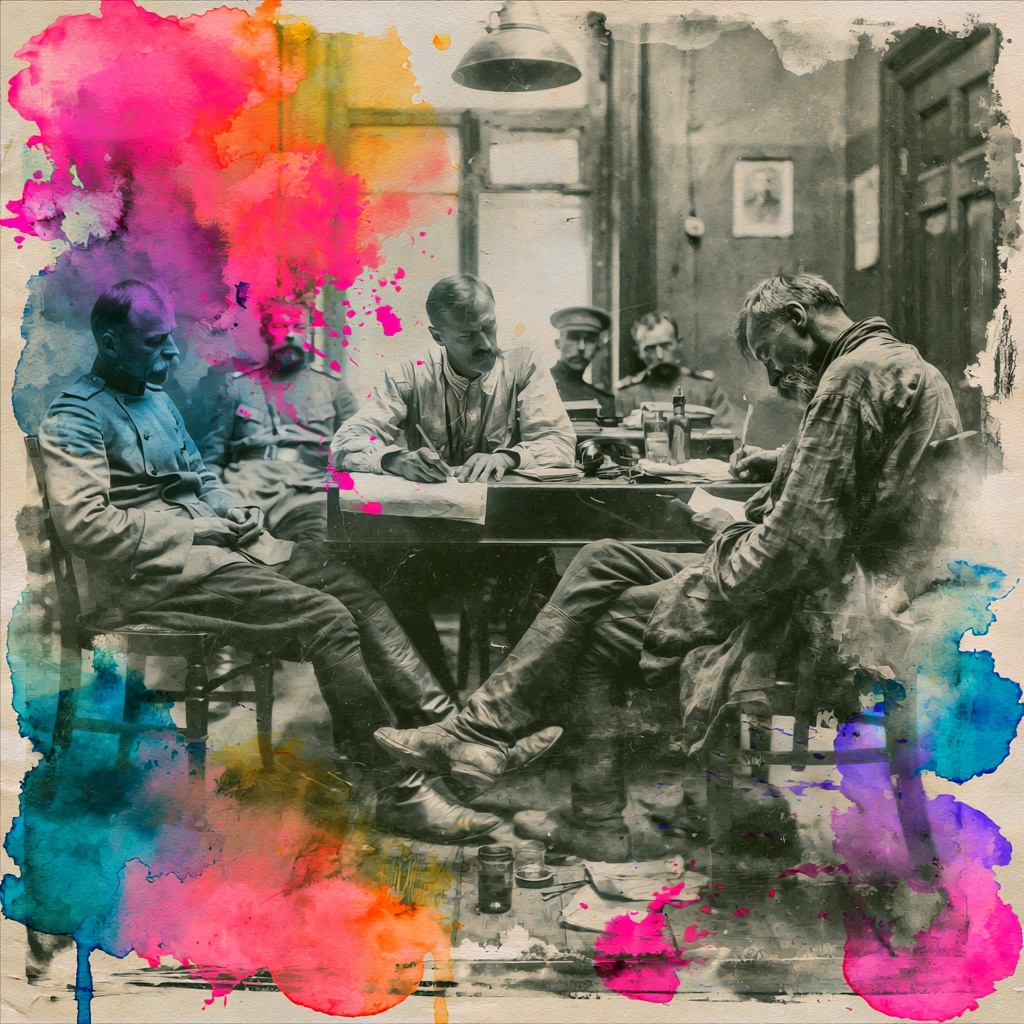
Yefim Zozulya’s “The Dictator: The Story of Ak and Humanity” is a darkly humorous parody of Bolshevik utopian eugenics. This thinly veiled critique of the Soviet regime, which was first published in the only issue of magazine Zori (Зори, spring 1919), Kyiv, would inspire and influence Yevgeny Zamyatin’s much better-known anti-utopia We. Translated into English by the Russian-American anarchist and author Alexander Berkman. HiLoBooks is pleased to serialize this story for HILOBROW’s readers.
ALL INSTALLMENTS: 1 | 2 | 3 | 4 | 5.
3. They ran.
The crowds ran in the streets. Red-cheeked young men ran, their faces marred with boundless horror. Humble employees of offices and organizations. Bridegrooms wearing clean cuffs. Hobbyist choir singers. Dandies. Storytellers. Billiard players. People who go to the cinema in the evenings. Careerists, troublemakers, crooks with white foreheads and curly hair. Sweaty, good-natured libertines. Belligerent drunks. Funny guys, hooligans, beauties, dreamers, lovers, cyclists. Broad-shouldered eristics, talkers, liars, long-haired hypocrites, brooding losers with sad black eyes and cold emptiness behind those eyes hidden beneath the veneer of youth. Young curmudgeons with full, smiling lips. Wanton adventurers, freeloaders, quarrelers, kind underachievers, clever villains.
The women ran. Fat, gluttonous, and lazy. Thin hags, demanding and annoying, bored, the wives of geniuses and fools, gossips, traitors, envious and greedy, and now equally disfigured by fear. Proud fools and kind nobodies. Those who dye their hair out of boredom, indifferent debauchees, lonely, helpless, arrogant, pleading, those robbed by fear of their graceful façades.
The gnarled old people ran; fat, short, tall, handsome, and ugly.
Building managers, pawnshop appraisers, iron traders, carpenters, craftsmen, jailers, grocers, gracious brothel keepers, gray-haired dignified butlers, respectable patriarchs mired in turpitude and deceit, experienced cardsharps, and corpulent scoundrels.
They ran in a thick, swift, solid, and rigid mass. Pounds of rags enveloped their bodies and limbs. Hot steam gushed from their mouths. Vitriol and screams echoed across the lurking indifference of abandoned buildings.
Many ran with their belongings. With crooked fingers they dragged pillows, boxes, bins. They grabbed their valuables, children, and money. They returned, rung their hands in horror, and ran again.
But they were turned back. All of them. People who were just like them shot at them, cut them off, beat them with sticks, with fists, with rocks, bit them, and shouted mightily at them. The crowds shrank back, shedding the wounded and the dead.
By evening the city had returned to its usual state. Shivering people returned to their apartments and jumped into their beds. A brief and sharp hope pulsated desperately within their cramped, hot skulls.
4. The procedure was simple.
“Your surname?”
“Boss.”
“Age?”
“Thirty-nine.”
“Occupation?”
“I stuff cigarette tubes with tobacco.”
“Tell the truth!”
“I’m telling the truth. I’ve held an honest job for fourteen years, supporting my family.”
“Where’s your family?”
“Here they are. This is my wife. And this is my son.”
“Doctor, examine the Boss family.”
“Yes, sir.”
“Well, how are they?”
“Citizen Boss is anemic. His overall health is average. The wife suffers from headaches and rheumatism. The boy is healthy.”
“Very good. You may go, doctor. Citizen Boss, what’s your pleasure? What do you love?”
“I love people, and I love life overall.”
“Be more precise, Citizen Boss. We’re short on time.”
“I love…? What do I love… I love my son… He plays the violin so well… I love to eat, though truly, I’m no glutton… I love women. It’s nice to see a beautiful woman walk down the street. I love to rest in the evenings, when I’m tired… I love filling cigarette tubes. I can fill five hundred tubes in an hour… I love a lot of things… I love life….”
“Calm down, Citizen Boss. Quit crying. What say you, psychologist?”
“Nonsense, colleague. Trash. These are the most ordinary of creatures. Wretched existence. The temperament is semi-phlegmatic, semi-sanguine. The activity is weak. Lowest class. There’s no hope for improvement. Passivity seventy-five percent. Madame Boss is even lower. The boy is vulgar, but perhaps… How old is your son, Citizen Boss? Quit crying.”
“Thirteen…”
“Don’t worry. Your son can remain, for now. A five-year deferment. As for you… Well, that’s none of my business. Your call, colleague.”
“In the name of the Board of Supreme Determination, and in order to cleanse life of unnecessary human rubbish, indifferent creatures that slow down progress, I order you, Citizen Boss, and your wife to leave life in the next twenty-four hours. Quiet! Don’t shout! Orderly, calm the woman down. Call the guards. These two are unlikely to manage without their help.”
RADIUM AGE PROTO-SF: “Radium Age” is Josh Glenn’s name for the nascent sf genre’s c. 1900–1935 era, a period which saw the discovery of radioactivity, i.e., the revelation that matter itself is constantly in movement — a fitting metaphor for the first decades of the 20th century, during which old scientific, religious, political, and social certainties were shattered. More info here.
SERIALIZED BY HILOBOOKS: James Parker’s Cocky the Fox | Annalee Newitz’s “The Great Oxygen Race” | Matthew Battles’s “Imago” | & many more original and reissued novels and stories.