
A YEAR IN A DAY (6)
By:
March 19, 2026
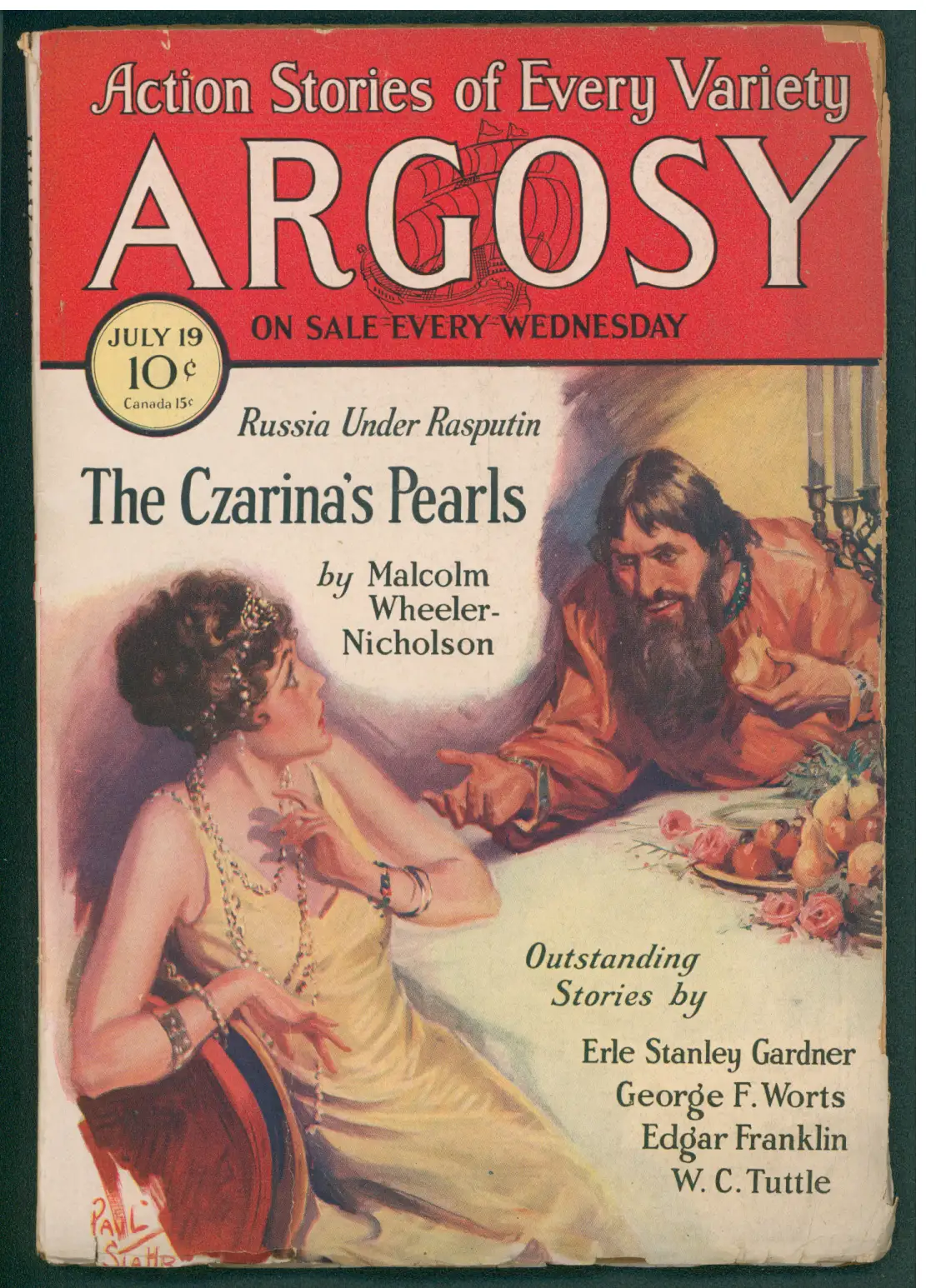
Between 1928 and 1932, the prolific detective fiction author Erle Stanley Gardner produced seven science fiction and fantasy stories for Argosy. “A Year in A Day” (July 19, 1930) takes the idea of invisibility-through-acceleration popularized by H.G. Wells’ 1901 story “The New Accelerator” and applies it to the framework of the crime story. Though Gardner is not one of the era’s most talented sf authors, here he anticipates everything from the Golden Age speedster comic-book characters the Flash (1940) and the Whizzer (1941) to Nicholson Baker’s 1994 erotic novel The Fermata. HiLoBooks is pleased to serialize the story, which enters public domain this year, for HILOBROW’s readers.
ALL INSTALLMENTS: 1 | 2 | 3 | 4 | 5 | 6 | 7.
CHAPTER 6
Among Living Statues
Art thought of Carl Ramsay and of how Ramsay would undoubtedly have summarized the situation in headlines. “Time Ticks Tediously,” or some such alliterative expression. And, thinking of Ramsay, he suddenly thought of the murders, and knew that he must apprehend the real criminal.
He had unlimited time at his disposal. He could cover all trains, all means of escape. It only remained to walk where he wanted to go. Any form of so-called rapid transportation was out of the question.
One mistake he made. He jumped over the wheel of a machine that stood between him and the curb. The trip up in the air was quite all right. In fact he felt like a feather. Had it not been for the atmospheric resistance it would have been simple. But the rush of air held him down somewhat.
Even so, he jumped faster, farther, and higher than he had intended or thought possible. This was doubtless due to the fact that his strength had multiplied with his ability to speed up the muscular action.
But when he wanted to come back to the sidewalk he found that he could not do so. He was held a prisoner, floating in mid-air. The force of gravitation was so slow that it seemed he wasn’t even drifting toward the sidewalk.
Finally he managed to claw his way along the side of a building, find a projection, use this to give him a handhold, and push himself toward the sidewalk.
He walked for fully a quarter of a mile before a strange pressure seemed to strike the bottoms of his feet. Then he knew that he was normally just alighting from the jump he had made. The force of gravitation had just taken hold.
That very element made it difficult for him to get about. He found that he dared not trust to any jumps, but must keep at least one foot on the pavement; if he made any sudden motion, there was not enough friction engendered by the force of gravitation to give him a foothold.
Altogether, it was a strange world, one in which every physical law seemed to be suspended. This was due, not to any change in the world itself, but merely to a change in the illusion of time. To express it in another manner, it was due entirely to the fact that Art Swift could think more rapidly.
The rate of thought, then, controlled environment.
It was a novel idea to toy with, but he couldn’t wait for speculation. He had work to do. He must solve those murders, apprehend the real criminal.
He started with Carl Ramsay.
Undoubtedly Ramsay had been the point of contact for the murders. He had taken some of the drug, diluted so the tempo of living became a hundred to one. He had switched the cigarette Tolliver Hemingway was about to take from his cigarette case, for a poisoned cigarette in which the first half inch of tobacco had been prepared with some poisonous drug.
The millionaire had inhaled that drug with the first puff of the cigarette. Then, when he exhaled the smoke, the other watchers in the room had been able to get the odor. But Hemingway had received the full force of the concentrated gas.
It had been simple.
But Ramsay had grown careless. He had made his substitution when Swift’s eyes were upon him. Swift hadn’t been able to detect what was going on, but he had been able to see the sudden disappearance of the fast-moving right hand and arm, and then, when he had talked to Ramsay, Ramsay had tried to answer before the drug wore off.
That was the reason those first sounds which came from Ramsay’s lips had been so unintelligible. Doubtless they had been words, perfectly formulated. But the sounds had been so rapid that it had been impossible for the eardrums of his hearers to split those sounds into words.
Then something had happened to Ramsay. Either he had planned his disappearance because he knew he would be suspected, or else he had actually been abducted after a struggle.
Swift determined to find out which.
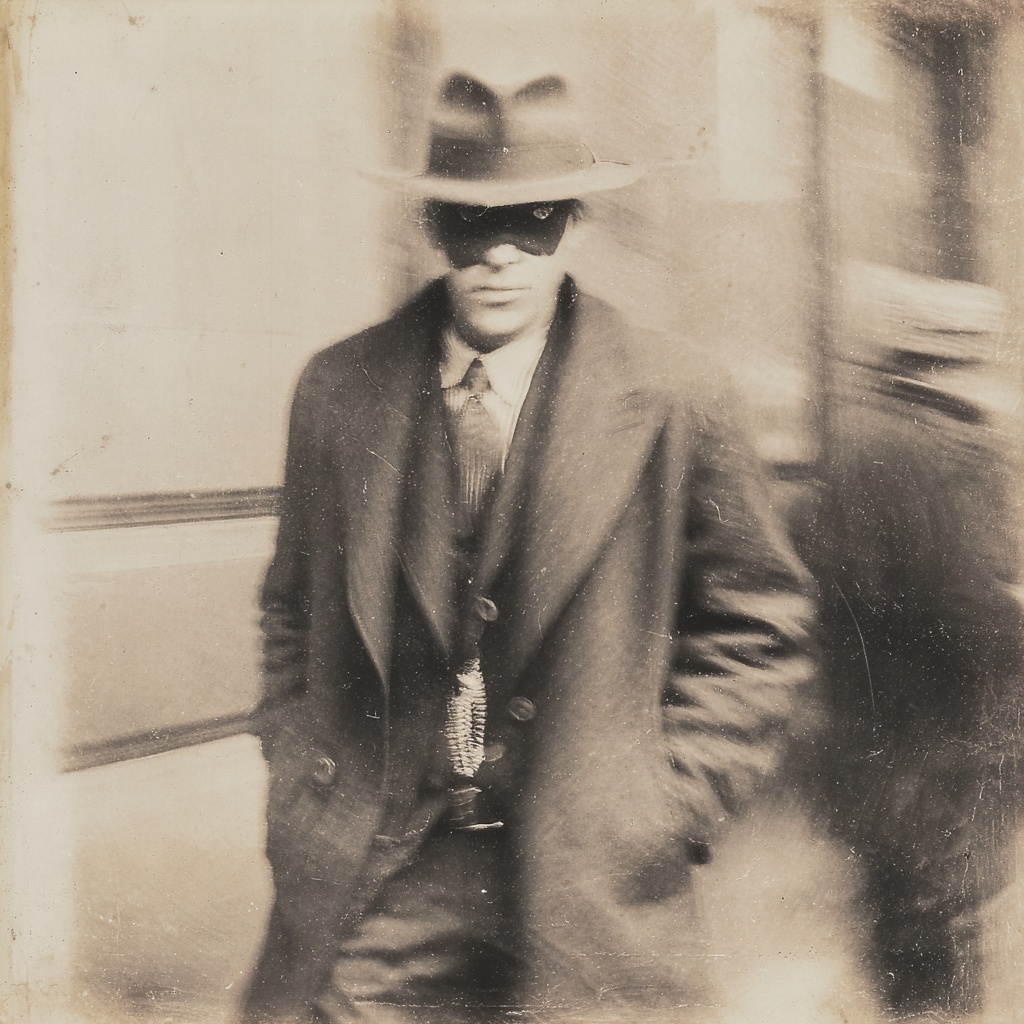
He battled his way against the ever-present roar of the rushing atmosphere to Ramsay’s room and took up the trail from there.
The police had combed the room, and had taken every article that might be of value. Yet Swift made a search of his own, going into every nook and corner. He found nothing.
He wondered if he should make an attempt to cover trains, and thought of Dr. Zean’s office. He might find something there, and he could drop into the Union Depot on the way.
He walked down the stairs to the street, and suddenly jerked himself upright with an exclamation. A strange sight met his eyes.
The street was frozen into arrested activity. He had grown accustomed to that spectacle. A horse was trotting, and but one foot was on the ground. On his back was a mounted policeman. He had evidently been swinging his club. Now he was like a mounted statue. A taxicab was cutting over on the turn, and the tires on the outside were flattened by the weight of the car. There was not the slightest motion in either wheels or tires.
But that which arrested Swift’s attention was the peculiar sight of a man walking casually through the tangled mass of arrested traffic.
The man’s coattails were whipped out behind. His hair was streaming. His hat had gone, and he walked with the peculiar pavement-shufiling gait which Art Swift had found so necessary to cultivate.
Here, then, was a man, the tempo of whose life was some five hundred times plus that of other men. Here was a man who must be inoculated with the mysterious extract which Dr. Cassius Zean had discovered. By that same token, he must be one of the outlaw gang.
He carried a suitcase, and the suitcase had been streamlined to make it offer less resistance to the air. He walked like a man with a certain fixed purpose, and he seemed perfectly at ease, confident in his own power.
Watching him, Swift became convinced the man was an old hand at this rapid life. He seemed to show no interest in the strange phenomena of the frozen world where motion had been stilled. He walked calmly, sedately.
And Swift, slipping behind a parked automobile, watched him curiously, wondering what strange errand had caused this man to speed up his life at a ratio of five hundred to one.
The other slithered his way across the street, paused before the door of an imposing edifice. There was a fleshy woman leaving the door of that building, and Swift had noticed her prior to seeing the other man.
She was tugging at the door, one foot stretched out, ready to step to the pavement. Her mottled face was flushed with dark color. Her glassy eyes were staring straight ahead. Her mouth was open. Probably she was gasping for breath, but it would have taken seeming hours for her progress to the place she was going, minutes for the first intake of her breath to be apparent.
Swift realized now that he had no mere five-hundred-to-one ratio in his life tempo. The cumulative effect of the dosage he had taken when several capsules jabbed their contents into his blood stream had given him a much faster rate of life than that. He had no means of knowing just how fast.
The man he followed walked directly to the door out of which the woman was emerging. He ducked under her arm, brushed against her, and entered the lobby of the building.
Swift followed.
Once the man turned. By the simple process of freezing into complete immobility, Swift defied detection. All about were the figures of men staring with glassy, unseeing eyes at what was going on about them.
There was a policeman standing at a marble table in the center of the flagged floor. All about were counters, wickets, gilt cages.
Swift realized he was in one of the big banking establishments. The man he followed walked to one of the cages. He took a key from the inert hand of a guard, unlocked the cage door, pulled it open, entered.
There were piles of gold on the counter, stacked up in glittering spheres of coin. The man scooped them into the suitcase. Then he left and went to another cage. Here he repeated the process. Here, also, there were several piles of large-denomination currency. The man scooped these in with the gold.
When he had selected the cream of the plunder, he closed the suitcase and turned toward the door. Swift became stock-still, standing with one foot out and up, as though in the act of taking a step. The man passed within three feet of him. When he had gained the street, Swift followed.
His quarry led him to a corner a block away. Here he sat the suitcase down, right beside a traffic policeman who was in the act of blowing his whistle.
He had left thousands of dollars in stolen gold and currency unguarded, right within reach of a policeman’s hand. Yet he was perfectly safe in doing so. No one could move fast enough to pick it up.
The bank bandit shuffled into a jewelry store, selected several diamonds, dumped them into his pocket, returned to his suitcase, bowed his head to the policeman in ironical thanks, picked up the bag, and crossed the street.
Swift followed. The man walked as rapidly as the air resistance would allow. He seemed intent upon reaching a certain destination as quickly as possible.
He turned into an alley. A truck was standing there, motor running. The suitcase was tossed into the truck. There were more suitcases there, all of the same general design.
As Swift watched, another figure came around the corner, walking in the same pavement-shuffling manner, carrying a suitcase. He tossed this upon the truck, paused to speak with the man Swift had been following.
Then the two turned and came directly toward Art Swift.
Once more he froze into immobility. They passed close to him. One of the men stopped.
“Say, I’ve seen this guy before. Who the hell is he?”
Swift remained motionless, one foot reaching out as though taking a step. Yet he knew there was something different in the studied balance of his pose from that of the other men who were caught in arrested motion.
“Never lamped him,” said the second man. “Come on. We’ve got work to do.”
But the man Swift had been following wasn’t so certain.
“I’m telling you there’s something funny about this guy. He stands funny, he looks funny. I’ve seen him before. I think he was standing in the bank I frisked. Let’s go through his pockets and see who in hell he is.”
“Aw, forget it. We got no time to be pulling all the funny stuff. That newspaper gave the whole show away, Doc Zean is croaked, and we ain’t goin’ to be able to get no more of the stuff. We gotta work fast and make a clean-up while the getting is good.”
They moved away. Swift heard the man he had followed fling a final comment.
“When we come back we’ll see which way he’s walking and what he’s got up his sleeve. He looks off color to me.”
The men reached the mouth of the alley and turned away.
Swift started for cover, and, as he approached the place opposite which the truck was parked, saw a swirl of motion at the opposite end of the alley.
He adopted his usual expedient of standing absolutely still.
Two men, loaded down with suitcases, came into the alley. One of them stopped.
“Say, that guy wasn’t there last trip!”
“What do we care? He couldn’t do anything.”
“Yeah, but he might be stallin’.”
They set down their suitcases, walked with quiet menace directly toward Art Swift.
Then Swift caught sight of something else. Another man glided swiftly into the alley. There was something familiar in the posture of that man. He gave a swift glance and found that it was Nick Searle of the Star.
In some manner the reporter had speeded himself up so as to get into the game. Art thought of the metal box the girl had received, a box containing a complete assortment of the rubber capsules. Probably Searle had secured possession of that and had injected sufficient of the serum to take part in the strange game which was being enacted.
The two bandits approached Swift. Searle was not far behind.
“Hey, you, what you doing here?” asked one of the men, pausing before Swift.
Swift endeavored to keep his face entirely devoid of expression. He fixed his eyes upon distance, and held his breath.
“Aw, he’s all right,” grumbled one of the men. “Just some poor mutt that strayed into the alley and we didn’t notice him the other trip.”
“The hell we didn’t,” insisted the more suspicious of the two. “He just wasn’t here, and if he wasn’t—”
He moved his hand in a swift gesture, directly toward Swift’s eye.
“If he’s on the up-and-up, we can stroke the eyeball,” said the man.
Involuntarily Art blinked. “Ha!” exclaimed the bandit, and jumped forward, his fist swinging in a terrific uppercut.
Art sidestepped, jerked his head back to dodge the blow, and shot out a straight left.
He found the atmospheric resistance slowed his punches somewhat, but the superior strength which had come to his muscles with the speeding-up process largely overcame that. It was his clothes that suffered most.
As he launched that straight left, the resistance of the air held his coat sleeve stationary. He had the peculiar sensation of feeling his sleeve peeled back from his arm, and the bare arm flashed forward in a quick punch which connected.
But the second man was busy. He swung a slungshot, and only missed Swift’s head by a matter of inches.
“The damned spy!” yelled the man who staggered back under the impetus of Swift’s punch.
Art knew he was no match for the two men, and jumped to one side, hoping to get where he could have his back to the wall. But they understood his maneuver and closed on him from different angles.
He ducked, caught a punch on the back of the head, felt his stomach grow cold as a fist landed in the solar plexus, and dropped to his knees. He flung out his arm, reaching for the legs that sought to kick him in the face, caught an ankle, jerked it, and had the satisfaction of seeing the man go down.
RADIUM AGE PROTO-SF: “Radium Age” is Josh Glenn’s name for the nascent sf genre’s c. 1900–1935 era, a period which saw the discovery of radioactivity, i.e., the revelation that matter itself is constantly in movement — a fitting metaphor for the first decades of the 20th century, during which old scientific, religious, political, and social certainties were shattered. More info here.
SERIALIZED BY HILOBOOKS: James Parker’s Cocky the Fox | Annalee Newitz’s “The Great Oxygen Race” | Matthew Battles’s “Imago” | & many more original and reissued novels and stories.