
THE MYSTERY OF THE XV (2)
By:
January 16, 2026
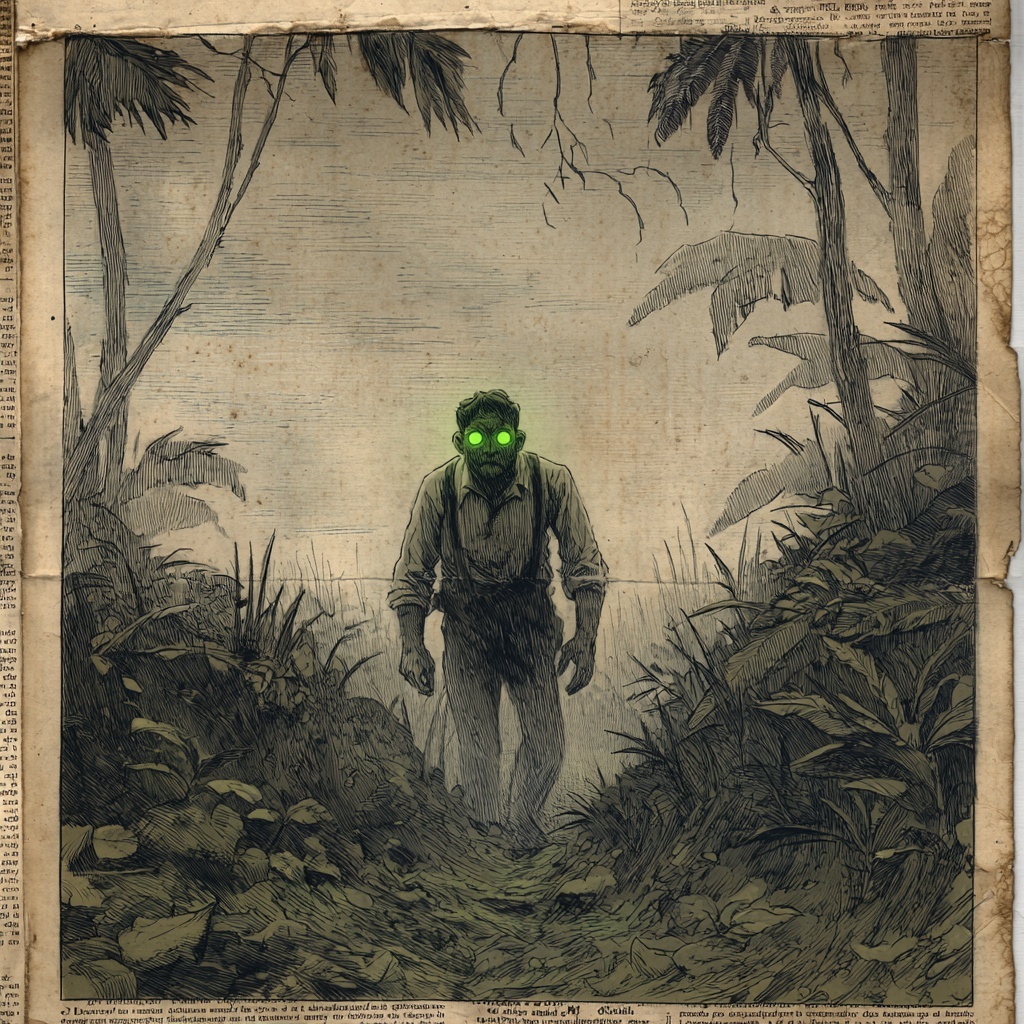
Léo Saint-Clair, known as the “Nyctalope,” is an indomitable crimefighter with night vision — and an early example of a pulp superhero. Excerpted here is a section from the first of his many outings, in Jean de La Hire’s Le Mystère des XV (The Mystery of the XV, serialized in 1911 in the French newspaper Le Matin). There’s a proto-Batman vibe to the Nyctalope; here, he even mentors an irrepressible teenage sidekick. In Josh Glenn’s translation, which first appeared in the anthology Before Superman: Superhumans of the Radium Age (MIT Press, Summer 2025), he’s attempted to retain the proto-cartoonish tone of the prose.
ALL INSTALLMENTS: 1 | 2 | 3 | 4 | 5.
Œdipus, according to legend, was similarly bold when confronting the Sphinx and her riddle; when he ingeniously solved it, the Sphinx killed herself. But it was a futuristic Sphinx of sorts, one whose enigma was no mere guessing-game, but rather a myriad of formidable high-tech obstacles, towards which the Nyctalope and Max boldly marched.
Also to Œdipus’s advantage: He was under no compulsion to tackle the Sphinx; and unless he failed to solve her brain-teaser, she posed him no threat. Merely approaching the XV’s base, however, meant death—likely for Christiane, surely for Saint-Clair and his sidekick. For it would be defended by every sort of hazard—from advanced weaponry to architectural mazes and pitfalls, not to mention the XV’s merciless, battle-hardened goons. The very nature of the base’s danger was a mystery.
However, despite the variety of unknown forces arrayed against them, despite the infinitely more menacing nature of the futuristic Sphinx (and bear in mind, the original Sphinx was so menacing that its legend has survived for thirty centuries), and despite the thousand eyes no doubt tracking their progress even now, our heroes continued to put one foot in front of the other. They were driven primarily by love and affection, of course; but let’s not discount their burning curiosity—which from time immemorial has been the x-factor impeling restless humankind onward and upward!
Beneath their superior qualities, though, lurked the possibility of every sort of weakness—they were human beings, after all. From his many experiences, the Nyctalope understood this all too well… and Max sensed it too. Which is precisely why they steeled themselves, as they progressed, in an effort to make themselves the implacable masters of their own natures. They aspired to be nothing less than relentless emanations of Fate itself. In such a frame of mind they marched on—as though nothing short of death could cause them to hesitate in their course for even a single moment.
Drawing near the XV’s base at last, they began to proceed with greater caution. The Nyctalope slowly led the way, his alert eyes piercing the darkness; Max, who didn’t dare switch on the electric light attached to his jacket, was guided entirely by the sound of Saint-Clair’s soft footsteps. They followed a tortuous path through the foliage; at each turn, the Nyctalope murmured merely “left” or “right.” So profound was the darkness that Max could not see Saint-Clair, though the two were only separated by an arm’s length.
FRENCH PROTO-SF TRANSLATIONS BY JOSH GLENN: Raymond Roussel’s LOCUS SOLUS [excerpt] | Noëlle Roger’s THE NEW ADAM [excerpt] | Alfred Jarry’s THE SUPERMALE [excerpt] | Jean de La Hire’s THE MYSTERY OF THE XV [excerpt].
RADIUM AGE PROTO-SF: “Radium Age” is Josh Glenn’s name for the nascent sf genre’s c. 1900–1935 era, a period which saw the discovery of radioactivity, i.e., the revelation that matter itself is constantly in movement — a fitting metaphor for the first decades of the 20th century, during which old scientific, religious, political, and social certainties were shattered. More info here.
SERIALIZED BY HILOBOOKS: James Parker’s Cocky the Fox | Annalee Newitz’s “The Great Oxygen Race” | Matthew Battles’s “Imago” | & many more original and reissued novels and stories.